A podcast about the messy, beautiful ways grown-ups grow up. Leaders, learning experts and developmental researchers come together to explore turning science into the day-to-day practice of adult development in teams, homes, organisations, and life. Dr Alis Anagnostakis is an adult development researcher, group learning facilitator and founder of the Vertical Development Institute. Her highest hope as a researcher-practitioner is to help support the growth of conscious, mature and future-fit leaders and to bring the tools of vertical development into day-to-day to day life. www.verticaldevelopment.education
Listen to episodes
23 recent
March 27, 20261 hr 17 min
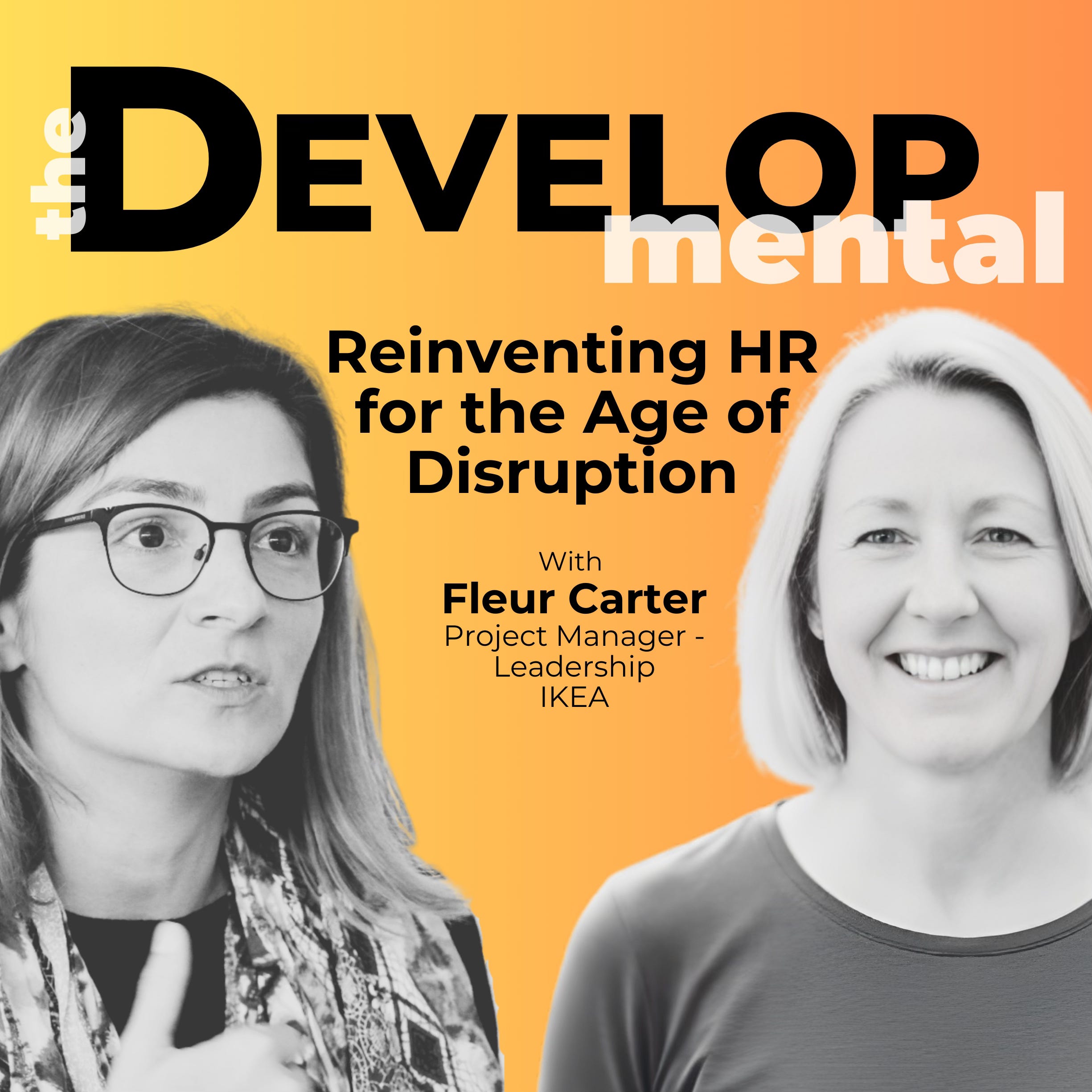
Reinventing HR for the Age of Disruption
In this episode of The Developmental, I’m in conversation with one of the wisest, most conscious HR leaders I know: Fleur Carter. Fleur has spent over twenty years inside one of the world’s largest and most innovative retail organisations, experimenting with what leadership development could become when the old playbooks stop working. Fleur and I have been in each other’s orbit for several years now, connected by a shared passion for vertical development and a growing inquiry about what the people function needs to become in this era of relentless disruption. This conversation grew out of several unrecorded ones - and true to form, we didn’t script it. We followed the thread and got to places we both found insightful, and I hope you do too. What emerged is an honest exploration of what it takes to do developmental work at enterprise scale from the inside - from the story of a CEO who volunteered his own vulnerability as the starting point for collective change, to the structural redesigns needed when governance and reward systems actively work against the mindset shifts the business says it wants. I came away holding a question that I think will stay with me for a while: what does it take to learn to breathe in free fall, when there are no more footholds between one disruption and the next? Episode Highlights 00:00 - Welcome & Intro Alis introduces Fleur and frames the conversation around reinventing HR in an age where disruption has become the norm rather than the exception. 03:00 - We Are All “In Over Our Heads” Fleur reflects on Robert Kegan’s metaphor of ‘being in over our heads’ and how the assumption that disruption is temporary seems to have collapsed. A Buddhist teacher’s provocation: what if we stopped looking for footholds and accepted we are in free fall? 10:00 - From Buddhism to Bob Kegan How Fleur’s personal journey through yoga, Buddhism, and living in India converged with her discovery of adult development theory and the links of modern psychology with ancient wisdom. 14:00 - A CEO Goes First A new CEO with an intuition that what got them here wouldn’t get them there, and how volunteering his own Immunity to Change Map as the example for leaning into developmental discomfort became a catalyst for change. 17:30 - What Immunity to Change Actually Does Alis and Fleur unpack the ITC process, including its power as both an individual mirror and a collective diagnostic tool for surfacing the hidden assumptions holding a business back. 22:30 - Why Trying Harder Doesn’t Work The belief that failure to change means laziness or lack of discipline - and how organisations get trapped in cycles of pushing harder through more programs, more comms, more performance management. 31:00 - Capability vs. Capacity The distinction that changes everything for HR: self-awareness as a capability you can train versus a capacity you need to develop. How IKEA built a leadership framework that holds both. 38:00 - Practising What You Preach Why Fleur believes HR teams need to subject themselves to the same developmental work they facilitate for others, and how she and her team walked that talk. 42:00 - When the System Works Against the Change The tension between a culture that rewards togetherness and consensus, and the need for more self-authored leadership. How governance structures, decision-making processes, and even board meeting formats had to be redesigned. 48:00 - What Is HR’s Role Now? HR as a strategic driver rather than a fixer of ‘fluffy’ people problems, and how to embed developmental work in leadership programs beyond theory, moving the learning outside of the classroom. 55:00 - Finding Your Tribe Why the work is lonely if you try to do it alone, and Fleur’s practical model of bringing in support - from developmental coaching, a tribe of like-minded thinkers, and a business mentor from the senior leadership team. 59:00 - Reinventing the Consultant-Client Partnership What does it look like when consultants, multiple vendors, and internal teams truly collaborate and co-create - letting go of ego and individual goals in service of something bigger? 1:08:00 - Highest Intentions Fleur’s driving belief that businesses can create positive change in the world, and the role of conscious leadership. And Alis’s biggest polarity - sitting with both despair and radical hope. Resources mentioned in this episode * The Testament of a Furniture Dealer by Ingvar Kamprad, IKEA founder * Brené Brown with Lisa Lahey on Immunity to Change (Part 1 of 2) - Dare to Lead podcast * Connect with Fleur on LinkedIn Guest Bio: Fleur Carter Fleur Carter is a senior People and Culture leader and organisational learning strategist with extensive experience leading enterprise transformation in one of the world’s largest global retail organisations. She specialises in designing integrated organisational interventions that not only develop leaders’ capacity for complexity but drive real business impact. Known for her systems thinking, strategic clarity and developmental insight, Fleur has been experimenting with reimagining what leadership development could become in the age of disruption. Fleur has designed and facilitated cutting-edge leadership experiences for senior leaders, developed and implemented a distributed leadership model at enterprise level and acts as a senior team development facilitator, coach and advisor. Working at the forefront of development, Fleur brings her curiosity for people, diversity and culture and how this converges with business realities. Dive deeper I hope you’ve enjoyed this article. If you are curious to dive more deeply into learning about Vertical Development and how it might impact your work and life, check out our online library of webinars and certification programs accredited by the International Coaching Federation. If you choose to become a paid subscriber to this Substack, you will receive complimentary access to all our webinars and a 50% discount on our long-form online programs, including our “Vertical Development Practices for Coaches” . You can also check out our new Developmental AI Lab (still in beta) - a laboratory for experimentation with ways AI can foster developmental growth. If you are seeking to train as a developmental coach and get your first ICF credential, check out our ICF Level 1 Foundation Diploma in Developmental Coaching - next cohort starts in July 2026 (running on Americas/Apac time zones). We only have a handful of places left. Check out the Program Page for details, and reach out to schedule an interview. Spread the word… If you want to do your bit to build a wiser, more conscious world, I hope you share this article with others who could benefit from the learning. And, if you haven’t done it yet, subscribe! Join your nerdy community, and let’s keep on staying curious and learning from each other. Get full access to Vertical Development: How Grown-ups Grow Up at www.verticaldevelopment.education/subscribe
August 4, 20251 hr 20 min
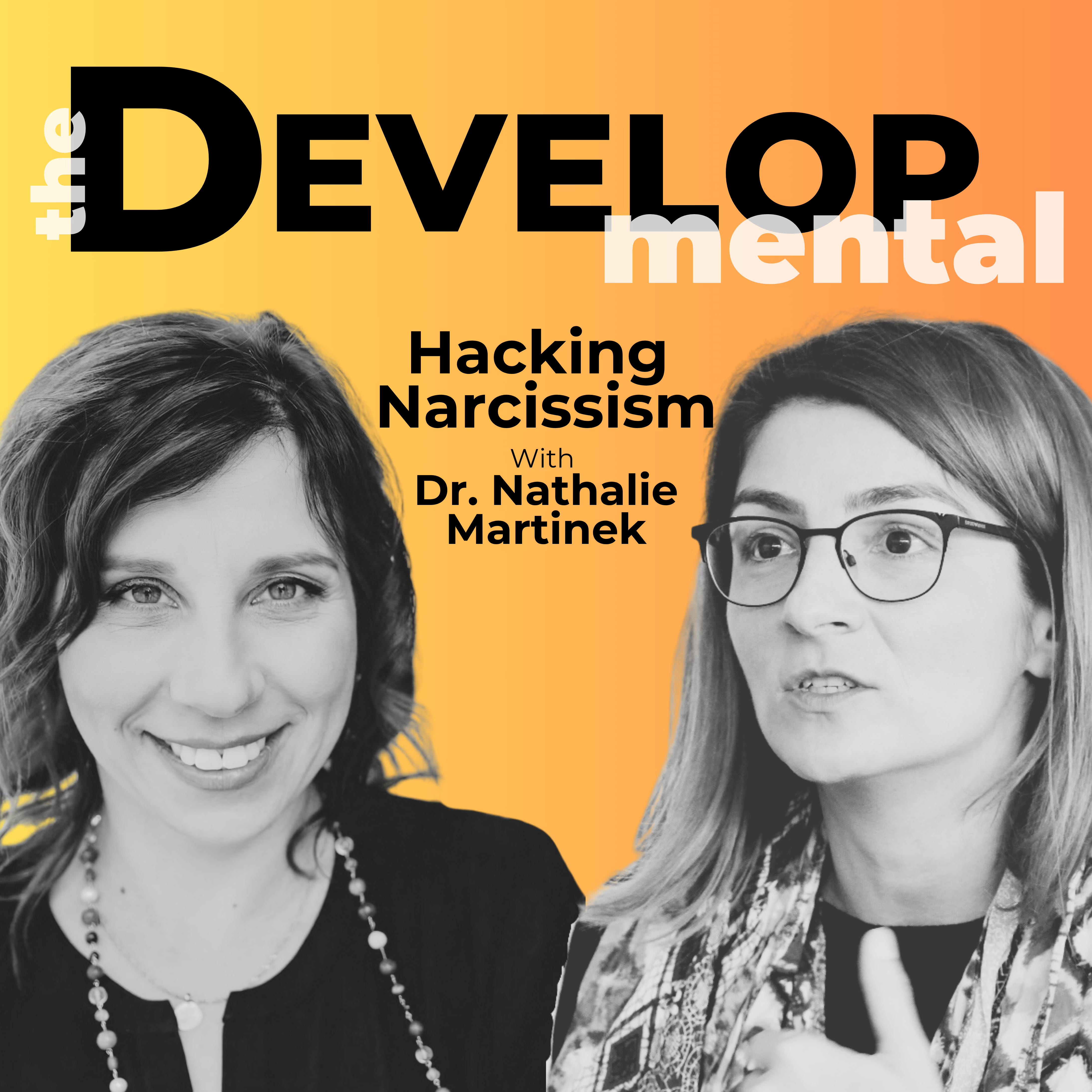
Hacking Narcissism
In this episode of The Developmental, I’m in conversation with fellow Substacker, Dr. Nathalie Martinek , an independent researcher and facilitator whose story and work brings new clarity to the messy business of human growth. We explore how narcissism, and the shadow of shame that often goes with it, can be reframed not as a clinical label, but as a relational pattern that we each play a part in. Nathalie takes us from her time as a researcher in cancer biology labs to her own mirror moment: discovering how people (including herself) can behave like cancerous cells within toxic organisational cultures. In this episode, she shares: A vivid reframing of narcissism as something we all carry in relationship dynamics A powerful three‑fold shame framework for navigating inner resistance when we set boundaries Practical tools—from narrative reframing to the Drama Triangle—to support courageous and relationally healthy leadership I hope this conversation encourages you to lean into your own developmental edge, helps you discover new pathways to model what you teach and walk the talk as leaders, becoming, as Nathalie beautifully says, an antidote to relational toxicity. Episode Highlights: 00:00 – Welcome & Intro Alis introduces Nathalie and sets the scene for a deep dive into shame, narcissism, and walking the talk in leadership and facilitation. 04:20 – From Cancer Biology to Human Systems Nathalie shares how her early science career in cancer research led her to study dysfunctional human systems and relational toxicity. 12:05 – Becoming the Cancer Cell A raw reflection on recognising her own toxic behaviours within toxic systems—and the wake-up call that led to change. 19:15 – Spiritual Awakening & Finding a New Path The messy, long road from burnout to learning reflective practice, spiritual healing, and group facilitation. 26:40 – Walking the Talk Nathalie explains how the Family Partnership Model demands facilitators model what they teach—and how she learned to embody it. 34:15 – What Not Walking the Talk Looks Like Real examples from facilitation settings—when leaders perform care but undermine psychological safety. 42:50 – Moral Courage in Facilitation What to do when the person with the most power in the room (the leader) is also part of the problem. 49:10 – Hacking Your Own Narcissism Nathalie redefines narcissism as a relational pattern, not a pathology, and invites facilitators (and leaders) to examine their power and need for control. 55:50 – Three Types of Shame Nathalie introduces her brilliant framework: Shame 1 : Breaking rules you didn’t know existed. Shame 2 : Violating your own values to conform. Shame 3 : Feeling guilt after setting healthy boundaries. 1:09:10 – Good Person Syndrome & Boundary Guilt Exploring the tension between being a “good person” and choosing self-alignment over others’ comfort. 1:16:35 – Practical Tools for Working with Shame From reframing narratives to breathing exercises and working with Karpman’s Drama Triangle as a reflection tool. 1:23:00 – Final Reflections Why increasing our tolerance to shame might be one of the most powerful levers for individual and collective transformation. Guest Bio: Dr. Nathalie Martinek Nathalie Martinek, PhD , helps people build relational leadership capacity and cultivate effective relationships in professional life, while also supporting those who’ve been scapegoated, sidelined, or harmed in environments that protect image over people. As a coach, she works with professionals to shift unhelpful relational patterns and navigate subtle power dynamics. As a group facilitator, she creates spaces for learning, applied reflection, and restoration. As a consultant, she helps individuals make sense of workplace dysfunction and emerge intact, with insight into the system and how to move forward. Her approach draws on years of practice inside and alongside institutions, informed by an early career in developmental biology and cancer research, where she studied how environments shape behaviour and how systems enable dysfunction. Nathalie writes and teaches on scapegoating, narcissistic systems, relational leadership, and the emotional forces that shape them. She is the author of The Little Book of Assertiveness , The Scapegoating Playbook at Work , and creator of Hacking Narcissism on Substack . Get full access to Vertical Development: How Grown-ups Grow Up at www.verticaldevelopment.education/subscribe
June 3, 20251 hr 4 min
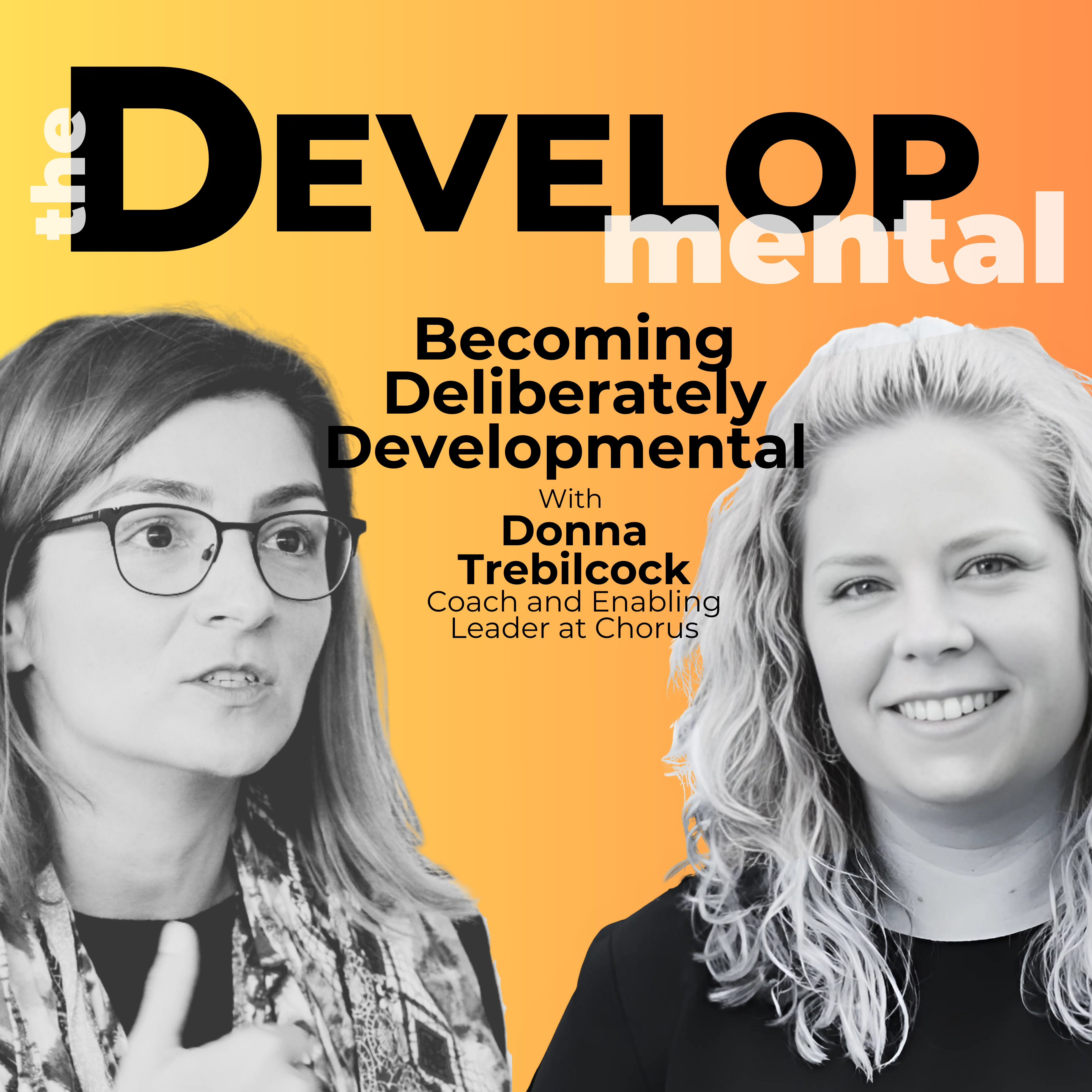
Becoming Deliberately Developmental
Welcome to a soulful, candid conversation with experienced coach Donna Trebilcock who is, without a doubt, one of the wisest and most passionate people leaders I have ever met, working in service of a one-of-a-kind brave, norm-bending organisation: Chorus . Together, we explore how deliberately developmental principles are being put into practice within Chorus — through redefining leadership, cultivating collective responsibility, and fostering environments where people can grow into their next developmental edge, but also Donna’s own journey or vertical development and the way it has enabled her to hold space for others’ growth. Donna invites us to a space where raw vulnerability is balanced with practical insights, offering a window into what it really takes to build a developmental organization while becoming a developmental person. If you are in any shape and form involved in leading people or leading people functions, or perhaps coaching or facilitating the growth of people in work contexts, this episode is not to be missed. Episode Summary * [00:00:00] Introduction to Donna Trebilcock * Donna’s background and coaching approach. * Introduction to Chorus as a self-managing, purpose-driven organization. * [00:03:00] The Reality of Developmental Work * How personal and organisational growth journeys are intertwined * [00:10:00] Identity and Developmental Transition * The inner struggle: “Who am I if I’m not indispensable?” * Donna’s transition from Achiever to Redefining and coaching as a turning point. * [00:18:00] The Role of Experimentation in Developmental Leadership * Concrete team-level experiments (e.g., peer feedback in meetings). * Removing top-down control creates empowered, engaged teams. * [00:23:00] Inside the Chorus Experiment * Chorus’ unique model: flat, no hierarchy, no job titles. * Internal coaching evolving from performance focus to deep developmental work. * [00:28:00] Leading Without Authority * Challenges of influence without power. * Coaching as key to growing leadership capacity at all levels. * [00:31:00] Democratizing Power and Accountability * Playbooks co-created by staff. * Agreement-making frameworks that anticipate and hold conflict. * [00:35:00] Impact and Outcomes * Increased engagement, innovation, autonomy. * Vertical development becoming core to the culture. * [00:38:00] Growth Labs and Organizational Learning * Development becoming embedded across onboarding, meetings, and eventually recruitment. * Creating local autonomy and minimizing centralized enabling functions. * [00:43:00] The Messiness of Developmental Work * Dealing with legacy structures and culture. * Compassion and patience as foundational mindsets. * [00:48:00] When Empowerment Pushes Back * Confronting the discomfort of power being questioned. * Walking the talk as a leadership team, even when it’s hard. * [00:51:00] Slowing Down to Speed Up * Developmental debriefs in high-pressure times. * Counterintuitive moves to nurture sustainable growth. * [00:55:00] Donna’s Advice to Her Earlier Self * Expect and embrace the mess. * Compassion for self and others is essential fuel. * [00:59:00] Hope and the Ripple Effect * Recognising human potential and the messy, gritty, real work of making the world better. Guest Bio: Donna Trebilcock Donna is a certified Executive, Organisational, and Systems Coach specialising in leadership and team development through a vertical (adult development) lens. She supports leaders and teams to grow in complexity, strengthen relationships, and navigate meaningful change — especially in progressive, self-managing, or values-led organisations.With deep experience coaching individuals and teams at all levels, she brings a grounded, developmental approach to building high-performing, purpose-driven cultures. She works in close partnership with clients to co-create coaching engagements that meet them where they are and support their most important goals.Donna’s practice is shaped by ongoing professional development and lived experience in complex, adaptive organisational systems. She is passionate about the real work of leadership — cultivating the inner capacity to lead amidst uncertainty, build trust, and grow collective intelligence.Key qualifications and tools Donna brings to coaching partnerships include: • Certified in Executive, Organisational and Relationship Systems Coaching • Leadership Maturity Profile (LMP) accredited • Leadership Circle Profile (LCP) 360-degree accredited • ORSC (Organisation & Relationship Systems Coaching) trained • NLP Practitioner • CILCA360 accredited • Shifting Horizons Advanced Practitioner Certified • Expert workshop design and facilitation (from small teams to whole systems) • Experienced in large-scale transformation and public sector environments Dive deeper I hope you’ve enjoyed this podcast. If you are curious to dive more deeply into learning about Vertical Development and how it might impact your work and life, check out our online library of webinars and courses accredited by the International Coaching Federation. If you choose to become a paid subscriber to this substack you will receive complimentary access to all our webinars and 50% discount on our long-form online programs. Spread the word… If you want to bring your bit to building a wiser, more conscious world, I hope you share this article with others who could benefit from the learning. and, if you haven’t done it yet, Subscribe! Join your nerdy community and let’s keep on staying curious and learning from each other Get full access to Vertical Development: How Grown-ups Grow Up at www.verticaldevelopment.education/subscribe
March 25, 20251 hr 25 min
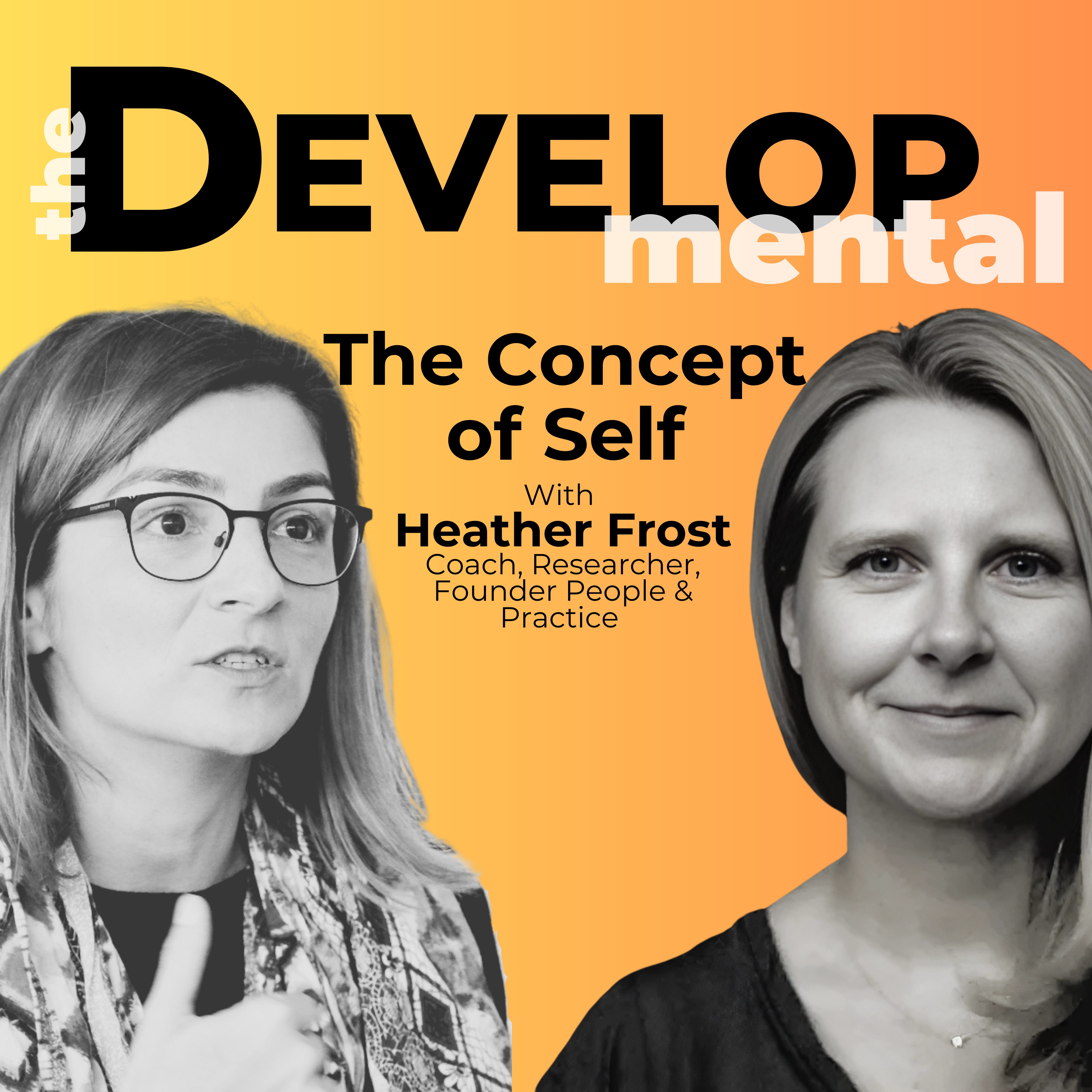
Concept of Self
For this episode, I sat down with researcher, coach, and lifelong explorer Heather Frost to dive into her fascinating work on the concept of self . From global travel to coaching, psychology and philosophy, Heather shares how her journey led her to ask one of life’s most fundamental questions: What is the Self? Together, we unpack the difference between self-concept and the Concept of Self , explore how different understandings of self shape behaviour and identity, and consider what this all means for coaching, adult development, and how we relate to each other. I hope you leave this conversation with a new perspective on yourself and with renewed curiosity about the complexity and beauty of our minds. Episode Summary 00:00 – 05:30 | Origins of the Inquiry into Self Heather’s lifelong curiosity about how people make sense of themselves, shaped by travel, philosophy, coaching, and neuroscience. 05:30 – 10:30 | Embracing Uncertainty Immersive travel as a practice of “not knowing” — cultivating openness, resilience, and a fluid sense of self. 10:30 – 15:30 | How Not-Knowing Changes Us Alis and Heather explore how dislocation and risk can deepen self-awareness and transform identity. 15:30 – 23:00 | Kindness, Openness, and Humility Exposure to difference builds compassion and dissolves rigid identity boundaries. 23:00 – 31:00 | Defining Terms: Self-Concept vs. Concept of Self Clear distinction: * Self-concept = beliefs about who I am * Concept of self = what I think the “self” is 31:00 – 39:00 | The 3 Spectrums of Self Heather’s research reveals three key dimensions: * Stability – Is self constant or evolving? * Unity vs. Multiplicity – One self or many? * Thoughts-as-Self vs. Thoughts-as-Patterns 39:00 – 44:30 | Why This Matters in Coaching The Concept of Self influences agency, decision-making, and behaviour change. Coaches must listen for clues in the client's language. 44:30 – 54:00 | Adapting Coaching Approaches Tailor your methods: future visualisation works for stable self-views; emergent experiments work better for fluid self-views. 54:00 – 1:01:00 | Reframing Limiting Beliefs No “right” way to view the self — ask: Does this belief serve the client in their context? 1:01:00 – 1:08:00 | Links to Adult Development Later developmental stages often correlate with fluid, multi-part understandings of self — but nuance and fit matter more than hierarchy. 1:08:00 – 1:13:00 | Practice for Coaches Reflect on your own concept of self. Tune into how your clients relate to Self — and coach accordingly. 1:13:00 – End | Final Reflections Heather’s hope: deeper awareness of how we understand “self” can foster more compassionate, skillful coaching — and a more tolerant world. Guest Bio: Heather Frost Heather is the Founder and Director of People and Practice , Co-founder of Think Perspective and Visiting Tutor at Henley Business School. She has over 20 years of experience of experience in behaviour change; coaching, mentoring, training, and consulting to clients including Deloitte, Oxentia, Accenture and Kantar. Deeply driven to understand different cultures and the systems that influence behaviour, Heather has lived as a resident in four countries and travelled extensively to over forty countries. Her commercial work with organisations, executives, leaders, and teams incorporates her global experience and expertise in culture change, business transformation, learning and development, organisational development, leadership development, and systemic change. Heather holds a Bachelor’s degree in Psychology (BPsych) with a minor in Philosophy, a Master of Science in Coaching & Behavioural Change (MSc) and is currently a Doctoral Researcher (PhD) in Leadership, Organisations and Behaviour at Henley Business School. Heather won a fully funded scholarship through the Henley Business School flagship "World of Work" award. Heather's research and coaching focuses on the link between self-awareness, meta-cognition, consciousness, sense of agency, quality of thought, beliefs, culture, purpose, and behaviour: ultimately how individuals "act" and behave. Her newly developed psychological scale which measures the Concept-of-Self, upcoming published work, writing, and training helps coaches understand how their “self” and the self of their client’s manifest and interact. Her research explores practitioner self-deception, bias and self-delusion, the self-as-instrument, mindfulness, neuroscience and meaning in life. Heather is a certified Lumina Learning Practitioner, an accredited coach with the International Coaching Federation (ACC) and a Senior Practitioner with the European Mentoring & Coaching Council (EMCC). She holds the following certifications from INSEAD: Leading Organisations in Disruptive Times, Innovation in the Age of Disruption, Strategy in the Age of Digital Disruption and Leading in a Transforming World. She is a Certified Six Sigma Green Belt from PMI (CSSGB). Heather is also an Advanced Practitioner of Breakthrough Coaching (WBECS/coaching.com) and a Visiting Tutor at Henley Business School teaching the triple-accredited Professional Certificate of Executive Coaching (PCEC). Dive deeper I hope you’ve enjoyed this podcast. If you are curious to dive more deeply into learning about Vertical Development and how it might impact your work and life, check out our online library of webinars and courses accredited by the International Coaching Federation. If you choose to become a paid subscriber to this substack you will receive complimentary access to all our webinars and 50% discount on our long-form online programs. Also, until the 30th of March, we offer our ICF-accredited certification program - “Vertical Development Practices for Coaches” at 30% discount. Spread the word… If you want to bring your bit to building a wiser, more conscious world, I hope you share this article with others who could benefit from the learning. and, if you haven’t done it yet, Subscribe! Join your nerdy community and let’s keep on staying curious and learning from each other Get full access to Vertical Development: How Grown-ups Grow Up at www.verticaldevelopment.education/subscribe
June 28, 20241 hr 18 min
A Lived Experience of Vertical Growth
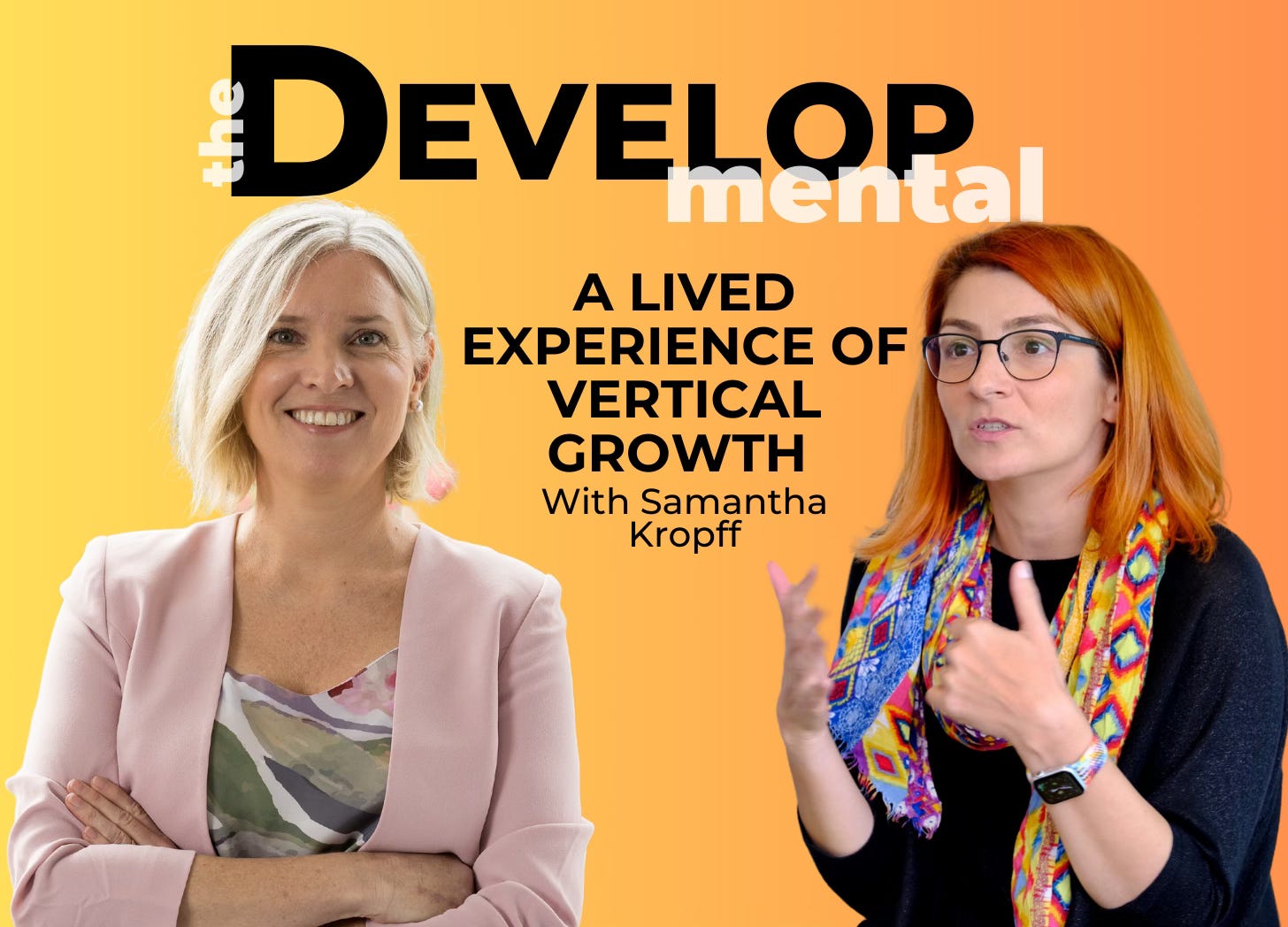
Through my work, I have been immensely lucky to meet some exceptional humans who have inspired me, taught me precious lessons of wisdom and even offered me the most precious gift of all: their friendship. This episode features one of these remarkable people: Samantha Kropff . Sam shares with us her journey from being a forensic investigator to becoming a leader and later a leadership development expert and the accompanying transformation she experienced in her work and life. She vulnerably shares the ups and downs of her growth - revelations, setbacks, hard-won lessons and the courageous choice to push herself out of her comfort zone again and again. Samantha is an inspiring example for every woman who has ever had to find her voice and step into her leadership power, especially when working in male-dominated environments. She is also an advocate for the value of vertical development as a life practice, showing us how incredibly beautiful and painfully messy the journey of human growth can actually be. Episode Summary: * [00:05:30] Sam’s Background: Sam’s career and personal journey towards vertical development. * [00:15:45] Redefining vs. Transforming: Differences between the lived experience of Redefining and Transforming. See this previous episode of The Developmental for an overview of the stages of development. * [00:25:00] Sam’s Career Change and Identity Shift * [00:35:00] Relationship with Time: Evolving from a linear to a flexible perspective on time. * [00:45:15] Integrating Shadow Aspects: Importance of integrating shadow aspects in personal growth. * [00:55:00] Organizational Change Challenges: Challenges in pushing for change as the chair of a culture reform committee. * [01:05:00] The Role of Discomfort in Growth: Discomfort as a catalyst for vertical development. * [01:14:00] Closing Thoughts: Final reflections on vertical growth's impact on individuals and organizations. Guest Bio: Samantha Kropff Samantha Kropff is a Manager of Leadership Development in NSW Government and also a leadership coach. Samantha has spent her career working in government organisations both in Leadership Development and also as a technical specialist. Samantha is an experienced executive coach, having coached senior police leaders both across Australia as well as 8 international police agencies over the past 4 years. Samantha started her career as a Forensic Investigator working both nationally and internationally on commonwealth police investigations. Working to dismantle global organised criminal syndicates and also helping Australian citizens or those overseas during times of crisis, such as Timor-Leste to help during civil unrest, deploying to Netherlands to assist with the investigation of the downing of MH17, or deploying interstate to help with fatal bushfires. Samantha transitioned from investigating crime to using her investigative skills to explore what influences leadership behaviours, and how to support leaders to grow and development, not just as a leader but as a human being. She can see the exponential impact leaders can have on others and organisations, and it is her passion to find ways to support current and aspiring leaders to be the best versions of themselves. Samantha works with vertical leadership development in her coaching practice and as a leader herself. She is a living example of applying the tool to herself for her own growth and works with leaders who want to do the same. She is especially passionate about supporting female leaders to let go of the conditioning that keeps them small and support them to feel safe to be seen and reach more of their leadership potential. You can read more about Sam’s work on her website: https://www.skleadership.com.au Dive deeper I hope you’ve enjoyed this podcast. If you are curious to dive more deeply into learning about Vertical Development and how it might impact your work and life, check out our online library of webinars and courses accredited by the International Coaching Federation. Spread the word… If you want to bring your bit to building a wiser, more conscious world, I hope you share this article with others who could benefit from the learning. and, if you haven’t done it yet, Subscribe! Join your nerdy community and let’s keep on staying curious and learning from each other. Get full access to Vertical Development: How Grown-ups Grow Up at www.verticaldevelopment.education/subscribe
February 19, 20241 hr 3 min
Cancer as a Developmental Journey
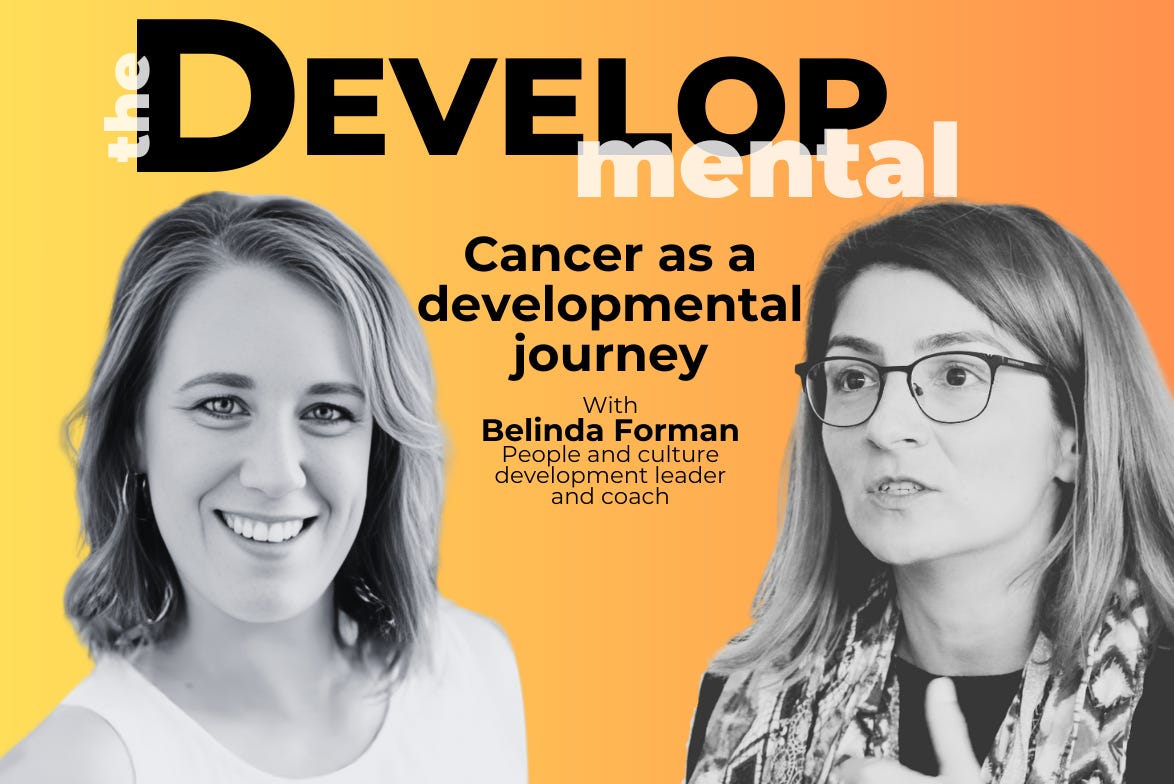
In this emotional conversation, I sit down with my dear friend, Belinda Forman, who shares her profound journey with cancer, not just as a battle to be fought, but as a deeply personal developmental journey. Belinda opens up about the initial shock of diagnosis, the rollercoaster of choices around treatments, and the unexpected pathways to personal growth that emerged from her experience. Through her story she invites us into a vulnerable exploration of the intersection of health crises and adult development, shedding light on the power of mindset, the importance of facing our mortality, and showing us how we might choose to lean into adversity as a gift of transformative growth. I hope you are as inspired as I was by Belinda’s insights into navigating one of life's toughest challenges with grace, ‘fire’, awareness, resilience, and an open heart, and that you find in this conversation some precious wisdom to bring into your own relationship with adversity. Episode summary * [00:00:00] Kicking off with a deep dive into growing through health challenges. * [00:03:11] Belinda opens up about her cancer journey and finding growth amidst adversity. * [00:09:58] She touches on the raw deal of facing mortality and the growth it spurred. * [00:12:18] Talks about how her views on control and acceptance were turned upside down. * [00:18:14] Highlights how a positive mindset and seeing cancer as part of her story helped her heal. * [00:35:01] Belinda reflects on the continuous journey of self-discovery and supporting oneself post-crisis. Useful Resources * Belinda’s LinkedIn profile: https://www.linkedin.com/in/belindaforman/ * The meditation Belinda mentions she has found hepful and healing: * Insight timer - another great app for meditation Belinda recommends: https://insig.ht/j0c3vaJoNGb * Bowel cancer AU - www.bowelcanceraustralia.org * Learn more about colon cancer: Coloncancerfoundation.org Guest Bio: Belinda Forman Belinda Forman is a seasoned People and Culture professional with a diverse background in coaching, L&D, team experience, and culture development. Based on the Sunshine Coast in Australia, Belinda has a passion for helping individuals connect with their purpose and values, empowering them to lead more powerful and fulfilling lives. Belinda and her husband Matt have spent the last 15 years building and growing business in the tech space. Creating environments where individuals thrive both personally and professionally. Dive deeper I hope you’ve enjoyed this podcast. If you are curious to dive more deeply into learning about Vertical Development and how it might impact your work and life, check out our online library of webinars and courses accredited by the International Coaching Federation. Spread the word… If you want to bring your bit to building a wiser, more conscious world, I hope you share this article with others who could benefit from the learning. and, if you haven’t done it yet, Subscribe! Join your nerdy community and let’s keep on staying curious and learning from each other. Get full access to Vertical Development: How Grown-ups Grow Up at www.verticaldevelopment.education/subscribe
January 25, 20241 hr 5 min
Emotions as Superpowers
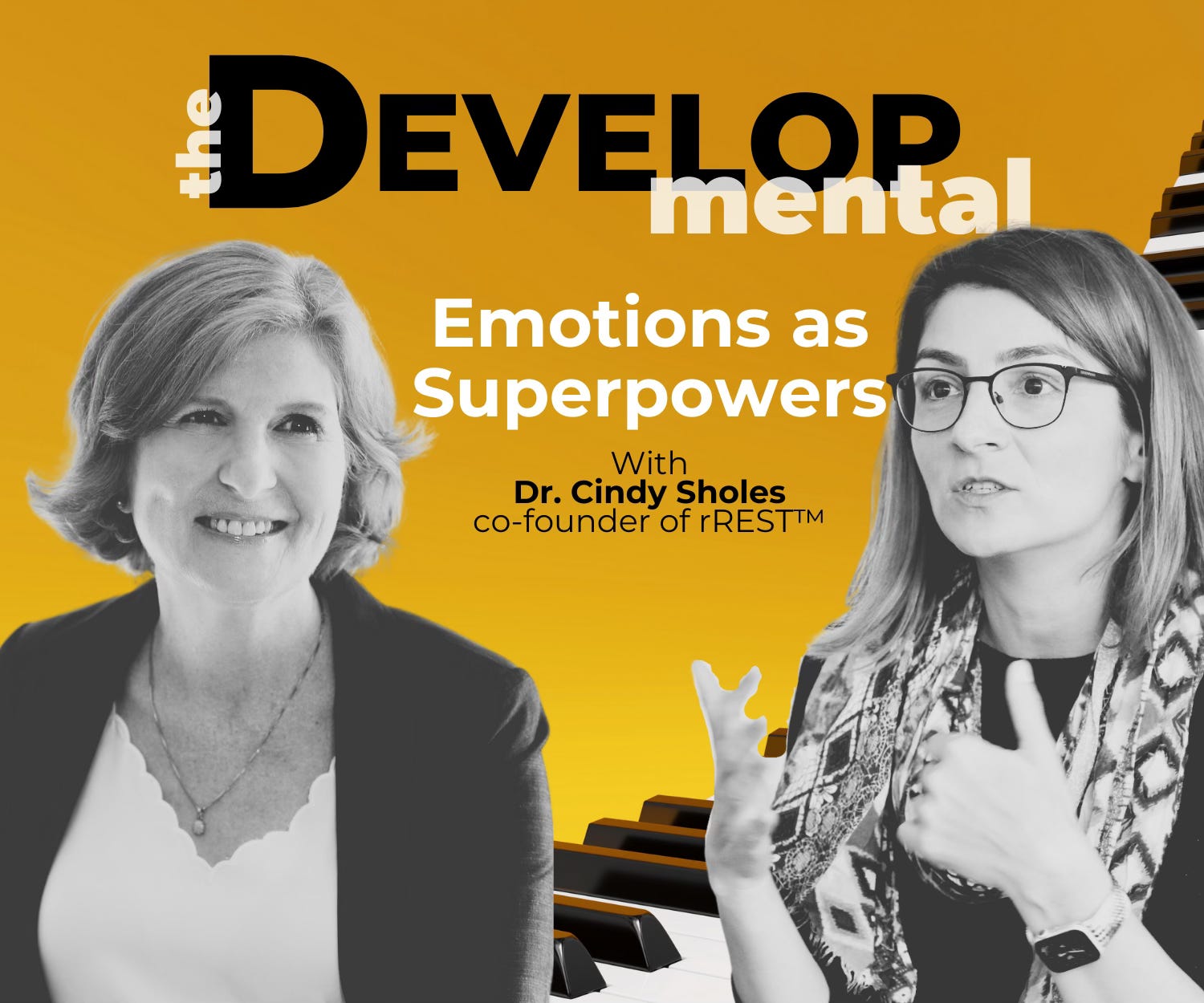
In this episode we dive into the rollercoaster of emotions and how they secretly power our lives. I’m thrilled to learn from Dr. Cindy Sholes, a neuroscientist, coach and co-founder of the rREST™ technique, as we explore "Emotions as Superpowers." In this chat, Cindy takes us on her personal journey, from the foundational experiences of her early years to her research into neuroscience and her journey into the heart of human emotion. She sheds light on the mysteries of emotional agility and introduces us to the rREST technique – her unique approach to taming emotional stress. We'll explore how our feelings are not just fleeting reactions, but powerful guides that shape who we are and how we navigate the world - how we parent, engage with our life-partners and show up for others (and ourselves) every day. So, grab a cozy spot and join us for a conversation that I hope will be as enlightening as it is heartwarming. We're not just talking about emotions – we're aiming to discover how they can be our greatest superpowers in this crazy, beautiful and yet often overwhelming journey of life. Episode summary [00:02:33] Dr. Cindy shares her neuroscience background and personal experiences. [00:06:08] Journey from neuroscience to studying emotions and the subconscious. [00:09:51] Discussion on emotional triggers and the importance of emotional understanding. [00:17:20] Explanation of emotional agility in adult development. [00:23:35] Introduction to the rRest technique for managing emotional stress. [00:33:15] Four reflective questions for better emotional understanding. [00:41:21] How emotions manifest physically and impact behavior. [00:51:14] Curiosity as an effective tool for soothing emotions. [00:56:49] Importance of practice and awareness in emotional regulation. [00:59:44] Dr. Cindy's vision for emotional mastery and authentic self-expression. [01:02:31] Summary of key insights and the role of curiosity in emotional growth. Useful Resources * Cindy’s website: https://www.drcindysholes.com * Learn more about the rREST™ method: https://rrestacademy.com * Shirzad Chamine’s work on Positive Intelligence (saboteurs/sage): www.PositiveIntelligence.com * The Emotional Guidance Scale source : the book "Ask and It is Given" by Ester and Jerry Hicks. * Dr. Brene Brown’s work on Emotions : the book “Atlas of the Heart” * Dr. Valerie Livesay’s work on Fallback : https://www.ghostlightleadership.com and the podcast I recorded with Valerie on this topic: * The Bodily Maps of Emotions research study: Nummenmaa L, Glerean E, Hari R, Hietanen JK. Bodily maps of emotions. Proc Natl Acad Sci U S A. 2014 Jan 14;111(2):646-51. doi: 10.1073/pnas.1321664111. Epub 2013 Dec 30. PMID: 24379370; PMCID: PMC3896150. * The Contrasting Emotions Theory by Dr. Alis Anagnostakis: https://www.researchgate.net/publication/363432753_Fostering_Conscious_Leadership_Exploring_Leaders'_Experience_of_Vertical_Development_during_an_Executive_Leadership_Program Guest Bio: Cynthia (Cindy) Sholes, PhD Dr. Cindy has dedicated her life to supporting people who want to make a difference in the world by guiding them off of the burnout path dictated by society onto the purpose path assigned to them by their soul. Trained by Nobel Prize winners at UCSF, a prestigious medical school, Dr Cindy is a neuroscientist, who uses a little bit of magic to guide people to access their personal power and transform their future. She is the innovator and co-founder of rREST Inc. and was featured in the Wall Street Journal and USA Today for her 20 years of helping thousands break old emotional patterns to live full-hearted lives. She believes when you optimize brain function your authentic self will be freed and empowered to lead a purposeful life. Dive deeper I hope you’ve enjoyed this podcast. If you are curious to dive more deeply into learning about Vertical Development and how it might impact your work and life, check out our online library of webinars and courses accredited by the International Coaching Federation. Spread the word… If you want to bring your bit to building a wiser, more conscious world, I hope you share this article with others who could benefit from the learning. and, if you haven’t done it yet, Subscribe! Join your nerdy community and let’s keep on staying curious and learning from each other. Get full access to Vertical Development: How Grown-ups Grow Up at www.verticaldevelopment.education/subscribe
December 21, 20231 hr 23 min
Embodiment and Vertical Development
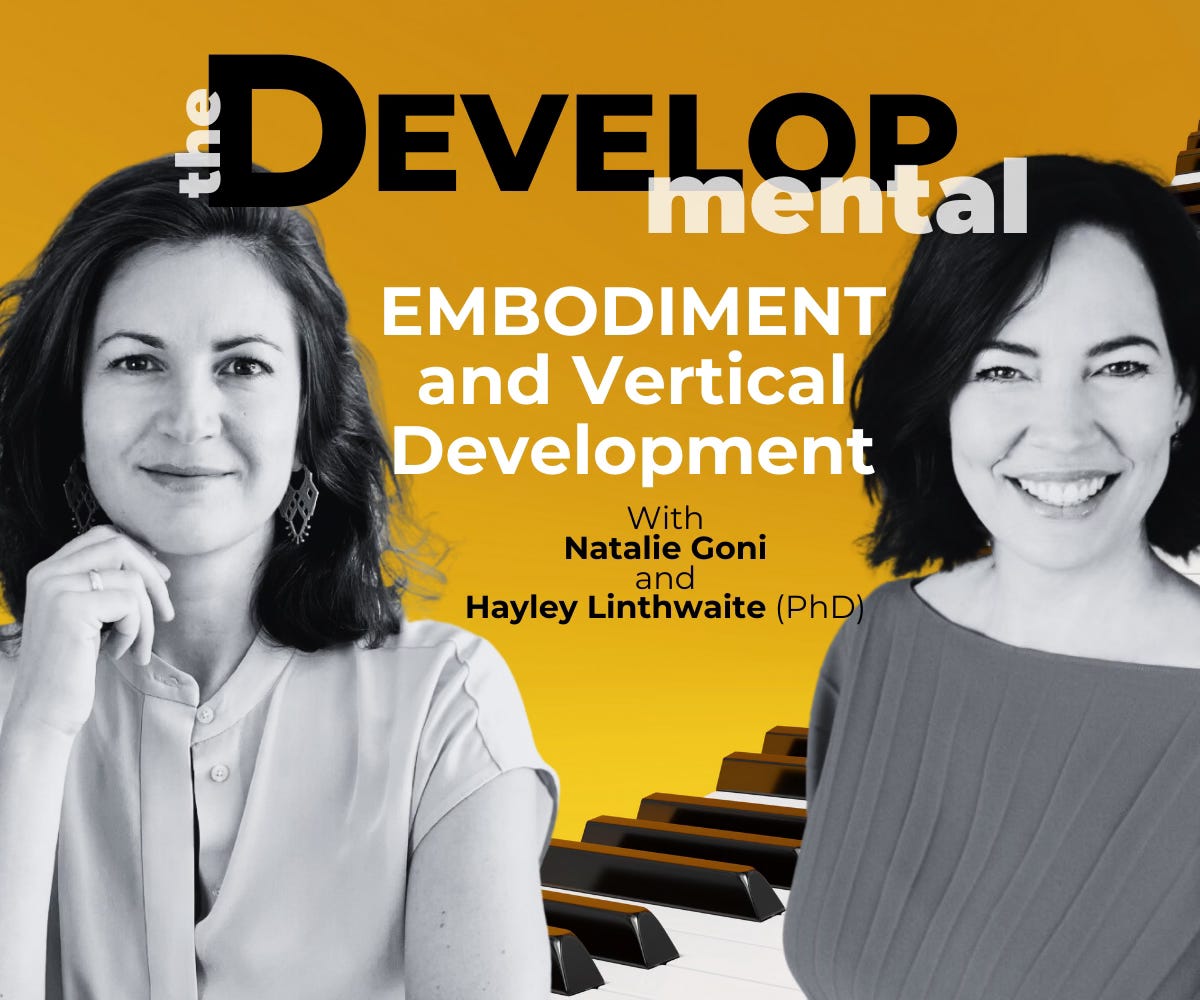
In the final episode of 'The Developmental' podcast for 2023, I explore a topic that has so far received very little attention - the role of the body in adult development. My guests, Natalie Goni and Hayley Linthwaite, are both pioneer practitioners at the intersection of vertical development and somatic practices and they bring a wealth of wisdom on the value of embodiment as a vehicle for personal growth. We explore what embodiment is (and what its opposite - disembodiment - feels like), the importance of understanding and befriending our body, the impact of ignoring physical discomfort, and the link between embodiment and leadership. We discuss the delicate topic of introducing somatic practices into leadership development programs and the untapped value for leaders and businesses. Natalie and Hayley both offer us the gift of two very different practices - so I’m encouraging you to listen to this episode in a private space where you might be able to get up, move or sit down, relax and close your eyes. Show summary 01:01 Understanding Embodiment and Vertical Development 01:47 Introducing the Guests: Natalie Goni and Haley Linthwaite 05:52 Exploring the Journey to Embodiment 11:26 Understanding Disembodiment 16:41 Exploring the Concept of Embodiment 19:36 The Role of Embodiment in Vertical Development 33:10 Overcoming Resistance to Embodiment in Organizations 39:41 Rediscovering Joy Through Movement 40:15 The Challenge of Breaking Free from Conditioning 40:43 Exploring Dance and Movement in Different Contexts 41:47 The Healing Power of Movement 43:05 The Role of the Body in Leadership and Decision Making 44:25 The Impact of Physical State on Leadership 47:16 The Importance of Self-Regulation and Self-Awareness 50:48 The Connection Between Body and Mind in Decision Making 51:51 The Role of Intention in Leadership 55:43 The Role of Embodiment in Vertical Development 56:40 The Power of Embodiment in Leadership 59:42 Practical Exercises for Embodiment - Hayley and Natalie’s guided experiments 01:17:03 The Importance of Presence and Aliveness 01:20:22 Closing Thoughts and Future Plans Useful Resources Hayley’s website: https://hayleylinthwaite.com Natalie’s website : https://nataliegoni.com Peter Levine (trauma therapy through somatic experiencing): https://www.somaticexperiencing.com/about-peter Bessel van der Kolk (neuroscience and trauma): https://www.besselvanderkolk.com 360 Emergence (transformation through movement): https://the360emergence.com Lindsay Braman (visual art, mental health, emotional regulation): https://lindsaybraman.com Guests’ Bios: Hayley Linthwaite For over 30 years, Hayley has made it her life’s work to ignite the sparks of transformative change all over the world. An experienced facilitator, coach, consultant, social entrepreneur and educator, she has empowered countless leaders and teams, facilitated multimillion-dollar organisational change programs, founded social enterprises, and cultivated a community of changemakers. She bridges the latest explorations in systems change, adult development and neuroscience with the transformative power of the arts and embodiment to unlock profound shifts in individuals and systems. All of her work is propelled by her unwavering belief in our human capacity to ignite change and create abundant futures. She holds a PhD in Transformational Change (Applied Performance), a Master of Creative Industries in Drama Teaching, a Graduate Bachelor of Education, and a Bachelor of Arts in Drama. Natalie Goni With over a decade of developing talent and leaders at one of the world’s largest financial institutions and as an Executive Coach and Group Facilitator for the past seven years, Natalie has not only always worked in the field of growth and people development, but she is also an avid and continued explorer of her own development journey through the lenses of adult development, embodiment and our emotions. Based in Hong Kong, Natalie is grateful to work with leaders and individuals across Asia Pacific and all over the world. Natalie brings an interdisciplinary and very human approach to coaching leaders and teams, drawing upon leadership development, team dynamics and self-exploration practices with systemic and post-conventional meaning-making approaches that increase self-awareness, build emotional maturity, and stretch one’s capacity to think and feel in more complex and adaptive ways. She supports her clients through key leadership transitions to build new skills and new ways of being. Natalie is also a faculty member of Harthill . Dive deeper I hope you’ve enjoyed this podcast. If you are curious to dive more deeply into learning about Vertical Development and how it might impact your work and life, check out our online library of webinars and courses accredited by the International Coaching Federation. Spread the word… If you want to bring your bit to building a wiser, more conscious world, I hope you share this article with others who could benefit from the learning. and, if you haven’t done it yet, Subscribe! Join your nerdy community and let’s keep on staying curious and learning from each other. Get full access to Vertical Development: How Grown-ups Grow Up at www.verticaldevelopment.education/subscribe
November 5, 20231 hr 8 min
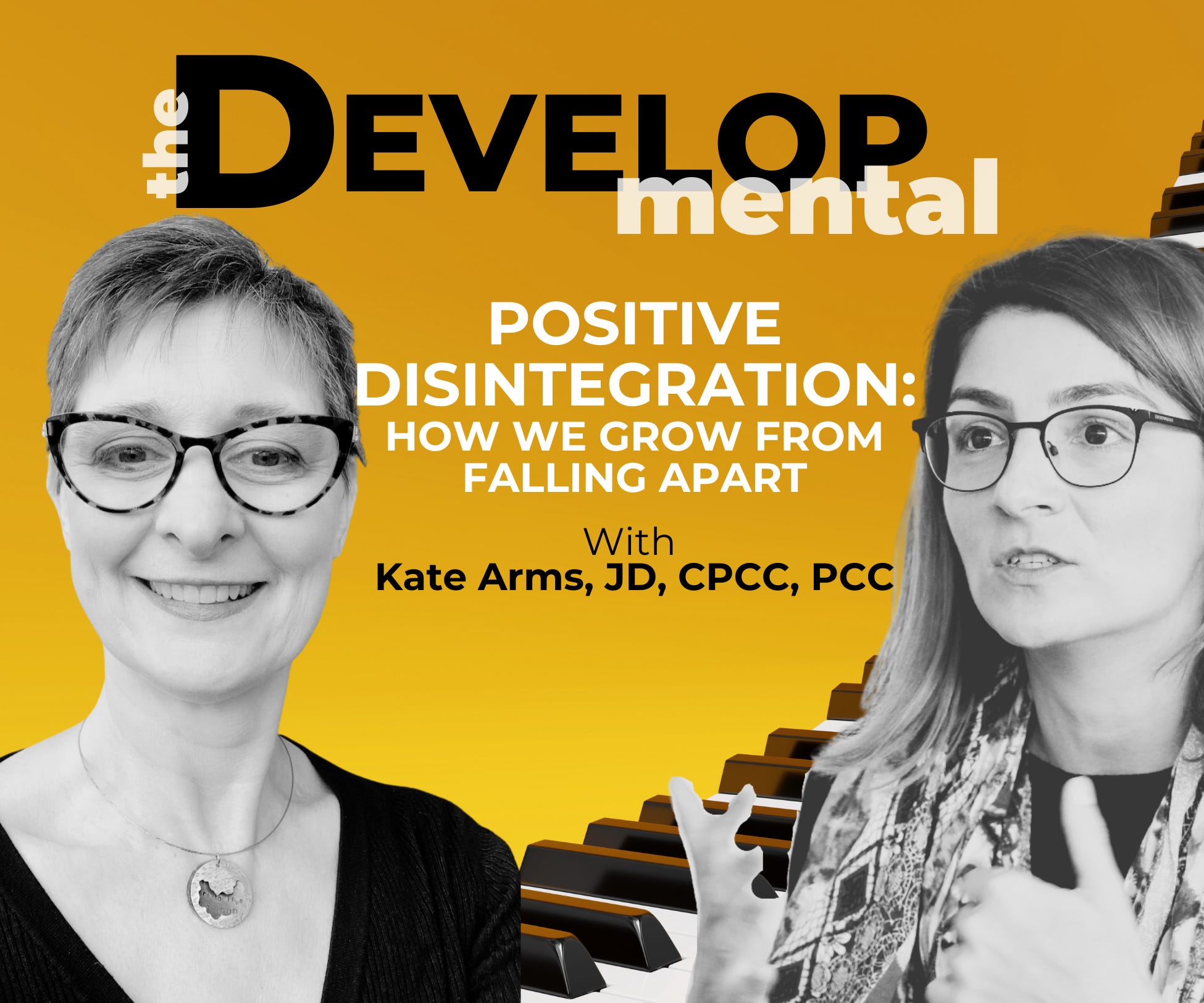
Positive Disintegration
Content warning. This episode contains references to mental illness and suicide, which may be emotionally confronting or triggering to some listeners. If you or someone you know is struggling, please reach out to a healthcare professional or call your local helpline. Episode summary: Kate Arms introduces us to the work of Polish psychologist and psychiatrist Kazimierz Dąbrowski, a brilliant developmentalist virtually unknown outside of the gifted and neurodivergent community, whose work centred on exploring how developmental growth unfolds through cycles of disintegration and re-integration. I talked with Kate about why such moments of disintegration are vital to our long-term growth and at the same time incredibly difficult to navigate. We also explore why coaches could benefit from an understanding of this psychological process and all the painful emotions that arise as we breakdown and then breakthrough. We explore how, as coaches, we might support our clients to navigate the messy spaces towards a wiser, more mature, more balanced self and how we might help ourselves do the same. 00:00 Introduction and Welcoming Guest 00:54 Exploring the Intersection of Fields 01:32 The Role of Neurodivergence in Adult Development 02:10 Discovering Dąbrowski’s Work and its Impact 05:09 The Journey of Self-Discovery and Transformation 10:15 Understanding the Concept of 'Twice Exceptional' 11:48 The Power of Coaching in Personal Growth 12:26 The Role of Emotions in Development 17:04 Exploring Dabrowski's Theory of Positive Disintegration 29:12 Understanding Developmental Potential and Overexcitabilities 36:38 The Role of a Coach in Navigating Disintegration 39:33 The Intersection of Coaching and Therapy 47:16 The Impact of Developmental Theory on Personal Growth About Kate Arms , JD, CPCC, PCC For over 35 years, Kate has been studying the question of how to create social groups that thrive as communities while community members thrive as individuals. She has deep interests in human physiology and neurodiversity, the role of ritual and art in personal transformation, collective creativity, change management, and governance structures that support individual and collective evolution. Kate has been a professional coach for over a decade and has been mentoring and teaching coaching since 2016. From the very beginning, her coaching practice focused on coaching creators and innovators, twice-exceptional and profoundly gifted adults, and parents of twice-exceptional kids. Her current portfolio of work includes private coaching, teaching and guiding coaches at the Neurodiversity Coaching Academy , and organizational leadership development and Agile coaching.In all her work, she focuses on transformational culture-building and designing systems to support adaptive change that sticks. Her book, L.I.F.T.: A Coach Approach to Parenting , presents an approach to parenting that helps parents bring out the best in their family relationships as they help their children navigate the challenges of growing up in the modern world. She holds a BA in Theatre and Biopsychology from Cornell University and a JD from Harvard Law School. She is credentialed as an International Coach Federation PCC, a certified ICAgile Expert in Enterprise Coaching, and a Certified Professional Co-Active Coach. She is a graduate of the Co-Active Leadership Program. Useful resources More about Dąbrowski’s work and a brilliant podcast hosted by Dr. Chris Wells: https://dabrowskicenter.org/podcast/ An overview of overexcitabilities and why you need to be aware of them (especially if you are raising gifted kids or you were one yourself): https://www.verywellfamily.com/dabrowskis-overexcitabilities-in-gifted-children-1449118 A wonderful book on overexcitabilities (addressed to gifted adults too): https://www.amazon.com.au/Living-Intensity-Understanding-Sensitivity-Excitability/dp/0910707898 Kate Arms’ and Tracy Winter’s website for all coaches interested in neurodiversity: https://www.neurodiversitycoachingacademy.com/about/ Kate’s book for parents seeking to integrate coaching into their relationship with children: https://www.amazon.com/L-I-F-T-Approach-Parenting-Kate-Arms/dp/1999430271 ICF’s guidelines for referring clients to therapy: https://coachingfederation.org/app/uploads/2021/01/ReferringaClienttoTherapy.pdf Dive deeper I hope you’ve enjoyed this podcast. If you are curious to dive more deeply into learning about Vertical Development and how it might impact your work and life, check out our online library of webinars and courses accredited by the International Coaching Federation. Spread the word… If you want to bring your bit to building a wiser, more conscious world, I hope you share this article with others who could benefit from the learning. and, if you haven’t done it yet, Subscribe! Join your nerdy community and let’s keep on staying curious and learning from each-other. Get full access to Vertical Development: How Grown-ups Grow Up at www.verticaldevelopment.education/subscribe
October 26, 202317 min
Narrating Your Growth: Lifelong Lessons from Keeping a Journal
You can listen to an audio version of this article by clicking the ‘play’ button in the Substack app or, if you’re reading this on your email, click ‘play’ in the voiceover section above. Please let me know in the comments if this audio feature is useful to you and if you think it’s worth adding the audio to every article going forward. Saturday, 20th of February 1999. 11pm “I have long worried that if I were to lay down my thoughts in the pages of a journal that would give anyone a gateway into my most intimate musings, and I was afraid to risk it. Until now… I do believe that writing will give my future self an opportunity to go back in time, to re-live the past, to understand it not just with the mind of my future self, but through the eyes of my present self. Perhaps time will make my memories fade and my grown up self will look back on my teenage years with a completely different perception than my own right now. I’m hoping this journal, which I am starting tonight, will help me better understand my own children when they get to the age I am now. Perhaps it will help future me bridge the ‘generation gap’ … ” This is the first entry in my first-ever journal. I started it when I was 16. My worry that my parents would read it was smaller than my worry that unless I did write, I would forever lose the memory of my teenage self and, with it, the proof that I had looked at the world in ways that seemed incomprehensible to the grown-ups around me at the time. Through my eyes, adults seemed to be afflicted with a strange sort of amnesia, that had erased any trace of their 16 year-old-selves and made them incapable of understanding the anxieties, passions and visceral intensity of regular teenagers like me. The thought I would one day forget too was terrifying. The journal was an attempt to hold my future self to account, but also my best shot at looking out for the children I knew I would raise someday. I didn’t want them to ever feel as disconnected from or misunderstood by the adult world as I did back then. That first journal evolved into over a dozen notebooks, spanning 24 years of my life and keeping a record of my becoming. Journaling became the one habit I was able to maintain through life’s highs and lows. I journaled through joy, hope, my first love, through my first heartbreak. I journaled through the death of loved ones, through divorce, through professional highs and the depths of despair. I’ve journaled about dreams that seemed impossible and then came true and journaled through failure and pain. I’ve journaled when pregnant - when I got to re-read my earliest journals and cry in gratitude for the priceless gift my 16-year-old self had left me. It’s a gift that to this day is helping me be a more conscious mother and keeps amnesia at bay. When my daughter turns 16, I’ll likely share my journals with her and let her make sense of them for herself. Perhaps my own 16-year-old will be a better partner for her at that stage than my middle-aged self. I also secretly hope she’ll start her own journal one day. I’m pretty sure I’ll be journaling for as long as my mind can reflect and my hands able to write. I’m looking forward to adding another shelf for my journals and, in the process, stepping through life as consciously as I possibly can. I have come to consider this one of the simplest and most powerful developmental practices and credit it for much of my growth. I deeply wish more people considered making it part of their lives. And here’s my case for why. Thanks for reading Vertical Development: How Grown-ups Grow Up! Subscribe for free to receive new posts and support my work. Over the years I’ve shared my love of journaling with countless teams and leaders. I’ve met people who had experienced the benefits of the practice themselves and were true believers. I’ve met many others who believed it might be useful but were convinced they could never muster the discipline to do it. And yet others who associated journaling with childhood or youth and could not see how a grown-up, with countless responsibilities in the world, could benefit from putting their thoughts to paper. I’ve heard many reasons not to take it up. People who say they are not gifted writers. Those who feel silly writing about their day. Those who don’t know what to write about. And those who don’t how to do it. I think all these obstacles can be overcome, but I also think that, before we dive into the HOW, we need first explore WHY it’s worth considering this practice in the first place. Why journal? The Research There is plenty of research on the benefits of regular journaling , and there are many of them too, including reducing anxiety and breaking the cycle of rumination, improved awareness, emotional regulation and a host of health benefits such as lower blood pressure, better lung and liver function, fewer depressive symptoms and higher wellbeing. Journaling has even been shown to be an effective intervention to support recovery from addiction. The actual mechanisms of what makes journaling so useful are not fully understood , it is suspected they serve a valuable role as an outlet for emotional processing and cognitive reframing. When I started my research in vertical development , exploring the journey of a subset of 35 leaders (of a total of 200) going through a 6 month long executive program, I was very keen to use journaling as a way to record research participants’ lived experiences of growth over time. No previous study had taken a longitudinal look at vertical development and none had attempted to capture the subjective experience of development over a longer period. And journaling seemed the perfect tool to achieve that. I offered participants a series of reflective questions over the 6 months - one question every week. They would receive a prompt on their phones, inviting them to pause, think back on their week and use the prompt question as a trigger for introspection. They would then record their answers and share them with me on the spot. Their journal entries became the most precious data source of my entire study because they always shared things that happened to them that week, their reactions, their moments of wisdom and their moments of break-down and I could see their evolution from one week to the next and from one month to the next. When I interviewed them at the end of the study, none of them remembered specifically what they had written in their journals. They offered broad reflections on their learnings and life experiences over those 6 months and I could, from my researcher's perspective, witness (with amazement) how memory distorts and deletes and how precious it is to record the things that happen to (and within) you at the right time. This experience validated my early observations that, unless we capture its journey, our evolving self shifts and moves fast, slipping through our fingers and in between the cracks in our memories. Whatever we remember about our lives and pivotal moments is a mere fragment of the rich tapestry of experiences that makes us US . This only served to reinforce my belief in the value of journaling as a memory-preserving tool. Are you enjoying this article? Feel free to share it and spread the ‘nerdiness’! But something else happened that I didn't expect. When I interviewed my research participants and asked them what were the most valuable parts of their program experience - a surprisingly large number of them mentioned the journaling exercise as a highlight of their learning and credited it with insights and behavioural changes they were able to make through the program. Most of them had come to think of the journal as an integral part of the program design (not as a mere research tool) and mentioned feelings of developmental discomfort, welcome reflection and even profound insight from those 10 short minutes they spent on it every week. They shared how the regular writing made them more aware of their behaviours, helped them consider decisions or dilemmas in a new light and even prompted more conscious, considered actions. All of them also acknowledged the weekly nudges and prompting questions were valuable - as they helped direct their thinking and in a sense forced them to slow down and take that reflective time. While no existing study has explored the value of journaling for vertical development (I might just invite this community to help me run that very study in 2024!) I suspect several benefits of this practice for our long-term growth : * Journaling helps you make your thoughts/emotions ‘object’ instead of you being ‘subject to’ them (check out Bob Kegan’s theory on this ) - which means you can ‘look at’ that which before you were ‘looking through’ - a mechanism that lies at the core of vertical development. * Journaling also helps you slow down your ‘doing’ and just ‘be’ - reflecting on what is going on within you instead of numbing through keeping busy all the time. This helps develop your self-awareness and the capacity to be in action and reflect on your actions at the same time - a core aspect of adult development * Most importantly, journaling is a powerful meaning-making tool, helping you sense into your ‘edge emotions’ - those emotions that arise at the end of your comfort zone - bring some curiosity to those messy spaces , allowing for more room for developmental discomfort and unlocking critical reflection, insight and ultimately action. How to do it? People often ask ‘how to journal’ or ‘what to write about?’. It’s worth remembering that this is not a contest and nobody is coming to assess your writing. Nobody is even going to read your writing! The value of journaling is in the writing itself. So what I found works best is that you write just as you think. Take your thoughts and put them on paper. They may be disjointed. They may make no sense. Just pull them out of your mind, where they often get crowded and start taking up too much space - and put them on a piece of paper where you can see them. Once you do that, there are a few principles that I found useful over the years and I invite you to test them: * There seems to be much value in the act of handwriting versus typing (that being said, if you’re just more comfortable with typing, by all means, go ahead and do it!). The very act of your hand creating words on paper helps thoughts settle and insights emerge. So if you can, buy yourself a nice notebook and use it, especially for this purpose. I suggest you don’t mix your journal with your work notes or any other notebooks you might use for other purposes. This beautiful practice deserves a space of its own. * Don’t censor your writing! It can be as messy as you want - both literally and figuratively. You might never want to go back and re-read what you wrote. There’s no need for your writing to be logical or follow a clear thread. You might just jump around from one idea to another, in no particular order. Trust that it works and welcome the mess! * Write about whatever is on your mind that day. It doesn’t have to be profound or insightful. Some days you’ll write about mundane things and other days about the biggest existential questions. All your writing has value as it’s you making sense of your world. * Don’t make journaling a chore! You don’t have to write every day and not even every week! I did find that, to make it a habit, it does help to have a certain frequency (my rule of thumb is a weekly ‘download’), but once the habit is there you’ll just go to your notebook when you feel the clutter in your brain getting too confusing, or when you’ll simply want to work through something that’s on your mind. * Keep your notebook handy! You never know when the need to reflect strikes! I keep mine on my desk, in sight. I find that it’s so much easier to remember to reflect when I can use my notebook as an anchor to take me off auto-pilot. That’s why I make it a point to choose notebooks with colourful covers, objects that stand out in the landscape of my home office. My physical journal itself becomes a nudge for reflection. * Write with no expectations. Don’t wait for something groundbreaking to occur and don’t place any pressure on yourself (or your journal) to get ‘somewhere’. Journaling is like the decision to eat healthy food and move your body - you do it constantly, all of your life, and you are bound to see the positive impact on your health. It’s not a race to a short-term goal. It’s a way to live consciously. An experiment: 20 weeks of journaling. Once I had proof of the value of journaling (beyond my love of this practice), I started making it an integral part of all my long-form organisational development programs. And I’d love to take the opportunity to invite you to experiment with it too. I’ve created a version of the original questions I used in my study and invite you to a 20 week trial of the value of this practice. Why 20 weeks? Because that gives you enough time to build the habit and also see the impact. If, after 20 weeks, you find it’s useless, the most you’ll have lost is a pretty notebook and a few minutes of writing time every week. I suggest you create a recurrent reminder in your calendar (preferably towards the end of the week) when you pause and take 10 minutes to reflect on how you showed up that week. The reflective question will help focus your attention on one particular aspect - some weeks you’ll reflect on relationships, other weeks on your emotions and others on your challenges/moments of wisdom and moments of fallback . You might want to copy the question in the calendar, so you can see it along your reminder. You can download all the questions here . Alternatively, you can print/save the posters below and put them somewhere you can see them, so you can grab the relevant question for each week with minimal effort. If you don’t like the question for a particular week, feel free to change it or simply free-write. These are not meant to be a prescription, but merely a nudge to get you going. I hope you take this invitation and jump into this experiment. I’d love to hear your learnings and musings along the way. Feel free to post them in the comments section. The next step for the “How Grown-ups Grow Up” Newsletter As I was writing this post, I started considering what might be next for our subscribers’ community and how else we might collectively help bring vertical development to the places where it’s most needed. I want to start creating more opportunities for us to interact around the articles and podcast episodes, to share our experiences and learn from each other and also I would love to conduct more research - we still have so much more to learn about the ways humans transform! But to do that, I need time, resources and a dedicated community of partners in exploration. Some of you have already pledged and expressed your interest in becoming paying subscribers, and I am very grateful for your support. I have been reluctant to turn on paid subscriptions because I don’t see this newsletter as a source of income. Its mission is to help raise awareness of the value (and practices) of vertical development and that will always be my main focus. This means that all the articles and podcasts will always be free for everyone. At the same time, the community around the newsletter is growing fast. I would love to create time and space for dialogue (through Substack Chat, dedicated Q&A sessions, webinars - to name just a few avenues) with those of you who feel called to go deeper into some of these practices and conversations around adult development. I’d also love to partner for research with those keen to dive into the academic exploration of this field. Enabling the paid subscription option will allow us to create a smaller community where we can nerd out, share our learnings, inquire together and join hands to fund future research. Before I take any steps in that direction, I would like to investigate if it’s something this community is keen on. If you’d be keen to become a paid subscriber when the time comes, do express your interest by pledging your support. If you have a minute, please fill in this poll and let me know if having an audio version of my articles is worthwhile for you. I am testing the voice-over feature of Substack for those of you who might prefer to listen rather than read: That’s it from me for now! Can’t wait to hear about your experiences around journaling! Do share your learnings, if you have been practising for a while. Add your tips and tricks to my list and, if you do try out the 20-week experiment, please come back and let us all know how you are going! Dive deeper I hope you’ve enjoyed this article. If you are curious to dive more deeply into learning about Vertical Development and how it might impact your work and life, check out our online library of webinars and courses accredited by the International Coaching Federation. Spread the word… If you want to bring your bit to building a wiser, more conscious world, I hope you share this article with others who could benefit from the learning. and, if you haven’t done it yet, Subscribe! Join your nerdy community and let’s keep on staying curious and learning from each other. Get full access to Vertical Development: How Grown-ups Grow Up at www.verticaldevelopment.education/subscribe
Is this your show?
Claim this listing to keep it up to date, reach guests who want to pitch you, and manage bookings with Guestify.