The Art & Science of Learning (TASL) Podcast connects ideas, people, and resources to inform and inspire exceptional learning experiences. Bridging the gap between research and practice across various industries promotes the cross-pollination of ideas to enhance learning for all. Through in-depth conversations with global leaders in learning, the TASL podcast aims to broaden the discussion on how we learn. In each episode, learning specialist Dr. Kinga Petrovai interviews industry leaders, academics, practitioners, and learning designers to explore various aspects of learning and development. These conversations weave together insights from around the globe and across industries, reaching listeners in 100 countries to inspire and inform innovations in lifelong learning.
Listen to episodes
60 recent
May 29, 2026Episode 13138 min
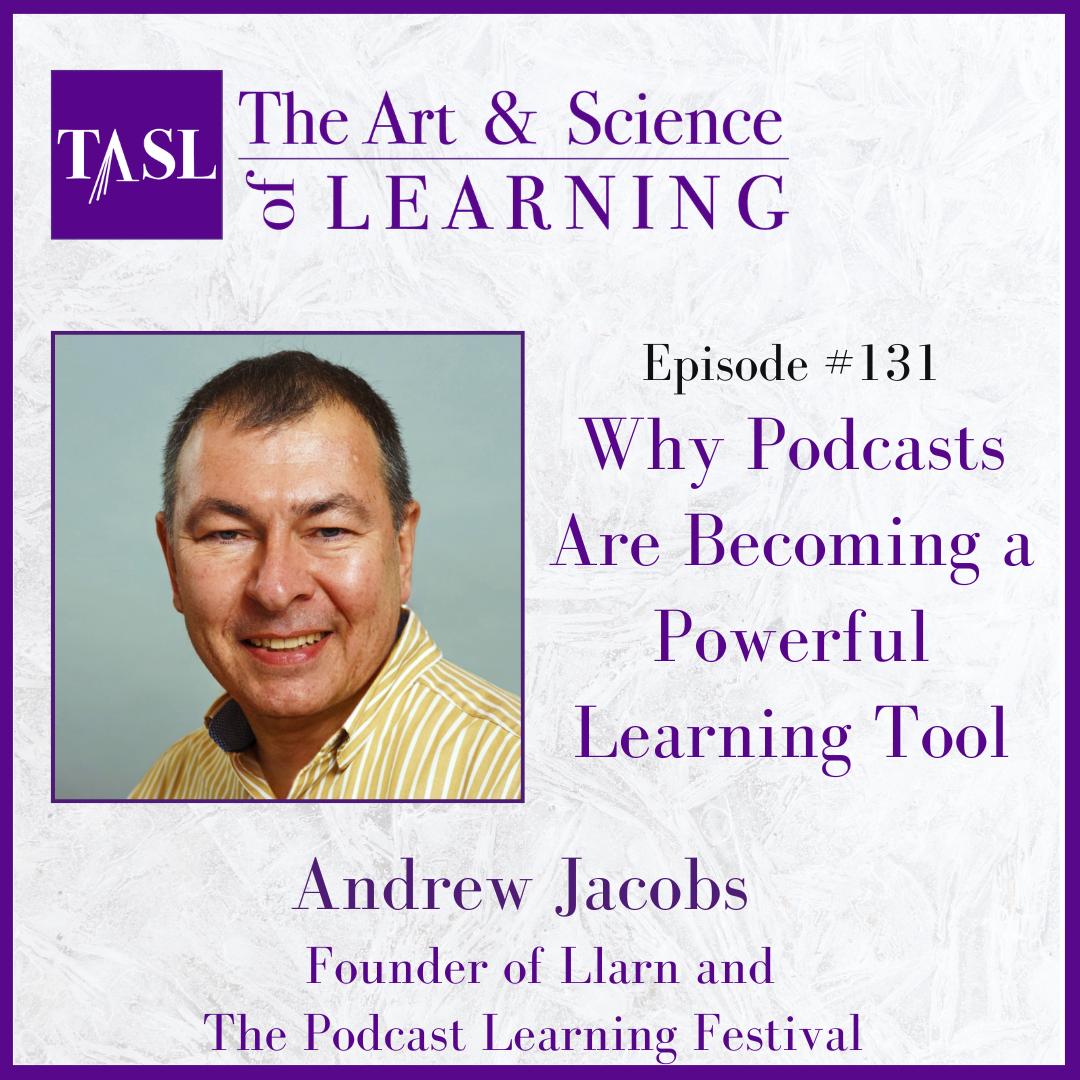
131. Why Podcasts Are Becoming a Powerful Learning Tool (Andrew Jacobs)
My guest in this episode is Andrew Jacobs, founder of the first-ever Podcast Learning Festival, which took place in London this February. The event brought together podcasters, learning professionals, and people interested in how podcasts can support learning.
Andrew is the founder of Llarn and an award-winning learning professional, speaker, writer, and podcaster. Over the past two decades, he has helped organizations rethink how people learn. His work has been recognized across the industry, including receiving the Jay Cross Memorial Award for innovation in informal learning. He's also a regular contributor to conferences, publications, podcasts, and industry events around the world, and he produces the Women Talking About Learning podcast.
In this conversation, Andrew shares what inspired him to launch the Podcast Learning Festival, what he learned from bringing together voices from across the learning community, and why podcasts continue to be such a powerful medium for sharing ideas and knowledge.
Four key themes emerged from our discussion.
First, learning doesn't always have to happen in formal settings. Podcasts create opportunities for people to learn continuously in ways that fit naturally into their lives.
Second, learning podcasts are about more than simply reading information or having conversations. They need to be designed in a way that helps listeners understand concepts, make connections, and apply what they've learned.
Third, podcasts are about more than content, they can build communities. Andrew talks about the connections, conversations, and relationships that emerge when people gather around shared interests and ideas.
And fourth, innovation often starts with taking the first step. As the creator of the first Podcast Learning Festival, Andrew shares both the opportunities and challenges of turning an idea into reality.
If you're interested in learning, podcasting, or bringing new ideas to life, I think you'll find a lot of value in this conversation.
Links:
Andrew Jacobs LinkedIn: https://www.linkedin.com/in/andrewjacobslnd/
The Podcast Learning Festival 2026: https://www.podcastlearningfest.live
Blog: https://lostanddesperate.com
Llarn: https://llarn.com
May 10, 2026Episode 13054 min
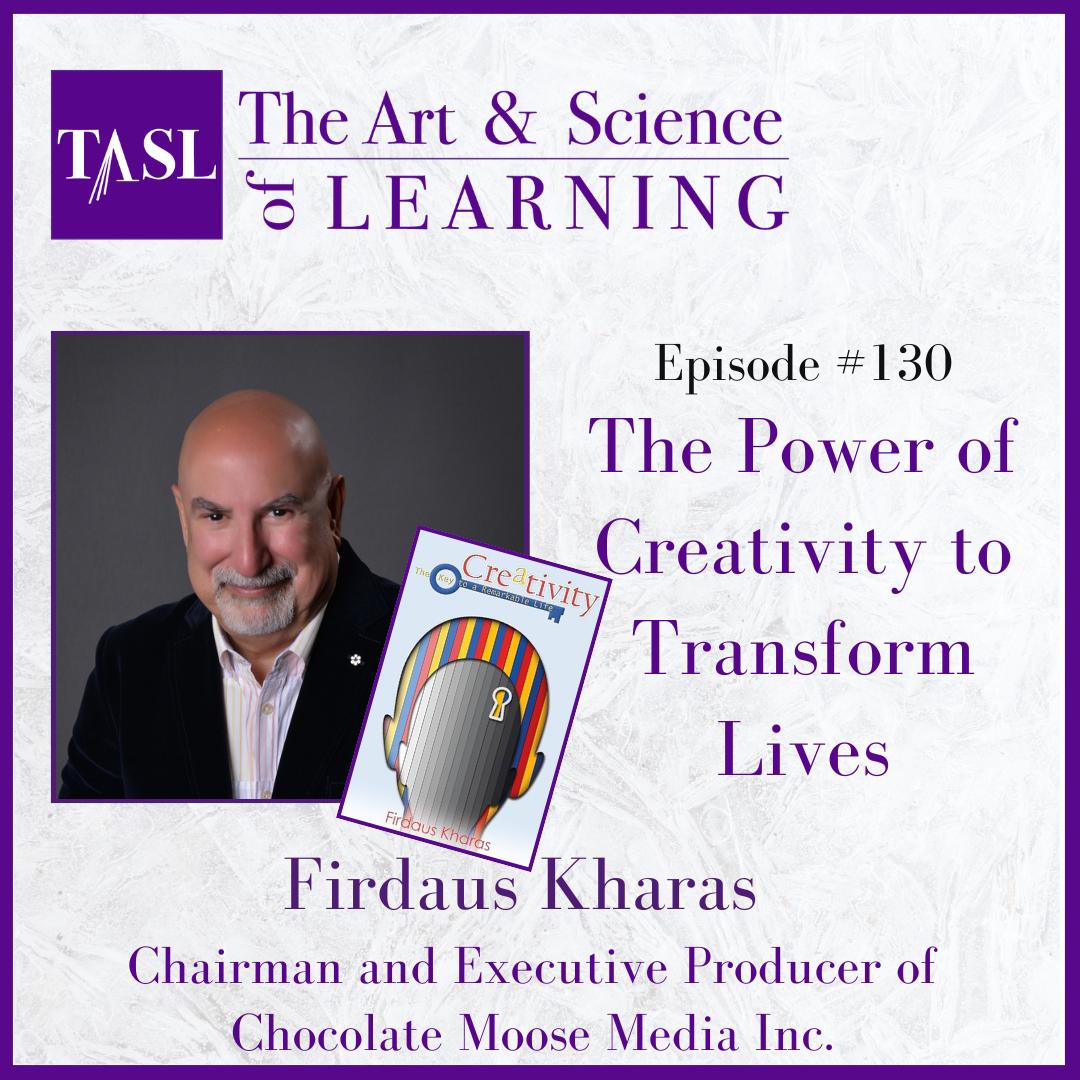
130. The Power of Creativity to Transform Lives (Firdaus Kharas)
This episode is all about creativity, which is not just about making art, it’s about how we think, adapt, connect, and imagine new possibilities. It is essential for solving the problems that improve our lives and make the world better.
I’m joined by Firdaus Kharas, award-winning filmmaker and humanitarian storyteller. His work has reached audiences around the world. As Chairman and Executive Producer of Chocolate Moose Media Inc., he has produced internationally recognized social impact campaigns and films focused on global issues, including health, education, human rights, and social change. He has won many awards, including the Order of Canada and an honorary doctorate from Carleton University.
In our conversation, we explore creativity not simply as artistic talent, but as a way of thinking, leading, problem-solving, and living more fully. Our conversation is inspired by his book, Creativity: The Key to a Remarkable Life, where he shares insights from decades of global storytelling, innovation, and social impact work.
In this episode, we talk about where creativity comes from, how to cultivate it in everyday life and work, and why curiosity, imagination, and human connection matter more than ever in a rapidly changing world.
I hope you enjoy our conversation and that it inspires you to build habits that foster creativity in your own life.
Links:
Firdaus Kharas: https://chocmoose.com/about-us/
Chocolate Mosse Media Inc. https://chocmoose.com
Book: Creativity: The Key to a Remarkable Life https://www.amazon.ca/Creativity-Remarkable-Life-Firdaus-Kharas-ebook/dp/B08D26KHCM
April 30, 2026Episode 12935 min
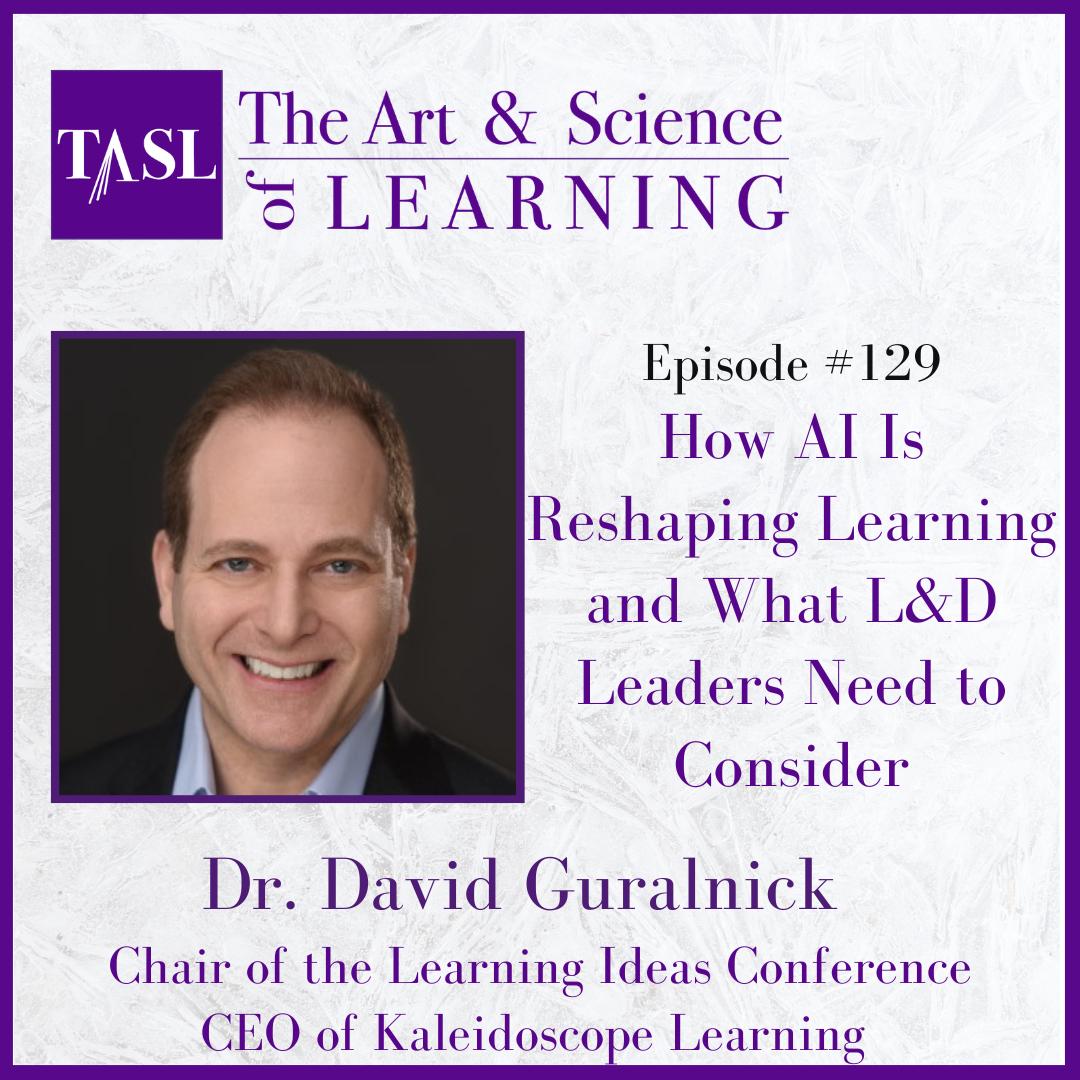
129. How AI Is Reshaping Learning and What L&D Leaders Need to Consider (Dr. David Guralnick )
In this episode, I sit down with Dr. David Guralnick, Founder & Chair of the Learning Ideas Conference, to explore what’s really happening at the intersection of AI, creativity, and learning.
Building on key themes from the Learning Ideas Conference, both the February event and the upcoming June conference focused on AI. We move beyond the hype to explore how AI is actually being used in learning and workplace contexts.
This is a reflective and honest conversation about the opportunities AI creates, but also the tensions it introduces. From hesitation among technical professionals, to the evolving role of creativity, to the question of whether faster always means better, we unpack what it means to integrate AI thoughtfully into our work and learning processes.
Dr. David Guralnick is President and CEO of Kaleidoscope Learning, a consultant specialized in the use of technology to improve job performance, and the author of How Organizations Can Make the Most of Online Learning. He is also the current president of the International E-Learning Association, founder and chair of The Learning Ideas Conference and an Adjunct Professor at Columbia University. David has created the first e-learning-specific authoring tool, and the award-winning Watch, Rate, and Compare e-learning approach. David has won over 200 awards in the e-learning industry, and his unique approach to his consulting and project work have saved over $2 billion, due to improved employee performance, for Fortune 500 and multinational clients such as Target, IBM, GE, Time Warner, and many others. David focuses his deep knowledge of the industry to reimagine learning in higher education and the workplace.
Learning Ideas Conference: https://www.learningideasconf.org
Online-Only Days: May 28th - 29th, 2026
New York & Online: June 10th - 12th, 2026
Dr. David Guralnick: https://www.davidguralnick.com
April 3, 2026Episode 12846 min
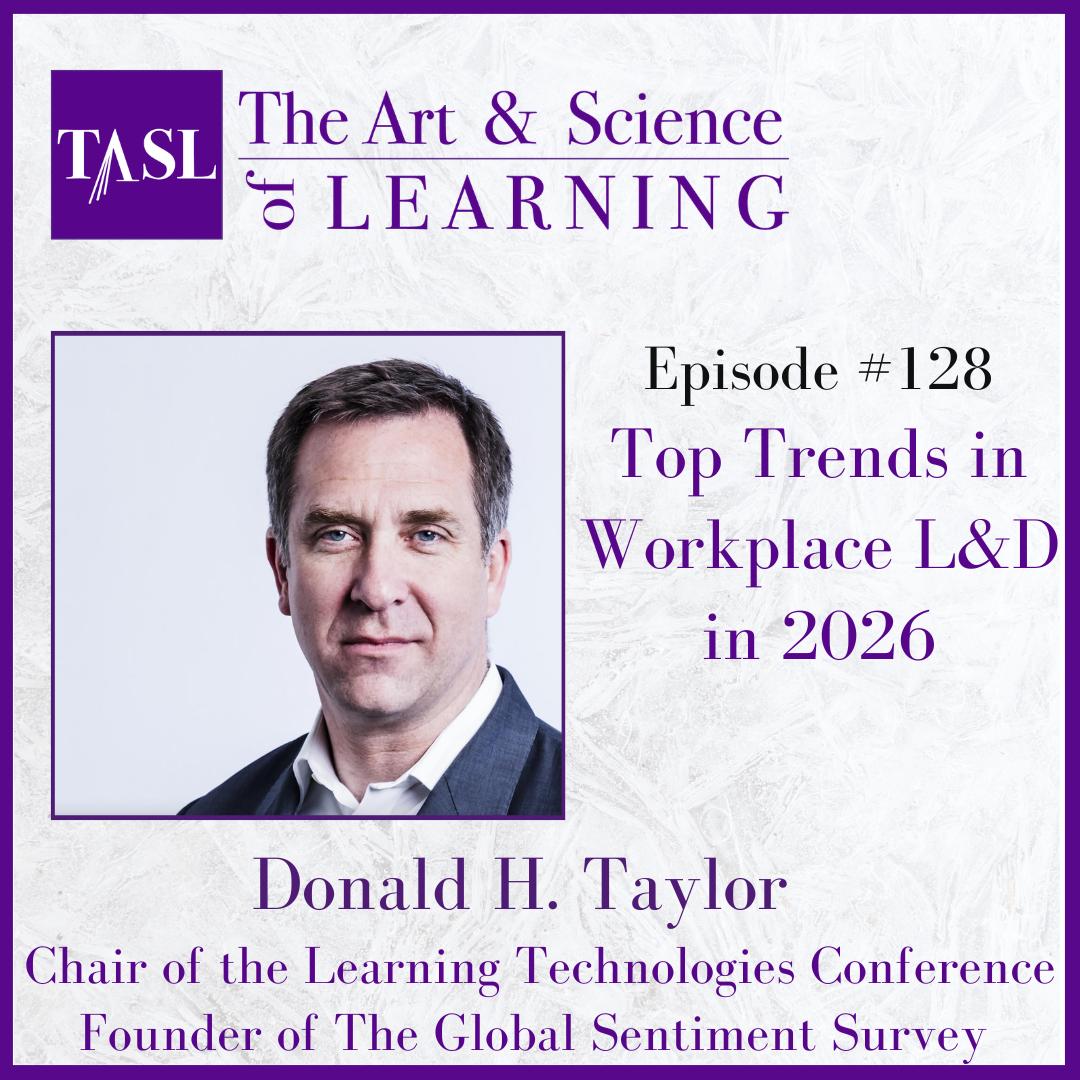
128. Top Trends in Workplace L&D in 2026 (Donald Taylor)
The Learning and Development (L&D) Global Sentiment Survey takes the pulse of where workplace learning is headed this year. With thousands of L&D professionals from around the world answering the key question, “What will be hot in workplace L&D in 2026?”, this survey, now in its 13th year, has provided a unique overview of what is happening in workplace learning. In this episode, we dive into one of the most important conversations happening right now in learning and development, how the field is evolving in the age of AI. I’m thrilled to have back on the podcast the person who founded and runs the Learning & Development Global Sentiment Survey.
Donald H. Taylor is Chair of the Learning Technologies Conference in London, the leading workplace learning event in Europe and one he has led for over twenty-five years. He was also Chairman of the Learning and Performance Institute from 2010-2021. Donald is the author of the book Learning Technologies in the Workplace (Kogan Page, 2017) and many articles. In 2007, he received the Colin Corder award for services to training, and in 2016, an honorary doctorate from London’s Middlesex University, for services to the Learning and Development profession. Since 2014, Donald has run the Learning & Development Global Sentiment Survey, which provides valuable insights to leaders of organizations and L&D professionals.
Links:
Global Sentiment Survey (GSS) 2026: https://donaldhtaylor.co.uk/research_base/global-sentiment-survey-2026/
Donald Taylor:
https://www.linkedin.com/in/donaldhtaylor/
AI in L&D: The Race for Impact by Donald H Taylor and Eglė Vinauskaitė
https://donaldhtaylor.co.uk/research_base/focus04-race-for-impact/
Book: How to be a Webinar Master
https://donaldhtaylor.co.uk/wp-content/uploads/2020/03/How-to-be-a-webinar-master-v10-for-free-distribution-2020-v2.pdf
Learning Technologies Conference – London, UK – 29th- 30th April 2026
https://www.learningtechnologies.co.uk/welcome/conference
March 19, 2026Episode 1271 hr 9 min
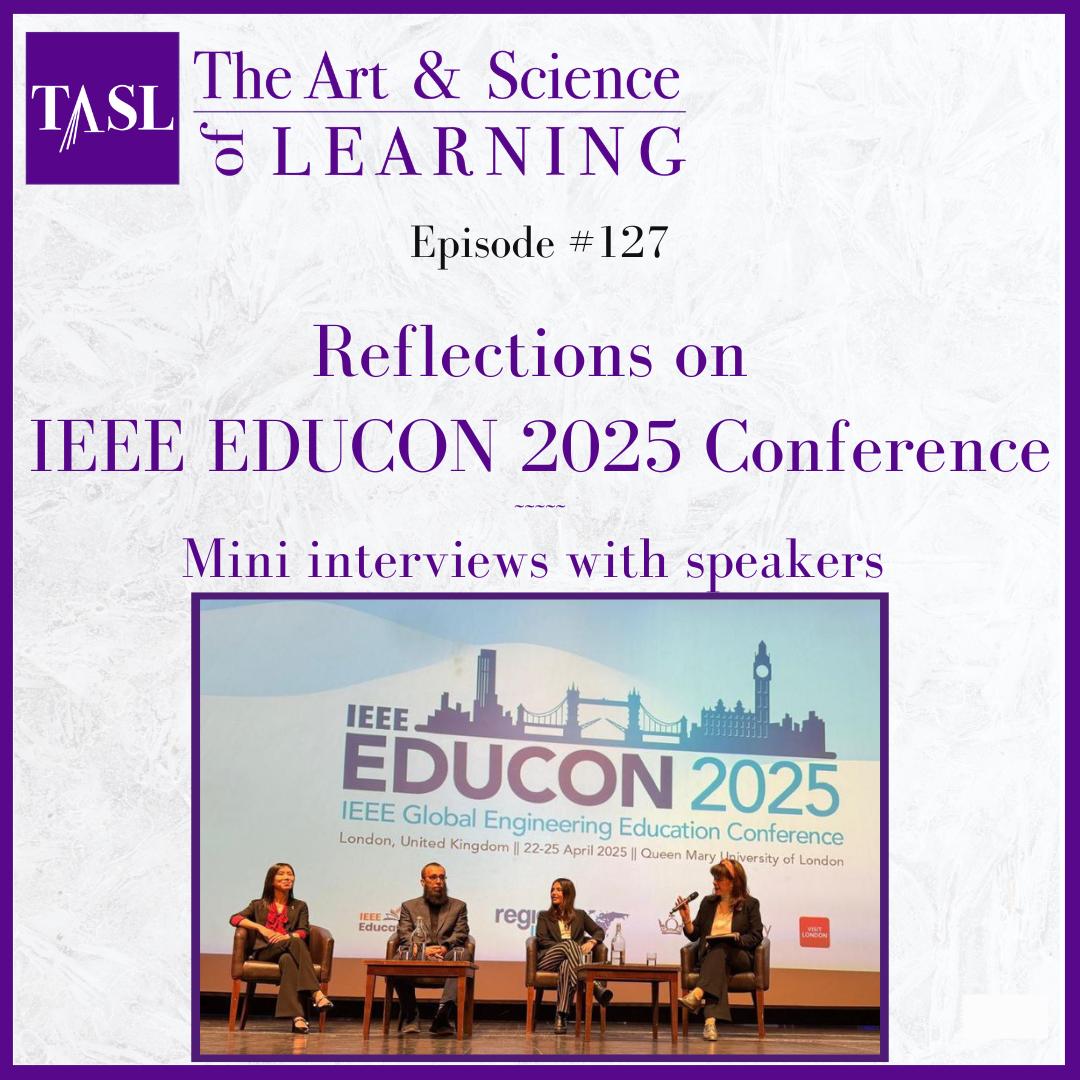
127. Reflecting on IEEE EDUCON 2025 London Conference
This episode brings you a special overview of the IEEE EDUCON 2025, held in London. EDUCON is one of the leading global conferences focused on engineering education, bringing together educators, researchers, and industry leaders to explore how teaching and learning are evolving in an increasingly complex and digital world.
I had the pleasure of attending EDUCON 2025 in London and serving as Chair of the Keynote Committee. It was a fantastic experience, and I would like to once again extend my sincere thanks to Prof. Usman Naeem, Chair of EDUCON 2025, and the entire team for organizing such an outstanding event. During the conference, I also had the opportunity to interview several speakers and organizers, and those conversations are featured in this episode.
Last year’s conference focused on sustaining educational excellence in engineering, with particular attention to the role of emerging technologies, especially generative AI, in shaping teaching practices, student engagement, and assessment. Across keynote sessions, research presentations, and interactive discussions, participants explored how tools like AI, virtual labs, and digital platforms are transforming the classroom, while also raising important questions about equity, access, and the future of skills development.
Beyond technology, the conference highlighted broader shifts in engineering education, including the move toward interdisciplinary learning, stronger collaboration between academia and industry, and a growing emphasis on inclusion and preparing students for real-world, global challenges.
Now, as we approach EDUCON 2026, which is held in Cairo, Egypt, from April 27th to 30th, 2026, I would like to reflect back on EDUCON 2025 and bring you the highlights from the conference.
In this episode, we’ll highlight some of the key themes, conversations, and takeaways from the conference, what stood out, what’s changing, and what it all means for the future of teaching and learning.
You’ll hear directly from a range of speakers from across academia and industry. We begin with Prof. Usman Naeem, Chair of EDUCON 2025 in London and a leader in computer science education at Queen Mary University of London. I’m then joined by Prof. Diana Andone of Politehnica University of Timișoara, Romania, and Vice President of Conferences for the IEEE Education Society, who brings a global perspective on innovation and collaboration in engineering education.
Next, you’ll hear from Tahir Ahmed, Vice President of Customer Delivery and Operations for Europe at Nokia, who shares industry perspectives on preparing the next generation of engineers. I also speak with Prof. Yue Chen, Professor of Telecommunications Engineering and Director of Scholarship at Queen Mary University of London. She discusses her work integrating generative AI into group-based assessments, highlighting both opportunities for enhancing critical thinking and challenges related to the digital divide.
I also speak with Trini Balart, a PhD candidate at Texas A&M University in the USA, who explores how artificial general intelligence can be thoughtfully integrated into engineering education while maintaining a focus on human-centered skills. Finally, we hear from Prof. Andreas Pester of The British University in Egypt, co-chair of EDUCON 2026 in Cairo, who offers a preview of this year’s conference and its focus on human-centered engineering education, sustainable innovation, and ethical leadership in the age of AI and digital transformation.
Whether you attended the conference or are hearing about it for the first time, this episode will give you a sense of where engineering education is headed and why it matters.
Interviews:
(5:05) Dr. Usman Naeem, Chair of EDUCON 2025 and Senior Lecturer in the School of Electronic Engineering and Computer Science at Queen Mary University of London
https://www.qmul.ac.uk/eecs/people/profiles/naeemusman.html
(14:45) Dr. Diana Andone, Vice President of Conferences for the IEEE Education Society and Director of eLearning Centre, at the Politehnica University of Timișoara in Romania.
https://elearning.upt.ro/en/diana-andone/
(30:40) Tahir Ahmed, Vice President of Customer Delivery and Operations for Europe at Nokia
https://www.linkedin.com/in/tahir-ahmed-4335867a/
(36:35) Prof. Yue Chen, Professor of Telecommunications Engineering and Director of Scholarship at Queen Mary University of London
https://www.qmul.ac.uk/eecs/people/profiles/chenyue.html
(42:11) Trini Balart, a PhD candidate at Texas A&M University in the USA
https://nuanced.engr.tamu.edu/people/trini-balart/
(47:55) Prof. Andreas Pester, Professor of Computer Science at The British University in Egypt
https://ieee-edusociety.org/contact/andreas-pester
Links:
EDUCON 2026 Cairo, Egypt: https://2026.ieee-educon.org
EDUCON 2025 London, UK: https://2025.ieee-educon.org
January 28, 2026Episode 12655 min
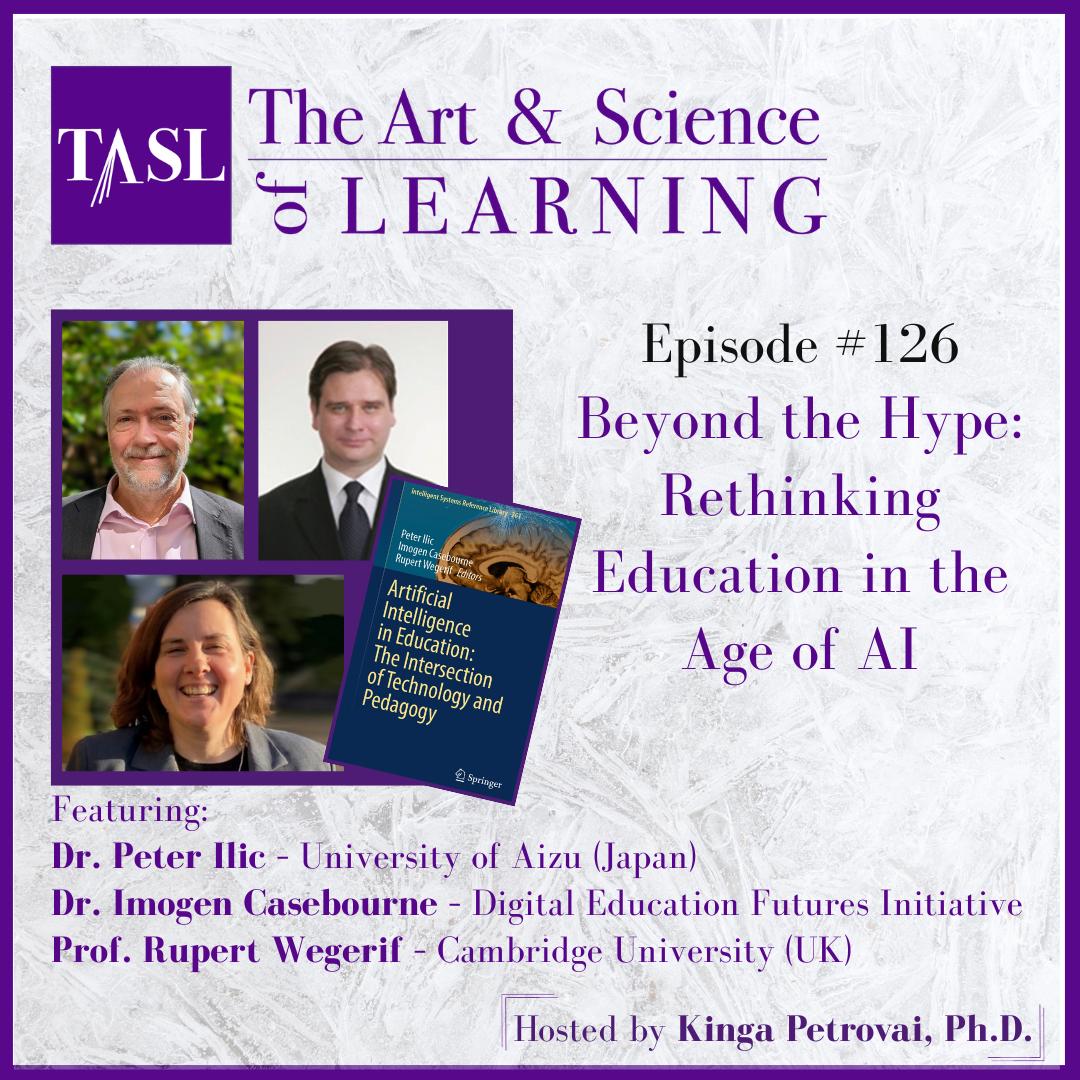
126. Beyond the Hype: Rethinking Education in the Age of AI
Artificial intelligence is advancing at an extraordinary pace, and education is being reshaped whether we are ready for it or not.
In this episode, we discuss a new and fascinating book on this topic — Artificial Intelligence in Education: The Intersection of Technology and Pedagogy. The contributors are experts from around the world who are both educators and technically proficient. I’m joined by the editors of the book, who are leading experts in the field of learning technologies.
Dr. Peter Ilic is a Senior Associate Professor in the Center for Language Research at the University of Aizu in Japan.
Dr. Imogen Casebourne is the research lead at the Innovation Lab at the Digital Education Futures Initiative (DEFI) at Cambridge University.
Prof. Rupert Wegerif is Professor of Education in the Faculty of have Education at the University of Cambridge and the founder and academic director of the Digital Education Futures Initiative (DEFI) at Hughes Hall, Cambridge University.
The book and this conversation sit at the intersection, and sometimes the tension, between technologists and educators. Historically, educational technologies promised transformation but often end up reinforcing outdated models of learning. AI poses a new challenge that is fundamentally changing education.
Together, we explore why simply adding AI to existing systems doesn’t work, why dialogue between technology and pedagogy is now urgent, and how approaches like design-based research can help us develop educational AI more responsibly.
We also discuss what it might mean to move toward a more dialogic understanding of education, one focused less on the transmission of knowledge and more on collaboration, problem-solving, and learning with both people and technology.
At its core, this episode is a call for collaboration between educators, technologists, and policymakers and for taking an active role in shaping the future of AI in education, rather than being shaped by it.
Links:
Book: Artificial Intelligence in Education: The Intersection of Technology and Pedagogy
https://link.springer.com/book/10.1007/978-3-031-71232-6
Dr. Peter Ilic: https://u-aizu.ac.jp/research/faculty/detail?lng=en&cd=90119
Dr. Imogen Casebourne: https://www.deficambridge.org/people/imogen-casebourne/
Prof. Rupert Wegerif: https://www.educ.cam.ac.uk/people/staff/wegerif/
January 6, 2026Episode 12546 min
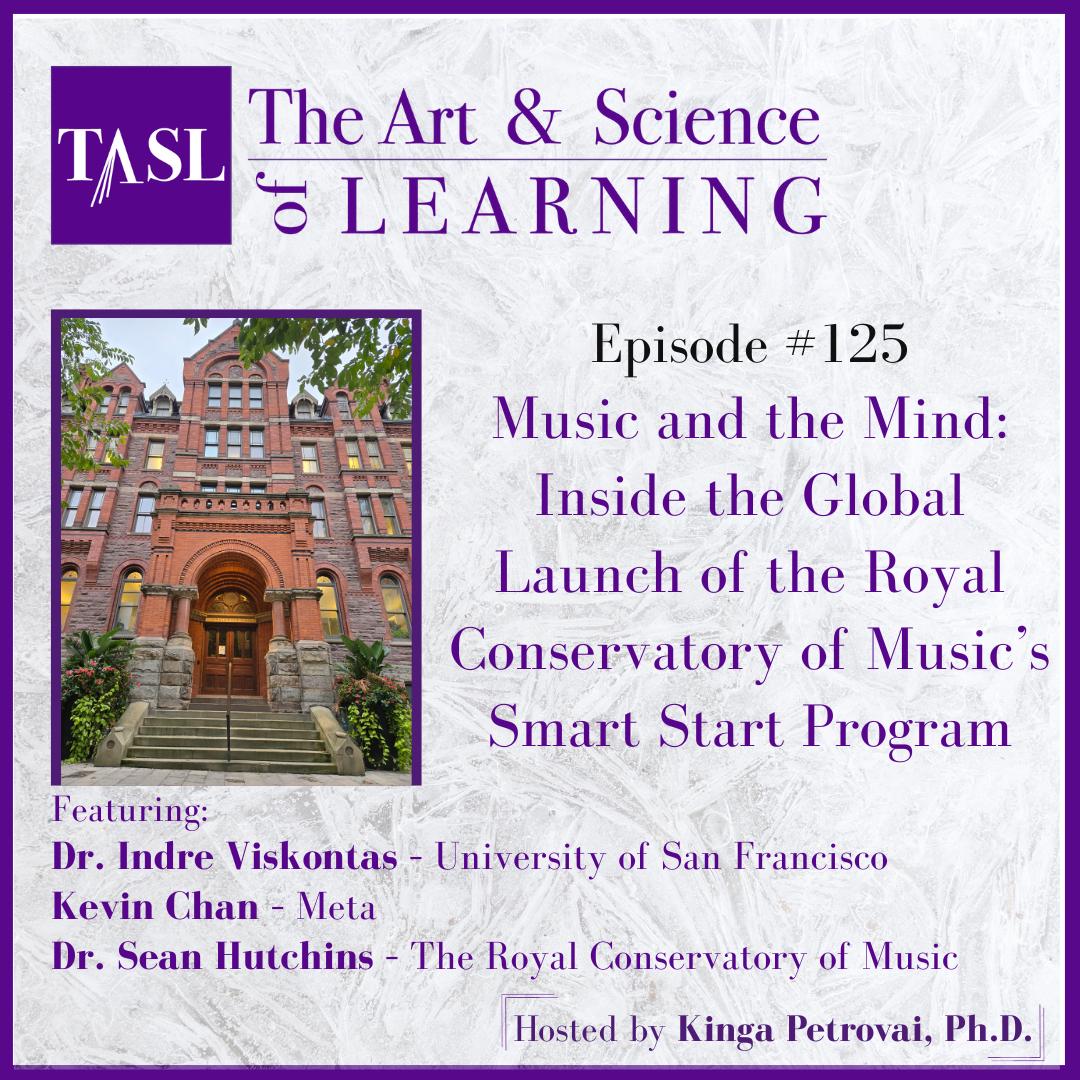
125. Music and the Mind: Inside the Global Launch of the Royal Conservatory of Music’s Smart Start Program
This special episode comes directly from an inspiring day at the Royal Conservatory of Music (RCM) in Toronto, where the global launch of the Smart Start program was celebrated through a landmark symposium titled Music and the Mind: A Smart Start to Early Childhood Education. The event focused on the transformative role of music in early childhood learning and development.
Educators, researchers, policymakers, and arts advocates gathered in Koerner Hall in Toronto to explore how music influences the developing brain, supports emotional and social growth, and enhances early learning well beyond songs and rhythm. The symposium also examined the evolving role of technology and artificial intelligence in education and creativity.
Smart Start is the Royal Conservatory of Music’s early childhood music program, designed for young learners at the very beginning of their musical journey. Grounded in research on child development and learning science, the program uses play-based, developmentally appropriate activities to nurture musical skills alongside cognitive, social, and emotional growth. Smart Start is about more than learning music—it supports whole-child development through music.
For more background on how the program was developed, listen here to the previous episode featuring Alexander Brose, President & CEO of The Royal Conservatory of Music: https://www.theartandscienceoflearning.com/blogsidebysidee/124-music-amp-neuroscience-the-royal-conservatory-of-musics-innovative-approach-to-early-childhood-education-alexander-brose
The day opened with a powerful keynote from Renée Fleming, celebrated soprano and author of Music and Mind, who spoke about the impact of music and music therapy on health and wellbeing. She invited the audience to sing together in harmony, setting the tone for a day centered on connection, research, and shared experience.
Alexander Brose, President & CEO of The Royal Conservatory of Music, welcomed attendees and shared the story behind Smart Start’s creation and development. Throughout the day, internationally recognized voices from across disciplines contributed to panels and discussions on music, neuroscience, education, creativity, and innovation.
Speakers and panelists included Evan Solomon, Canada’s Minister of Artificial Intelligence, Raffi, the beloved children’s singer-songwriter, Steve Paikin, the award-winning journalist, Eric Radford, Olympic figure skater and composer, and many more. The symposium also featured hands-on learning experiences led by Catherine West, pedagogy leader and early childhood education specialist, allowing participants to experience Smart Start exactly as children would in a learning environment.
This episode brings the symposium to life through three in-depth interviews with key speakers:
- Dr. Indre Viskontas (6:00min) – Associate Professor of Psychology at the University of San Francisco, musician, and host of the Inquiring Minds podcast, discussing the neuroscience of music and learning
- Kevin Chan (24:30min) – Senior Director at Meta, exploring the connections between creativity, technology, AI, and education
- Dr. Sean Hutchins (35:50min) – Director of Research at The Royal Conservatory of Music and co-developer of the Smart Start curriculum, unpacking the research and educational thinking behind the program
Together, these conversations offer a rich picture of why Smart Start matters and how early, play-based music education can help develop cognitive skills, emotional regulation, creativity, and problem-solving abilities, setting children up to become lifelong learners.
Dive in to revisit the ideas, insights, and inspiration from the Music and the Mind symposium, celebrating the global launch of the Royal Conservatory of Music’s Smart Start program.
Links:
Royal Conservatory of Music (RCM) Neuroscience: https://www.rcmusic.com/about-us/rcm-neuroscience
Music and the Mind Symposium (October 31st 2025): https://www.rcmusic.com/about-us/news/global-launch-of-rcm-early-childhood-music
October 30, 2025Episode 12445 min
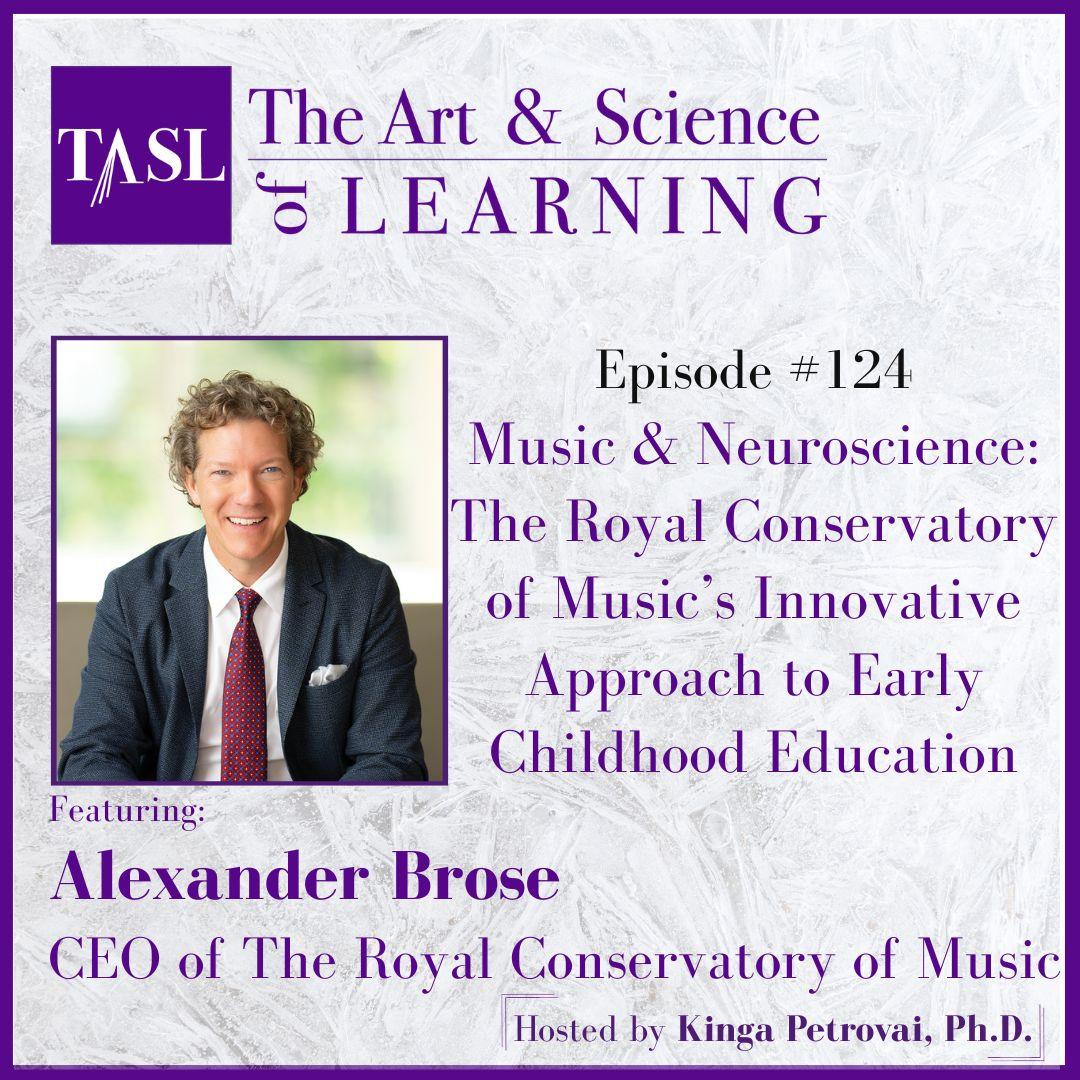
124. Music & Neuroscience: The Royal Conservatory of Music’s Innovative Approach to Early Childhood Education (Alexander Brose)
For the past decade, The Royal Conservatory of Music in Toronto, Canada, has partnered with leading neuroscientists to develop an early childhood education program that uses music to strengthen the cognitive foundations of lifelong learning. Designed for children from six months to four years old, this innovative approach nurtures essential learning skills through the power of music and integrates technology to prepare future-ready minds.
On October 31, 2025, The Royal Conservatory of Music will host the global launch of Smart Starts, a groundbreaking program that brings together experts in music, cognitive development, and technology to redefine early childhood education. I am looking forward to attending this symposium, called Music and the Mind, which will be packed with incredible speakers, and in the next episode will feature highlights from that day.
In this episode, my guest — the CEO and President of the RCM — joins me to discuss lifelong learning, the importance of creativity, the intersection of artistic and artificial intelligence, and the vision behind Smart Starts.
Alexander Brose is the President & CEO of The Royal Conservatory of Music (RCM) in Toronto, Canada. Before joining RCM, he was the inaugural Executive Director and CEO of the Tianjin Juilliard School in China, The Juilliard School in New York City’s first and only branch campus. There, he worked closely with colleagues both in Tianjin and New York to create an inclusive and supportive institutional culture that upheld the educational and artistic excellence of Juilliard and respected the surrounding influences of China.
Prior to that, he was the Vice President for Development at the Aspen Music Festival and School in Colorado, where he was responsible for all fund-raising and strategic relationship-building activities, raising US$75M as part of a capital campaign, and working with AMFS leadership to create a new strategic vision for the organization. Mr. Brose began his career spanning a decade in senior management roles at the San Francisco Conservatory of Music in California, including Director of Admissions and Associate Vice President for Advancement.
Raised in South Korea, Hong Kong, and the United States, Mr. Brose received his Bachelor of Arts degree in Asian Studies, with a concentration in China, from Cornell University in Ithaca, New York. An award-winning vocalist, Mr. Brose has performed in prestigious concert venues across the globe, including on the U.S. nationally-syndicated radio show “A Prairie Home Companion,” at the Seoul National Arts Center in South Korea, with the Glimmerglass Festival in Cooperstown, N.Y., and with the Grammy Award-winning San Francisco Symphony Chorus, among others. He has served as a member of the Board of Governors of the Recording Academy (Grammys) in the United States and the American Chamber of Commerce in China. He currently sits on the advisory councils of the Cornell University Glee Club, the school’s oldest student organization, as well as the Tianjin Juilliard School. A sought-after public speaker, Mr. Brose has presented at major arts conferences and universities in both the U.S. and China.
Links:
Alexander Brose: https://www.rcmusic.com/about-us/michael-and-sonja-koerner-president-and-ceo
RCM Neuroscience: https://www.rcmusic.com/about-us/rcm-neuroscience
Music and the Mind Symposium (October 31st 2025): https://www.rcmusic.com/about-us/news/global-launch-of-rcm-early-childhood-music
October 24, 2025Episode 12334 min
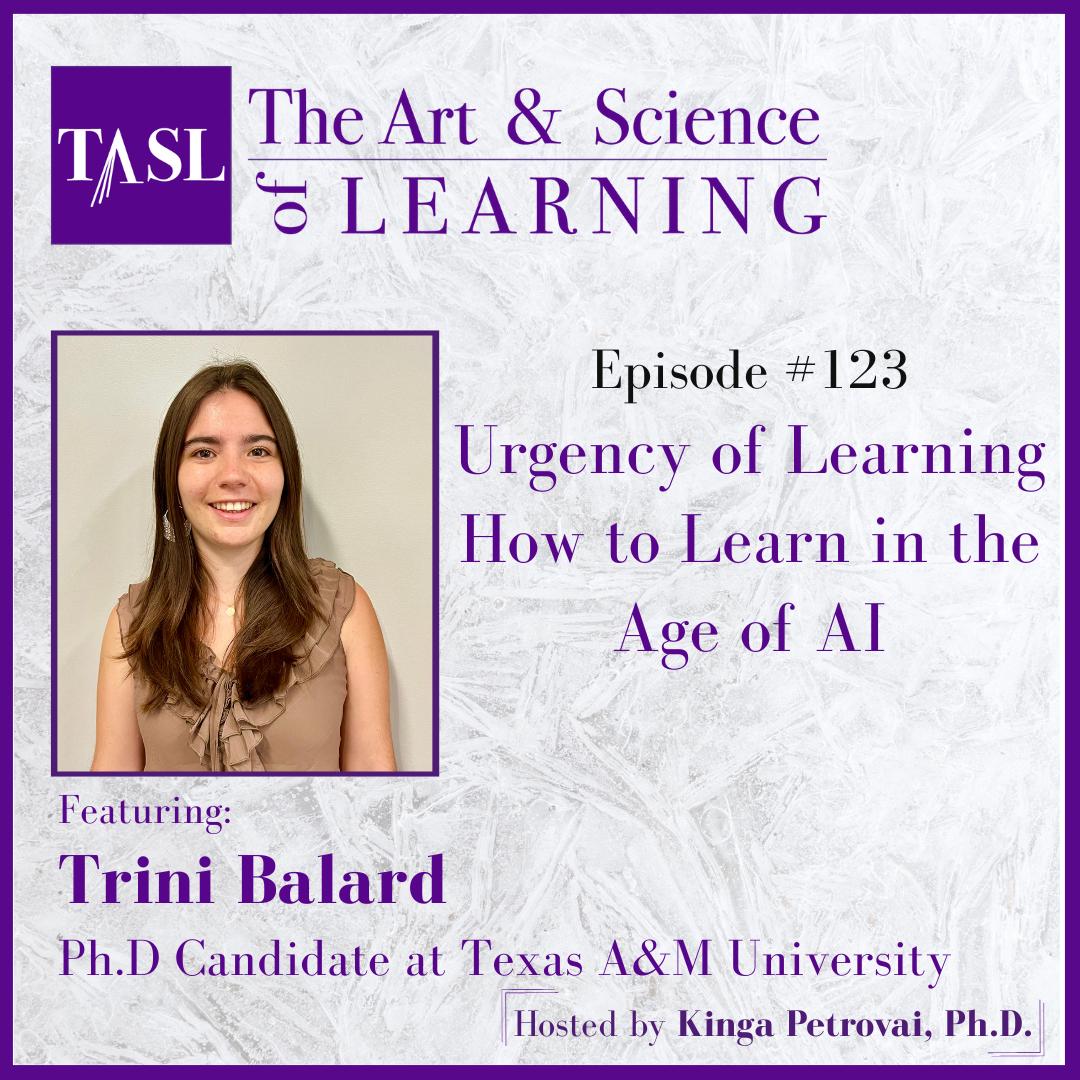
123. Urgency of Learning How to Learn in the Age of AI (Trini Balart)
There are significant challenges in education that have been ignored for too long, and AI is forcing us to confront them urgently; otherwise, AI will think for us, rather than with us. The need to learn how to learn has been increasingly important, but it has rarely been fully integrated into the education system. My guest in this episode is a doctoral student researching how to teach critical thinking with the aid of AI. She is sounding the alarm on the importance of teaching this skill with AI, otherwise, she thinks that AI will not only think for us, but it will not allow us to think at all.
Trini Balart is a Ph.D. candidate in the Multidisciplinary Engineering Department at Texas A&M University, originally from Chile. She holds a background in Industrial Engineering, Computer Science, and a major in Engineering, Design, and Innovation from the Pontifical Catholic University of Chile. Her research focuses on engineering education and the impact of generative artificial intelligence on how we teach, learn, and think. She is especially interested in how these tools are shaping the development of critical thinking in engineering students and prompting us to rethink the true purpose of education and what we understand by learning itself. Passionate about human-centred development, innovation, and progress, Trini is committed to building a future where AI empowers, rather than replaces, our uniquely human capabilities. She envisions a future where these tools may even help us reach deeper levels of knowledge and societal development.
LinkedIn: https://www.linkedin.com/in/trinidad-balart-386213223/
August 21, 2025Episode 12230 min
122. A Technical School Forged by Engineers, Fueled by Purpose (Tudor Andrei Tămâian, Principal of Anghel Saligny Technical High School)
This is very special episode of the podcast — one that’s quite personal and rooted in a story that spans generations.
Earlier this summer, I had the privilege of visiting Anghel Saligny Technical High School (Liceului Tehnologic Anghel Saligny) in Baia Mare, Romania — a school that holds profound meaning for my family. I was there to take part in my mother’s 50th high school reunion, a beautiful moment of reflection and reconnection.
But my family’s connection to this school goes far beyond that. My grandfather — a respected senior leader in the field of engineering — was among the group of leading engineers who shared a vision of creating a school that developed the future talent in civil building engineering. They created a school where young people could be trained for real careers in engineering, technology, and construction — a vision that continues to shape the school today. My godparents, also respected senior leaders in engineering, taught for many years at the school, bringing their professional experience and expertise to students. Now, that legacy lives on through my godparents’ daughter, Daniela Maria Deceanu, also an engineer who now serves as the Vice Principal of the school.
My own passion for education has been deeply shaped by both of my grandfathers. One, an engineer with a forward-thinking mindset, believed strongly in preparing students for the workforce of the future. The other, a devoted language teacher, passed on a love for words, learning, and communication. My parents carried on their passion for learning by teaching me how to learn and instilling in me the importance of lifelong learning. Their values continue to guide me in my work and in conversations that I have on this podcast.
In this episode, I sit down with Tudor Andrei Tămâian, the Principal of Anghel Saligny Technical High School, to talk about what it means to lead a vocational school in today’s world. Tudor shares how the school partners with local industry, facilitates European work exchange programs, and helps students gain practical, hands-on experience. We also talk about the school’s impressive track record at skills olympics and professional competitions, where students consistently prove the power of applied education.
This conversation is about leadership, vision, and the future of vocational learning.
Tudor Andrei Tămâian is the Principal of Anghel Saligny Technical High School (Liceul Tehnologic Anghel Saligny) in Baia Mare, Romania. He is a highly dedicated professional with a strong academic background in Economics (B.A.), Business Administration, and Human Rights (M.A.).
With over 15 years of experience as an educator and four years as a high school principal, Tudor also brings valuable insights from previous roles in sales and financial services, particularly in credit and banking.
As a school leader, he promotes a collaborative and open management style that values communication, teamwork, and a positive work environment. His decisions are always student-centred, aiming to improve both the learning experience and student outcomes.
Passionate about sharing knowledge and values with younger generations, Tudor is committed to being part of a mission-driven team focused on reducing school dropout rates and increasing the number of students who successfully complete their high school education. He strongly believes in education as a powerful tool for building better futures.
Anghel Saligny Technical High School (Liceul Tehnologic Anghel Saligny)
https://www.asalignybm.tpsvision.ro
Is this your show?
Claim this listing to keep it up to date, reach guests who want to pitch you, and manage bookings with Guestify.