

November 29, 2024Episode 3121 min
Den globale demokratikrisen (Norwegian)
A recording of my presentation at the "Democracy in Crisis" seminar 16th of November 2024 in Oslo at the House of Literature. The presentation is in Norwegian.

Episodes
30
Latest episode
Nov 2024
Language
EN-GB
Join Dr. David Isaksen and his guests from academia, communications consulting, and politics in discussions about what it means to lead people by persuasion rather than by force/rank/bargaining.
A recording of my presentation at the "Democracy in Crisis" seminar 16th of November 2024 in Oslo at the House of Literature. The presentation is in Norwegian.
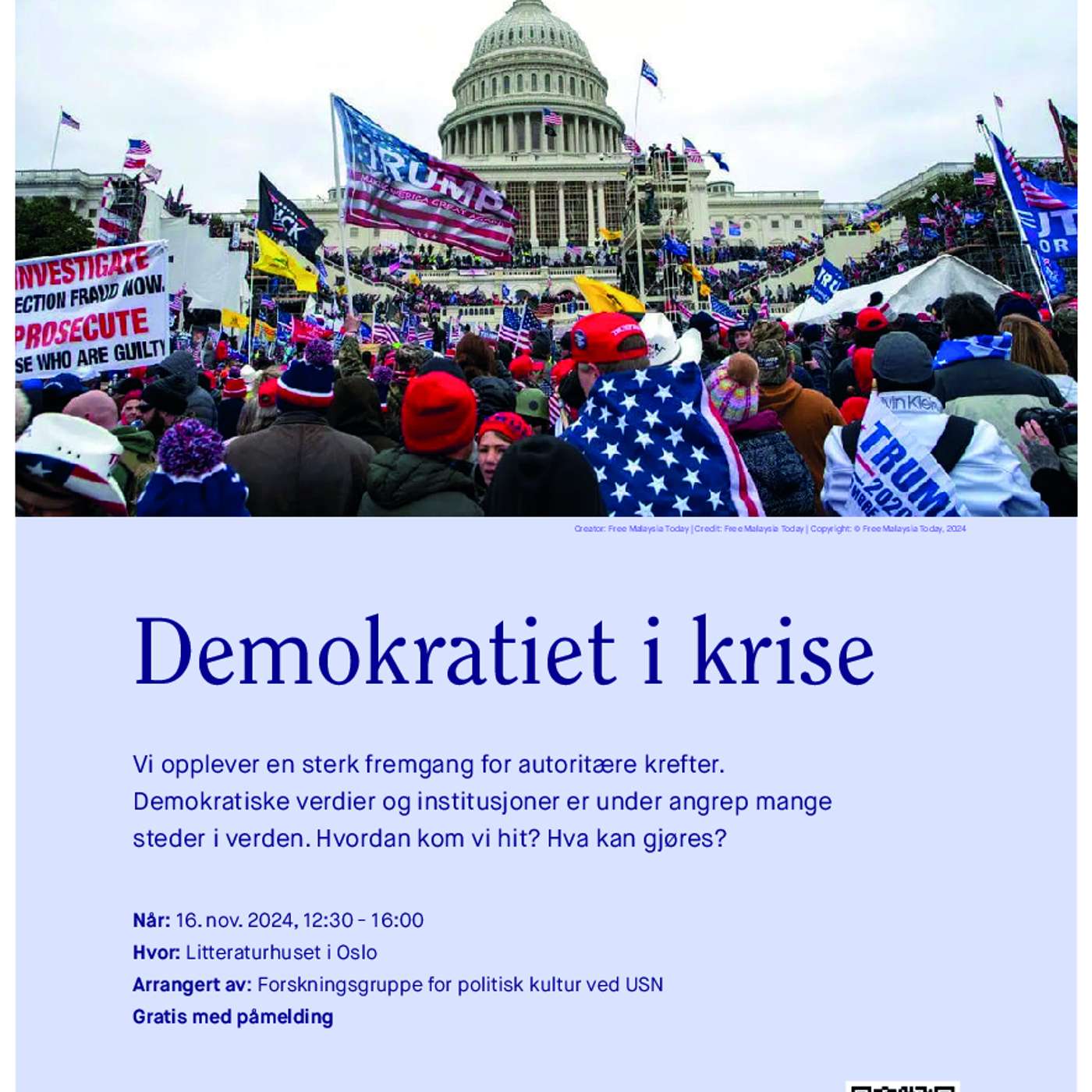
For local audiences, join us for a live seminar at the House of Literature (Litteraturhuset) in Oslo 16. november. Sign up for free at https://www.litteraturhuset.no/nb/arrangement/demokratiet-i-krise For global audiences, here is a summary of the current democratic crisis we are living through and all its many aspects. I also discuss why democracy is worth fighting for and what we can do to meet the current crisis. Why is democracy under attack from within as well as from authoritarian dictatorships in other countries? What has happened to the electorate in democracies that leads many of them to elect authoritarians?

Discussion with a Russian dissident about the rhetoric of the Russian opposition to Vladimir Putin from 2021-2023. We cover four sentencing speeches by Alexei Navalny, as well as sentencing speeches by Vladimir Kara-Murza, Memorial leader Oleg Orlov, and student activist Darya Kozyreva. A three part discussion. This episode covers the aftermath of Navalny's death and the current disorganized and chaotic state of the Russian opposition. We discuss four speeches by Oleg Orlov, Vladimir Kara-Murza, and Darya Kozyreva and the possible way forward to a free and democratic Russia. 00:00 Aftermath of Navalny's death and introducing Oleg Orlov 00:50 Oleg Orlov's sentencing speech (English) 10:39 Oleg Orlov's sentencing speech (Russian) 19:50 Reaction and Analysis 32:20 Vladimir Kara-Murza's sentencing speech (English) 36:14 Vladimir Kara-Murza's sentencing speech (Russian) 39:25 Reaction and Analysis 1:00:46 Kara-Murza on Lessons Not Learned (English) 1:03:40 Kara-Murza on Lessons Not Learned (Russian) 1:05:40 The current disorganized state of the Russian opposition 1:14:47 Darya Kozyreva sentencing speech (English) 1:18:58 Darya Kozyreva sentencing speech (Russian) 1:22:27 The need for organization and acknowledging the sadness of a lost country

Discussion with a Russian dissident about the rhetoric of the Russian opposition to Vladimir Putin from 2021-2023. We cover four sentencing speeches by Alexei Navalny, as well as sentencing speeches by Vladimir Kara-Murza, Memorial leader Oleg Orlov, and student activist Darya Kozyreva. A three part discussion. This episode covers the last two major speeches Alexei Navalny gave from prison before he was murdered and their impact. 00:00 Russian invasion, protests, and Navalny's early nationalist politics 14:30 Contempt of court speech (English) 26:20 Contempt of court speech (Russian) 37:41 Reaction and analysis 52:19 Navalny's final speech (English) 59:51 Navalny's final speech (Russian) 1:06:30 Analysis and conclusion

Discussion with a Russian dissident about the rhetoric of the Russian opposition to Vladimir Putin from 2021-2023. We cover four sentencing speeches by Alexei Navalny, as well as sentencing speeches by Vladimir Kara-Murza, Memorial leader Oleg Orlov, and student activist Darya Kozyreva. A three part discussion. 00:00 Introduction Alexei Navalny 06:07 Yves Rocher speech, February 2021 (English) 18:12 Yves Rocher speech (Russian) 29:19 Analysis 36:06 Veteran Speech (English) 48:12 Veteran Speech (Russian) 59:44 Analysis and conclusion of part 1
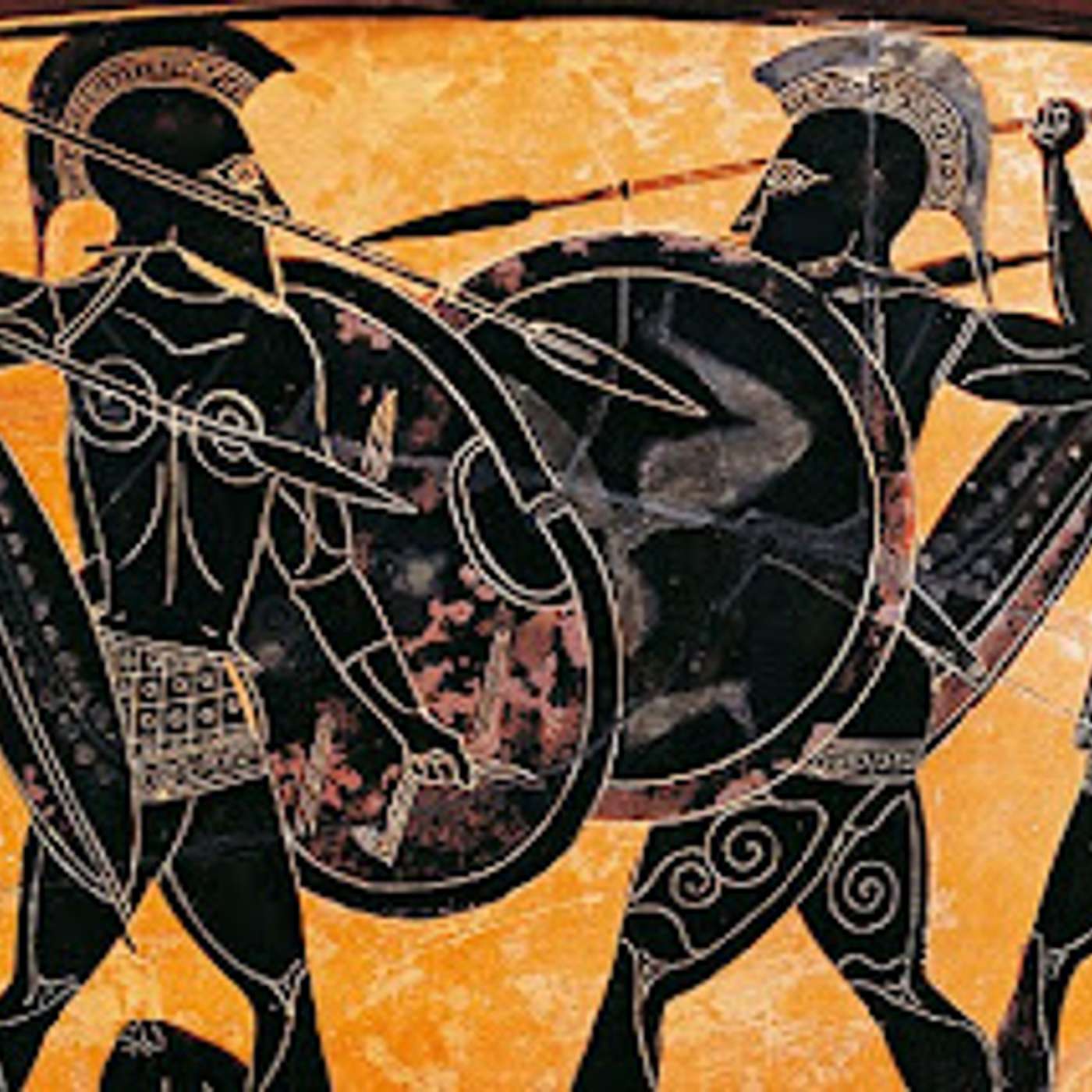
Over 300 years BCE, Isocrates warned Athenians about the curse of empire in his oration "On the Peace." The central claim was that ruling over an empire was as devastating to the moral well-being of Athens and their potential subject states as tyranny is to a leader and his subjects. He draws a contrast between domination and leadership and points out a future for Athens where they can again lead a benevolent alliance of free city states that will be more stable and more mutually beneficial for all involved.
Perelman made a category of arguments that he termed to be "based on the structure of reality." Dr. Steven B. Katz joins us to discuss each of the arguments within this category, and how they rely on culturally accepted connections termed "liasons of succession" and "liasons of co-existence" in order to gain acceptance of other claims. Essentially, you find structures of reality that are already there (already accepted) and then apply them to a specific situation. As Kenneth Burke points out, these structures may only be "natural" in the sense that a path made through a field is natural. Nevertheless, as soon as that structure or path has been made it is there as a structure that can be used to pass from A to B. This episode builds on the episodes "Chaim Perelman's Theory of Argumentation" and "Perelman's Quasi-logical Arguments."

Isocrates believed most knowledge needed for practical judgement was contingent and more easily found by internal and external arguments. Plato believed all true knowledge can be derived from first principles. Both were right https://intelligenceofpersuasion.blogspot.com/2012/10/seeking-light-for-ourselves-in-darkness.html?m=1

Dr. Ivana Stradner, who grew up in Serbia, discusses the rise of Serbian nationalism, Putin's strategy of increasing ethnic tensions in the region, and why we may be close to a new war in the Balkans.

Perelman made a category of arguments that he termed "quasi-logical." Quasi does not mean "fake" in this context, but just that they are similar to the arguments made in formal logic. Dr. Steven B. Katz joins us to discuss each of the arguments within this category, and how they rely on some of the most basic cognitive patterns that humans use to make sense of the world around us. Because we can perceive similarity, difference, and the relations of parts to the whole, we are able to use these as basis for arguments to move others. This episode builds on the episode "Chaim Perelman's Theory of Argumentation."
Claim this listing to keep it up to date, reach guests who want to pitch you, and manage bookings with Guestify.
Claim this listing
Phil McKinney
Axel Springer SE

Michael Michelini: Global Internet Businessman in China, Asia

Anthony Fasano, P.E., AEC PM, F. ASCE & Fiona Johann, PMP, AEC PM

Oliver Wyman Health