Reaching Producers Beyond the Extension Meeting
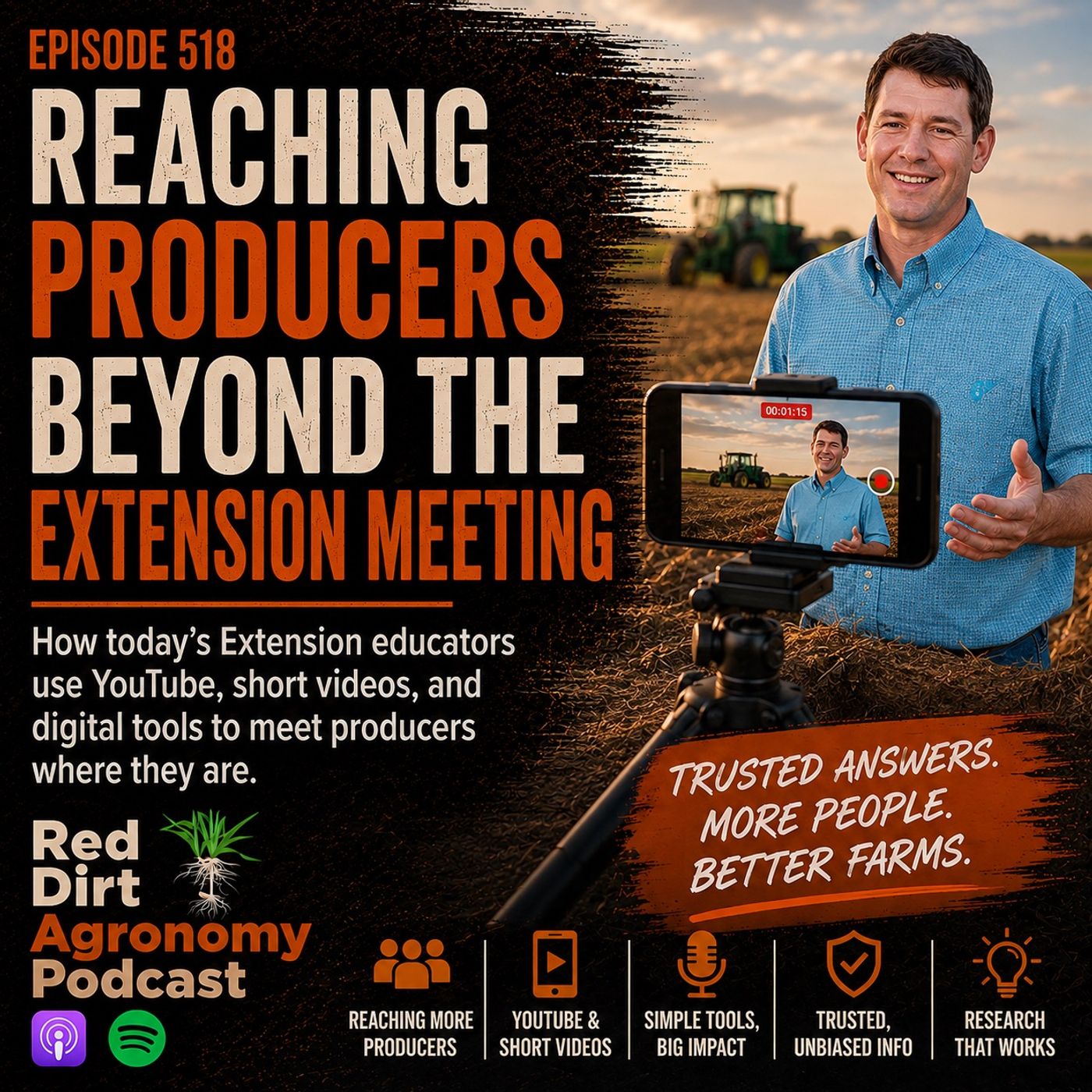
Visit RedDirtAgronomy.com Daniel Adamson Ph.D., Oklahoma State University Extension soil and water conservation specialist, joins Dave Deken, Brian Arnall Ph.D. and Josh Lofton Ph.D. for a conversation about building an Extension program in a changing communications landscape. They discuss YouTube, short-form video, social media, field demonstrations and why seemingly ordinary work can become valuable educational content when producers get to see something they normally would not. Adamson currently serves as an OSU assistant professor and Extension specialist focused on soil and water management and conservation. The conversation also gets practical: what equipment actually matters for producing useful videos, why digital outreach can be difficult to measure inside traditional academic systems, and how artificial intelligence raises the stakes for putting reliable, unbiased agricultural information online. From a phone and microphone to a soil pit and a good explanation, the group makes the case that reaching producers is increasingly about meeting them where they already search. Key takeaways: YouTube and short-form video can reach producers who may never attend a traditional Extension meeting. What feels routine to a specialist may be completely new—and highly useful—to someone watching from the farm. Good agricultural video does not require a truckload of equipment; steady footage and clean audio can make a major difference. Digital outreach can produce measurable reach even though traditional academic evaluation systems may still place more value on peer-reviewed publications and fact sheets. As AI becomes another source of agricultural answers, recognizable, research-based Extension content becomes increasingly important. Detailed Timestamped Rundown 00:00–02:57 — Why Extension communication matters now Dave introduces the episode around Extension, communication and getting good research-based information to producers who increasingly search for answers on their phones. He previews YouTube, video production and the growing importance of trusted information in an AI-driven world. 02:58–05:31 — Meet Daniel Adamson The group reintroduces Adamson nearly two years into his OSU career, with some Oklahoma-versus-Texas banter and a little background on his rural roots. 05:32–07:15 — Building an Extension program Adamson talks about finding the right "lanes" for his program and learning what will actually meet people's needs. One unexpected responsibility has been onsite wastewater treatment—better known to most rural homeowners as septic systems. 07:16–09:20 — The communication problem The conversation turns to one of Adamson's biggest questions: how Extension reaches people in the ways they actually consume information while respecting their time. Video and social media become central to that discussion. 09:21–13:48 — From radio and websites to YouTube Arnall remembers an Extension landscape dominated by websites, radio and television. Dave contrasts that with Oklahoma Wheat Commission videos, describing a YouTube channel that grew rapidly as producers found timely crop information there. 13:49–18:50 — Short videos and ordinary Tuesdays Lofton and Adamson discuss the surprising reach of short-form videos. Adamson's simple soil-structure clip earns thousands of views, reinforcing the idea that work scientists consider ordinary can be genuinely interesting to producers. 18:51–23:30 — Local audiences become regional audiences The group compares Facebook, X, Instagram and YouTube audiences and discusses how online field days and videos can reach people well beyond Oklahoma. The practical advice: capture footage while the work is happening, even if narration comes later. 23:31–27:07 — Does academia reward digital outreach? Arnall and Lofton describe a mismatch between the ways audiences increasingly consume Extension information and the ways universities traditionally measure scholarly productivity. Fact sheets and peer-reviewed publications count differently than podcasts, blogs or social videos. 27:08–30:29 — Communication creates opportunities The group discusses how online visibility can build reputation, generate speaking opportunities and help specialists become recognizable resources. Arnall describes finding a place in academia through communication and "edutainment." 30:30–33:51 — Adamson's North Star: help people Adamson explains that he wants to learn useful things, teach them simply and avoid overlooking basic information just because a specialist has seen it many times. Research quality remains essential, but valuable Extension knowledge does not always fit neatly into an academic mold. 33:52–35:36 — Why YouTube stands out In-person education remains valuable, but Adamson is particularly interested in concise, useful videos. He illustrates the point with his own experience searching YouTube for practical help dealing with a mole in his garden. 35:37–39:16 — What equipment actually matters The group asks what someone needs to start making agricultural videos. Dave's recommendations are intentionally simple: a phone, something that holds it steady and an external microphone when possible. Clean audio matters more than an expensive production setup. 39:17–41:29 — Portrait, landscape and the algorithm They discuss vertical versus horizontal video, YouTube Shorts and platform algorithms. Dave's advice is essentially to make useful content rather than obsess over gaming the algorithm. 41:30–44:21 — Extension, trust and artificial intelligence Adamson explains why he valued Extension as a crop adviser: it offered a source of unbiased, factual information. Lofton connects that role to AI, warning that automated answers can incorporate unreliable material and making trustworthy source material even more important. 44:22–45:31+ — Extension's next generation The episode closes by reflecting on how much expectations have changed. Social media and technology are no longer optional extras for a new specialist or even a college instructor—they are increasingly part of communicating effectively with the people they serve. RedDirtAgronomy.com