
Find partners
Productivity Smarts

Productivity Smarts

Hosted by Gerald J. Leonard

EducationInterviews guests

Episodes

170

Latest episode

Oct 2026

Language

EN

About the show

Productivity Smarts is an audio podcast hosted by Gerald J. Leonard, a productivity expert who helps other professionals get more done. Each episode features an in-depth discussion or interview with top productivity experts, tips, and strategies to help you become more productive by leveraging neuroscience principles. Features: • Interviews with top productivity experts • Tips and strategies for getting more done • Interviews with people who are doing great things Benefits: • Learn how to get more done • Get inspired by others who are doing great things in their lives • Hear what they do to stay focused and motivated Books: Productivity Smarts: Leaders and Managers Unlock Productivity Secrets from 12 Influential Musicians of the 20th and 21st Century: https://amzn.to/4mcy2jr A Symphony of Choices: https://amzn.to/3Keq3zx KIVA: It's a loan, not a donation Join me in providing microloans through Kiva that create a personal impact worldwide. https://www.kiva.org/lender/topmindshelpingtopminds Connect with Gerald: https://www.linkedin.com/in/geraldjleonard Free Productivity Smarts Weekly Evaluation Worksheet https://go.productivityintelligenceinstitute.com/productivity-smarts-worksheet Learn more at www.productivitysmartspodcast.com

Listen to episodes

60 recent
October 27, 202640 min

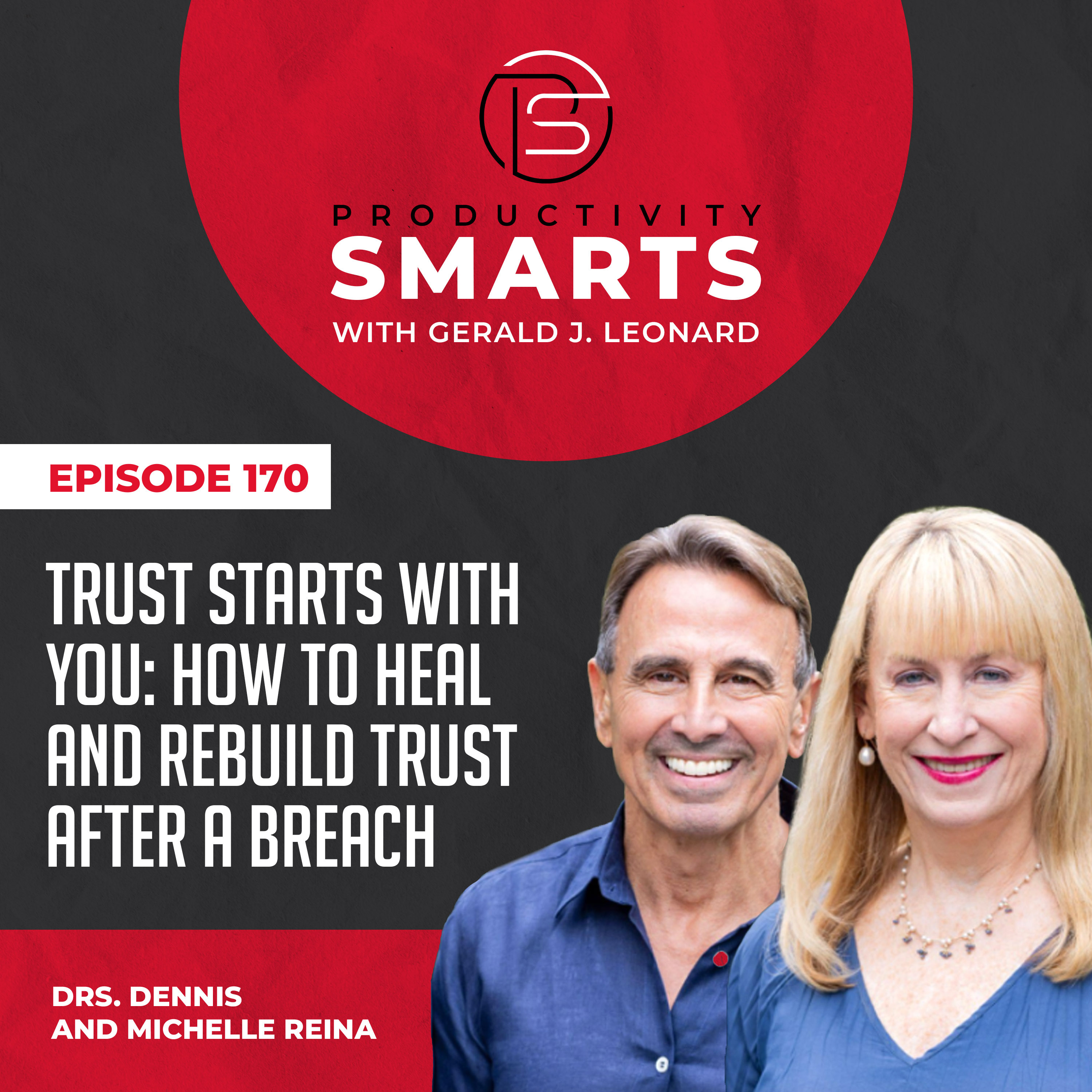
Trust Starts With You: How to Heal and Rebuild Trust After a Breach with Drs. Dennis and Michelle Reina

How do you rebuild trust once it has been broken? And what if the first person whose trust you need to repair is you? Drs. Dennis and Michelle Reina are internationally recognized pioneers in organizational trust and co-founders of Reina Trust Building. They have spent more than three decades helping people restore connection and confidence in the workplace. Their work combines research with practical tools to help teams recover, especially after trust has been broken. In this episode of Productivity Smarts, Gerald J. Leonard sits down with Dennis and Michelle to talk about their seven steps for healing after a breach. They explain why the first step is to name and acknowledge what happened, and why we often feel a breach in the body before we understand it in the mind. Journaling, reaching out for support, and giving yourself room to feel are what move you from hurt toward action. The conversation also looks at how trust begins with the relationship we have with ourselves. Dennis and Michelle share their research finding that more than 90 percent of trust-breaking behavior is unintentional, and that small lapses add up over time. They talk about reframing the experience, taking responsibility, and forgiving yourself and others. They also explain what it means to let go and move on while keeping the lessons. They finish with the daily habits that build trust, including journaling and yoga, and the three dimensions of trust: character, communication, and capability. If you want to heal after a breakdown in trust, strengthen your working relationships, or build more trust in yourself, this conversation gives you clear steps you can start using right away. What We Discuss [00:05] Introducing Drs. Dennis and Michelle Reina [02:59] How they met on the dance floor, and the role of music in their lives [06:20] The first step after a breach: name and acknowledge it [07:48] Why trust feels like an energy field, and how the body signals a breach [10:34] Journaling, emotional safety, and getting support [13:02] Why the first person we breach is ourselves [15:00] Reframing the experience and asking “What choices do I have now?” [16:55] Building self-trust through reliability and integrity [17:37] Introspective awareness and the art of trust building [20:00] Why over 90 percent of broken trust is unintentional [23:32] Taking responsibility and learning from the experience [24:22] Forgiveness, bitterness, and the weight we carry [26:41] The capacity for trust and how a breach shakes our self-confidence [28:40] Why a daily reflective practice matters [32:08] Daily habits: journaling and yoga since 1979 [33:07] The three dimensions of trust: character, communication, and capability [33:44] Step seven: letting go and moving on without forgetting the lessons [37:07] Where to find the Reinas’ books, courses, and programs Notable Quotes [06:40] "We need to first name it before we claim it. We need to name and acknowledge what has happened and the impact." – Dr. Dennis Reina [07:48] "Trust is an energy field. When it's there, there's a vibration." – Dr. Michelle Reina [13:45] "When we break trust with another, the very first person that we breach is ourself." – Dr. Michelle Reina [20:00] "Trust building is the intentional process of us being introspective and reflective and willing to grow in our awareness." – Dr. Michelle Reina [21:43] "Over ninety percent of the behavior that breaches trust is unintentional." – Dr. Michelle Reina [25:04] "Bitterness is drinking poison, thinking you're hurting the other person, but you're the person drinking the poison." – Dr. Dennis Reina [32:08] "Trust is not built by the grand gestures; it's built by those everyday little consistent habits." – Dr. Dennis Reina [35:00] "Forgiveness is the releasing of energy. Forgiveness is what gives birth to where we are going next." – Dr. Michelle Reina Resource and Links Drs. Dennis and Michelle Reina Website: https://reinatrustbuilding.com/ Books: The Art of Trust Building and their other titles, available on their website, Amazon, Barnes & Noble, and from their publisher, Berrett-Koehler Productivity Smarts Podcast Website - productivitysmartspodcast.com Gerald J. Leonard Website - geraldjleonard.com Turnberry Premiere website - turnberrypremiere.com Scheduler - vcita.com/v/geraldjleonard Kiva is a loan, not a donation, allowing you to cycle your money and create a personal impact worldwide. https://www.kiva.org/lender/topmindshelpingtopminds See Privacy Policy at https://art19.com/privacy and California Privacy Notice at https://art19.com/privacy#do-not-sell-my-info .
October 20, 202647 min

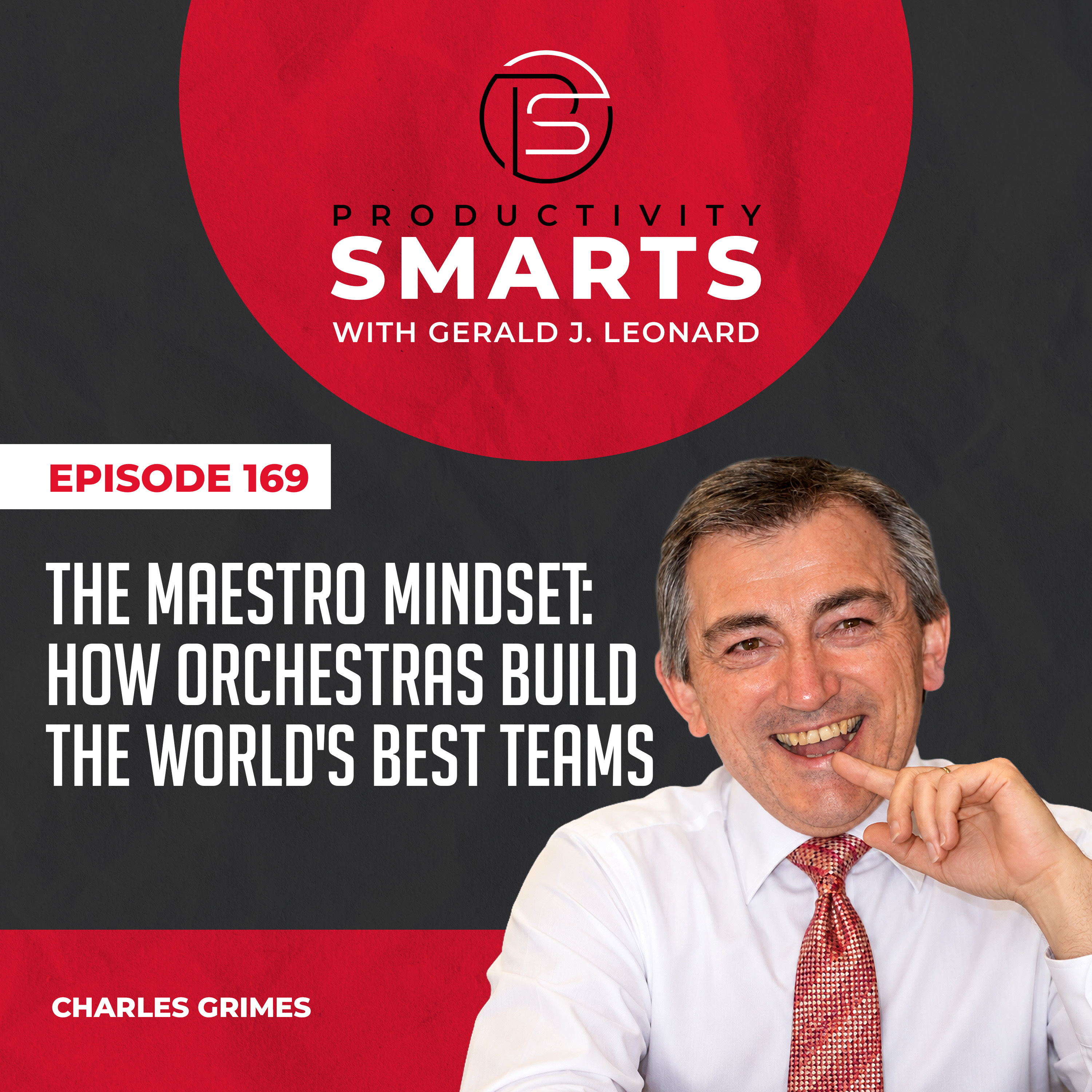
The Maestro Mindset: How Orchestras Build the World's Best Teams

Can a symphony orchestra show us how to lead a team? Why do some groups perform brilliantly with one person in front of them and poorly with another? In this episode of Productivity Smarts , Gerald J. Leonard sits down with Charles Grimes , a business psychologist, leadership consultant, lifelong choral singer, and author of A Question of Leadership , to explore what 30 years of working with leaders and performing alongside professional orchestras have taught him about high-performing teams. Charles shares the story of a disengaged choir that transformed in minutes when a conductor arrived, convinced the piece was worth doing. Together, they connect it to roving leadership, where leadership passes between people depending on who has the ball, as in a jazz quartet or a rugby match. Charles explains why listening is the core skill of great teams, why leadership is a relationship built one person at a time, and why musicians welcome feedback that most workplaces avoid. They also cover preparation without perfectionism, balancing confidence with humility, and why practice matters more than performance. Charles closes with three questions every leader should ask: What is really going on? Who am I becoming? How do I help my people thrive? If you want to listen better, lead in a way that lifts your team, and make practice a habit, this conversation offers a fresh perspective from the world of music. What We Discuss [02:01] Introducing Charles Grimes and A Question of Leadership [02:59] Bach, joy, and writing a cantata every week [06:19] How singing and business psychology came together [10:03] The conductor who transformed a disengaged choir [14:16] Why struggling sports teams replace the coach [16:46] Jazz and roving leadership: how the lead moves around the band [19:10] Headship versus leadership [19:52] What orchestras understand about high-performing teams [20:13] Listening vertically and horizontally [27:07] Leadership is a relationship, not a list of tips [28:57] Feedback: why musicians accept it and workplaces avoid it [32:56] Preparation without perfectionism [34:31] Moving between confidence and humility [37:30] Why practice and rehearsal matter more than performance [38:41] Who are you becoming as a leader? [40:40] What a conductor is really for [44:17] “It’s who he was”: leadership beyond title and role [45:56] How to connect with Charles Notable Quotes [21:02] “I believe that they are the orchestras, professional orchestras, that the the highest performing teams that you get anywhere because it is quite extraordinary" - Charles Grimes [19:10] “They have the headship. But as you've just been explaining, the leadership moves round.” - Charles Grimes [27:23] “Leadership is about a relationship, and you’ve got to have a relationship with each of those people in your team.” - Charles Grimes [29:36] “I don’t take it personally. You don’t take it personally. It’s just constant feedback.” - Charles Grimes [31:21] “Feedback is the breakfast of champions.” - Gerald J. Leonard [34:19] “Aim for excellence, but not for perfection.” - Charles Grimes [35:43] “You’ve got to have confidence, but you’ve also got to be humble.” - Charles Grimes [44:28] “It wasn't about his title. It wasn't about his role. It was about who he was as a person.” - Gerald J. Leonard Resource and Links Charles Grimes Website: https://www.charlesgrimes.com/ LinkedIn: https://www.linkedin.com/in/charlesggrimes/ Email: charles@charlesgrimes.com Book: A Question of Leadership by Charles Grimes Productivity Smarts Podcast Website - productivitysmartspodcast.com Gerald J. Leonard Website - geraldjleonard.com Turnberry Premiere website - turnberrypremiere.com Scheduler - vcita.com/v/geraldjleonard Kiva is a loan, not a donation, allowing you to cycle your money and create a personal impact worldwide. https://www.kiva.org/lender/topmindshelpingtopminds See Privacy Policy at https://art19.com/privacy and California Privacy Notice at https://art19.com/privacy#do-not-sell-my-info .

October 13, 202641 min

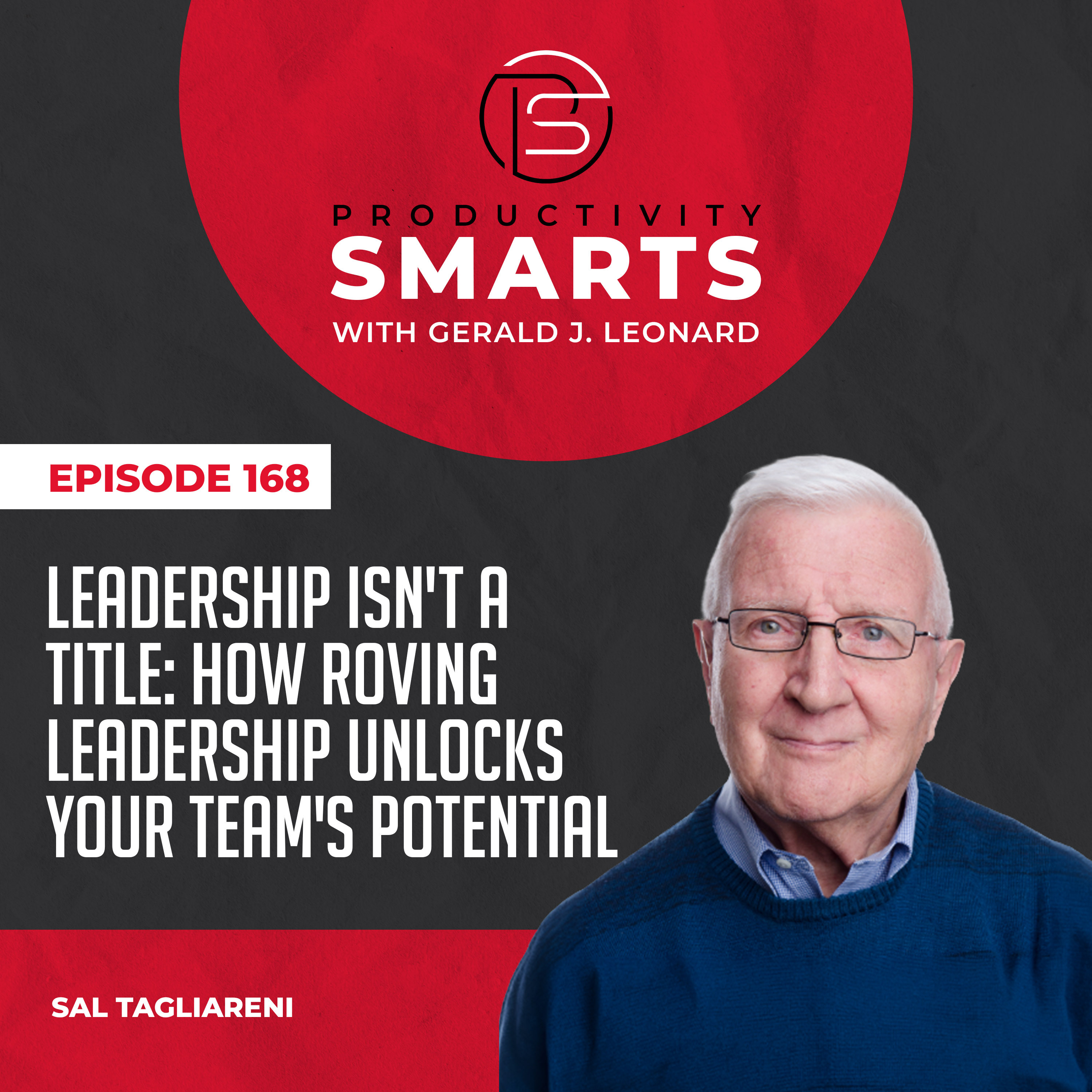
Leadership Isn't a Title: How Roving Leadership Unlocks Your Team's Potential with Sal Tagliareni

What makes someone a leader? Is it their title, their authority, or their ability to help others succeed? And what changes when leadership becomes something everyone on a team can practice? Sal Tagliareni , author of A Roving Leadership , explores a different approach to leadership shaped by his mentorship and coaching with Viktor Frankl. Rather than placing all responsibility on one person, roving leadership allows leadership to move between team members depending on the situation, the skills required, and the needs of the moment. In this episode of Productivity Smarts, Gerald J. Leonard sits down with Sal to discuss how organizations can create environments where people feel valued, confident, and willing to take initiative. Sal explains why recognizing your own worth and appreciating the contributions of others are essential to building stronger teams. When people feel psychologically safe, they are more comfortable sharing ideas, asking questions, and stepping into leadership when needed. The conversation also examines the importance of clear expectations and rules of engagement. Trust and teamwork do not happen automatically. They grow when people understand their responsibilities and communicate honestly. Sal also explores visualization, explaining how it can help people prepare for challenges and approach their goals with greater confidence. Beyond motivation, Sal highlights the role of habits, systems, and consistent action in achieving meaningful progress. Drawing on Viktor Frankl's influence, he reflects on personal responsibility, purpose, and the human value behind every role. If you want to strengthen teamwork, encourage shared leadership, and create a workplace where people can contribute their best, this conversation offers a fresh perspective on how leadership can work in practice. What We Discuss [02:02] Introducing Sal Tagliareni and the idea of roving leadership [05:30] Why so many people feel disconnected from their work [06:01] Leadership as a shared responsibility, not a fixed role [09:27] Adapting leadership to the needs of the moment [10:48] Recognizing your worth and the value you bring [12:03] Creating psychological safety and stronger teamwork [16:01] Establishing clear rules of engagement [19:04] Using visualization to prepare for success [21:24] Turning insight into consistent action [24:19] Accepting the messy reality of leadership [28:57] Building habits and systems that support motivation [32:00] Strengthening trust through honesty and communication [34:19] Viktor Frankl's influence on leadership and meaning [38:02] Applying roving leadership in everyday work Notable Quotes [06:01] “Leadership is not a static; it moves from person to person, dependent on the need and the circumstances.” - Sal Tagliareni [09:36] “Leadership is not one style. -| Sal Tagliareni [10:50] “You have value. Period.” - Sal Tagliareni [12:50] “I see a lot of people who think they have to control everything, and in fact, they're controlling nothing.” - Sal Tagliareni [15:06] “They don't commit to you because you know you're treating them like okay, do this stupid, rather than hey guys, together we really need to do this.” - Sal Tagliareni [18:26] “Courage is a heck of a lot more important than confidence. But you're only going to take courage if you get encouraged.”-| Sal Tagliareni [21:43] “Insight is not enough in human behavior. Behavior is important.” - Sal Tagliareni [24:19] “Leadership is messy and it's tough and it's lonely.” | Sal Tagliareni [28:57] “Motivation isn't the issue most times. It's the lack of a system.” - Sal Tagliareni [38:49] “Transformational culture is not something that happens overnight.” | Sal Tagliareni Resource and Links Sal Tagliareni LinkedIn: https://www.linkedin.com/in/sal-sj-tagliareni Book: A Roving Leadership by Sal Tagliareni Productivity Smarts Podcast Website - productivitysmartspodcast.com Gerald J. Leonard Website - geraldjleonard.com Turnberry Premiere website - turnberrypremiere.com Scheduler - vcita.com/v/geraldjleonard Kiva is a loan, not a donation, allowing you to cycle your money and create a personal impact worldwide. https://www.kiva.org/lender/topmindshelpingtopminds See Privacy Policy at https://art19.com/privacy and California Privacy Notice at https://art19.com/privacy#do-not-sell-my-info .
October 6, 202641 min

Episode 167 - Design the Life You Would Absolutely Love: Breaking Limiting Beliefs with Dr. Kim Nugent

What if the biggest thing standing between you and the life you want is the way you think and speak about what is possible? In this episode of Productivity Smarts, host Gerald J. Leonard welcomes back Dr. Kim Nugent , an award-winning leadership expert, Dream Builder Master Coach, best-selling author, and advocate for personal transformation. Dr. Nugent explains why so many adults live on autopilot, putting work, family, and responsibilities ahead of their own dreams. She breaks down common limiting beliefs such as “I can’t because” and “I don’t have enough time,” and shows how thoughts shape emotions, actions, and ultimately results. Gerald and Kim explore how to notice your internal language, shift from a judging mindset to a learning mindset, and use your body as an early warning system when stress or fear takes over. Kim also shares practical Dream Builder tools, including imagining your life three years from now, getting specific about what you truly want, and acting from the identity of the person who has already achieved it. They also discuss why fear often appears when you move beyond your comfort zone, how setbacks can be reframed as feedback, and why meaningful change can begin with one small daily step. If you have been waiting for “someday,” this episode will challenge you to get clear, raise your internal thermostat, and start building a life you would absolutely love. What We Discuss: ● [02:00] Meet Dr. Kim Nugent ● [05:00] Why adults stop dreaming and start living on autopilot ● [08:00] Limiting beliefs: “I can’t because” and “I don’t have enough time” ● [10:00] How language directs attention and shapes your reality ● [12:00] Thoughts, emotions, actions, and results ● [15:00] Why mindset is the starting point for resilience and change ● [16:00] Using your body to interrupt reactive patterns ● [18:00] The four life domains in Dream Builder coaching ● [19:00] The three-year “time machine” exercise ● [23:00] Getting specific about what you truly want ● [25:00] Moving from dissatisfaction to a compelling vision ● [30:00] Why age does not have to limit your dreams ● [31:00] Recognizing fear disguised as preparation or timing ● [35:00] Raising your internal thermostat and getting comfortable with growth ● [36:00] Reframing setbacks as feedback ● [37:00] One meaningful step to take over the next 90 days Notable Quotes ● [08:23] “The first one would be, I can’t because.” – Dr. Kim Nugent ● [12:03] “We have emotions around that thought, and then we have actions that we take, and we have the results that we have.” – Dr. Kim Nugent ● [12:58] “Comfortable’s nice, but it doesn’t get you to the great life that you would absolutely love.” – Dr. Kim Nugent ● [20:03] “The words that we use can either propel us forward or keep us stuck.” – Dr. Kim Nugent ● [31:27] “Fear is normal. You know, you’re not gonna ever stop the fear. It’s what do you do with the fear?” – Dr. Kim Nugent ● [37:47] “What is one step, just one step I can take today towards that?” – Dr. Kim Nugent Resource and Links Dr. Kim Nugent ● Website - drnugentspeaks.com Productivity Smarts Podcast ● Website - productivitysmartspodcast.com Gerald J. Leonard ● Website - geraldjleonard.com ● Turnberry Premiere website - turnberrypremiere.com ● Scheduler - vcita.com/v/geraldjleonard Kiva is a loan, not a donation, allowing you to cycle your money and create a personal impact worldwide. https://www.kiva.org/lender/topmindshelpingtopminds See Privacy Policy at https://art19.com/privacy and California Privacy Notice at https://art19.com/privacy#do-not-sell-my-info .
September 28, 202640 min

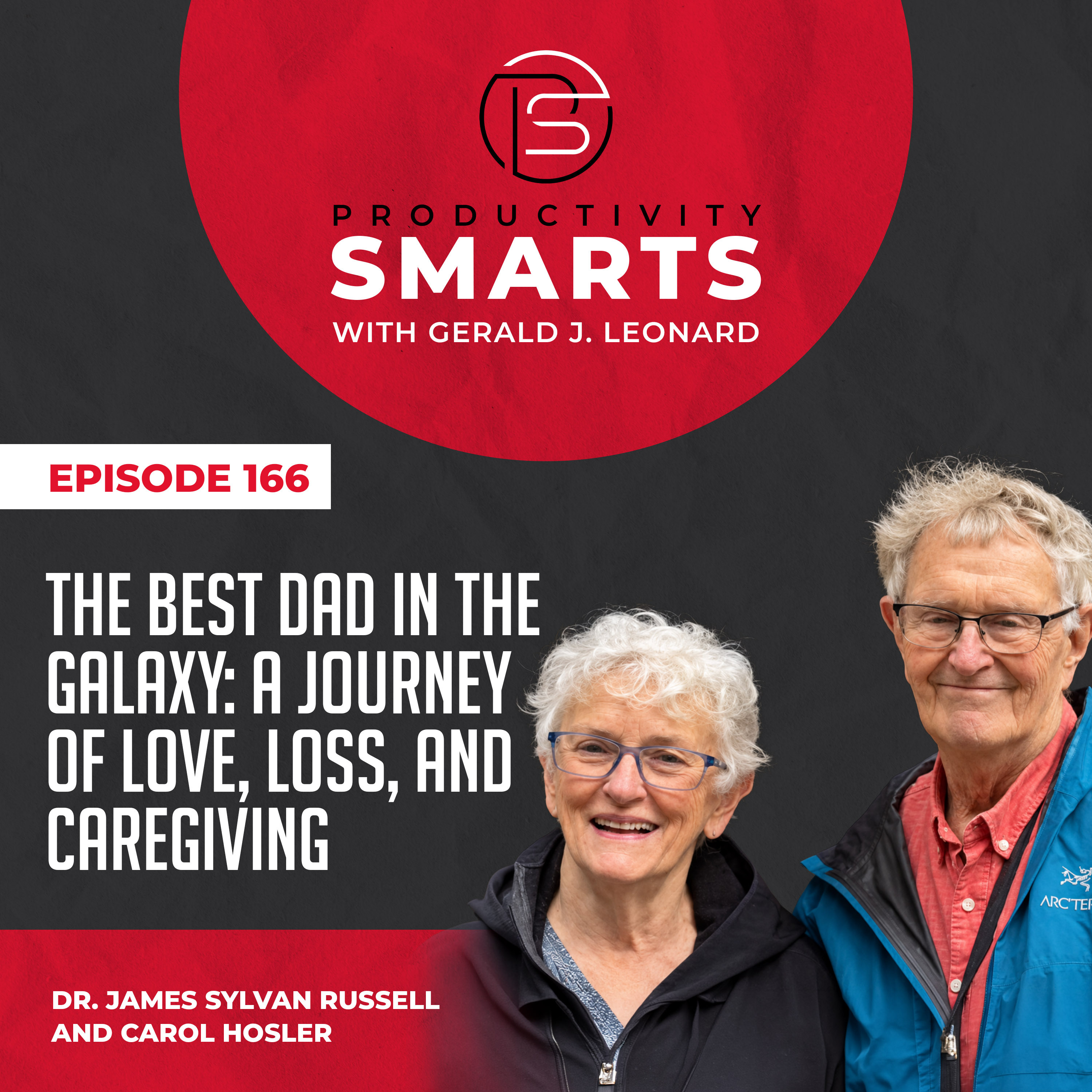
Episode 166 - The Best Dad in the Galaxy: A Journey of Love, Loss, and Caregiving

What would you sacrifice to care for a daughter facing Alzheimer's at just 51? What if you moved from your retirement community, lost your wife eighteen months later, and then faced your own cancer diagnosis? And what if, through it all, love refused to let go? In this episode of Productivity Smarts, host Gerald J. Leonard sits down with Dr. James S. Russell and Carol Hosler, authors, educators, management consultants, and Alzheimer's caregivers, to talk about Best Dad in the Galaxy: She Said It . The book is a candid account of Dr. Russell caring for his daughter, Lynne, through Alzheimer's, and a practical guide to building a compassionate community of care. Dr. Russell explains how he found the book he wanted to write, and Gerald shares his own story of his mother's dementia and how music could bring her back. The conversation turns to headphones, playlists, and how music kept Lynne calm, active, and connected. The guests introduce their "love team" approach and the four pillars of care, prepare, share, and repair. They also discuss how Dr. Russell's background as a management consultant and community college dean helped him work with care staff, why one email is never enough to change an organization, and how redefining productivity around what matters most frees up time for the people you love. They close with how hope shifts over the course of a diagnosis, why "the only failed visit is the visit that doesn't happen," and what it meant when Lynne called her dad by name three weeks before she died. If you're caring for someone with dementia, worried about a parent, or trying to do it all alone, this episode will show you how to build your team before you need it. What We Discuss [02:01] Meet Dr. James S. Russell and Carol Hosler [05:49] Why Dr. Russell wrote the book [07:04] What readers should take away: the capacity we miss in our loved ones [08:07] Why you can't caregive solo: the "love team" [12:11] Headphones, playlists, and how music affects movement and mood [15:35] The four pillars: care, prepare, share, and repair [18:32] Redefining productivity for the sandwich generation [21:25] Telling stories instead of asking "Do you remember?" [23:14] Leadership lessons from management consulting: the double-portions story [26:47] Why organizational communication takes repetition, not one email [28:24] Building relationships before you need them [29:02] Choosing hope after a catastrophic diagnosis: Micah 6:8 [31:18] Why hope shifts, and why the only failed visit is the one that doesn't happen [34:00] Arming visitors with stories: the 19 names [36:39] What Lynne taught them about love and resilience [38:56] Where to find Best Dad in the Galaxy Notable Quotes [06:33] “I have written 5 books about it. I had to throw out the first 4 because it took me so long to figure out what I really wanted to say.” – Dr. James S. Russell [08:17] “I’m solo. You can’t do it solo.” – Carol Hosler [09:13] “So we call that love team. It’s so much more than a support system.” – Carol Hosler [10:25] “People talk about a lot of things, but the minute that you realize she's diagnosed, the highest priority is to build a system of people who really care for her because they're there.” – Dr. James S. Russell [20:59] “It’s not only that it cares for the people better… the impact makes the organization more profitable.” – Dr. James S. Russell [29:30] “Do justice, love mercy, and walk humbly with your God. And that’s the basis that I built it on over the years.” – Dr. James S. Russell [31:49] “I think it’s also important not to set too high expectations for yourself… The only failed visit is the visit that doesn’t happen.” – Carol Hosler [36:45] “My daughter told me that I was the best dad in the galaxy. She said it.” – Dr. James S. Russell Resource and Links Carol Hosler Book Website: bestdadinthegalaxy.com Book: Best Dad in the Galaxy: She Said It James S. Russell LinkedIn: https://www.linkedin.com/in/james-s-russell-46b32438/ Productivity Smarts Podcast Website - productivitysmartspodcast.com Gerald J. Leonard Website - geraldjleonard.com Turnberry Premiere website - turnberrypremiere.com Scheduler - vcita.com/v/geraldjleonard Kiva is a loan, not a donation, allowing you to cycle your money and create a personal impact worldwide. https://www.kiva.org/lender/topmindshelpingtopminds See Privacy Policy at https://art19.com/privacy and California Privacy Notice at https://art19.com/privacy#do-not-sell-my-info .
September 22, 202631 min

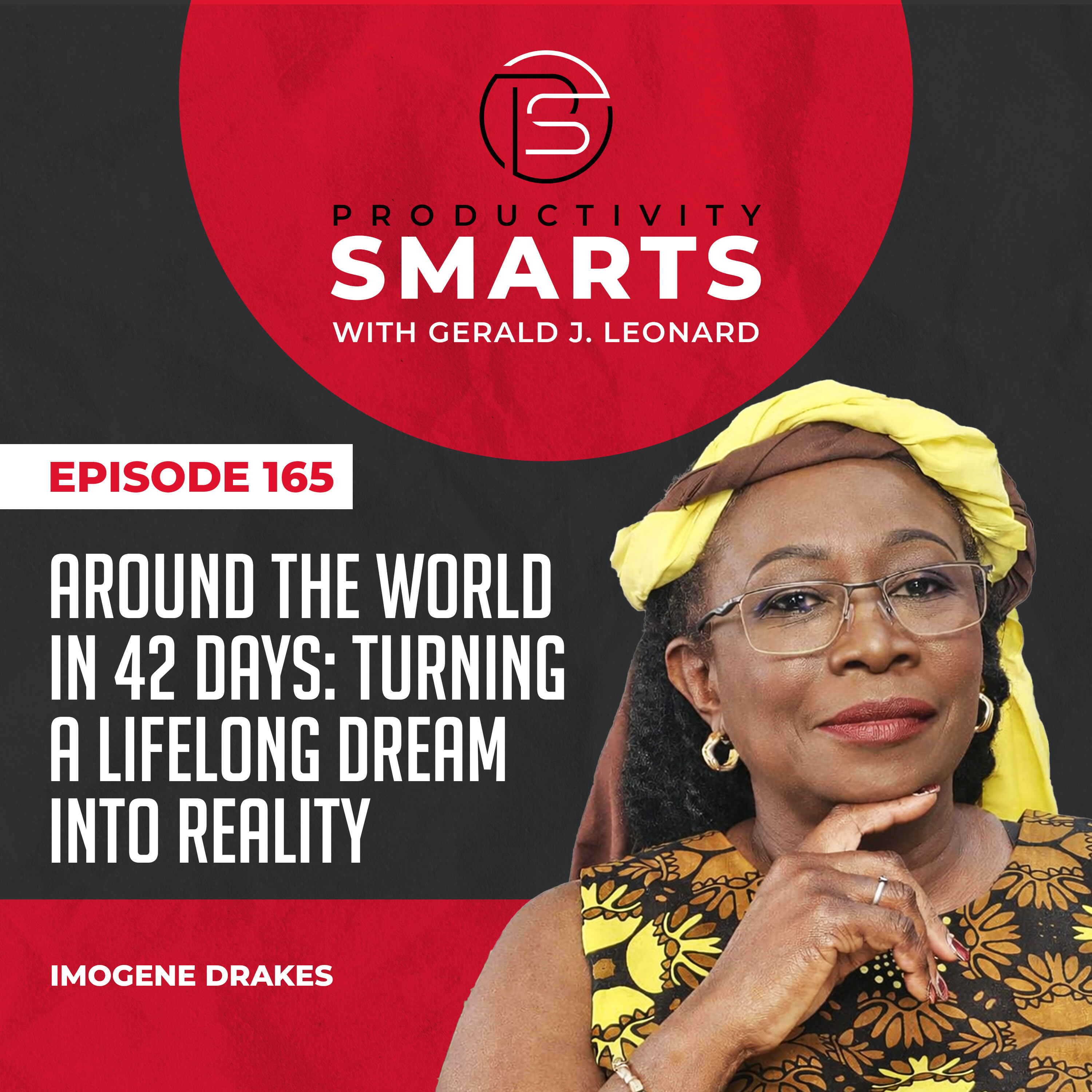
Around the World in 42 Days: Turning a Lifelong Dream Into Reality

How does a lifelong scientist reconcile her love of data with her fascination with ancient myths that defy explanation? And what does it take to turn a retired grandmother into a solo traveler crossing six continents in just 42 days? In this episode of Productivity Smarts , host Gerald J. Leonard sits down with Dr. Imogene Drakes , author of Around the World in 42 Days , for a fascinating conversation about curiosity, courage, planning, and the power of seeing the world with your own eyes. Dr. Drakes shares the story behind her extraordinary journey, which began not with a detailed plan, but with a lifelong fascination with ancient stories, mythology, and science. A Sunday sermon quoting Psalm 82 was the final push she needed to start planning. Within weeks, she had mapped out a whirlwind tour of iconic sites across the globe, from Machu Picchu to Easter Island, from Stonehenge to Mohenjo-daro in Pakistan. But this journey was not without its obstacles. Dr. Drakes opens up about the challenges she faced, including a visa with an incorrect passport number, canceled flights, and the disappointment of missing the glass-bottom boat tour in Japan. Yet through quick thinking, persistence, and a little bit of luck, she turned each setback into an opportunity. Gerald and Dr. Drakes explore why age is irrelevant when pursuing meaningful goals, the importance of writing down your dreams, and how building flexibility into your plans, both in time and budget, can save you when things go wrong. They also discuss the deeper lessons from her journey, including the power of humility, the importance of connecting with people across cultures, and her ongoing mission to explore the common threads between science, mythology, and religion. If you've ever dreamed of doing something extraordinary but told yourself it's too late, this episode will inspire you to put your birth certificate away and start planning. What We Discuss [02:02] Meet Imogene Drakes and Around the World in 42 Days [04:16] The inspiration behind her journey [05:51] Planning a 42-day adventure around the world [08:01] Why experiencing places firsthand matters [09:06] Discoveries in Australia and Japan [13:25] Navigating unexpected travel challenges [15:07] What the journey taught her about herself [16:59] Mohenjo-daro and the journey’s defining moment [18:20] Finding common ground across cultures [20:35] Why it’s never too late to pursue a dream [22:51] Journaling, reflection, and finding purpose [25:19] Turning a dream into a practical first step [27:28] Creating a roadmap for others [29:15] Where to find Around the World in 42 Days Notable Quotes [07:19] "I didn't say anything to anyone until it was all planned." – Dr. Imogene Drakes [08:26] "I wouldn't be satisfied if I wrote a book and actually didn't go to the places to see what they look like." – Dr. Imogene Drakes [09:06] "It's really important that you don't take anyone's word for important things you need to do." – Dr. Imogene Drakes [13:25] "It's always good to build in some space in whatever you're doing, especially if you're going very far." – Dr. Imogene Drakes [14:00] "First of all, I had to stop, and I had to breathe. Then I had to think." – Imogene Drakes [15:07] "I can think on my feet." – Dr. Imogene Drakes [15:31] "I really didn't give up. I'm not somebody who gives up easily." – Dr. Imogene Drakes [20:58] "Put your birth certificate very far away. It has nothing to do with your ability." – Dr. Imogene Drakes [21:19] "I find that since I'm retired, I am busier than ever because I'm so happy with what I'm doing." – Dr. Imogene Drakes [25:47] "Write down your dream. And then write down what your first step will be." – Dr. Imogene Drakes Resource and Links Imogene Drakes Facebook: https://www.facebook.com/people/ImogeneaDrakes/61591723627710/ Book: A round the World in 42 Days Upcoming book: The Top of the Globe Productivity Smarts Podcast Website - productivitysmartspodcast.com Gerald J. Leonard Website - geraldjleonard.com Turnberry Premiere website - turnberrypremiere.com Scheduler - vcita.com/v/geraldjleonard Kiva is a loan, not a donation, allowing you to cycle your money and create a personal impact worldwide. https://www.kiva.org/lender/topmindshelpingtopminds See Privacy Policy at https://art19.com/privacy and California Privacy Notice at https://art19.com/privacy#do-not-sell-my-info .
September 15, 202635 min

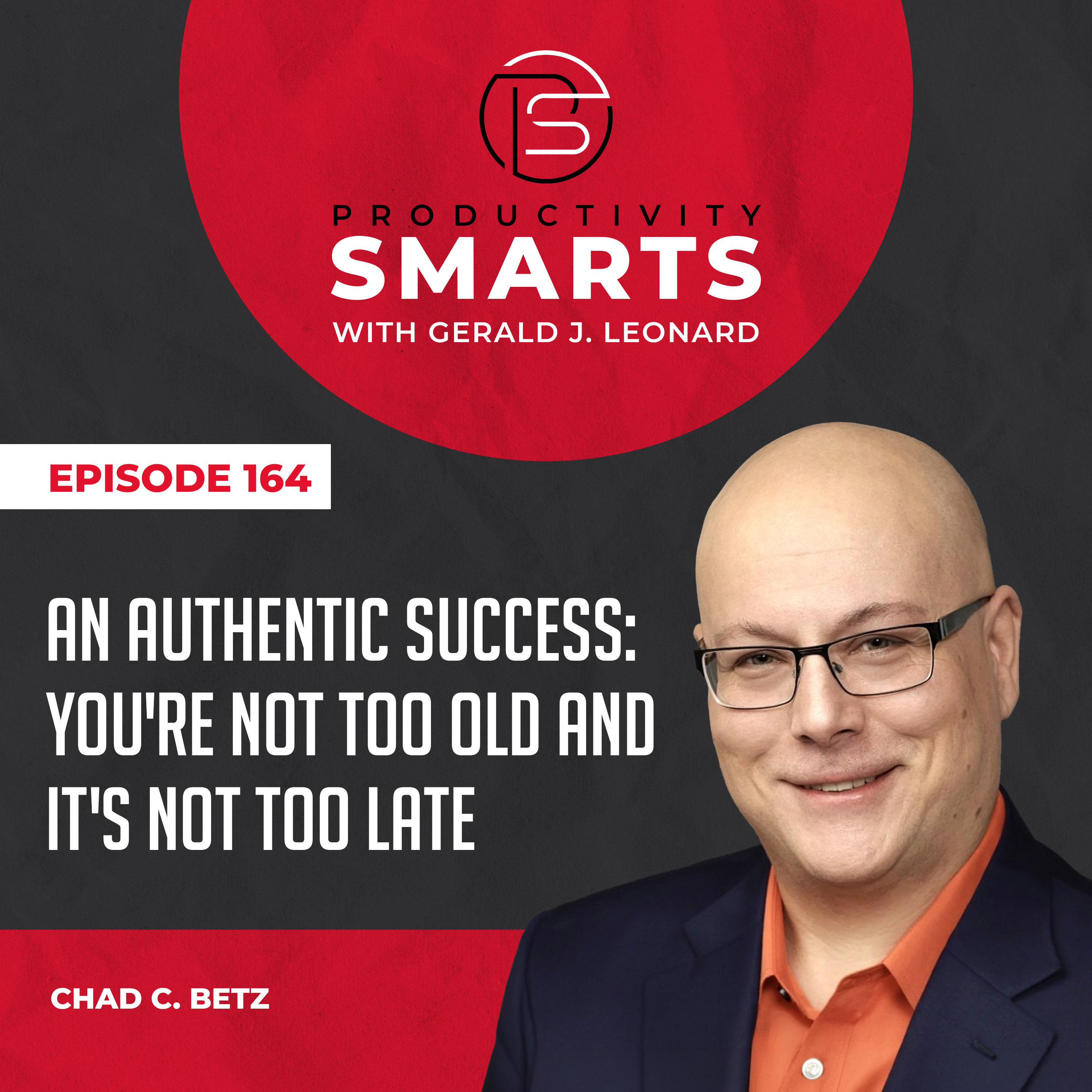
Episode 164 - An Authentic Success: You're Not Too Old And It's Not Too Late

Do you ever look at those "30 Under 30" lists and feel that little pang of regret, that sinking feeling that whispers, "I should have made my mark by now. Maybe I missed my window?" But the truth is, some of the people who make the biggest impact in the world don't do it in their 20s, 30s, or even their 40s. They find their stride after 50 and 60. Why? In this episode of Productivity Smarts , host Gerald J. Leonard sits down with Chad Betz, author of An Authentic Success , for a powerful conversation about redefining success, breaking free from the "sunk cost fallacy," and building a life aligned with your true purpose. With over thirty years of leadership and financial services experience, Chad shares his personal journey from a high-powered but unfulfilling career to one built on intention and meaning. He opens up about his "parking lot moment": a low point in a parking garage where he realized he was helping others achieve their goals at the expense of his own. That realization sparked a transformation that ultimately became the foundation for his book and his coaching practice. Gerald and Chad explore why smart, capable people often stay stuck in careers that no longer fit them, the psychological barriers that keep us clinging to the wrong paths, and how to make "slow pivots" rather than reckless leaps. Chad introduces practical frameworks like the 20 Goals Exercise and the OODA Loop (Observe, Orient, Decide, Act) to help listeners gain clarity, build momentum, and take intentional action. They also tackle the difference between being busy and being truly productive, the importance of coaches and mentors, and the power of journaling to capture the "whispers" that often hold life-changing ideas. If you've ever felt like you're running hard but heading in the wrong direction, this episode offers a guide for pausing, reflecting, and realigning with what truly matters. What We Discuss [02:01] Meet Chad Betz [03:51] The inspiration behind An Authentic Success [05:23] Parking garage wake up [06:37] Why smart people stay stuck [08:17] Reinventing after 50 [10:10] Lifelong learning and turning experience into an advantage [12:55] Learning from people who have already walked the path [14:20] What happens when you're productive in the wrong direction [15:18] The 20 Goals Exercise and discovering your passion [16:05] Making slow pivots instead of starting over [18:10] Keeping your goals simmering when life gets in the way [20:10] Persistence, resistance, and staying focused [21:08] Why coaches and mentors can help you break through [24:45] Success versus activity [25:05] Why being busy doesn't necessarily mean you're succeeding [27:02] The OODA Loop: Observe, Orient, Decide, Act [28:39 Journaling for clarity and direction [32:09] Finding valuable ideas in the whispers [33:33] Where to find Chad and his work Notable Quotes [04:32] "I was really helping other people achieve their goals at the expense of my own." – Chad Betz [06:01] "I really did feel like a failure even though from the outside I had a good job and things were going well." – Chad Betz [07:32] "We invest so much time, so much effort, so much education, and then we say, 'We can't change.'" – Chad Betz [15:4]7 "The last piece of it, it's the most important piece, you have to take action." – Chad Betz [16:05] "You don't have to quit your job and run off into the sunset, chase your passions." – Chad Betz [19:25] "Just because life gets in the way doesn't mean you have to give up on your goals." – Chad Betz [24:54] "There's a difference between being successful and seeing results compared to just seeing activity and being busy." – Chad Betz [32:13] "Those life-changing ideas aren't screaming at you. They're in the whispers in the background." – Chad Betz Resource and Links Chad Betz Website: https://www.anauthenticsuccess.com/ LinkedIn: https://www.linkedin.com/in/chadcbetz/ YouTube: https://www.youtube.com/@chadcbetz Book: An Authentic Success Productivity Smarts Podcast Website - productivitysmartspodcast.com Gerald J. Leonard Website - geraldjleonard.com Turnberry Premiere website - turnberrypremiere.com Scheduler - vcita.com/v/geraldjleonard Kiva is a loan, not a donation, allowing you to cycle your money and create a personal impact worldwide. https://www.kiva.org/lender/topmindshelpingtopminds See Privacy Policy at https://art19.com/privacy and California Privacy Notice at https://art19.com/privacy#do-not-sell-my-info .
September 8, 202637 min

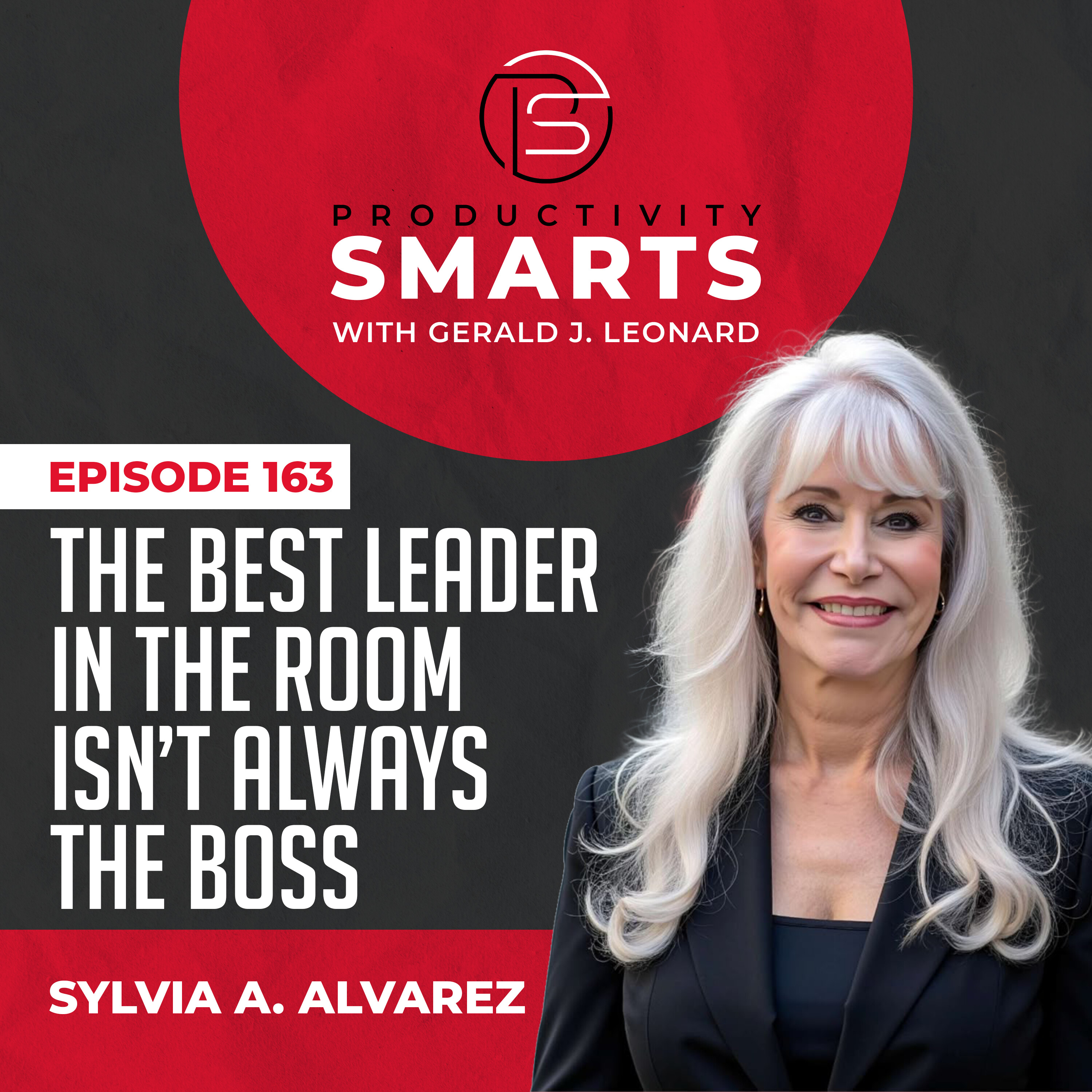
Episode 163 - The Best Leader in the Room Isn’t Always the Boss

How do you turn a life shaped by adversity into a legacy of courage, service, and impact? And what can we learn from the people who choose to become better rather than bitter when life gets difficult? In this episode of Productivity Smarts , host Gerald J. Leonard sits down with Sylvia Alvarez , housing advocate, educator, author, and entrepreneur, for a powerful conversation about resilience, family, housing, and standing up for what is right. Sylvia shares the remarkable story of her mother, Cielo, who survived extreme hardship in Cuba, fled to New York with almost nothing, and eventually became a successful entrepreneur and real estate developer. From her mother, Sylvia learned five principles represented by the name Cello: courage, hope, endurance, love, and overcoming. Those lessons shaped Sylvia's own journey. Her connection to housing began when she was just nine years old, translating for her parents as they purchased their first home in Tampa. Years later, she raised $163 million in down payment assistance, helping nearly 13,000 families purchase homes. Sylvia also opens up about the darkest chapter of her career: the 2008 foreclosure crisis. After her agency lost its funding, she made the painful decision to close its doors. Instead, all 14 employees volunteered to stay and help families facing foreclosure. Over eight and a half years without pay, the team helped more than 14,000 Tampa Bay families. The experience eventually led Sylvia to co-author The American Nightmare and speak before government officials at the White House. She explains why speaking truth to power matters and how difficult experiences can build the grit and conviction needed to create change. Gerald and Sylvia also discuss Home Track Online, a HUD-certified housing education program designed to help people understand homeownership, credit, budgeting, and the realities of buying a first home. If you're navigating a difficult season or looking for a reminder that adversity can become a source of purpose, this episode offers a simple message worth carrying with you: Don't be bitter. Be better. What We Discuss [05:00] The extraordinary story of Sylvia's mother, Cielo [06:18] Five principles: courage, hope, endurance, love, and overcoming [09:12] Choosing to become better, not bitter [11:41] Sylvia's journey into housing at age nine [12:48] Helping nearly 13,000 families become homeowners [14:42] The 2008 foreclosure crisis and closing the agency [15:55] Eight and a half years without pay [19:23] Writing The American Nightmare [19:25] Sylvia's invitation to the White House [22:02] Speaking truth to power [22:17] How adversity builds grit and conviction [23:44] Don't be bitter, be better [24:14] Cielo's entrepreneurial determination [26:50] A childhood lesson about fighting injustice [30:50] Continuing her mother's legacy through housing advocacy [31:43] Home Track Online and preventing foreclosure [33:26] Preparing first-time buyers for reality [34:56] Building a legacy that outlives you [36:20] Where to find Sylvia and her resources [36:45] Final thoughts Notable Quotes [06:18] "C is for courage. She said you have to have courage every day because every day is not going to be an easy day." – Sylvia Alvarez [06:45] "No matter what the problem is, you have to outlive it." – Sylvia Alvarez [09:12] "Instead of getting better, they tend to get bitter. She did the opposite." – Gerald J. Leonard [11:12] "A diamond doesn't shine and sparkle unless it's got friction and polish." – Sylvia Alvarez [15:55] "We helped over 14,000 Tampa Bay area families with our free foreclosure prevention programs." – Sylvia Alvarez [22:02] "When you speak truth to power." – Sylvia Alvarez [23:44] "Don't be bitter. Be better." – Sylvia Alvarez [31:43] "People who work with a HUD certified housing counselor and take a HUD certified class were 35 percent less likely to become a victim of foreclosure." – Sylvia Alvarez [34:19] "You are your mother's child." – Gerald J. Leonard Resource and Links Sylvia Alvarez Instagram: Sylvia Alvarez Book: The American Nightmare: Strategies for Preventing, Surviving, and Overcoming Foreclosure Home Track Online: hometrackonline.org Housing Education Alliance USA: hea-usa.org Productivity Smarts Podcast Website - productivitysmartspodcast.com Gerald J. Leonard Website - geraldjleonard.com Turnberry Premiere website - turnberrypremiere.com Scheduler - vcita.com/v/geraldjleonard Kiva is a loan, not a donation, allowing you to cycle your money and create a personal impact worldwide. https://www.kiva.org/lender/topmindshelpingtopminds See Privacy Policy at https://art19.com/privacy and California Privacy Notice at https://art19.com/privacy#do-not-sell-my-info .
September 1, 202635 min

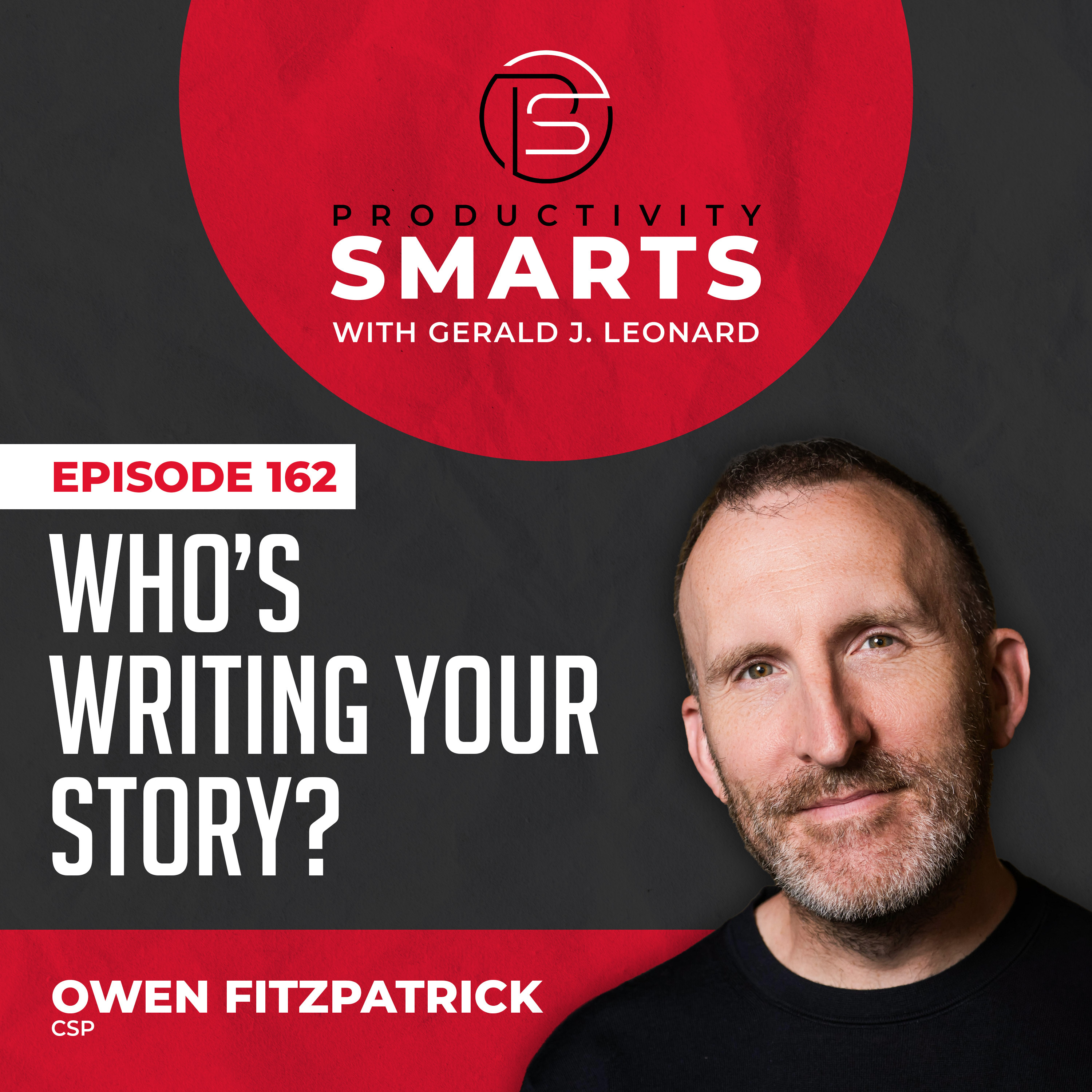
Episode 162 - Inner Propaganda: Leading Hearts and Minds Through Turbulent Times with Owen Fitzpatrick

What if the biggest obstacle to your productivity isn't your schedule, your tools, or your willpower, but the stories you've been telling yourself without realizing it? In this episode of Productivity Smarts , host Gerald J. Leonard sits down with Owen Fitzpatrick, CSP, social psychologist, keynote speaker, and author of Inner Propaganda , to explore how the hidden architecture of belief drives behavior, performance, and transformation. Owen introduces the concept of belief leadership, the idea that people don't follow plans, they follow beliefs, and explains why most productivity struggles trace back to a single limiting story we've bought into about who we are. Gerald and Owen dig into how the brain operates as a prediction machine, filtering the world through only 40 bits of the 10 million bits of information our eyes take in every second, and why that means we often see the world not as it is, but as we are. The conversation moves into Owen's time in North Korea, the origin of the term "inner propaganda," and how the same mechanisms nations use to indoctrinate citizens show up in our own heads, in advertising, and even in how AI systems learn to persuade us. They close with a discussion of antifragility, and how reframing failure as fuel can help you build an identity that gets stronger under pressure rather than breaking down. If you're ready to challenge the subconscious stories running your life and your leadership, this episode is packed with insight you can apply immediately. What We Discuss [00:00] Introduction [02:01] Guest introduction: Owen Fitzpatrick [05:28] Belief leadership: why people follow beliefs, not plans [06:07] Not enough hours and the myth of the "unproductive person" [08:02] How the stories we sell ourselves become our beliefs [08:49] The smoker story: expanding your identity to make change possible [11:30] 10 million bits vs. 40 bits: how little we actually perceive [12:10] The brain as a prediction machine [13:12] Why the brain optimizes for survival, not productivity [14:24] Seeing the world through the lens of our own stories [15:51] North Korea and the origin of "inner propaganda" [17:56] Rambo, Rocky, and everyday indoctrination through media [20:12] Tribalism, vilification, and the price of belonging [21:41] Reading from the book: "The Brain Always Wins" [23:27] Predictive processing and the neuroscience of belief [24:08] Lisa Feldman Barrett and how emotions are constructed [26:24] Priming, expectation bias, and running into walls [27:44] How beliefs set us up for self-sabotage or success [30:08] Antifragility: getting stronger from adversity [32:01] Blending identities: jazz, productivity, and reinvention [33:34] Where to find Owen and his book [34:39] Final thoughts Notable Quotes [08:12] "The stories that we sell to ourselves, not necessarily just tell ourselves, but sell to ourselves, they become the beliefs that we buy." – Owen Fitzpatrick [10:24] "An identity is just a story we sell to ourselves about who we are... and because it's just a story, we can sell ourselves a new story." – Owen Fitzpatrick [12:11] "The brain is a prediction machine." – Owen Fitzpatrick [13:46] "Your brain does not optimize for productivity. It optimizes for survival and it optimizes for stability." – Owen Fitzpatrick [16:30] "The exact same mechanisms that the state uses to propagandize are the same things that my brain uses." – Owen Fitzpatrick [21:59] "The brain is a gambling addict that bets on reality. It doesn't wait for information. It guesses what should happen and adjusts when surprised." – Owen Fitzpatrick [27:57] "We can completely distort a situation based upon our beliefs or expectations, because that's how we get into mental health struggles... that's how we sabotage ourselves." – Owen Fitzpatrick [30:17] "The opposite of fragile is not resilient... antifragility is when you expose something to adversity, it gets stronger as a result." – Owen Fitzpatrick [30:54] "Every single time you're wrong, it helps you to learn and grow and improve." – Owen Fitzpatrick Resource and Links Owen Fitzpatrick Website: owenfitzpatrick.com LinkedIn: www.linkedin.com/in/owenfitzp Book: Inner Propaganda Book Website: innerpropaganda.com Podcast: Inner Propaganda Newsletter: Inner Propaganda Productivity Smarts Podcast Website - productivitysmartspodcast.com Gerald J. Leonard Website - geraldjleonard.com Turnberry Premiere website - turnberrypremiere.com Scheduler - vcita.com/v/geraldjleonard Kiva is a loan, not a donation, allowing you to cycle your money and create a personal impact worldwide. https://www.kiva.org/lender/topmindshelpingtopminds See Privacy Policy at https://art19.com/privacy and California Privacy Notice at https://art19.com/privacy#do-not-sell-my-info .

August 24, 202637 min

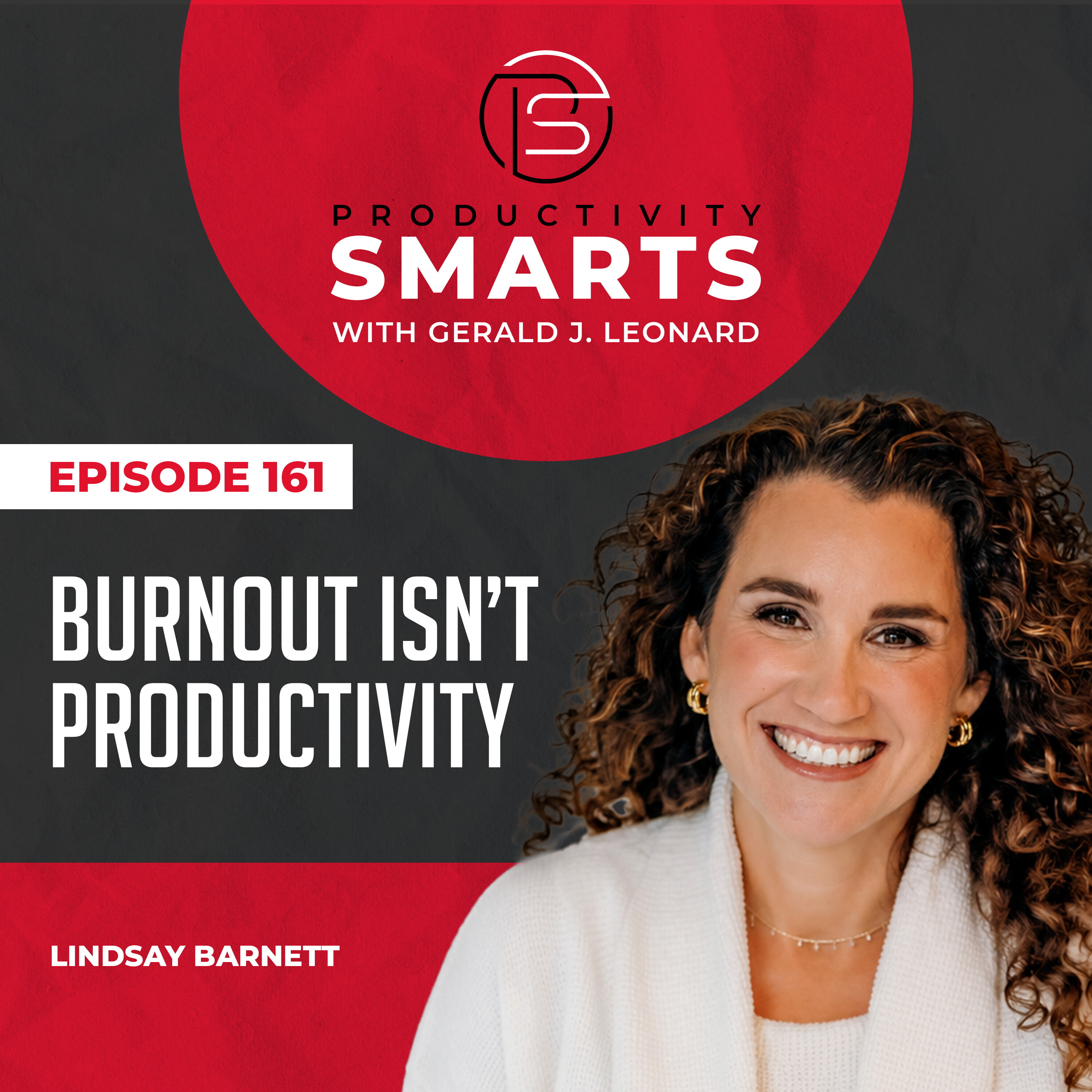
Episode 161 - Working Hell to Working Well: Making Your Company Work for You with Lindsay Barnett

How can professionals and creatives transform burnout into sustainable productivity while creating a work life that actually supports the life they want? In this episode of Productivity Smarts , host Gerald J. Leonard sits down with Lindsay Barnett, workplace experience strategist and author of Working Hell to Working Well , to rethink what productivity can look like when doing more is no longer the goal. Lindsey shares how moving to a part-time schedule after the pandemic changed the way she approached work, time, and work-life harmony. Gerald and Lindsay explore why constraints can sharpen focus, how mindfulness creates space between stimulus and response, and why negotiation works better as collaboration than compromise. They also unpack the habits that keep people stuck in hustle culture, from constant email and social media access to the pressure to always be productive. Lindsay shares her "3 I's" of intellectual challenge, impact, and interaction as a way to identify what gives you energy and what may be missing from your work. The conversation also examines burnout in leadership, unrealistic expectations, and the fear of failure that can create unnecessary work. If you're feeling burned out, stuck, or ready to rethink how you work, this episode offers practical ways to build sustainable productivity and greater work-life harmony. Listen in for practical ideas you can start applying to your work and life today. What We Discuss [00:00] Introduction [02:01] Guest introduction: Lindsay Barnett [03:39] Lindsay's journey to workplace wellness [05:48] The power of personal experience [06:48] The power of constraints [08:17] Constraints create clarity [09:19] The water hose analogy [11:19] Practical steps to overcome burnout [13:50] Mindfulness and fluidity [15:59] Negotiation and networking skills [18:57] Shifting from hustle culture [20:09] Breaking the hustle pattern [23:36] Dealing with feeling stuck [26:53] Unsticking yourself through learning [27:47] Taking agency in your career [30:34] The research and depth behind Working Hell to Working Well [31:02] Why burnout is contagious in leadership [31:22] Fear of failure as a hidden driver of overwork [33:50] Constraints as a competitive advantage, from supply chains to teams [35:08] Where to find Lindsay, her book, and the new Recharge Lab [36:05] Final thoughts Notable Quotes [07:07] "The words we use create the world that we see. And it creates the world that our body lives in." – Gerald J. Leonard [08:24] "There is something about constraint that creates such clarity." – Lindsay Barnett [10:05] "I'm using less water, I'm covering more ground, and I'm getting the job done. I'm being more efficient, and I'm conserving my energy. And that's the principle of constraints." – Gerald J. Leonard [11:47] "Mindfulness is that little gap between the piece of information that's coming your way and your response." – Lindsay Barnett [13:16] "The unexamined life is like driftwood—throw it out in the ocean and wherever the wave takes it, that's where it goes." – Gerald J. Leonard [16:29] "Negotiation looks more like, here's what I have on my plate. What do you have on your plate? How do we start the conversation? Not with, I want it this way, you want it that way, but really saying, where can we go together?" – Lindsay Barnett [19:37] "It's unsustainable to drive your car at 100 miles an hour and never stop for gas. The engine is just gonna burn up. But that's exactly what happens to us." – Gerald J. Leonard [20:11] "I'm a big believer in small actions over time yield big results." – Lindsay Barnett [25:09] "We oftentimes overly identify with work. And so we can feel super stuck, but there's a whole other aspect of life that we can use to charge our battery." – Lindsay Barnett [31:58] "Sometimes what happens is this fear of failure is driving our behavior to create certain standards of excellence that honestly we may not have the resources to actually deliver on." – Lindsay Barnett Resource and Links Lindsey Barnett Website: barnettcoaching.com LinkedIn: Lindsay K. Barnett Book: Working Hell to Working Well New offering: The Recharge Lab (team experience launching soon) Productivity Smarts Podcast Website - productivitysmartspodcast.com Gerald J. Leonard Website - geraldjleonard.com Turnberry Premiere website - turnberrypremiere.com Scheduler - vcita.com/v/geraldjleonard Kiva is a loan, not a donation, allowing you to cycle your money and create a personal impact worldwide. https://www.kiva.org/lender/topmindshelpingtopminds See Privacy Policy at https://art19.com/privacy and California Privacy Notice at https://art19.com/privacy#do-not-sell-my-info .

Is this your show?

Claim this listing to keep it up to date, reach guests who want to pitch you, and manage bookings with Guestify.

Claim this listing