Find partners
Planetary Radio: Space Exploration, Astronomy and Science

Planetary Radio: Space Exploration, Astronomy and Science

Hosted by The Planetary Society

TechnologyScienceInterviews guests

Episodes

1340

Latest episode

Jun 2026

Language

EN-US

About the show

Planetary Radio brings you the human adventure across our Solar System and beyond. We visit each week with the scientists, engineers, leaders, advocates, and astronauts who are taking us across the final frontier. Regular features raise your space IQ while they put a smile on your face. Join host Sarah Al-Ahmed and Planetary Society colleagues including Bill Nye the Science Guy and Bruce Betts as they dive deep into space science and exploration. The monthly Space Policy Edition takes you inside the DC beltway where the future of the US space program hangs in the balance. Visit planetary.org/radio for an episode guide and much more.

Listen to episodes

60 recent
June 10, 202656 min

U.S. space science in flux: Grant rules, rockets, and reorganization

Between budget battles, proposed grant rule changes, and an exploding Blue Origin rocket, there's a lot to cover in U.S. space policy right now. Jack Kiraly, The Planetary Society's director of government relations, joins host Sarah Al-Ahmed to walk through a cascade of developments affecting NASA and the broader U.S. science community, including a proposed rule change at the Office of Management and Budget that would hand control of federal research grant decisions to political appointees, bypassing the peer review process that has underpinned U.S. science for decades. Kiraly also discusses a major reorganization at NASA, a new competition for the management of the Jet Propulsion Laboratory, the fallout from the New Glenn explosion, and what it means for the future of Artemis. Plus, in What's Up, the names of the Artemis III crew are revealed. Discover more at: https://www.planetary.org/planetary-radio/2026-us-space-science-in-fluxSee omnystudio.com/listener for privacy information.

June 5, 202652 min

Space Policy Edition: A proposal to stifle American science

The White House's Office of Management and Budget has released a sweeping 400-page proposed rule change that would fundamentally alter how the U.S. federal government manages grants, affecting everything from NASA research to biomedical science and community programs. In this episode, Casey Dreier is joined by Liz Ginexi, a former Program Officer at the U.S. National Institutes of Health, to break down what these changes would mean for American science. Among the most significant proposals: replacing merit-based peer review with partisan political review, allowing grants to be terminated at any time without justification, and restricting scientists' ability to publish their work and attend conferences. Together, Casey and Liz explain how a document dressed up in procedural language could centralize unprecedented control over U.S. scientific funding under a single White House office. Discover more at: https://www.planetary.org/planetary-radio/political-control-over-scientific-grantsSee omnystudio.com/listener for privacy information.
June 3, 202655 min

Spacewoman with Eileen Collins

Colonel Eileen Collins was the first woman to pilot and command a Space Shuttle, and the person NASA trusted to lead the program back into space after the loss of Columbia. But her story is about so much more than the milestones. In this episode, Sarah Al-Ahmed sits down with Eileen Collins to discuss “Spacewoman,” a new documentary written and directed by Hannah Berryman, based on Collins' book “Through the Glass Ceiling to the Stars: The Story of the First American Woman to Command a Space Mission.” They talk about what drove her to keep pushing forward, the personal cost of pursuing an extraordinary career, and what it means to break barriers, not just for yourself, but for everyone who comes after you. Then, Bruce Betts, our Chief Scientist, joins us for What's Up to explore what distinguished pilots and commanders from mission specialists in the space shuttle era, and why that distinction was so critical to Eileen's path to the commander's seat. Discover more at: https://www.planetary.org/planetary-radio/2026-spacewomanSee omnystudio.com/listener for privacy information.
May 27, 20261 hr 2 min

Los Angeles Astronomical Society celebrates 100 years of looking up

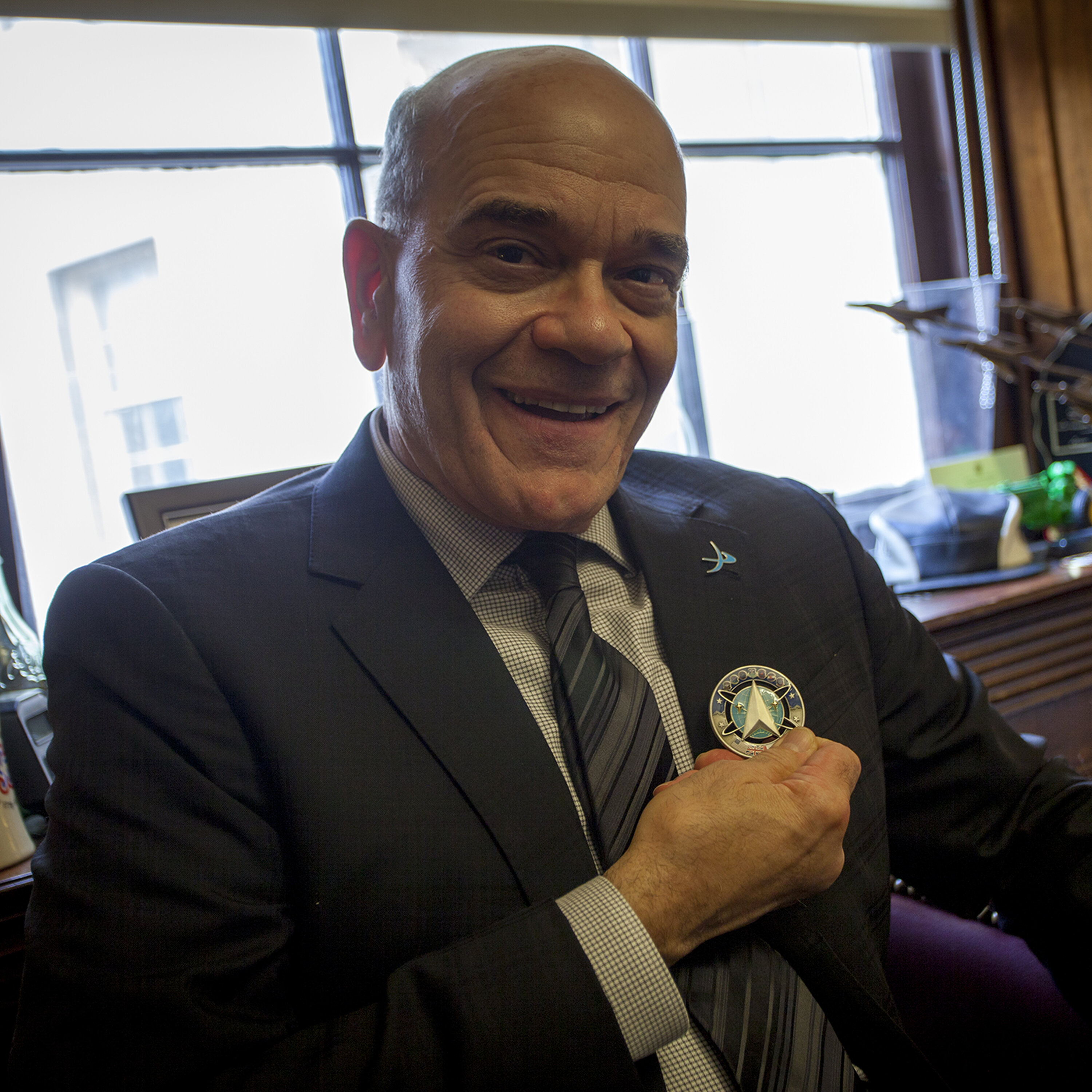
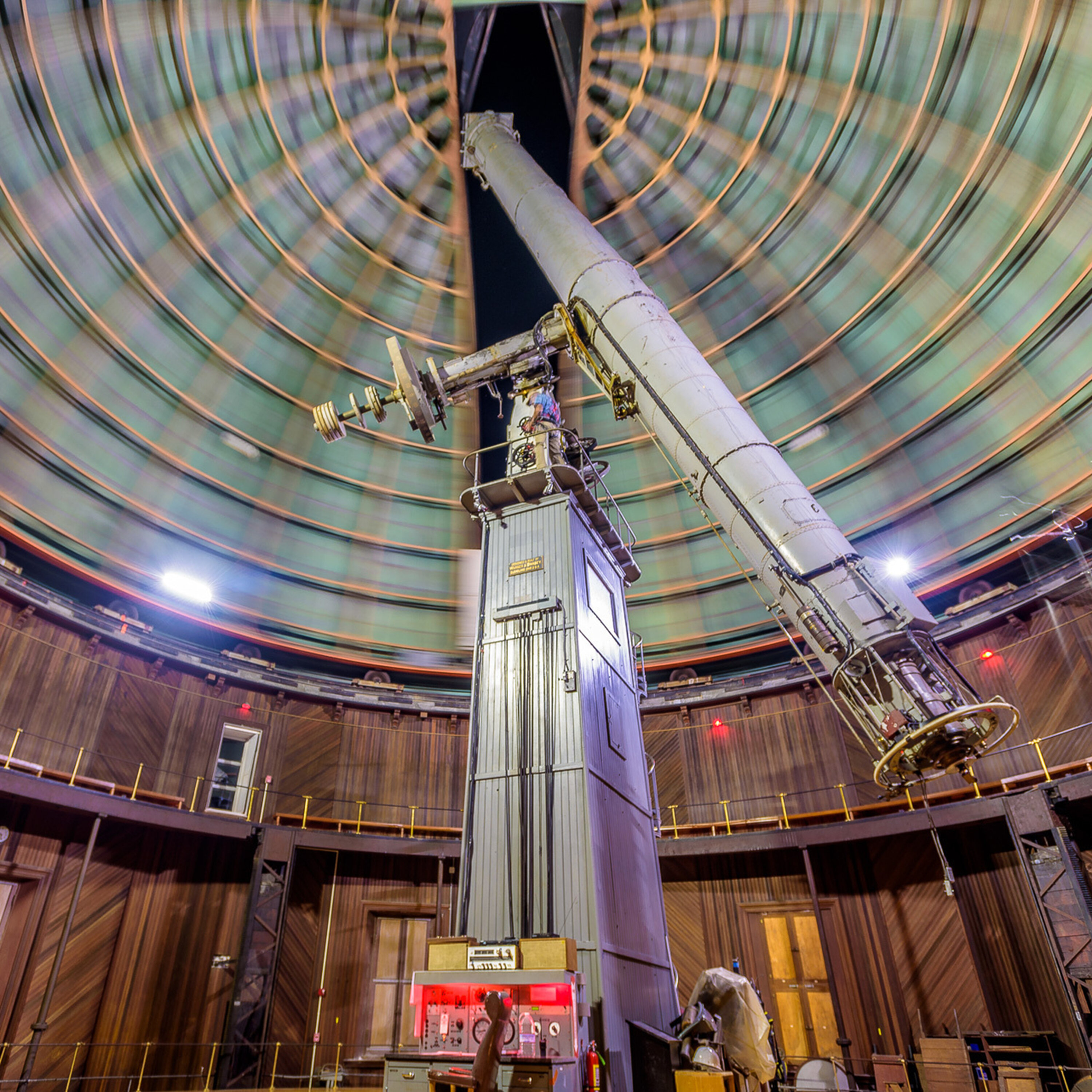
The Los Angeles Astronomical Society (LAAS) is one of the oldest and largest amateur astronomy clubs in the United States, and this year, it’s turning 100. To mark the occasion, the LAAS threw a centennial star party on the lawn of Griffith Observatory, featuring 100 telescopes, a dedication ceremony, and a community of passionate skywatchers who showed up rain and all. In this episode, we sit down with Laura-May Abron, vice president of the Los Angeles Astronomical Society and chair of its Centennial Committee, to discuss what it took to put together the event. We drop into the centennial dedication ceremony to hear from LAAS President Keith Armstrong and Griffith Observatory Director Ed Krupp. We also spend time with some of the remarkable members who make this community what it is, including LAAS historian Louis Chilton, who has been a member for over 60 years, research scientist and LAAS member Bryce Bolin, self-taught optician and telescope builder Jeff Schroeder, and Geo Somoza, volunteer at The Planetary Society and one of the people who has dedicated his life to showing others the sky. Plus, Bruce Betts joins us for What's Up and a look at what you can spot in the night sky in June. Discover more at: https://www.planetary.org/planetary-radio/2026-laas-centennial See omnystudio.com/listener for privacy information.
May 20, 202655 min

Twenty organic molecules found in an ancient Martian rock

NASA's Curiosity rover has been exploring Mars' Gale Crater for over a decade. A new analysis of samples collected there reveals something remarkable: more than 20 different organic molecules preserved in ancient rock, including the first detection of a nitrogen-bearing heterocycle on Mars, a type of molecule that's a precursor to compounds essential for life as we know it. While these molecules aren't evidence of life, they tell us that the chemical building blocks for life were present in ancient Martian environments. In this episode, we talk with Amy Williams, an astrobiologist and associate professor at the University of Florida, about what this discovery means for our understanding of Mars' habitability. Then, Planetary Society Chief Scientist Bruce Betts joins us for What's Up, where we compare the results to samples collected from asteroid Bennu. Discover more at: https://www.planetary.org/planetary-radio/2026-diverse-organics-gale-crater-marsSee omnystudio.com/listener for privacy information.
May 15, 202651 min

Book Club Edition: Diane Ackerman and “The Planets: A Cosmic Pastoral”

Author, poet, and science communicator Diane Ackerman is our guest. Her wonderful collection of poems, with one devoted to each of the worlds in our Solar System, was first published in 1976. Carl Sagan said she had produced, “...a stunning book of poetry in The Planets. The work is scientifically accurate and even a convenient introduction to modern ideas on the planets, but much more important, it is spectacularly good poetry, clear, lyrical, and soaring. . . One of the triumphs of Ackerman’s pastoral is the demonstration of how closely compatible planetary exploration and poetry, science and art really are.” “The Planets” is now available in a brand new edition, and is as sublime, entertaining, and enlightening as it was half a century ago. Discover more at: https://www.planetary.org/planetary-radio/book-club-diane-ackermanSee omnystudio.com/listener for privacy information.
May 13, 202657 min

Igniting Discovery: A showcase of NASA-funded research

The Planetary Society's 2026 Day of Action brought something new this year. For the very first time, the advocacy day was followed by a showcase of NASA funded science in an event called Igniting Discovery. Host Sarah Al-Ahmed speaks with Jack Kiraly, Director of Government Relations at the Planetary Society, about how the event came together, and with first-time advocate Julianna Charlene Kolczynski, whose passion for space traces back to her grandfather's dreams. Megan McKeown, Director of Governmental Affairs at the Association of Public and Land-Grant Universities, opens the event. Then we hear from the scientists themselves: Blake Schreurs of the Johns Hopkins Applied Physics Laboratory, planetary scientist Kirby Runyon of the Planetary Science Institute, Christine McCarthy of Columbia University's Lamont-Doherty Earth Observatory, Brent McBride of the University of Maryland Baltimore County, biomechanics PhD student Liliana Delgado of the University of Nebraska Omaha, and science communicator Sarah Treadwell, also known as Space Case Sarah. Planetary Society member Ari Gozlan closes with a reflection on what it means to celebrate science after the Day of Action. Plus, Chief Scientist Bruce Betts joins Sarah for What's Up. Discover more at: https://www.planetary.org/planetary-radio/2026-igniting-discoverySee omnystudio.com/listener for privacy information.
May 6, 202659 min

Day of Action 2026: Rejoining the fight to save NASA science

Every year, members of The Planetary Society travel to Washington, D.C., to make their voices heard on Capitol Hill. This year, just days after the Artemis II crew splashed down off the coast of San Diego, the Presidential Budget Request dropped once more, proposing a 46% cut to NASA's science budget.  Planetary Radio host Sarah Al-Ahmed was on the ground capturing the passion, the preparation, and the people behind one of the largest Days of Action in the Planetary Society's history. In this episode, we hear from Bill Nye, Planetary Society chief ambassador. Sarah speaks with Planetary Society CEO Jenn Vaughn, charter members and advocates David Johnson and Philip Shane, healthcare researcher and human factors scientist Gabe Segarra, astrobiologist and postdoctoral fellow at Carnegie Science Earth & Planets Laboratory Michael Wong, and Colossus Computing CEO Jason Cerundolo and CTO Alex Swehla. Plus, Chief Scientist Bruce Betts joins us for What's Up, where we discuss the missions at stake if NASA's science budget is cut. Discover more at: https://www.planetary.org/planetary-radio/2026-day-of-actionSee omnystudio.com/listener for privacy information.
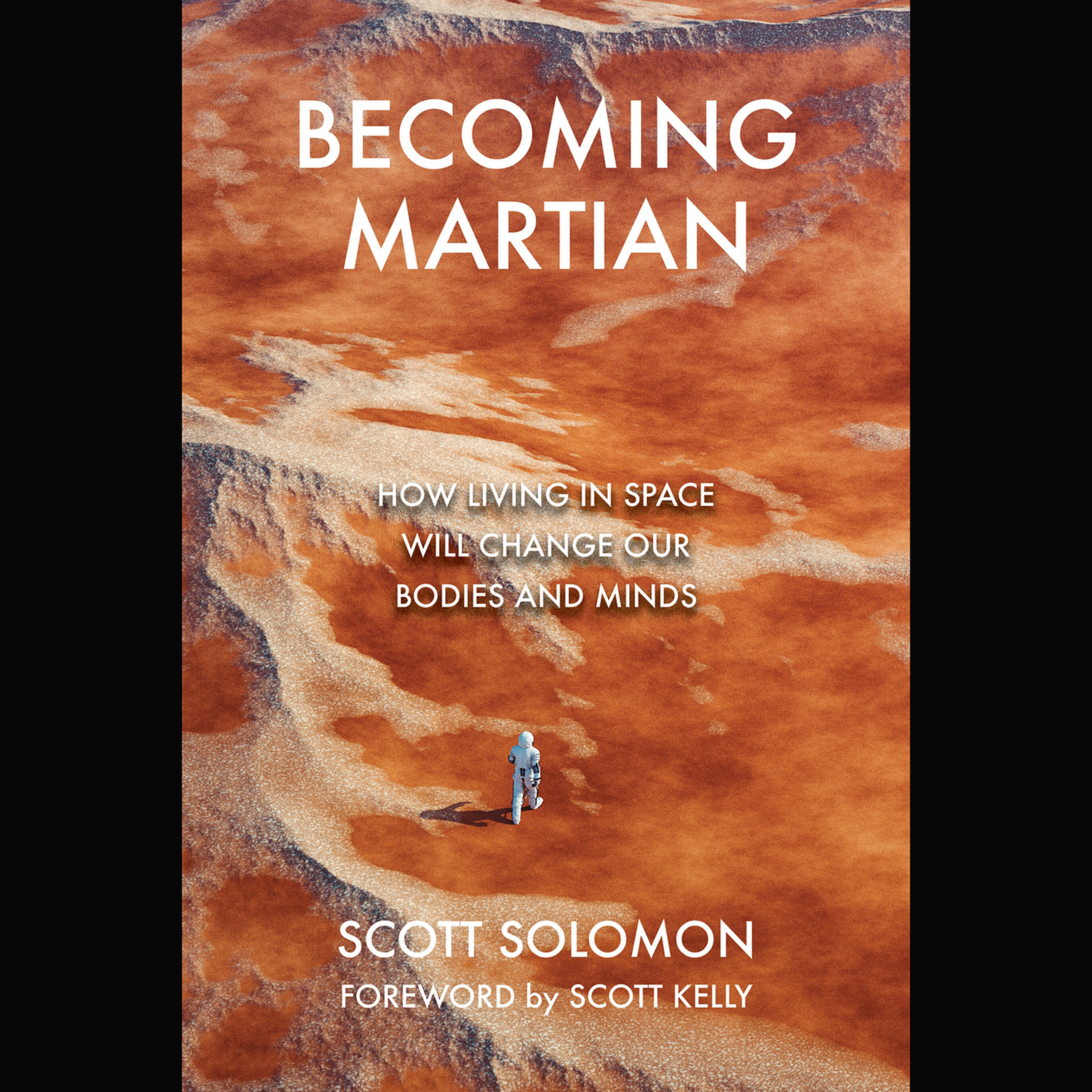
May 1, 20261 hr 18 min

Space Policy Edition: Why humans matter — The philosophy of Artemis II

When Artemis II returned its crew safely to Earth, millions of people found themselves unexpectedly moved. The mission was a test flight, a proof-of-concept, and yet it felt like something far greater than the sum of its parts. In this episode, Casey Dreier, chief of space policy at The Planetary Society, sits down with Rebecca Lowe, philosophy senior fellow at the Mercatus Center at George Mason University, to explore the deeper meaning of humanity's return to deep space. Drawing on philosophy of mind, aesthetics, and theories of value, they unpack why human presence in space feels fundamentally different from even the most sophisticated robotic mission, and why that difference matters. Discover more at: https://www.planetary.org/planetary-radio/spe-philosophy-of-artemis-iiSee omnystudio.com/listener for privacy information.
April 29, 202659 min

Yuri's Night 2026: Celebrating 65 years of human spaceflight

On April 12th, 1961, Yuri Gagarin became the first human in space. Sixty-five years later, we celebrated that milestone at Griffith Observatory in Los Angeles, CA.  We began on the lawn of Griffith Observatory, where host Sarah Al-Ahmed spoke with exhibitors about the tools, dreams, and technology that drive space exploration. Laura Tomlin, CEO of Space for Teachers, shares how microgravity research projects inspire the next generation. Robotics engineer Kalind Carpenter from NASA’s Jet Propulsion Laboratory (JPL) walks us through the machines he’s helping to build to explore the moon and beyond. Software engineer David Hernandez from Blue Origin describes the work happening at Club for the Future to get young people excited about space. Research scientist Robert Green from JPL talks about the invention of imaging spectroscopy and how it’s used to unlock the secrets of distant worlds. And aerospace engineer Andy Sadhwani, who flew to space aboard Virgin Galactic, reflects on seeing Earth from above and what the Artemis II astronauts experienced. We then move inside for Yuri's Night's evening stage show, where the focus shifts to human experience and the overview effect. Cinematographer and polar explorer Jannicke Mikkelsen, Norway's first astronaut, shares her experience as part of the first crew to orbit over both Earth's north and south poles. Space philosopher Frank White, author of "The Overview Effect," leads a panel discussion with actress Nadine Nicole from The Expanse and commercial space explorer Christopher Huie about what happens to humans when we see Earth from space. Finally, NASA astronaut Ron Garan brings it all together with a powerful vision of our planet's fragility, our interconnectedness, and humanity's potential when we work together. The episode closes with Bruce Betts' What's Up segment, revealing a little-known story about what went wrong during Yuri Gagarin's historic first flight. Discover more at: https://www.planetary.org/planetary-radio/2026-yuris-night-2026See omnystudio.com/listener for privacy information.

Is this your show?

Claim this listing to keep it up to date, reach guests who want to pitch you, and manage bookings with Guestify.

Claim this listing

More Technology podcasts