Welcome to Partners for Advancing Health Equity, a podcast bringing together people working on the forefront of addressing issues of health justice. Here we create a space for in-depth conversations about what it will take to create the conditions that allow all people to live their healthiest life possible. Partners for Advancing Health Equity is led by Tulane Celia Scott Weatherhead School of Public Health and Tropical Medicine, is a part of the Tulane Health Equity Institute, and is supported by the Robert Wood Johnson Foundation (RWJF). The views expressed here do not necessarily reflect the views of RWJF. CHECK OUT OUR COMPANION PODCAST: The Skin You're In
Listen to episodes
24 recent
September 9, 202645 min
Health Equity Across Sectors: Dr. Adaeze Enekwechi's Insights on Health Policy and Leadership
In this episode of our companion podcast, The Skin You're In, host Thomas LaVeist sits down with Dr. Adaeze Enekwechi , a former head of health programs at the White House Office of Management and Budget and the current CEO of Nadia Care . They delve into Dr. Enekwechi's unique path through federal administration and her transition to the private sector, highlighting the critical role of leadership in shaping health policy. Dr. Enekwechi shares valuable insights from her time in the Obama administration, and reflects on the intricacies of navigating governmental structures and the importance of advocating for vulnerable populations. Now leading a venture-backed company, Dr. Enekwechi discusses how her experience in federal service informs her approach to entrepreneurship and the strategic partnerships necessary for driving impactful change in healthcare. Join us for a thought-provoking conversation that explores how public health professionals can leverage their skills across sectors to create lasting improvements in health policy and practice. Host: Thomas LaVeist, PhD , Dean and Weatherhead Presidential Chair, Tulane Celia Scott Weatherhead School of Public Health and Tropical Medicine , Principal Investigator, Partners for Advancing Health Equity , Writer and Director, The Skin You’re In documentary Guest: Adaeze Enekwechi, PhD, MPP , CEO, Nadia Care , Operating Partner, WCAS Video Version Transcript
August 25, 20261 hr 4 min
Closing Divides: Advancing Mental Health Equity Through Community-Driven Technology
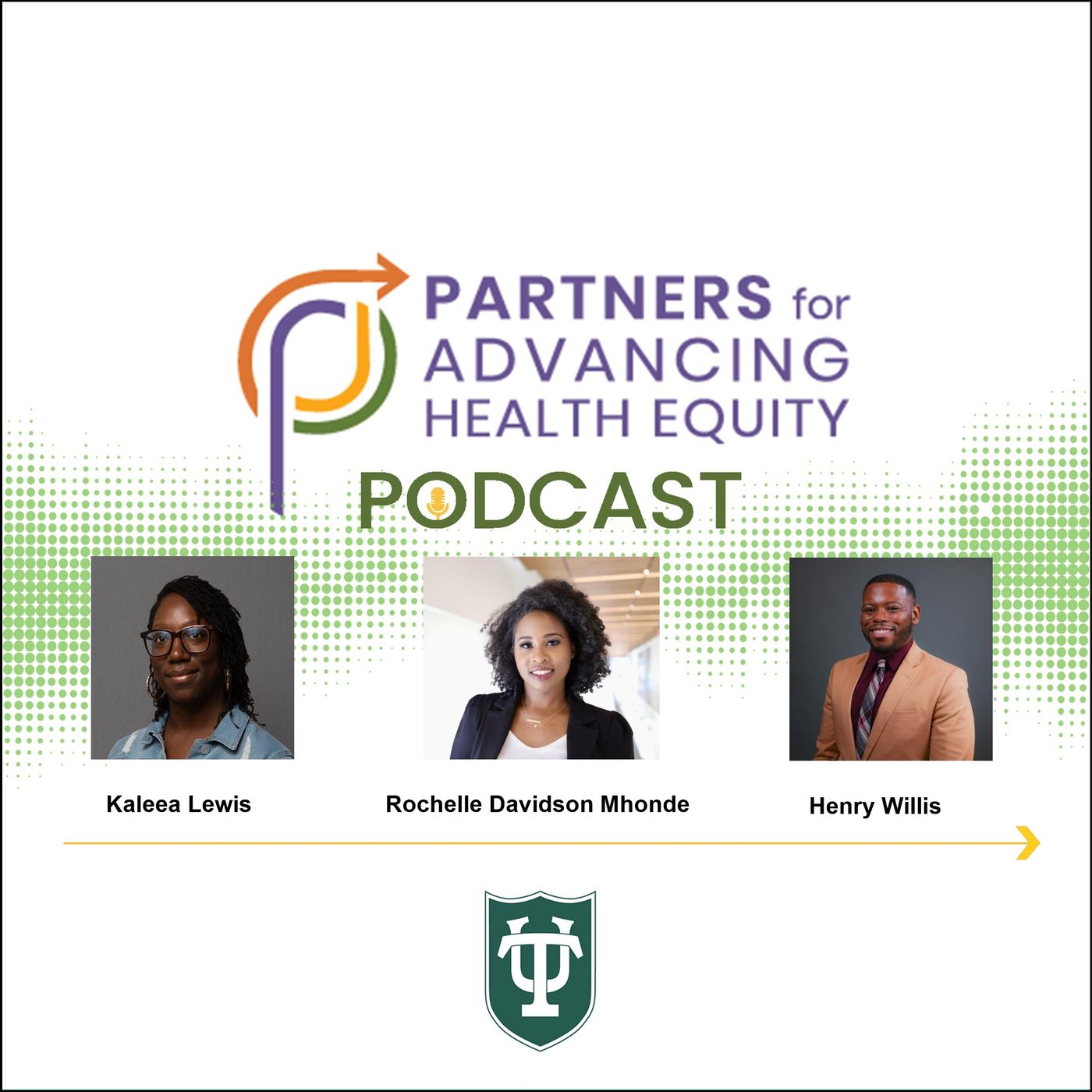
In this episode of the Partners for Advancing Health Equity podcast, host Dr. Caryn Bell discusses the critical intersection of technology and mental health in Black communities with Health Equity Scholars for Action , Dr. Rochelle Davidson Mhonde , Dr. Kaleea Lewis , and Dr. Henry Willis . They emphasize the urgent need for mental health equity and how structural racism affects racially marginalized populations. The conversation highlights the importance of involving communities in the design of digital tools to ensure they address real needs and experiences. They explore how digital tools can facilitate better communication between parents and youth on sensitive topics like sexual health and trauma. And, looking ahead, the experts envision a future where leaders in tech and health truly represent Black communities. They advocate for accountability and genuine community engagement to improve mental health outcomes. This episode serves as a vital call to action for researchers, public health practitioners, policymakers, and tech developers to prioritize equity and representation in their work. Host: Dr. Caryn Bell, Associate Director, Partners for Advancing Health Equity, Assistant Professor, Tulane Celia Scott Weatherhead School of Public Health and Tropical Medicine Guests: Dr. Kaleea Lewis, Assistant Professor, University of Missouri, College of Health Sciences · Dr. Rochelle Davidson Mhonde, Assistant Professor, George Mason University Dr. Henry Willis, clinical psychologist, Assistant Professor, University of Maryland, College Park Department of Psychology Video Version Transcript
August 13, 202633 min
Behind Bars: Unmasking Health Inequities in America's Prisons with Homer Venters
From our companion series, The Skin You’re In , we talk with Dr. Homer Venters, former Chief Medical Officer of New York Correctional Health Services, exploring the often-overlooked intersection of public health and the criminal justice system, as well as discussing Dr. Venters' groundbreaking work in correctional health and his latest book, Outbreak Behind Bars : Spider Bites, Human Rights, and the Unseen Danger to Public Health. Listeners will gain insights into the systemic health challenges faced by incarcerated individuals, including the impact of solitary confinement and the spread of infectious diseases like COVID-19 and scabies. Dr. Venters shares eye-opening stories from his experiences, emphasizing the urgent need for transparency and accountability in correctional health care. This episode not only highlights the pressing issues within the prison system but also offers a hopeful vision for reform, and the importance of integrating public health strategies in these settings. Host: Thomas LaVeist, PhD , Dean and Weatherhead Presidential Chair, Tulane Celia Scott Weatherhead School of Public Health and Tropical Medicine , Principal Investigator, Partners for Advancing Health Equity , Writer and Director, The Skin You’re In documentary Guest: Homer Venters, M.D ., Adjunct Faculty at the NYU School of Global Public Health and former Chief Medical Officer of New York Correctional Health Services. Author, Life and Death in Rikers Island , and Outbreak Behind Bars : Spider Bites, Human Rights & the Unseen Danger to Public Health Video version Transcript
July 9, 202641 min
Health Equity In Action: Insights from Rebekah Gee and the Quest for Accessible Family Health Care
From our companion podcast series, The Skin You're In : host Thomas LaVeist chats with Dr. Rebekah Gee , CEO of Nest Health , about her journey from academia to government and now to the private sector. They discuss the successful implementation of Medicaid expansion in Louisiana, which provided coverage to over 600,000 residents, and the innovative at-home care model Nest Health offers for families lacking access to primary healthcare. Dr. Gee addresses systemic inequities in Louisiana's healthcare system and advocates for ongoing efforts in health equity, emphasizing the need for solution-focused discussions that harness the potential of the private sector. This episode is essential for anyone interested in healthcare access and equity. Host: Thomas LaVeist, PhD , Dean and Weatherhead Presidential Chair, Tulane Celia Scott Weatherhead School of Public Health and Tropical Medicine , Principal Investigator, Partners for Advancing Health Equity , Writer and Director, The Skin You’re In documentary. Guest: Rebekah Gee , CEO and Founder, Nest Health Transcript Video version
June 24, 20261 hr 2 min
Joy as Resistance: Redefining Health Narratives for Black Communities
This episodes explores Black joy, resilience, and health equity. Host Dr. Caryn Bell and guests, Health Equity Scholars for Action , Dr. Yanica Faustin and Dr. Tiffany Ford discuss how structural racism impacts health outcomes, especially in maternal health. They advocate for strength-based approaches in health equity research that celebrate Black experiences, emphasizing community-led solutions. The guests urge a shift from deficit-focused narratives to thriving ones, calling for more funding for successful initiatives. Listeners are encouraged to foster supportive environments that uplift Black narratives, aiming to amplify stories of healing and creativity. Join this enlightening discussion on reimagining health equity through joy and empowerment. Host: Dr. Caryn Bell , Associate Director, Partners for Advancing Health Equity , Assistant Professor, Tulane Celia Scott Weatherhead School of Public Health and Tropical Medicine Guests: Dr. Yanica Faustin , Founder and CEO, Impact Health Equity , Associate Professor, Elon University Dr. Tiffany N. Ford , Assistant Professor, University of Illinois Chicago School of Public Health Video Version Transcript https://files.constantcontact.com/4c2e156f801/5852e267-1441-4629-a9c0-eb5843019992.pdf
May 27, 202627 min
Navigating Public Health and Policy: Insights from APHA’s Georges Benjamin
From our companion podcast series, The Skin You're In : In this insightful episode, we talk with Georges Benjamin, Executive Director of the American Public Health Association (APHA). Georges reflects on the nuances of navigating policies and politics and APHA’s influence in advocating for impactful initiatives. The conversation also addresses the diverse political landscapes within public health, highlighting the need for inclusivity while maintaining a commitment to health equity. Also discussed is guidance to future public health leaders, stressing the importance of community engagement and understanding systemic barriers to health outcomes. Host: Thomas LaVeist, PhD , Dean and Weatherhead Presidential Chair, Tulane Celia Scott Weatherhead School of Public Health and Tropical Medicine , Principal Investigator, Partners for Advancing Health Equity , Writer and Director, The Skin You’re In documentary. Guest: Georges C. Benjamin, MD , Executive Director, American Public Health Association Transcript Video version
April 23, 202621 min
Part Two: Live from Montgomery: Conversations with the Men of The Skin You’re In documentary
In part one from our companion podcast series, The Skin You're In , we heard from the filmmakers and featured participants as they discussed the making of the documentary and the broader forces shaping health disparities in America. In this second installment, the conversation expands beyond the stage. Panelists and audience members offer their own perspectives, highlighting the importance of community dialogue, shared experience, and sustained engagement in advancing better health outcomes for all. Moderator: Dean Meminger , Spectrum News NY1 Anchor Panelists: Dr. Thomas LaVeist , Writer and Director Dr. Wil LaVeist , Producer Alejandro Orengo , Director of Photography Scheron Bryant, Jr. Tevon Robinson Transcript
April 23, 202632 min
Part One: Live from Montgomery: Conversations with the Men of The Skin You’re In documentary
In part one of this two part episode from our companion podcast series, The Skin You're In , we delve into the critical question: Why do Black Americans face poorer health outcomes and shorter life expectancies? Centered around the documentary, The Skin You’re In , this conversation was recorded live, December 2025, at the film's premiere in Montgomery, Alabama—a city steeped in civil rights history. Moderated by Spectrum News NY1 Anchor Dean Meminger , the filmmakers and the men featured in the film share their insights on how history, public policy, and community narratives intertwine to impact health equity in America. Moderator: Dean Meminger , Spectrum News NY1 Anchor Panelists: Dr. Thomas LaVeist , Writer and Director Dr. Wil LaVeist , Producer Alejandro Orengo , Director of Photography Scheron Bryant, Jr. Tevon Robinson Transcript
January 27, 202614 min
Enduring together: Prioritizing mental and emotional well-being in health equity work
In this episode of the Partners for Advancing Health Equity Podcast, host Caryn Bell emphasizes the significance of mental and emotional well-being as essential components for sustaining health equity efforts. As advocates face increasing challenges, this episode explores how community care, adaptability, and collective action form the foundation for endurance in this vital work. Listeners will reflect on past insights from thought leaders who highlight the importance of connection, vulnerability, and mutual support in overcoming adversity. Key themes include building emotional safety, fostering adaptability, and investing in community initiatives. With inspiring quotes and practical resources, this episode calls on listeners to engage actively, support one another, and contribute to a healthier, more equitable future. Join us as we embark on this important journey of learning and growth, and don’t forget to share your thoughts and experiences with us. Experts highlighted in this episode (in order of appearance): · Brett Ford, Associate Professor of Psychology, University of Toronto; Director of the Affective Science & Health Laboratory Leslie Nolan, Behavioral Health Division Director, Imperial Calcasieu Human Services Authority Raquel Martin, Clinical Psychologist; Professor, Tennessee State University Mayra E. Alvarez, President, The Children’s Partnership Angela Chalk, Founder and Executive Director, Healthy Community Services Jennifer Ito, Research Director, USC Equity Research Institute Cara James , President and CEO, Grantmakers In Health Reginald Tucker-Seely, Principal and Owner, Health Equity Strategies and Solutions Elizabeth Waetzig, Founding Partner and CEO, Change Matrix Sharrelle Barber , Director, The Ubuntu Center on Racism, Global Movements, and Population Health Equity at the Dornsife School of Public Health Thomas LaVeist, Dean and Weatherford Chair in Health Equity, Celia Scott Weatherhead School of Public Health and Tropical Medicine, Tulane University Natasha Phelps, Equity-Centered Policy Manager, The Center for Black Health & Equity Halima Leak Francis, Director & Professor of Practice, Tulane School of Professional Advancement, John Lewis Public Administration Program Alma C. Stewart Allen, Founder and President, Louisiana Center for Health Equity (LCHE) Sinsi Hernandez-Cancio , Vice President, National Partnership for Women & Families Jonathan Heller, Senior Health Equity Fellow, University of Wisconsin-Madison Resources - Webinars and activities highlighted in this episode: Webinar, June 2024: Mental Health in Times of Crisis Webinar, March 2025: Leveraging Policy Change to Address Health Disparities Webinar, November 2024: Overcoming Threats to Health Equity: Today and Tomorrow Webinar, September 2024: Better Health for All: The Role of Philanthropy in Advancing Health Equity Webinar, July 2025: The Importance of Increasing Media Literacy to Build Trust and Advance Truth-telling in Health Webinar, September 2025: Moving to Action: Organizational Change to Advance Health Equity Podcast, June 2023: Episode Two: Next Steps in Advancing Health Equity: Cross-sector Perspectives Podcast, May 2023: Louis Sullivan, M.D.- A Life Devoted to Reducing Health Inequities Webinar, October 2023: Funding Change: A Conversation on Philanthropy’s Vision for Health Equity Interested in sharing and amplifying your own work in health equity? Email us at partners4he@tulane.edu for any of the following opportunities: Share your expertise: Submit resources to our Library and showcase the projects that matter most to you. Author a guest blog: Bring your perspective forward and spark meaningful dialogue. Drive programming: Recommend speakers and topics that reflect emerging priorities and diverse viewpoints. Becoming a member : Anyone interested and/or working in the field of health equity is welcome to apply to be an active member. There are no member fees of any kind. Exploring partnership opportunities: Collaborate with us on programming and initiatives that advance health equity. For more information on partnering or collaboration opportunities, email us at partners4he@tulane.edu.
July 1, 202542 min
Episode 2: Addressing Health Misinformation and Disinformation to Advance Truth-telling
Episode Two With social media serving as a breeding ground for information inaccuracies, it is important to develop robust media and data literacy skills to distinguish fact from fiction. In this second episode of a two-part series, we continue to explore how misinformation can distort public understanding and reactions to critical health information and we pose essential questions: What are the key characteristics of misinformation and disinformation that we should be looking for? And, how can we empower our communities to distinguish fact from fiction? Host Caryn Bell , Associate Director, P4HE Collaborative , Assistant Professor, Celia Scott Weatherhead School of Public Health & Tropical Medicine at Tulane University Guests Tim Leshan, Chief External Relations and Advocacy Officer, Association of Schools and Programs of Public Health (ASPPH) Erin O’Malley, Executive Director , Coalition for Trust in Health & Science (CTHS) Resources: Coalition for Trust in Health in Science website Tips for Consumers How to Navigate Trusted Health Information & Identify Misleading And False Content ASPPH Messaging Guide TRANSCRIPT VIDEO VERSION
Is this your show?
Claim this listing to keep it up to date, reach guests who want to pitch you, and manage bookings with Guestify.