
Find partners
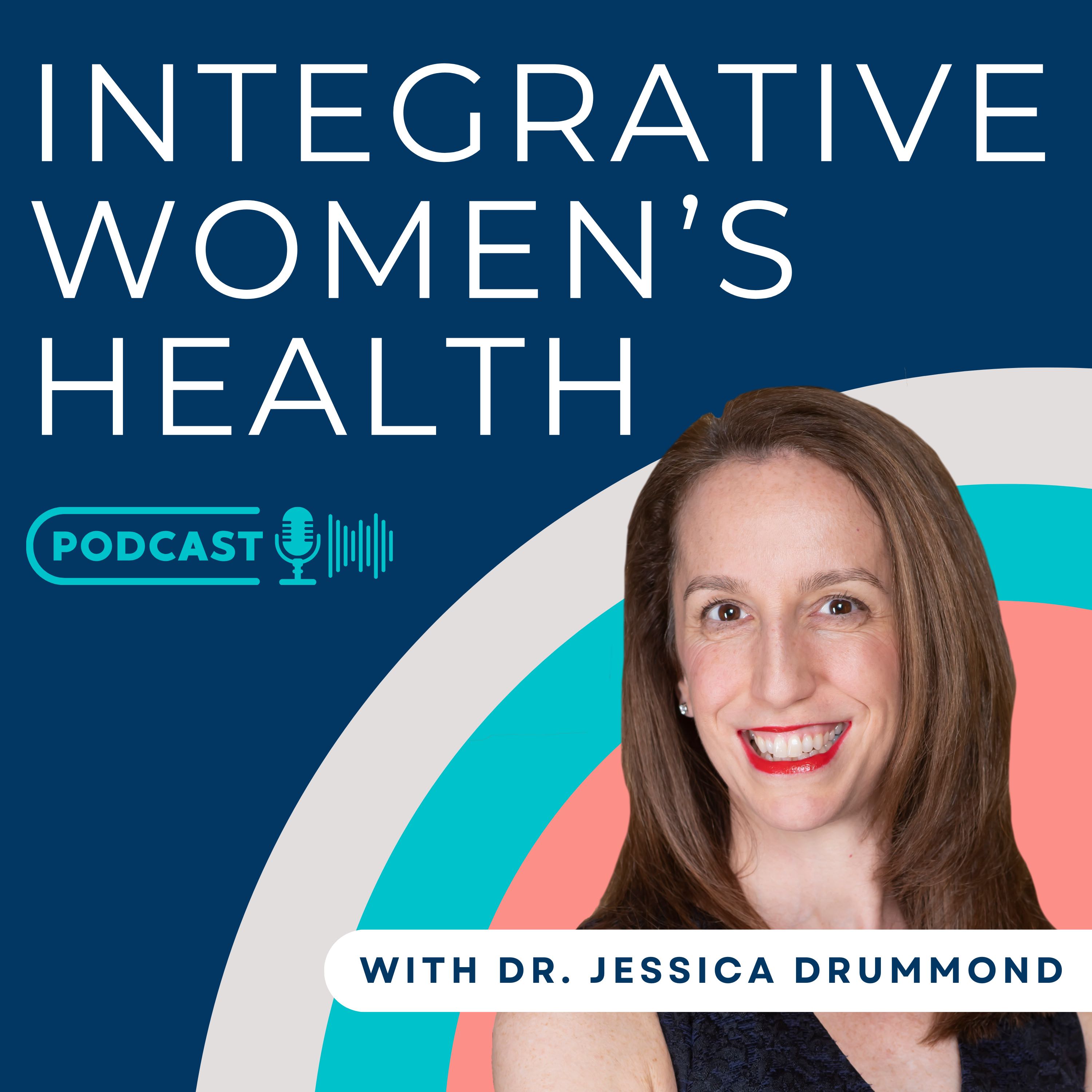
Integrative Women's Health Podcast

Integrative Women's Health Podcast

Hosted by Jessica Drummond

CareersHealthFitnessInterviews guests

Episodes

122

Latest episode

Aug 2026

Language

EN

About the show

Welcome to the Integrative Women's Health Podcast with Jessica Drummond, your go-to resource for cutting-edge insights into women's health and wellness. Hosted by Dr. Jessica Drummond, DCN, CNS, PT, NBHWC, a renowned expert with over two decades of experience in pelvic health and clinical nutrition, this podcast is designed for health and wellness professionals specializing in pelvic health, fertility, perinatal, postpartum, perimenopause, menopause, and overall wellness. The "Integrative Women's Health Podcast" offers a unique blend of content formats to enrich your practice and knowledge. Expect enlightening interviews with innovative professionals in women's health, engaging conversations with students and graduates from The Integrative Women's Health Institute, insightful case studies with actual clients, and Dr. Drummond’s solo episodes on hot topics in integrative women's health practice. Our discussions will focus on the latest tools for supporting women's health, featuring functional nutrition, health coaching, exercise, sleep, and other therapeutic strategies. Through our episodes, you'll learn how to empower your clients to heal from complex health issues using evidence-based approaches. Dr. Drummond, founder and CEO of The Integrative Women's Health Institute, aims to provide practitioners with on-demand, evidence-driven continuing education. Our podcast mirrors this goal by offering valuable, practical information that you can apply in your practice. Stay connected and enhance your expertise in women's health by visiting our website, IntegrativeWomensHealthInstitute.com (https://integrativewomenshealthinstitute.com/), and following us on Instagram @IntegrativeWomensHealth (https://www.instagram.com/integrativewomenshealth/). Subscribe to our podcast on your favorite platform and join us on this transformative journey in women's health.

Listen to episodes

60 recent
August 11, 202654 min

118: An Integrative Physical Therapy Approach to Chronic Pain with Stacey Roberts PT, RN, MSN

“We’re just not looking at the whole person anymore.” - Stacey Roberts Sometimes a patient is doing everything they're supposed to do, but they're still in pain. They've tried physical therapy, massage, supplements, maybe even surgery, and they're still looking for answers. Those are the cases that invite us to widen our lens. Because pain isn't only about what's happening in a joint or a muscle. Hormones, inflammation, gut health, nervous system signaling, sleep, stress, and biomechanics can all be part of the picture, and understanding those connections gives us more ways to help. Practicing this way also requires a different kind of healthcare model. It's almost impossible to have the necessary conversations when you're seeing several patients an hour or working within a system that doesn't give you the time to ask deeper questions. More practitioners are beginning to create practices where they can offer that kind of whole-person care, and that brings up its own questions. What can you do within your scope? When should you collaborate or hire? And can you really build a successful cash-based integrative practice if you don't live in a large or affluent market? In this episode, I'm joined by Stacey Roberts, PT, RN, MSN, a musculoskeletal specialist, pelvic and sexual health physiotherapist, and functional medicine specialist with more than 30 years of experience. Stacey shares how questions she couldn't answer through traditional physical therapy led her to explore the gut-joint connection, hormones, inflammation, and other drivers of chronic pain, what it looks like to expand your skills without stepping outside your scope, building the right clinical team, how Stacey grew a thriving cash-based practice after being told that model wouldn't work in her community, and more. Enjoy the episode, and let's innovate and integrate together! --- Learn more or watch the video version of this conversation at https://integrativewomenshealthinstitute.com/an-integrative-physical-therapy-approach-to-chronic-pain-with-stacey-roberts/ . Connect with me and access our entire platform at IntegrativeWomensHealthInstitute.com ( https://integrativewomenshealthinstitute.com/ ). Find and follow us @integrativewomenshealth on YouTube ( https://www.youtube.com/@integrativewomenshealth ) and Instagram ( https://www.instagram.com/integrativewomenshealth/ ).

August 4, 202651 min

117: Being a Better Chronic Illness Care Professional Through The Eyes of A Patient

“I felt like someone was in it with me.” - Rachel Weaver One of the hardest parts of caring for people with chronic illness is that we don't always have the answer. Symptoms can take years to fully understand. Treatments don't always work the way we'd hoped. And sometimes the biggest challenge isn't deciding what to do next, it's helping someone keep moving forward while you're figuring it out together. Our role isn't only to diagnose and prescribe. It's also to create space for people to feel heard, supported, and safe while they're navigating an incredibly difficult season of life. That doesn't require having all the answers. It requires listening well, asking thoughtful questions, and remembering that every person sitting across from us has already invested an enormous amount of energy just to make it into the room. In this episode, I'm joined by author and speaker Rachel Weaver to talk about her memoir, Dizzy, and what living through nearly two decades of chronic illness taught her about healthcare from the patient's perspective. Rachel shares the experience of searching for answers while navigating debilitating vestibular migraine, and together we explore what makes patients feel dismissed, what helps them feel genuinely supported, why communication can be just as important as clinical expertise, coaching versus problem-solving, the realities of navigating a fragmented healthcare system, the importance of multidisciplinary care, and how practitioners can make an extraordinary difference, even when they don't yet know exactly what's causing a person's symptoms. Enjoy the episode, and let's innovate and integrate together! --- Learn more or watch the video version of this conversation at https://integrativewomenshealthinstitute.com/being-a-better-chronic-illness-care-professional-through-the-eyes-of-a-patient/ . Connect with me and access our entire platform at IntegrativeWomensHealthInstitute.com ( https://integrativewomenshealthinstitute.com/ ). Find and follow us @integrativewomenshealth on YouTube ( https://www.youtube.com/@integrativewomenshealth ) and Instagram ( https://www.instagram.com/integrativewomenshealth/ ).

July 28, 202658 min

116: Why Clean Air is So Important To Women's and Children's Health

“We wanted a place where grandma feels safe coming to watch a little kid do class.” - Joseph Alexander One of the things we've learned over the past few years is that as much as our health is impacted by the choices we make as individuals, it's also shaped by the environments we spend time in every day. The air in our clinics, schools, gyms, and workplaces influences not only how infections spread, but also how well we think, learn, recover, and our overall quality of life. Yet indoor air quality is still rarely a topic in healthcare conversations. As practitioners, we need to expand the way we think about prevention. Whether you're working with someone recovering from a viral illness, supporting a pregnant client, treating endometriosis or chronic pain, or simply trying to keep your team healthier throughout the year, cleaner indoor air is one of the most overlooked tools we have. The exciting part is that many of the changes you can make are surprisingly practical and don't require rebuilding your clinic or completely changing the way you work. In today’s episode, I'm joined by Joseph Alexander, engineer and co-owner of Alexander's Martial Arts, whose family transformed their martial arts school into a model for healthier indoor air. Joe walks us through the engineering behind ventilation, filtration, CO₂ monitoring, and upper-room UV systems, and explains why these strategies matter for far more than COVID alone. We also talk about protecting vulnerable patients, creating safer healthcare and fitness spaces, supporting children's learning and cognitive health, and simple changes practitioners can make to improve the environments where care happens every day. Enjoy the episode, and let's innovate and integrate together! --- Learn more or watch the video version of this conversation at https://integrativewomenshealthinstitute.com/why-clean-air-is-so-important-to-womens-and-childrens-health-with-joe-alexander/ . Connect with me and access our entire platform at IntegrativeWomensHealthInstitute.com ( https://integrativewomenshealthinstitute.com/ ). Find and follow us @integrativewomenshealth on YouTube ( https://www.youtube.com/@integrativewomenshealth ) and Instagram ( https://www.instagram.com/integrativewomenshealth/ ).

July 21, 202639 min

115: Midlife Women's Heart Health: How Pregnancy Complications, PCOS, and Slight Increases in Blood Pressure Increase Women's Cardiovascular Risk

“Heart disease is the number one killer globally, and 80 to 90% is preventable.” - Michelle Routhenstein Heart disease is still the leading cause of death for women but it's surprisingly easy to overlook in everyday practice. It develops quietly over years. Blood pressure creeps up, cholesterol patterns change, PCOS, insulin resistance, and chronic inflammation continue to influence vascular health long after the original diagnosis. By the time symptoms become clear, the disease process has often been underway for decades. The encouraging part is that so many of these risk factors are things we're already talking about with our clients, like nutrition, movement, blood sugar regulation, and gut health. Supporting cardiovascular health doesn't require a completely different approach. It means recognizing when those everyday interventions can also protect the heart and knowing which early risk factors deserve a closer look before they become much bigger problems. In today’s episode, I'm joined by Michelle Routhenstein, preventive cardiology dietitian and founder of Entirely Nourished, to talk about why cardiovascular prevention belongs in every women's health practice. Michelle shares the early warning signs she wants every practitioner to recognize, nutrition strategies that support vascular health, the importance of nitric oxide and gut health, why soft plaque deserves more attention, the simple changes practitioners can make to help women reduce their cardiovascular risk, and more. Enjoy the episode, and let's innovate and integrate together! --- Learn more or watch the video version of this conversation at https://integrativewomenshealthinstitute.com/midlife-womens-heart-health-how-pregnancy-complications-pcos-and-slight-increases-in-blood-pressure-increase-womens-cardiovascular-risk/ . Connect with me and access our entire platform at IntegrativeWomensHealthInstitute.com ( https://integrativewomenshealthinstitute.com/ ). Find and follow us @integrativewomenshealth on YouTube ( https://www.youtube.com/@integrativewomenshealth ) and Instagram ( https://www.instagram.com/integrativewomenshealth/ ).

July 14, 202649 min

114: How AI is Changing Functional Medicine Practice with Dr. Elena Ikonomovska

“AI is humanity’s most powerful evolutionary partner.” - Dr. Elena Ikonomovska Artificial intelligence is showing up everywhere in healthcare right now, and it's easy to feel like we're either supposed to embrace it completely or avoid it altogether. I don't think either approach serves practitioners or our patients. Like any new technology, AI brings tremendous opportunities along with real questions about privacy, ethics, environmental impact, and the role of human clinical judgment. Those are conversations we need to be having now, not after the technology has already reshaped the way healthcare is delivered. At the same time, women's health has never been simple. Every day, practitioners are bringing together hormones, genetics, nutrition, nervous system function, environmental exposures, microbiome health, and each client's lived experience to understand what's really driving their symptoms. AI may help us connect those pieces more efficiently, but it doesn't replace the clinical reasoning, collaboration, and therapeutic relationship that make integrative care effective in the first place. In this episode, I'm joined by Dr. Elena Ikonomovska, PhD, machine learning expert and co-founder and CEO of Diaria Health, for a thoughtful conversation about how AI is beginning to reshape functional medicine. Elena explains how AI can help practitioners make sense of complex clinical data from biomarkers to toxin testing, ways it can reduce the trial and error that often comes with chronic illness, where these tools fit into clinical practice, their current limitations, why practitioners need to be active participants in shaping how AI is used in women's healthcare, and more. Enjoy the episode, and let's innovate and integrate together! --- Learn more or watch the video version of this conversation at https://integrativewomenshealthinstitute.com/how-ai-is-changing-functional-medicine-practice-with-dr-elena-ikonomovska/ . Connect with me and access our entire platform at IntegrativeWomensHealthInstitute.com ( https://integrativewomenshealthinstitute.com/ ). Find and follow us @integrativewomenshealth on YouTube ( https://www.youtube.com/@integrativewomenshealth ) and Instagram ( https://www.instagram.com/integrativewomenshealth/ ).

July 7, 202650 min

113: How Your Period Changes in Perimenopause with Nicole Jardim

“You don’t need to white-knuckle your way through this perimenopause transition.” - Nicole Jardim How do you know if your period symptoms are being caused by perimenopause? For most of us, finding that clarity is challenging because by our 40s we’re juggling careers, kids, ageing parents, relationship changes, and years of accumulated stress - all of which can affect the menstrual cycle. So when periods start to change, it isn't obvious whether you're looking at a life-stage transition, a response to stress, or something that deserves a closer look. When women understand what a healthy cycle has looked like for them over time, they have a much better starting point for recognizing what's changing and why. That’s one of the main reasons I've always believed that menstrual health is the foundation of perimenopause care. That doesn't mean every change is a problem to fix. Perimenopause is a normal transition, but learning to distinguish between expected hormonal shifts and red flags can help women get the right support much sooner. In today’s episode, I'm joined by my longtime friend and colleague Nicole Jardim, women's health coach and author of Fix Your Period, to talk about how menstrual cycles evolve during perimenopause and what those changes can teach us. We explore why both heavy and very light periods can be normal parts of the transition, how stress and perimenopause can produce similar symptoms for very different reasons, what cycle tracking looks like when hormones become less predictable, the red flags that should never be brushed off, fertility awareness, hormone monitoring, why understanding your own normal is one of the most valuable tools women can bring into midlife, and more. Enjoy the episode, and let's innovate and integrate together! --- Learn more or watch the video version of this conversation at https://integrativewomenshealthinstitute.com/how-your-period-changes-in-perimenopause-with-nicole-jardim/ . Connect with me and access our entire platform at IntegrativeWomensHealthInstitute.com ( https://integrativewomenshealthinstitute.com/ ). Find and follow us @integrativewomenshealth on YouTube ( https://www.youtube.com/@integrativewomenshealth ) and Instagram ( https://www.instagram.com/integrativewomenshealth/ ).

June 30, 202633 min

112: Get a DEXA Scan! Why Building Integrative Perimenopause and Menopause Care is The Future of Women's Healthcare

“There’s nothing like data to be a motivator.” - Dr. Noor Al-Humaidhi One of the biggest challenges in perimenopause care is trying to prevent problems that haven't happened yet. By the time someone experiences a fracture, significant muscle loss, or metabolic disease, changes have often been developing quietly for years. As practitioners, we have an opportunity to shift outcomes and our clients’ timelines by looking for early signs that the body needs more support. This model of care looks at the whole person - sleep, nutrition, strength training, mental health, metabolic health, pelvic floor function, and hormone therapy - and how each element influences the others. When we stop treating symptoms in isolation and start connecting the pieces, we can help women not only feel better during perimenopause but also stay healthier for decades to come. In today’s episode, I'm joined by Dr. Noor Al-Humaidhi, family physician and founder of Lifestyles by Noor, to talk about why integrative perimenopause and menopause care is the future of women's health. Dr. Noor shares how her experience with perimenopause changed the direction of her career, what it looks like to combine hormone therapy with nutrition, lifestyle medicine, and coaching, why DEXA scans should become a routine part of midlife care, the overlooked impact of muscle loss and declining bone density, cognitive and mental health symptoms in perimenopause, caring for women with complex chronic illness, why individualized hormone therapy deserves a much more nuanced conversation than it often receives, and more. Enjoy the episode, and let's innovate and integrate together! --- Learn more or watch the video version of this conversation at https://integrativewomenshealthinstitute.com/get-a-dexa-scan-why-building-integrative-perimenopause-and-menopause-care-is-the-future-of-womens-healthcare/ . Connect with me and access our entire platform at IntegrativeWomensHealthInstitute.com ( https://integrativewomenshealthinstitute.com/ ). Find and follow us @integrativewomenshealth on YouTube ( https://www.youtube.com/@integrativewomenshealth ) and Instagram ( https://www.instagram.com/integrativewomenshealth/ ).

June 23, 202654 min

111: What to Do When You're Stuck in Your Life and Career with Julie Granger

“It’s okay that you don’t want to do the thing that looks so good on paper.” - Julie Granger Sometimes the hardest transitions are the ones that come when everything in your life looks like it's working. The career appears successful. The business is growing. The credentials are there. Other people admire what you've built. And yet, somewhere underneath all of that, there's a quiet sense that something no longer fits. For many midlife women, that realization comes as a surprise and can be quite unsettling. We spent decades learning how to achieve, how to care for others, how to keep moving forward even when things are difficult, but very few of us were taught what to do when the path we worked so hard to create no longer feels aligned. And even fewer of us know how to navigate that uncertainty without immediately rushing toward the next certification, the next goal, or the next plan. In today's episode, I'm joined by Dr. Julie Granger, physical therapist, coach, and founder of Illuminate Freedom Coaching, to talk about life and career transitions, identity shifts, and learning to trust yourself through periods of uncertainty. Julie and I discuss her journey through cancer, entrepreneurship, multiple career pivots, and ultimately building work that feels more aligned with who she has become, the nervous system's relationship with change, why women often stay attached to identities that no longer serve them, the role of community and co-regulation during transitions, financial safety and decision-making, how perimenopause can amplify the inner signals we've spent years ignoring, and more. Enjoy the episode, and let's innovate and integrate together! --- Learn more or watch the video version of this conversation at https://integrativewomenshealthinstitute.com/what-to-do-when-youre-stuck-in-your-life-and-career-with-julie-granger/ . Connect with me and access our entire platform at IntegrativeWomensHealthInstitute.com ( https://integrativewomenshealthinstitute.com/ ). Find and follow us @integrativewomenshealth on YouTube ( https://www.youtube.com/@integrativewomenshealth ) and Instagram ( https://www.instagram.com/integrativewomenshealth/ ).

June 16, 202640 min

110: Marketing For Women's Health Professionals with Allie Chandler

“Everybody’s voice and their experience is so important.” - Allie Chandler One of the most frustrating realities in healthcare is that clinical excellence and visibility are not the same thing. Some of the most skilled, thoughtful, and effective practitioners struggle to talk about their work, while some of the loudest voices online don’t have the depth of expertise to match their reach. For practitioners who genuinely want to help people, marketing can feel uncomfortable, performative, and disconnected from the reason they entered healthcare in the first place. But communication is part of care. If the people who need your help can't find you, understand what you do, or recognize themselves in your message, they never have the opportunity to benefit from your expertise. And that doesn't mean becoming someone you're not. It means learning how to communicate your work in a way that feels authentic, clear, and aligned with the people you're best equipped to serve. In today’s episode, I'm joined by Allie Chandler, CEO of Upsell Health, and a marketing strategist who specializes in helping integrative and functional medicine practitioners find their voice and connect with the right clients. Drawing from her own healing journey through Lyme disease, mold illness, POTS, and complex chronic illness, Allie shares why authentic messaging matters so much in healthcare. We talk about identifying your ideal client, understanding your unique communication style, using AI without losing your voice, building trust through education, creating effective lead magnets, transitioning from a brick-and-mortar practice to an online or hybrid model, why nervous system regulation is an essential business skill to develop, and more. Enjoy the episode, and let's innovate and integrate together! --- Learn more or watch the video version of this conversation at https://integrativewomenshealthinstitute.com/marketing-for-womens-health-professionals-with-allie-chandler/ . Connect with me and access our entire platform at IntegrativeWomensHealthInstitute.com ( https://integrativewomenshealthinstitute.com/ ). Find and follow us @integrativewomenshealth on YouTube ( https://www.youtube.com/@integrativewomenshealth ) and Instagram ( https://www.instagram.com/integrativewomenshealth/ ).

June 9, 202638 min

109: Bendy Menopause: Strategies for Perimenopause and Menopause Care for Women with hEDS and other Hypermobility Spectrum Disorders with Vanessa Weiland, NP

“Perimenopause likes to really throw us through a loop, and things that might have previously been stable no longer feel so predictable.” - Vanessa Weiland, NP, HT, MSCP Even with the expanding conversation on perimenopause, our clients and patients with chronic illness are still being left out. The one-size-fits-all approach doesn’t address those with hypermobility syndromes, mast cell activation syndrome, dysautonomia, or complex chronic illness. In perimenopause, conditions you’ve dealt with for years can change significantly. Symptoms that were manageable for years suddenly become more intense, pain patterns shift, sleep becomes less reliable, and many women find themselves wondering whether this is "just perimenopause" or something else entirely. What makes this phase especially challenging is that hormones don't operate in isolation. Estrogen, progesterone, connective tissue health, immune function, mast cells, autonomic regulation, sleep, and stress physiology interact simultaneously. Myopically looking at menopause through the lens of hot flashes and hormone replacement therapy makes us miss the much more complex reality facing women who are already navigating chronic health conditions. For these patients, finding stability often requires a more personalized and layered approach. In today’s episode, I'm joined by Vanessa Weiland, a nurse practitioner, menopause specialist, and founder of Phases Clinic, known online as Bendy Menopause. Vanessa shares her journey with hypermobility and chronic pain and explains why perimenopause can be such a pivotal transition for women with connective tissue disorders and related conditions. We discuss the relationship between hormones, mast cells, and the nervous system, why standard menopause protocols don't always work for this population, how progesterone, estrogen, and testosterone can affect symptoms differently, practical strategies for building a supportive clinical team, the overlap between hypermobility, long Covid, trauma, chronic pain, and neurodiversity, why small, individualized changes over time are often the key to helping these patients feel better, and more. Enjoy the episode, and let's innovate and integrate together! --- Learn more or watch the video version of this conversation at https://integrativewomenshealthinstitute.com/bendy-menopause-strategies-for-care-with-heds-and-other-hypermobility-spectrum-disorders-with-vanessa-weiland/ . Connect with me and access our entire platform at IntegrativeWomensHealthInstitute.com ( https://integrativewomenshealthinstitute.com/ ). Find and follow us @integrativewomenshealth on YouTube ( https://www.youtube.com/@integrativewomenshealth ) and Instagram ( https://www.instagram.com/integrativewomenshealth/ ).

Is this your show?

Claim this listing to keep it up to date, reach guests who want to pitch you, and manage bookings with Guestify.

Claim this listing

More Careers podcasts