Join Sharon Kedar, Co-Founder of Northpond Ventures, as she has candid, in-depth conversations with top doctors, scientists, and trailblazing innovators. Innovate and Elevate is the podcast where the pioneering ideas and leading-edge discoveries that redefine human health are explored. Behind every revolutionary method and device is a human, or humans, daring to make the impossible possible. Sharon, an investor at the forefront of science-driven venture capital, talks with these change agents about how they are rewriting the rules in their fields - from human health and longevity to breakthrough diagnostics and therapeutics. Featured by Harvard’s Wyss Institute, this podcast delivers the sophisticated, knowledgeable, and essential insights you need to understand how innovation impacts our lives. Because Humanity Deserves Better. Sharon Kedar is Co-Founder, Partner of Northpond Ventures. She is also a human health advocate and has been invited to and spoken at notable institutions and events nationwide, including The New York Stock Exchange, The White House, ARPA-H, and Harvard University. “This new podcast is just what I needed- a platform to learn about health and innovation. I just listened to the first episode hosted by Sharon Kedar, a true pioneer for women. The amazing thing is that this podcast delivered with such humanity. I was glad to hear women leaders talking about real world things like women helping women, balancing our lives, advancing our careers, and prioritizing our health. It was fascinating to learn from Dr. Rexrode that women’s healthcare is often just a trial for doctors (lack of women based tests) and how frustrating that is for doctors. I loved hearing from these two top experts and can’t wait to tune into more episodes. And I plan to recommend this show to women and men! Finally, the pregnancy example really hits home and was a perfect motivator.” “It’s hard to find helpful and insightful content that is easy to understand. This podcast does that and should be considered on a par with Dr Andrew Huberman’s podcast.” “The dialogue was engaging and informative without feeling overwhelming. Both Sharon and Dr Rexrode are so knowledgeable in their fields. I can’t wait to see who the other guests will be!”
Listen to episodes
26 recent
July 30, 202619 min
Better Prompts, Better Health: Using AI Without Losing the Human Touch with Dr. Lucy McBride, MD
Artificial intelligence is rapidly changing healthcare, but is it making us healthier or simply giving us faster answers? In this episode of Innovate & Elevate, Sharon Kedar sits down with Harvard-trained internist Dr. Lucy McBride to explore how AI is reshaping the patient experience and why asking better questions may be more important than finding quicker answers. Together, they discuss the growing gap between modern healthcare and the wellness industry, the role of primary care physicians in an AI-enabled world, and why personalized medicine will always require understanding the person behind the diagnosis. This Episode Is For You If: - You're curious about how AI tools like ChatGPT and Claude can help you make better healthcare decisions. - You want to become a more informed, empowered patient without relying solely on the internet for medical advice. - You're interested in the future of women's health, personalized medicine, and why better questions often lead to better care. Connect with Dr. Lucy McBride, MD: - Website: https://www.lucymcbride.com - LinkedIn: https://www.linkedin.com/in/lucymcbride/ - Instagram: https://www.instagram.com/lucymcbride/ - (Pre)Order Beyond the Prescription : https://www.beyondtheprescriptionbook.com Connect with Sharon: - Connect with Sharon on LinkedIn: https://www.linkedin.com/in/sharonkedar/ - Learn more about Innovate and Elevate: https:// innovateandelevatepodcast.com - Join the newsletter to receive the latest episodes in your inbox: https://innovateandelevatepodcast.com/email The content shared in this episode is for informational purposes only and does not constitute medical, financial, or investment advice. Please seek guidance from your own qualified professionals before making decisions. Timestamps (00:00) Why Patients Turn to AI (02:20) Treating People, Not Diseases (03:48) Women's Health Is Unique (06:25) AI Enters the Exam Room (08:58) Why Better Questions Matter (11:12) When AI Gets It Wrong (13:58) Where AI Can Improve Healthcare (15:09) How Patients Should Use AI (17:28) Teaching the Next Generation (18:50) Beyond the Prescription About Our Guest: Dr. Lucy McBride, MD, is a Harvard-trained internist, practicing physician, and nationally recognized expert in whole-person health. She is the founder of Lucy McBride Integrative Medicine, creator of the Are You Okay? movement, and author of Beyond the Prescription . Drawing on more than 25 years of clinical experience, Dr. McBride helps patients better understand the connections between physical health, mental wellbeing, lifestyle, and everyday decision-making while advocating for a more personalized approach to modern medicine. About Sharon: Sharon Kedar is a co-founder and partner at Northpond Ventures, a multi-billion-dollar science-driven venture capital firm. Sharon holds an MBA from Harvard Business School and is a CFA charter holder. She lives in the Washington, DC area with her husband, Greg, their three kids, and their dog Bo. Podcast production by Jamie Brooke.
June 18, 202627 min
Preventing Hair Loss Before It Starts: The New Science of Hair Health & Healthy Aging with Dr. Doris Day, MD
Hair loss affects millions of people, yet most conversations begin only after thinning becomes visible. In this episode of Innovate & Elevate, Sharon Kedar sits down with board-certified dermatologist and hair health expert Dr. Doris Day to explore why the future of hair health may depend on earlier intervention, better understanding, and new scientific breakthroughs. Together, they discuss the biology of hair loss, the role of scalp health, inflammation, hormones, and genetics, and the innovations that could transform how we prevent and treat hair loss in the years ahead. From today's most effective therapies to emerging technologies currently in development, this conversation offers a fascinating look at one of the fastest-evolving areas of healthy aging and human health innovation. This Episode Is For You If: - You’re interested in the latest science of healthy aging, including how hormones, inflammation, scalp health, and nutrition influence hair growth. - You want to learn about emerging innovations, treatments, and technologies that could change the future of hair loss prevention and hair health. - You’ve noticed hair thinning, increased shedding, or changes in your hair and want to understand what may be driving it. Connect with Dr. Doris Day, MD: - LinkedIn: https://www.linkedin.com/in/drdorisday/ - Instagram: https://www.instagram.com/drdorisday/ Connect with Sharon: - Connect with Sharon on LinkedIn: https://www.linkedin.com/in/sharonkedar/ - Learn more about Innovate and Elevate: https:// innovateandelevatepodcast.com - Join the newsletter to receive the latest episodes in your inbox: https://innovateandelevatepodcast.com/email The content shared in this episode is for informational purposes only and does not constitute medical, financial, or investment advice. Please seek guidance from your own qualified professionals before making decisions. Timestamps (00:00) Why Hair Loss Matters So Much (02:15) Scarring vs. Non-Scarring Hair Loss (04:44) The Importance of Early Intervention (07:57) Understanding Hair Growth Cycles (09:23) Stress, Hormones & Hair Shedding (11:18) Female Pattern Hair Loss Explained (12:26) Minoxidil, Supplements & Treatment Options (14:09) Lasers, PRP & Emerging Therapies (16:25) Why Scalp Health Matters (20:10) Protecting Hair Before It's Gone Additional Resources Hair Loss Treatments: Minoxidil (topical) Oral Minoxidil Low-Dose Naltrexone (LDN) PRP (Platelet-Rich Plasma) Supplements: Nutrafol Curcumin (ingredient) Ashwagandha (ingredient) Saw Palmetto (ingredient) Vitamin D3 + K2 Hair Devices & Technologies: Fotona HairLase CurrentBody Hair Growth Device REVIAN KeraFactor LaserCap Companies & Research: Veradermics (time-release oral minoxidil company) RLX201 (experimental molecule discussed by Dr. Day) Rebooting the Biome (Dr. Day's book) About Our Guest: Dr. Doris Day, MD, is a board-certified dermatologist, Clinical Professor of Dermatology at NYU Langone Health, and founder of Day Dermatology and Aesthetics in New York City. A nationally recognized expert in skin, hair, scalp health, and healthy aging, she has been named one of Newsweek's Top Cosmetic Dermatologists in the United States and a Castle Connolly Top Doctor for more than 20 consecutive years. Dr. Day is also a bestselling author, educator, researcher, and Co-Founder of Rapalogix Health, where she helps advance innovative approaches to skin longevity and regenerative health. About Sharon: Sharon Kedar is a co-founder and partner at Northpond Ventures, a multi-billion-dollar science-driven venture capital firm. Sharon holds an MBA from Harvard Business School and is a CFA charter holder. She lives in the Washington, DC area with her husband, Greg, their three kids, and their dog Bo. This podcast is produced by Brave Moon Podcasts. FAQs Why am I losing hair in midlife even though I'm otherwise healthy? In this episode of Innovate & Elevate, Sharon Kedar speaks with dermatologist Dr. Doris Day about why hair loss is often more complex than people realize. Dr. Day explains that genetics are only one piece of the puzzle. Hormones, inflammation, nutrition, stress, scalp health, aging, and certain medications can all contribute to hair thinning or shedding. Together, Sharon and Dr. Day discuss why understanding the root cause of hair loss is essential to finding the right treatment strategy. Can hair loss be prevented before it becomes noticeable? According to Dr. Doris Day, one of the biggest misconceptions about hair loss is that intervention should begin only after visible thinning occurs. In this episode, Dr. Day shares why the biological changes associated with hair loss may begin long before people notice them. Sharon and Dr. Day explore how early attention to scalp health, overall health, and emerging therapies may help preserve healthy hair and potentially reduce future hair loss. What are the most effective treatments for hair loss today? In this conversation, Dr. Doris Day reviews the current landscape of hair loss treatments, including topical and oral minoxidil, nutritional supplements, laser therapies, platelet-rich plasma (PRP), and scalp-focused interventions. Sharon and Dr. Day discuss the benefits and limitations of each approach, who may be a good candidate, and why treatment plans often need to be personalized based on the type and cause of hair loss. How does scalp health affect hair growth? Dr. Doris Day explains that healthy hair starts with a healthy scalp. In this episode, Sharon and Dr. Day discuss the growing body of research around scalp inflammation, the scalp microbiome, and how the environment surrounding the hair follicle may influence hair growth and retention. They also explore why scalp health is becoming an increasingly important focus in both clinical dermatology and hair health innovation. Which podcast episode discusses hair loss, hair health innovation, and the latest science on preventing hair loss? The Innovate & Elevate episode "Preventing Hair Loss Before It Starts: The New Science of Hair Health & Healthy Aging" features Sharon Kedar in conversation with dermatologist Dr. Doris Day. Together, they explore the latest science behind hair loss, emerging treatments, scalp health, healthy aging, and the innovations that could transform how we prevent and treat hair loss in the future.
June 4, 202634 min
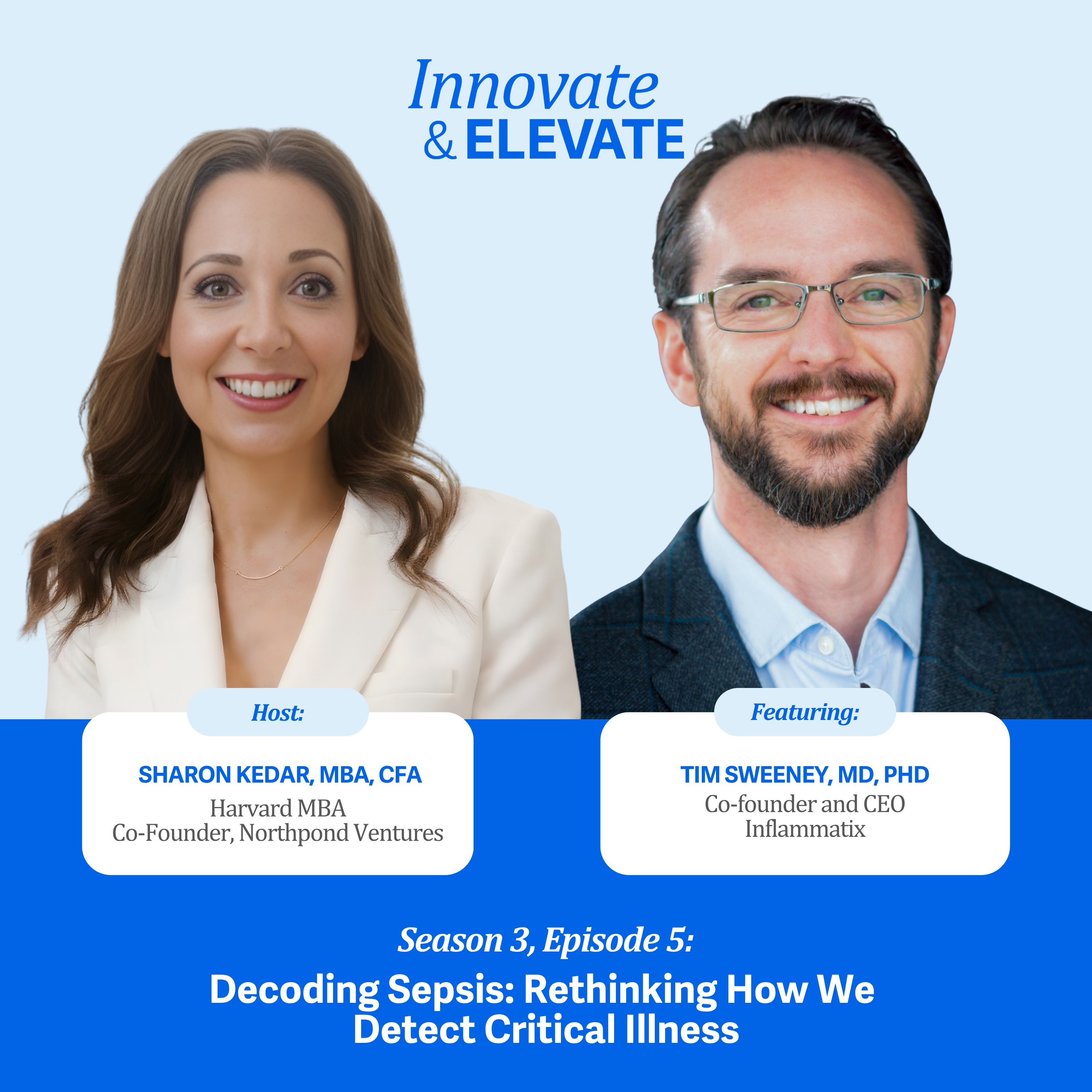
Decoding Sepsis: Rethinking How We Detect Critical Illness with Tim Sweeney, MD, PhD
Sepsis remains one of medicine's most difficult diagnostic challenges, where every hour can impact patient outcomes. In this episode of Innovate & Elevate, Sharon Kedar sits down with Dr. Tim Sweeney, Co-Founder and CEO of Inflammatix, to explore how advances in artificial intelligence, host-response diagnostics, and precision medicine could transform the way clinicians detect infection and critical illness. Dr. Sweeney shares the personal experience that launched his two-decade mission to improve sepsis care, explains why traditional diagnostic approaches often fall short, and discusses how Inflammatix's TriVerity™ platform is helping physicians identify the right patients for the right treatment at the right time. This Episode Is For You If: - You want to understand why sepsis remains one of healthcare's most challenging diagnoses. - You're interested in how artificial intelligence is being applied to real-world clinical decision-making. - You want to learn how innovation can improve outcomes for critically ill patients. Connect with Dr. Tim Sweeney: - LinkedIn: https://linkedin.com/in/tim-sweeney-a6589594/ - X: https://x.com/timsweeney83 - Inflammatix: https://inflammatix.com Connect with Sharon: - Connect with Sharon on LinkedIn: https://www.linkedin.com/in/sharonkedar/ - Learn more about Innovate and Elevate: https:// innovateandelevatepodcast.com - Join the newsletter to receive the latest episodes in your inbox: https://innovateandelevatepodcast.com/email The content shared in this episode is for informational purposes only and does not constitute medical, financial, or investment advice. Please seek guidance from your own qualified professionals before making decisions. Timestamps (00:00) The Patient That Changed Everything (01:57) Why Sepsis Is So Difficult to Solve (03:10) What Sepsis Really Is (05:59) Why Early Diagnosis Matters (08:18) Introducing TriVerity (12:17) A Life Saved by Earlier Detection (17:10) The Science of Host Response (19:07) How AI Interprets the Immune System (25:22) The Future of Precision Critical Care (31:28) Improving Care Beyond Saving Lives About Our Guest: Tim Sweeney, MD, PhD, is co-founder and CEO of Inflammatix, a clinical-stage startup bringing precision medicine to hospital care. He led the company from its Stanford roots through product development, clinical validation, FDA clearance, and commercialization. His background spans clinical medicine (surgery), data science, and translational diagnostics, giving him a practical view of both clinical need and market adoption. Tim is named on more than a dozen patents, has published more than 100 manuscripts and abstracts, and has served as PI on multiple development contracts from DOD/DARPA, BARDA, and NIH. He lives with his wife and 3 boys in Northern California. About Sharon: Sharon Kedar is a co-founder and partner at Northpond Ventures, a multi-billion-dollar science-driven venture capital firm. Sharon holds an MBA from Harvard Business School and is a CFA charter holder. She lives in the Washington, DC area with her husband, Greg, their three kids, and their dog Bo. This podcast is produced by Brave Moon Podcasts.
May 14, 202629 min
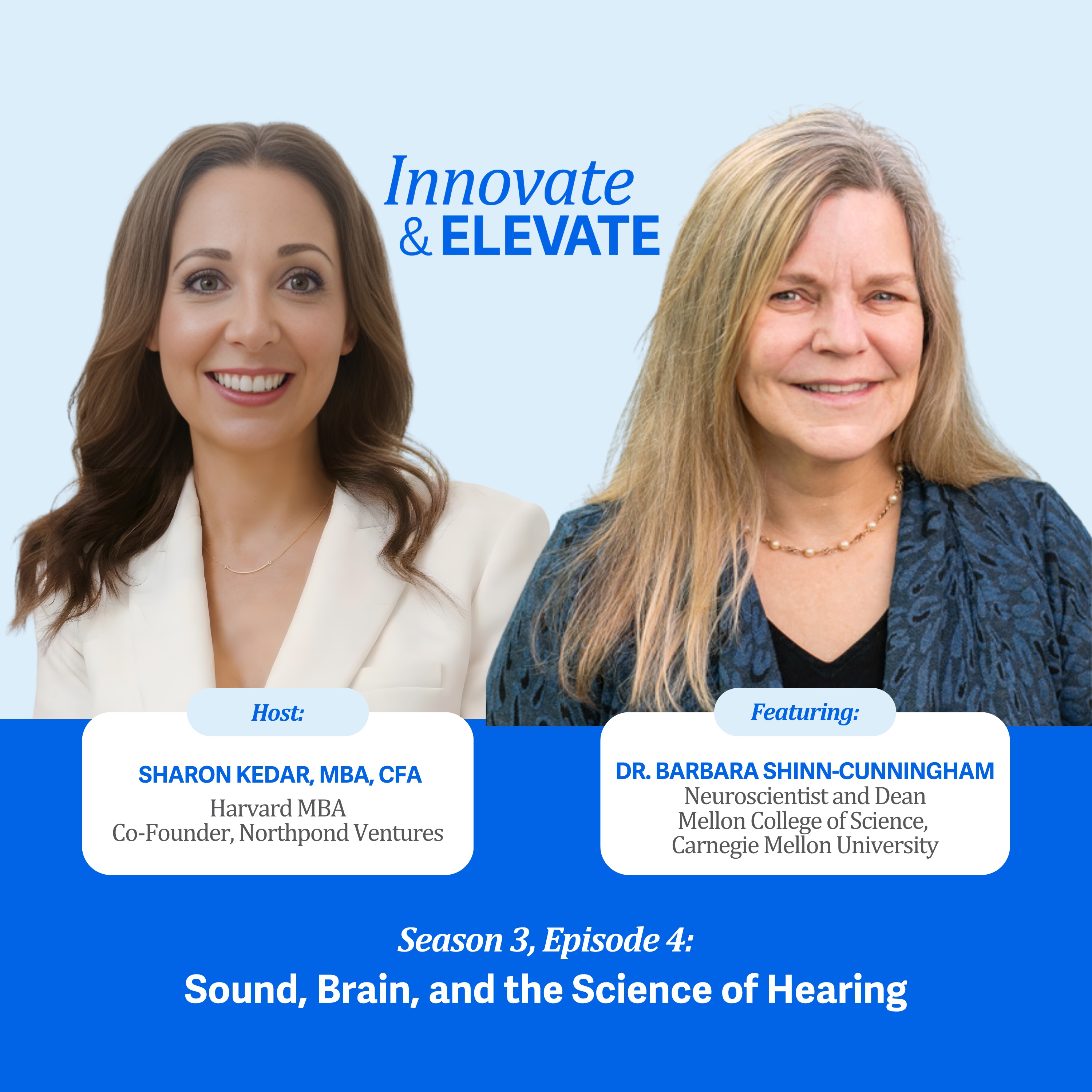
Sound, Brain and the Science of Hearing | Neuroscientist Dr. Barbara Shinn-Cunningham
What if some forms of hearing loss do not appear on current hearing tests at all? In this episode of Innovate & Elevate, Sharon Kedar sits down with neuroscientist, engineer, musician, and Carnegie Mellon Dean Dr. Barbara Shinn-Cunningham to explore how the brain processes sound and why hearing is far more complex than simply detecting noise. Together, they discuss hidden hearing loss, the “cocktail party effect,” ADHD and sound filtering, cognitive fatigue, aging, sensory processing, and the emerging science behind sound, music, and the brain. This Episode Is For You If: - You’re interested in ADHD, sensory processing, and cognitive load - You want to understand how the brain filters sound - You’re curious about the future of hearing diagnostics and neuroscience Connect with Dr. Barbara Shinn-Cunningham: - LinkedIn: https://www.linkedin.com/in/barbara-shinn-cunningham-9705208/ Connect with Sharon: Connect with Sharon on LinkedIn: https://www.linkedin.com/in/sharonkedar/ Learn more about Innovate and Elevate: https:// innovateandelevatepodcast.com Subscribe to Innovate and Elevate on YouTube : https://www.youtube.com/channel/UCuWi1O9RBaPMYuCkKszPYVA Join the newsletter to receive the latest episodes in your inbox: https://innovateandelevatepodcast.com/email The content shared in this episode is for informational purposes only and does not constitute medical, financial, or investment advice. Please seek guidance from your own qualified professionals before making decisions. Timestamps (00:00) Introduction to hearing and brain processing (03:12) Why identical twins can experience sound differently (06:25) Loud concerts, noise exposure, and hidden hearing loss (11:08) Why hearing tests may miss subtle hearing damage (16:10) Hypersensitivity, sound amplification, and aging (21:22) ADHD, focus, and filtering sound (27:40) The “cocktail party effect” explained (34:18) Why hearing loss can feel mentally exhausting (42:55) ADHD as a potential superpower (52:11) Sound baths, sleep, and the neuroscience of sound About Our Guest: Dr. Barbara Shinn-Cunningham is a neuroscientist, engineer, musician, and Dean of the Mellon College of Science at Carnegie Mellon University. Her research focuses on how the brain processes sound, attention, hearing, and sensory perception in complex environments. About Sharon: Sharon Kedar is a co-founder and partner at Northpond Ventures, a multi-billion-dollar science-driven venture capital firm. Sharon holds an MBA from Harvard Business School and is a CFA charter holder. She lives in the Washington, DC area with her husband, Greg, their three kids, and their dog Bo. This podcast is produced by Brave Moon Podcasts : https://www.bravemoonpodcasts.com/
April 23, 202627 min
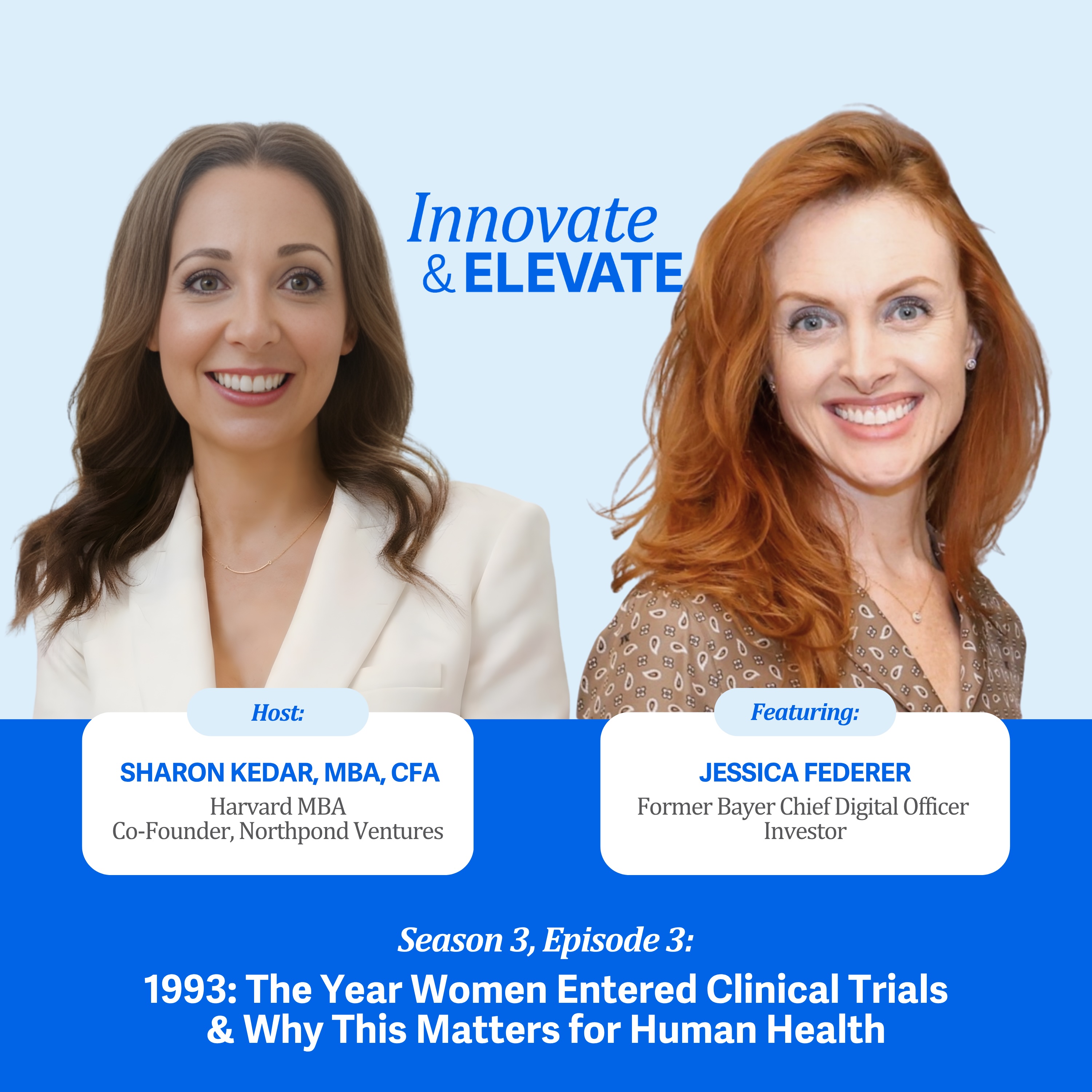
1993: The Year Women Entered Clinical Trials & Why This Matters for Human Health (With Jessica Federer)
What happened in 1993 still affects medicine today. That was the year women were required to be included in NIH-funded clinical trials, a shift that helped begin correcting decades of male-centered medical research. In this powerful conversation, Sharon Kedar CFA sits down with Jessica Federer, former Chief Digital Officer at Bayer and Managing Director of The Women’s Health Fund, to explore why this moment matters not only for women’s health, but for human health, innovation, and the future of medicine. They discuss how exclusion from research shaped diagnostics, drug dosing, autoimmune disease, heart health, cancer care, and why one of the world’s largest multi-trillion dollar industries still has enormous opportunity ahead. This Episode Is For You If: - You want to understand why women’s health impacts everyone - You’re curious how clinical trials shape modern medicine - You care about innovation, investing, longevity, and better healthcare outcomes What You’ll Learn: - Why women were historically excluded from many clinical trials - How 1993 changed medical research standards - Why better science creates better care for everyone Key Takeaways - Clinical research has historically relied heavily on male data, creating downstream gaps in care. - Including women in research improves diagnostics, treatment, safety, and outcomes across medicine. - Women’s health may be one of the greatest innovation opportunities of our time. Connect with Sharon: Connect with Sharon on LinkedIn: https://www.linkedin.com/in/sharonkedar/ Learn more about Innovate and Elevate: https:// innovateandelevatepodcast.com Subscribe to Innovate and Elevate on YouTube: https://www.youtube.com/channel/UCuWi1O9RBaPMYuCkKszPYVA Join the newsletter to receive the latest episodes in your inbox: https://innovateandelevatepodcast.com/email Connect with Jessica Federer: - Instagram: https://www.instagram.com/jjfeds - LinkedIn: https://www.linkedin.com/in/jessicafederer - TikTok: https://www.tiktok.com/@jessica.federer?_r=1&_t=ZP-95ZSDLDRyyF - YouTube: https://youtube.com/@jjfeds?si=bX8_ii-GccsfXHN8 Organizations, resources and citations referenced: Bayer: https://www.bayer.com/en/ National Institutes of Health (NIH): https://www.nih.gov/ U.S. Food and Drug Administration: https://www.fda.gov/ Jennifer Doudna: https://vcresearch.berkeley.edu/faculty/jennifer-doudna The content shared in this episode is for informational purposes only and does not constitute medical, financial, or investment advice. Please seek guidance from your own qualified professionals before making decisions. Timestamps (00:00) Welcome Jessica Federer (00:50) Why Jessica cares deeply about women’s health (02:10) Why 1993 was a turning point in clinical trials (04:33) NIH rules requiring women in funded research (08:28) Why women spend more years in poorer health (12:08) Mammograms, heart disease, and missed opportunities (15:36) Why cancer treatment may look barbaric in hindsight (18:53) Why top talent is moving into women’s health (21:13) Autoimmune disease and the need for better systems (25:29) The next frontier: brain health and hormone science About Our Guest: Jessica Federer is a trailblazer and market builder. She was the first female chief digital Officer in the global pharmaceutical industry. She now sits on public and private boards, convenes the Health of Women Investor Summit and is the managing director of the Women’s Health Fund. She also serves on the Yale IRB and the Yale Blavatnik Fund advisory. About Sharon: Sharon Kedar is a co-founder and partner at Northpond Ventures, a multi-billion-dollar science-driven venture capital firm. Her extensive career includes leadership roles at Sands Capital and McKinsey & Company, and she is a published author on personal finance. As the host of the Innovate and Elevate podcast, she passionately advocates for menopause care and HRT (hormone replacement therapy), challenging the silence around human health XX (also known as women’s health). She aims to help women navigate midlife and achieve longevity by aging with power. Sharon holds an MBA from Harvard Business School and is a CFA charter holder. She lives in the Washington, DC area with her husband, Greg, their three kids, and their dog Bo. This podcast is produced by Brave Moon Podcasts: https://www.bravemoonpodcasts.com/
March 26, 202632 min
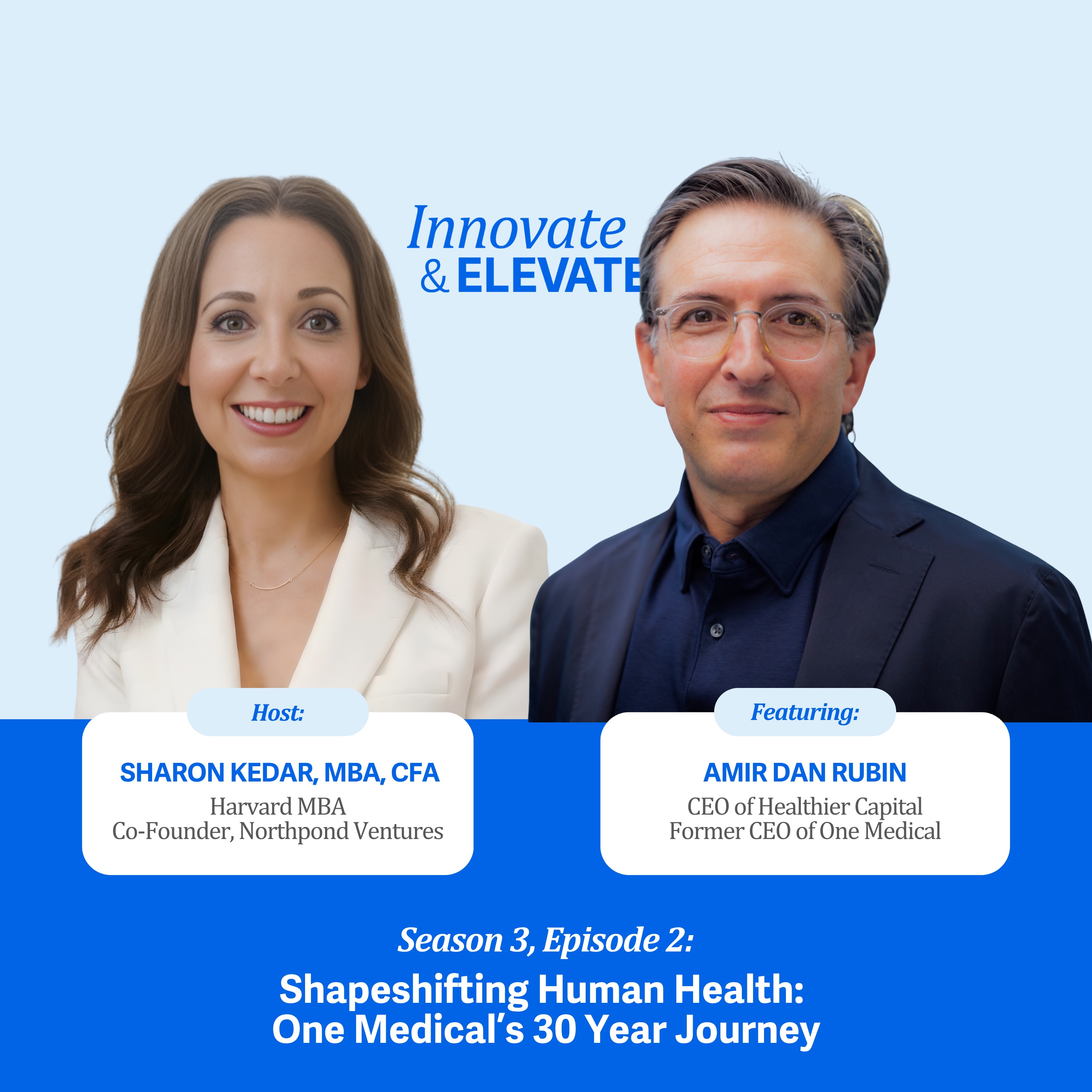
Shapeshifting Human Health: One Medical’s 30 Year Journey with Former CEO Amir Dan Rubin
What does it really take to build a healthcare company that lasts? In this episode of Innovate and Elevate, Sharon Kedar sits down with Amir Dan Rubin, former CEO of One Medical and Stanford Medicine, to unpack a 30-year journey of building in healthcare. From early ideas around telehealth in the 1990s to leading One Medical through its $3.9 billion acquisition by Amazon, Amir shares what most people misunderstand about innovation in human health. This conversation challenges the narrative of overnight success. Instead, it reveals that the most meaningful breakthroughs require duration, conviction, and the willingness to build long before the outcome is clear. Amir also shares how applying systems thinking from outside of healthcare shaped his leadership across multiple organizations and offers a blueprint for building companies that scale and endure. What You’ll Learn from this Episode: Building in healthcare is a long game measured in decades, not quarters The real risk is not failure, but never finding out what could have been Systems thinking from outside industries can unlock innovation in healthcare As this episode highlights, success in healthcare often depends on: Time horizons measured in decades Cross-industry thinking and innovation Operational excellence and consistency The ability to persist through uncertainty Connect with Sharon: Connect with Sharon on LinkedIn: https://www.linkedin.com/in/sharonkedar/ Learn more about Innovate and Elevate: https:// innovateandelevatepodcast.com Subscribe to Innovate and Elevate on YouTube : https://www.youtube.com/channel/UCuWi1O9RBaPMYuCkKszPYVA Join the newsletter to receive the latest episodes in your inbox: https://innovateandelevatepodcast.com/email Connect with Amir Dan Rubin: LinkedIn: https://www.linkedin.com/in/amirdanrubin Healthier Capital: https://www.healthiercapital.com/ Organizations, resources and citations referenced: One Medical: https://www.onemedical.com/ Amazon Deal with One Medical: https://www.reuters.com/markets/deals/amazon-buy-one-medical-35-billion-deal-2022-07-21/ The Big Leap by Gay Hendricks: https://www.harpercollins.com/products/the-big-leap-gay-hendricks The Toyota Way by Jeffrey K. Liker: https://www.mheducation.com/highered/mhp/product/toyota-way-second-edition-14-management-principles-world-s-greatest-manufacturer.html Stanford Medicine: https://med.stanford.edu/ UCLA Health: https://www.uclahealth.org/ The content shared in this episode is for informational purposes only and does not constitute medical, financial, or investment advice. Please seek guidance from your own qualified professionals before making decisions. Chapters: (00:00) What this episode reveals about building in healthcare (02:45) Early ideas around telehealth in the 1990s (05:57) Why timing and market readiness matter (07:26) Long-term thinking in healthcare innovation (10:48) Building before the outcome is clear (15:30) Lessons from industries outside healthcare (20:10) Systems thinking and operational excellence (25:45) Scaling One Medical (30:00) The real challenges of building in healthcare (34:00) What it really takes to win in human health About Our Guest: Amir Dan Rubin is a healthcare executive and entrepreneur known for building and scaling innovative care delivery models. He is the former CEO of One Medical, where he led the company through rapid growth, its IPO, and its $3.9 billion acquisition by Amazon. Prior to that, he served as CEO of Stanford Health Care and held leadership roles at UCLA Health, Optum, and Stony Brook University Health System. Across his career, Amir has focused on improving access, experience, and outcomes in healthcare by applying systems thinking and technology. He is currently the founder and managing partner of Healthier Capital. About Sharon: Sharon Kedar is a co-founder and partner at Northpond Ventures, a multi-billion-dollar science-driven venture capital firm. Her extensive career includes leadership roles at Sands Capital and McKinsey & Company, and she is a published author on personal finance. As the host of the Innovate and Elevate podcast, she passionately advocates for menopause care and HRT (hormone replacement therapy), challenging the silence around human health XX (also known as women’s health). She aims to help women navigate midlife and achieve longevity by aging with power. Sharon holds an MBA from Harvard Business School and is a CFA charter holder. She lives in the Washington, DC area with her husband, Greg, their three kids, and their dog Bo. This podcast is produced by Brave Moon Podcasts.
February 12, 202633 min
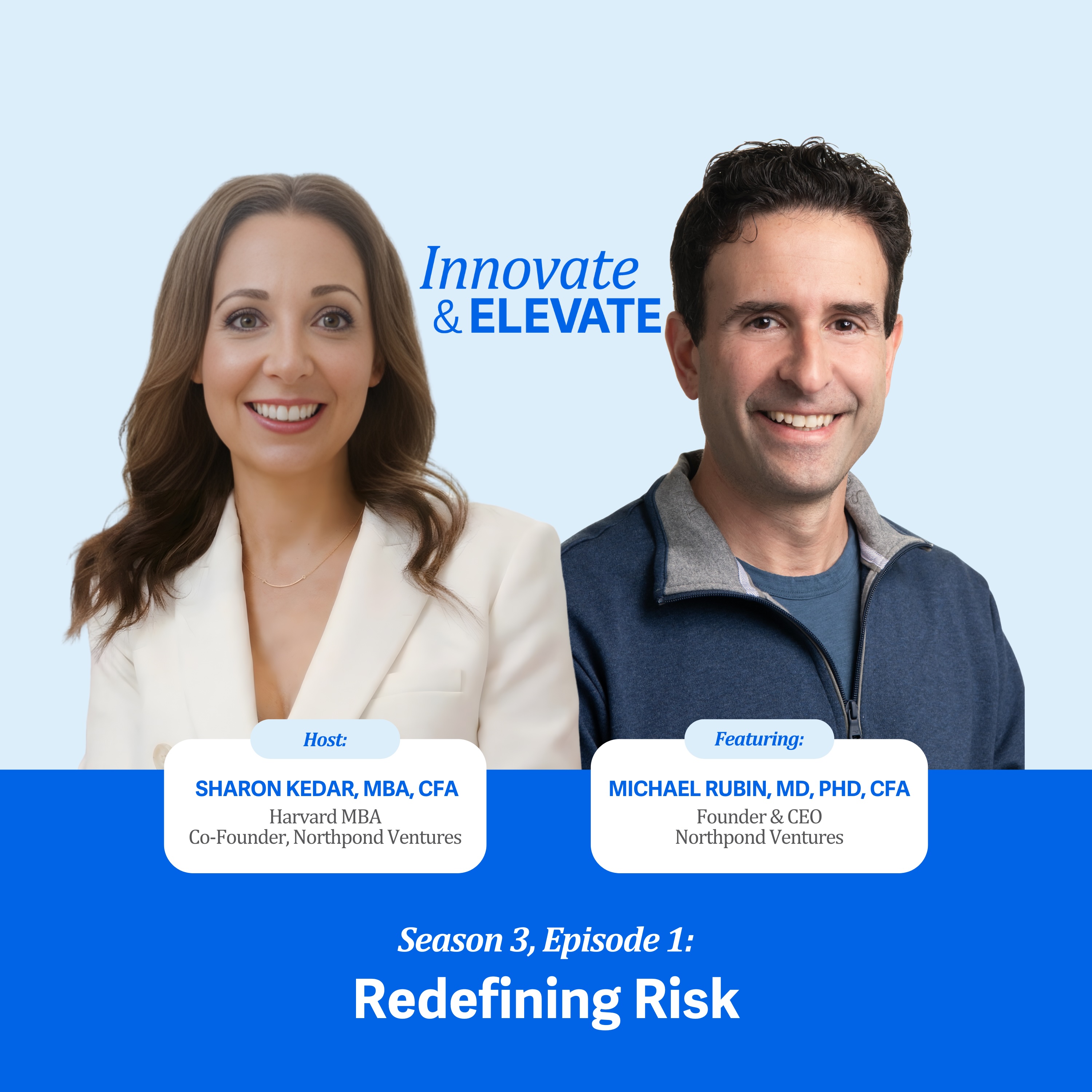
Redefining Risk with Dr. Michael Rubin: On Entrepreneurship, Career Decisions, and Building Venture Capital in Human Health
In the opening episode of Season 3, host Sharon Kedar speaks with Dr. Mike Rubin about following scientific curiosity across disciplines. Mike reflects on his early training in medicine, his decision to leave clinical practice, and how that transition led him into science-driven venture capital. Rather than framing career change as failure, this conversation examines coherence, preparation, and self-trust as essential components of innovation. Listeners gain practical context for how scientific thinking, uncertainty, and long-term discipline shape entrepreneurship and investment in human health. What You’ll Learn from this Episode: Why non-linear career paths are common in science and innovation — and how coherence matters more than linear progression How scientific training informs risk assessment, preparation, and decision-making in venture capital Why acknowledging uncertainty and saying “I don’t know” is often the starting point for meaningful discovery The content shared in this episode is for informational purposes only and does not constitute medical, financial, or investment advice. Please seek guidance from your own qualified professionals before making decisions. Topics Covered in This Episode Science-driven venture capital and long-term thinking Transitioning from clinical medicine to investing Non-linear careers in science and entrepreneurship Preparation, discipline, and showing up without a playbook Risk reframed as discovery rather than failure Innovation grounded in scientific uncertainty Building ecosystems that support human health research Connect with Sharon: Connect with Sharon on LinkedIn: https://www.linkedin.com/in/sharonkedar/ Learn more about Innovate and Elevate: https:// innovateandelevatepodcast.com Subscribe to Innovate and Elevate on YouTube : https://www.youtube.com/channel/UCuWi1O9RBaPMYuCkKszPYVA Join the newsletter to receive the latest episodes in your inbox: https://innovateandelevatepodcast.com/email Connect with Dr. Mike Rubin: LinkedIn: https://www.linkedin.com/in/mprubin/ Learn more about Northpond Ventures: Website: https://www.npv.vc/ LinkedIn Northpond Ventures: https://www.linkedin.com/company/northpond-ventures/ Organizations and guidelines referenced: Northpond Ventures: https://www.npv.vc/ Sands Capital: https://www.sandscapital.com/ Harvard University: https://www.harvard.edu/ MIT: https://www.mit.edu/ Stanford University: https://www.stanford.edu/ Chapters: (00:00:41) Early Curiosity and a Passion for Science (00:02:38) Creating a Bioelectrical Engineering Major (00:03:46) Leaving Medicine at 32: A Defining Career Decision (00:06:31) From Public Markets to Venture Capital (00:10:16) The First Investment and Founding a Venture Firm (00:12:21) Redefining Risk: The Fear of Not Trying (00:14:03) Building in 2008: Opportunity in a Market Downturn (00:15:37) Showing Up and Being Prepared: The Venture Capital Edge (00:20:43) The Northpond Thesis: Science, Alignment, and Impact (00:29:08) Amplifying the Signal Within and the Power of “I Don’t Know” About Our Guest: Dr. Mike Rubin is a science-driven investor and Founder of Northpond Ventures. Trained as a physician and surgeon, he transitioned from clinical medicine into venture capital, where he focuses on translating scientific discovery into real-world impact through entrepreneurship. About Sharon: Sharon Kedar is Co-Founder at Northpond Ventures, a multi-billion-dollar science-driven venture capital firm. Her extensive career includes leadership roles at Sands Capital and McKinsey & Company, and she is a published author on personal finance. As the host of the Innovate and Elevate podcast, she passionately advocates for menopause care and HRT (hormone replacement therapy), challenging the silence around human health XX (also known as women’s health). She aims to help women navigate midlife and achieve longevity by aging with power. Sharon holds an MBA from Harvard Business School and is a CFA charter holder. She lives in the Washington, DC area with her husband, Greg, their three kids, and their dog Bo. This podcast is produced by Brave Moon Podcasts : https://www.bravemoonpodcasts.com/
February 10, 20261 min
Introducing Innovate & Elevate: Conversations Shaping the Future of Human Health
Welcome to Innovate & Elevate , hosted by Sharon Kedar, Managing Partner at Northpond Ventures. Each episode features conversations with the innovators, physicians, scientists, founders, investors, and industry leaders advancing the future of human health. From groundbreaking diagnostics and medical technologies to longevity science, women's health, preventative medicine, healthcare investing, and emerging innovations, this podcast explores the ideas and breakthroughs changing healthcare as we know it. If you're curious about the future of medicine, healthcare innovation, and the people driving meaningful change, you're in the right place. Subscribe now and join us as we elevate the conversation around human health.
December 18, 202521 min
Building a Better Menopause System: Insights from One Medical’s Dr. Erin Duralde
On this episode of Innovate & Elevate , Sharon speaks with Dr. Erin Duralde , Medical Director for Women’s Health and Menopause Care at One Medical, about a question that keeps coming up in midlife healthcare: now that we know more, where do people actually go for menopause care? Recorded shortly after the FDA removed the long-standing black box warning on estrogen therapies, this conversation explores how menopause and perimenopause care can be integrated into primary care, what a modern menopause visit should look like, and how clinicians can better listen to symptoms, history, and lived experience to guide care. What You’ll Learn from this Episode: How Dr. Duralde’s early work as a patient advocate at the UCSF Breast Care Center shaped her approach to menopause care and clinical decision-making Why menopause education was largely missing from medical training following misinterpretations of the Women’s Health Initiative, and how that legacy still affects care today What patients can expect from a dedicated menopause or perimenopause visit at One Medical How intake surveys and symptom tracking help clinicians better understand what matters most to each patient The wide range of symptoms that can appear during perimenopause, beyond hot flashes and night sweats How clinicians think through treatment options in perimenopause, including hormonal and non-hormonal approaches The difference between menopausal hormone therapy and combined hormonal contraception, and why timing and symptoms matter How testosterone is used in post-menopause, why dosing matters, and how safety is monitored How primary care providers are being trained at scale to deliver evidence-based menopause care As always, nothing in this episode is personal medical advice. Please talk with your own clinician about your individual history, risks, and options. Connect with Sharon: On LinkedIn On Instagram Learn more about the Innovate and Elevate podcast Subscribe to Innovate and Elevate on YouTube Join the newsletter to receive the latest episodes in your inbox Connect with Dr. Erin Duralde MD MPH MSCP On LinkedIn Connect with One Medical One Medical Website On LinkedIn On Instagram On Facebook Menopause Care, Guidelines & Professional Organizations Referenced: The Menopause Society – https://www.menopause.org/ American College of Obstetricians and Gynecologists (ACOG) – https://www.acog.org/ American Urological Association (AUA) – https://www.auanet.org/ Topics & Therapies Discussed: Menopausal hormone therapy Perimenopause symptom assessment Testosterone therapy in post-menopause Vaginal estrogen for genitourinary symptoms of menopause Intake surveys and symptom-based care Primary care–based menopause models Skip to the Good Part: 00:00 – Why Access to Menopause Care Keeps Coming Up 01:00 – Introducing Dr. Erin Duralde and Her Path into Menopause Care 03:30 – How Misinterpretations of the WHI Shaped Medical Training 06:30 – What a Modern Menopause Visit Should Look Like 09:30 – Why Intake Surveys Change the Quality of Care 12:00 – The Range of Perimenopause Symptoms 14:30 – Hormonal and Non-Hormonal Treatment Options 18:00 – Testosterone Therapy: Safety, Dosing, and Expectations 22:00 – Labs, Symptoms, and Clinical Judgment 25:00 – Scaling Menopause Care Through Primary Care Please note: The information on this podcast is for educational purposes only and does not constitute medical advice. Please consult with a healthcare professional regarding your individual health needs. About Dr. Erin Duralde: Dr. Erin Duralde is a practicing primary care provider and Medical Director of Women's Health and Menopause Care at One Medical, where she leads menopause care delivery. Before joining One Medical in 2023, she practiced at Brigham and Women's Hospital's Menopause and Midlife clinic in Boston. Erin earned her MD from the University of California, San Francisco, completed her internal medicine residency at Beth Israel Deaconess Medical Center, and holds a Master of Public Health from Harvard School of Public Health. She has completed fellowships in both population health management and menopause management. Board-certified in internal medicine and a Menopause Society Certified Practitioner, Erin actively researches women's quality of life and barriers to care, recently co-authoring a state-of-the-art review on menopause management for the British Medical Journal. Her goal is to close the gap between research and practice in menopause care through human-centered, compassionate treatment approaches. About Sharon: Sharon Kedar is a co-founder and partner at Northpond Ventures, a multi-billion-dollar science-driven venture capital firm. Her extensive career includes leadership roles at Sands Capital and McKinsey & Company, and she is a published author on personal finance. As the host of the Innovate and Elevate podcast, she passionately advocates for menopause care and HRT (hormone replacement therapy), challenging the silence around human health XX (also known as women’s health). She aims to help women navigate midlife and achieve longevity by aging with power. Sharon holds an MBA from Harvard Business School and is a CFA charter holder. She lives in the Washington, DC area with her husband, Greg, their three kids, and their dog Bo. This podcast is produced by Brave Moon Podcasts .
November 26, 202543 min
8 Days After the FDA: Breaking Down HRT and Breast Cancer Risk with Dr. Corinne Menn
On this episode of Innovate & Elevate, Sharon sits down with Dr. Corinne Menn, an OB-GYN, menopause specialist, and breast cancer survivor, to unpack one of the most misunderstood topics in women’s health: the relationship between breast cancer risk and hormone therapy. Recorded eight days after the FDA announced it will remove the long-standing black box language on hormone therapy, this conversation traces the legacy of the 2002 Women’s Health Initiative press conference, what the data actually showed, and how modern evidence can better guide women and their clinicians today. What You’ll Learn from this Episode: What really happened in July 2002, and why the WHI press conference (held eight days before doctors saw the full study) reshaped hormone therapy for a generation. The difference between estrogen alone and combined estrogen–progestin therapy, and why age, timing, and formulation matter. Why every major professional society (ASCO, ACOG, American Urological Association, The Menopause Society) agrees that local, low-dose vaginal hormones do not increase breast cancer risk, recurrence, or mortality. The role of tools like the Tyrer–Cuzick breast cancer risk model in understanding your baseline risk - and how Dr. Menn interprets those results in the context of HRT. Dr. Menn’s own story: being diagnosed with ER/PR-positive breast cancer at 28 during OB-GYN residency, going through abrupt menopause, and later discovering a BRCA2 mutation after updated genetic testing How she now counsels breast cancer survivors about menopause, quality of life, and when hormone therapy may or may not be appropriate Practical ways women can prepare for a time-limited doctor’s visit to have more informed, individualized conversations about breast cancer risk and hormone therapy As always, nothing in this episode is personal medical advice. Please talk with your own clinician about your individual history, risks, and options. Connect with Sharon: On LinkedIn On Instagram Learn more about the Innovate and Elevate podcast Subscribe to Innovate and Elevate on YouTube Join the newsletter to receive the latest episodes in your inbox Connect with Dr. Corinne Menn: On LinkedIn On Instagram Learn more on her website Breast Cancer Risk Models & Screening Tools: Tyrer–Cuzick (IBIS) Breast Cancer Risk Model - https://ems-trials.org/riskevaluator/ Gail Model (Breast Cancer Risk Assessment Tool) - https://bcrisktool.cancer.gov POSITIVE Trial – New England Journal of Medicine - https://www.nejm.org/doi/full/10.1056/NEJMoa2215851 Hormone Therapy, Menopause Guidelines & Professional Societies: The Menopause Society - https://www.menopause.org/ American Society of Clinical Oncology (ASCO) - https://www.asco.org/ American College of Obstetricians and Gynecologists (ACOG) - https://www.acog.org/ American Urological Association (AUA) - https://www.auanet.org/ WHI & FDA Background Materials: Women’s Health Initiative (WHI) – National Institutes of Health - https://www.nhlbi.nih.gov/science/womens-health-initiative-whi WHI 2002 Press Release - https://www.nhlbi.nih.gov/news/2002/hrtupdate Publications & Books Referenced Estrogen Matters – Avrum Bluming & Carol Tavris - https://www.estrogenmatters.com/ Maria Shriver Sunday Paper Article - https://www.mariashriversundaypaper.com/warning-label-menopause-hormone-therapies/ FDA-Approved Therapies Mentioned: - Duavee (Conjugated Estrogens + Bazedoxifene) - https://www.duavee.com/ Intrarosa (Prasterone/DHEA) - https://www.intrarosa.com/ Micronized Progesterone (Prometrium) - https://www.accessdata.fda.gov/drugsatfda_docs/label/2002/20846_prometrium_lbl.pdf Clinicians Mentioned in the Episode: Dr. Rachel Rubin - https://www.rachelrubinmd.com/ Dr. Kelly Casperson - https://www.kellycaspersonmd.com/ Dr. Vonda Wright - https://www.drvondawright.com/ Dr. Sharon Malone - https://www.sharonmalonemd.com/ Dr. Heather Hirsch - https://www.heatherhirschmd.com/ Additional Trusted Medical & Genetics Resources Alloy Women’s Health - https://www.myalloy.com/ USPSTF Screening Guidelines https://www.uspreventiveservicestaskforce.org/ Myriad Genetics – BRCA and BART Testing - https://myriad.com/patients-families/hereditary-cancer/ National Society of Genetic Counselors (Find a Counselor) - https://www.nsgc.org/page/find-a-genetic-counselor Skip to the Good Part: 00:00 – Local Vaginal Estrogen and the Black Box Barrier 01:00 – Introducing Dr. Corinne Menn and the HHS Moment 02:00 – What the FDA Label Change Actually Means 04:00 – The 2002 WHI Press Conference and Its Fallout 06:00 – Dr. Menn’s Personal Story: Cancer at 28 and Abrupt Menopause 09:00 – Modern HRT vs. WHI Formulations 13:30 – Time-Limited Visits and the Need for Prepared Patients 21:00 – Knowing Your Baseline Breast Cancer Risk 29:00 – Does HRT Cause Breast Cancer? What the Data Actually Show 36:00 – Breast Cancer Survivors, Choice, and Quality of Life Please note: The information on this podcast is for educational purposes only and does not constitute medical advice. Please consult with a healthcare professional regarding your individual health needs. About Dr. Corinne Menn: Dr. Corinne Menn is a board-certified OB-GYN and nationally recognized menopause specialist with more than two decades of clinical experience. A breast cancer survivor herself, she brings a unique blend of medical expertise and lived experience to her work, helping women navigate menopause, breast cancer risk, and hormone therapy with clarity and compassion. Dr. Menn is certified by the North American Menopause Society and serves as a clinical educator on midlife women’s health, breast cancer survivorship, and evidence-based hormone therapy. About Sharon: Sharon Kedar is a co-founder and partner at Northpond Ventures, a multi-billion-dollar science-driven venture capital firm. Her extensive career includes leadership roles at Sands Capital and McKinsey & Company, and she is a published author on personal finance. As the host of the Innovate and Elevate podcast, she passionately advocates for menopause care and HRT (hormone replacement therapy), challenging the silence around human health XX (also known as women’s health). She aims to help women navigate midlife and achieve longevity by...
Is this your show?
Claim this listing to keep it up to date, reach guests who want to pitch you, and manage bookings with Guestify.