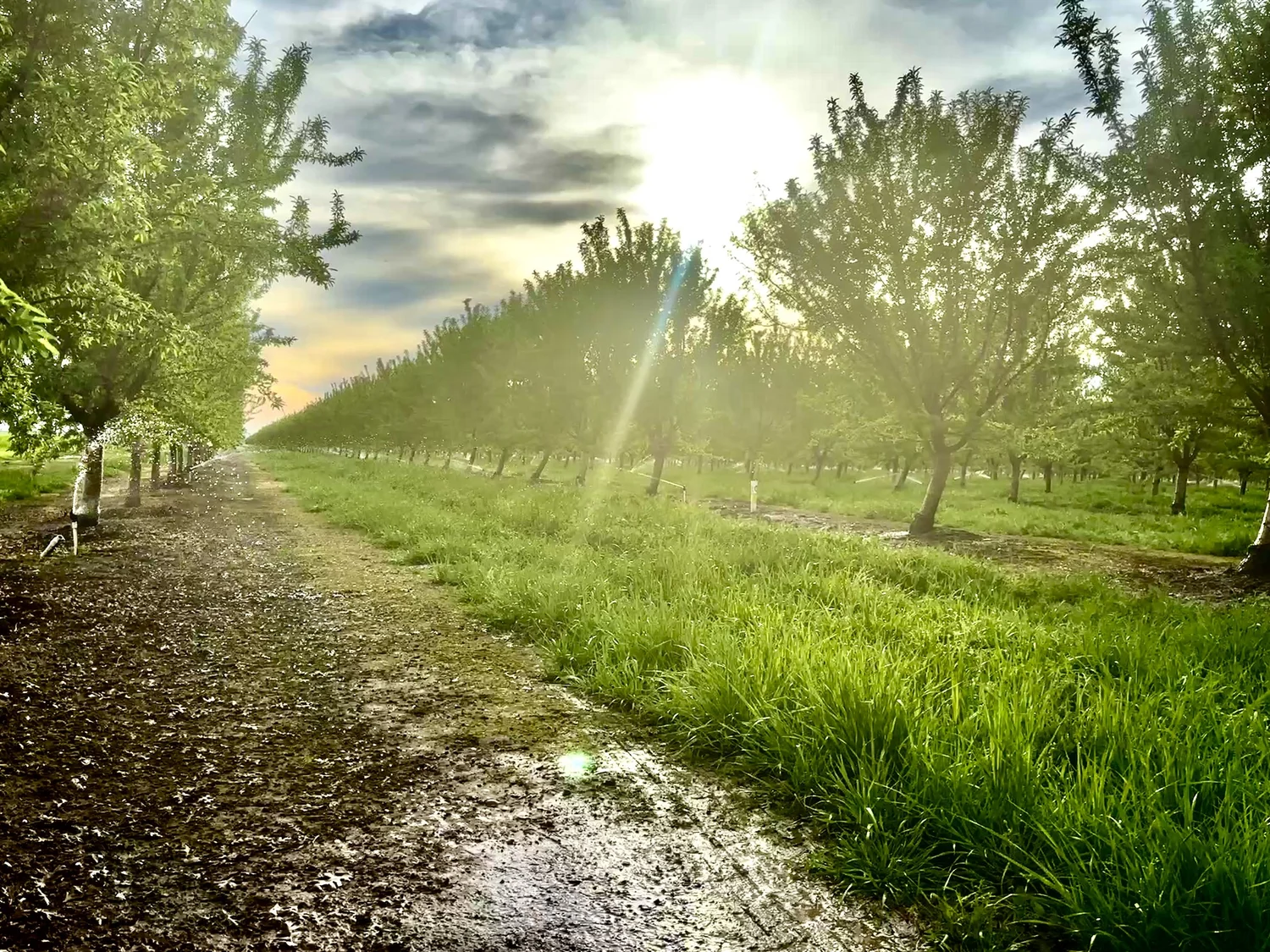
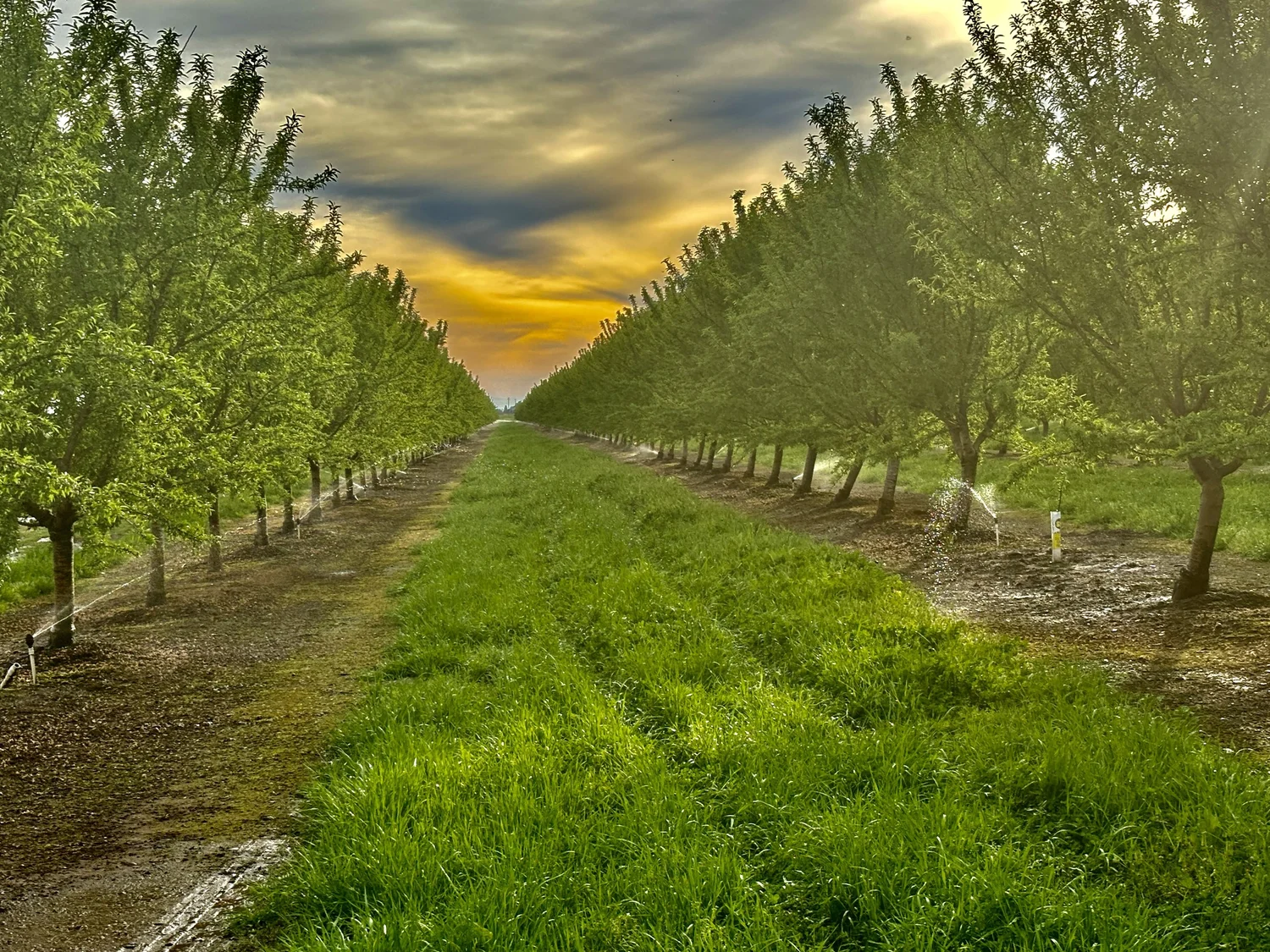
This is a podcast that goes over new research and basic information about growing orchard crops in the Central Valley of California
Listen to episodes
60 recent
October 15, 2026Episode 30937 min
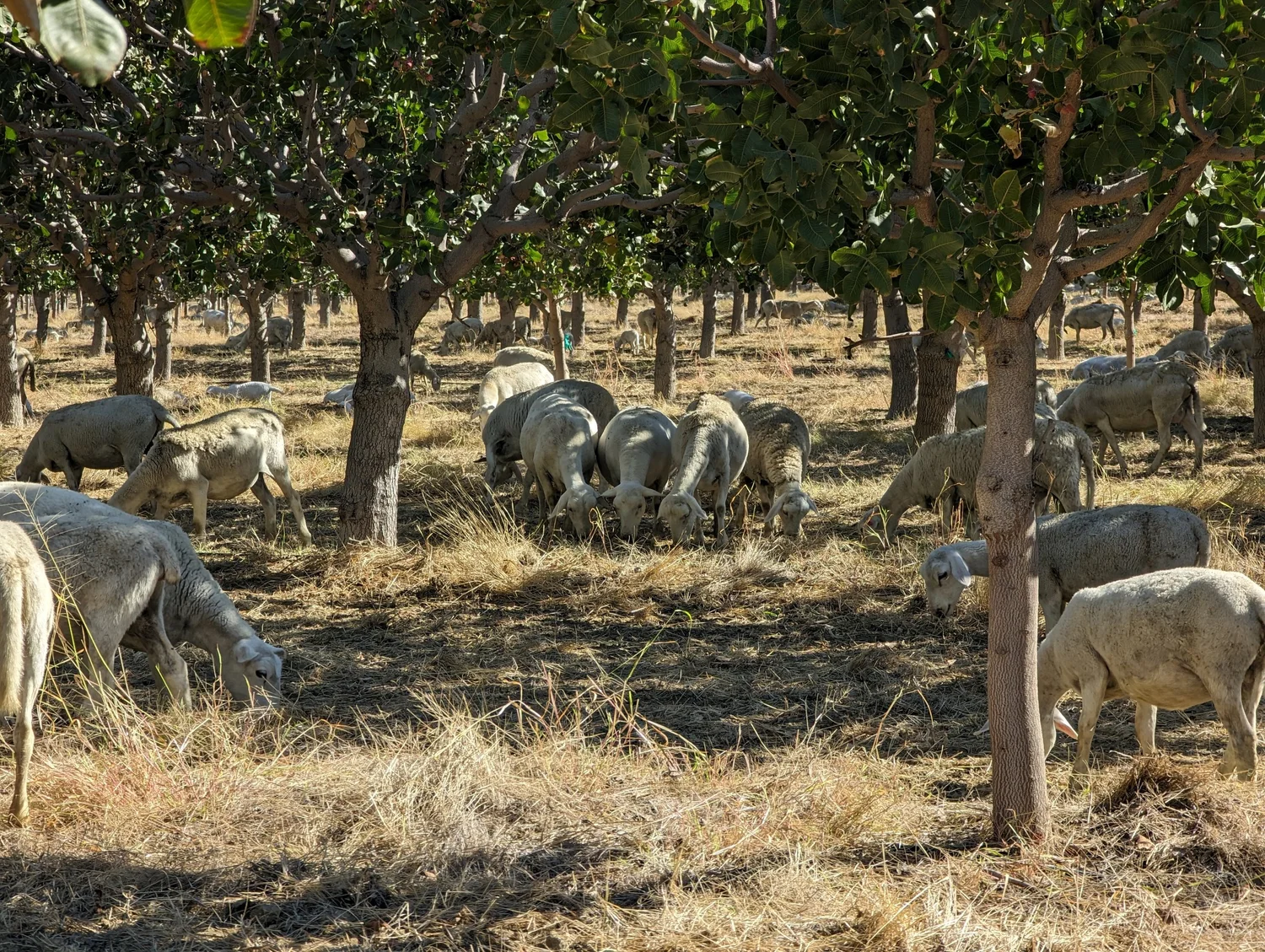
Impact of sheep grazing on nut mummies in orchards
Winter sanitation is the foundation of navel orangeworm control, however orchard access can be difficult, particularly in wet winters. Houston Wilson, entomology specialist at UC Riverside, is part of a multidisciplinary team looking at sheep grazing in orchards. He has been looking at whether sheep eat mummy nuts, and how well they do it. Episode transcript The views, thoughts, and opinions expressed are the speaker’s own and do not represent the views, thoughts, and opinions of the University of California. The material and information presented here is for general information purposes only. The "University of California" name and all forms and abbreviations are the property of its owner, and its use does not imply endorsement of or opposition to any specific organization, product, or service. Follow us on Twitter! @SacOrchards and @SJVtandv Thank you to the Almond, Pistachio, Prune, and Walnut Boards of California for their kind donations. Thank you to Muriel Gordon for the music.
September 17, 2026Episode 30838 min
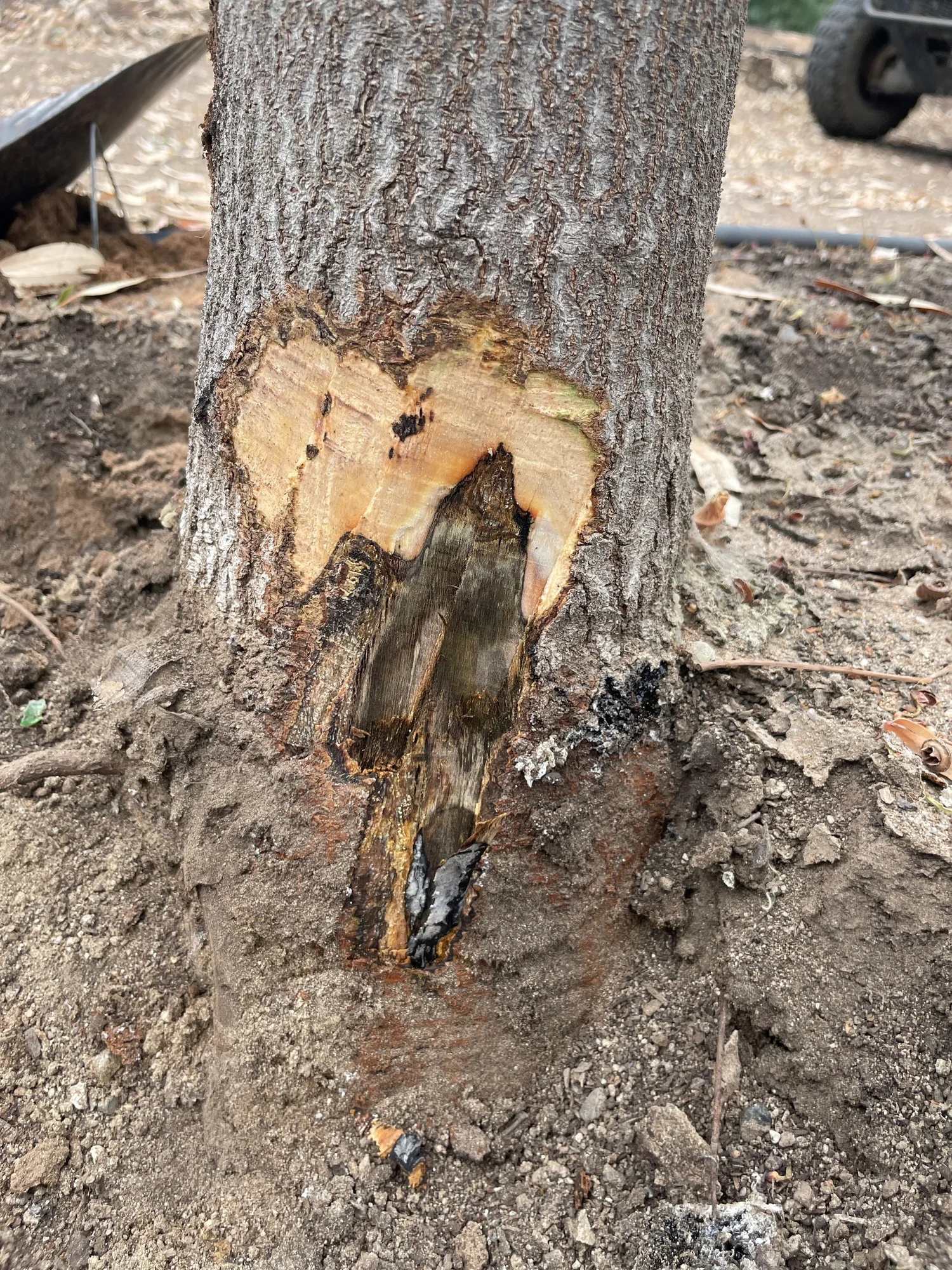
Alejandro Hernandez on phytophthora in pistachios
Phytophthora infections have become more common in pistachio. Alejandro Hernandez covers the biology of this disease, as well as his research on rootstock susceptibility and the efficacy of new fungicides. Please note that some of these fungicides are not registered for use in pistachio. Episode transcript Mention of a pesticide does not constitute a pesticide recommendation, and mention of specific trade names does not constitute an endorsement. Always follow the pesticide label. Find out more at ipm.ucanr.edu The views, thoughts, and opinions expressed are the speaker’s own and do not represent the views, thoughts, and opinions of the University of California. The material and information presented here is for general information purposes only. The "University of California" name and all forms and abbreviations are the property of its owner, and its use does not imply endorsement of or opposition to any specific organization, product, or service. Follow us on Twitter! @SacOrchards and @SJVtandv Thank you to the Almond, Pistachio, Prune, and Walnut Boards of California for their kind donations. Thank you to Muriel Gordon for the music.
May 13, 2026Episode 30724 min
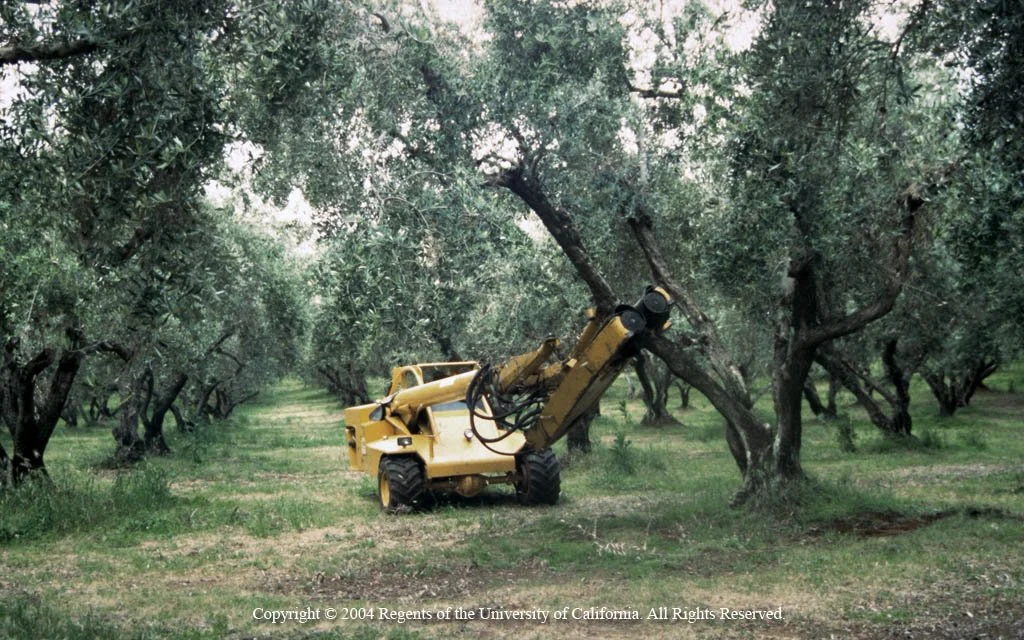
ACC research in olives with Becky Wheeler-Dykes
Fruit removal is a serious issue in table olive production, namely because the fruit are harvested before they are ripe. ACC, an ethylene precursor, has the potential to improve fruit removal (please note that the commercial product is not registered in olives yet and cannot legally be used). Becky Wheeler-Dykes, an advisor in Glenn, Colusa, and Tehama Counties, has been examining its efficacy in olives with a team of researchers at UC Davis. She shares some preliminary, and promising results in this week’s episode. Episode transcript Mention of a pesticide does not constitute a pesticide recommendation, and mention of specific trade names does not constitute an endorsement. Always follow the pesticide label. Find out more at ipm.ucanr.edu The views, thoughts, and opinions expressed are the speaker’s own and do not represent the views, thoughts, and opinions of the University of California. The material and information presented here is for general information purposes only. The "University of California" name and all forms and abbreviations are the property of its owner, and its use does not imply endorsement of or opposition to any specific organization, product, or service. Follow us on Twitter! @SacOrchards and @SJVtandv Thank you to the Almond, Pistachio, Prune, and Walnut Boards of California for their kind donations. Thank you to Muriel Gordon for the music.
May 6, 2026Episode 30636 min
Distribution uniformity return on investment tool
Anyone who has an irrigation system knows that it needs to be maintained for peak performance. Anyone who has an irrigation system also knows that almost everything seems to be more important in the moment than flushing those lines or checking pressures. A distribution uniformity test is a good way to assess the health of your irrigation system, but it isn’t always easy to figure out if the cost of making these fixes, particularly big fixes, will pencil out. CURES got a grant a few years back to develop a tool to estimate the return on investment for making fixes to a system. Inge Bisconer and Parry Klassen share how the tool works and what spurred them to develop it in this week’s episode. Episode transcript The views, thoughts, and opinions expressed are the speaker’s own and do not represent the views, thoughts, and opinions of the University of California. The material and information presented here is for general information purposes only. The "University of California" name and all forms and abbreviations are the property of its owner and its use does not imply endorsement of or opposition to any specific organization, product, or service. Follow us on Twitter! @SacOrchards and @SJVtandv Thank you to the Almond, Pistachio, Prune, and Walnut Boards of California for their kind donations. Thank you to Muriel Gordon for the music. Come to an upcoming extension meeting! Sacramento Valley The Nickels Field Day is on Tuesday May 19 San Joaquin Valley (scroll to the bottom)
April 29, 2026Episode 30627 min
2026 Prune Fruit Set, GDH30, and Cost of Thinning
In 2026 the Sacramento Valley prune industry is experiencing high fruit sets, high GDH 30 , and a high cost of fruit thinning because of very diesel prices . Jaime Ott (UCCE Tehama), Domena Agyeman (UCCE Butte), and Franz Niederholzer (UCCE Colusa) break down prune grower crop management considerations given this tricky set of circumstances. Upcoming Orchard Meetings: The Almond Board of California also has four upcoming IPM meeting, tackling rodents, red leaf blotch, Carpophilus and other pests: Bakersfield: Thursday, April 30 Wednesday, June 16, if you’re an almond variety nerd like me you can’t miss the Almond Board’s Crackout Event at Merced College In the Sacramento Valley : Nickels Field Day is Tuesday, May 19 in Arbuckle I have two almond variety meetings at the Chico State Farm in June. Thursday June 11 and Thursday, June 25th. The Third Thursday on July 16 will be in Yuba City and cover Walnut Mold The Third Thursday on August 20 will be in Orland and tackle labor economics Following a harvest season hiatus, there will be a Third Thursday on November 19 in Yuba City recapping 2026’s IPM challenges and lessons The views, thoughts, and opinions expressed are the speaker’s own and do not represent the views, thoughts, and opinions of the University of California. The material and information presented here is for general information purposes only. The "University of California" name and all forms and abbreviations are the property of its owner and its use does not imply endorsement of or opposition to any specific organization, product, or service. Follow us on Twitter! @SacOrchards and @SJVtandv Thank you to the Almond, Pistachio, Prune, and Walnut Boards of California for their kind donations. Thank you to Muriel Gordon for the music. The views, thoughts, and opinions expressed are the speaker’s own and do not represent the views, thoughts, and opinions of the University of California. The material and information presented here is for general information purposes only. The "University of California" name and all forms and abbreviations are the property of its owner and its use does not imply endorsement of or opposition to any specific organization, product, or service. Follow us on Twitter! @SacOrchards and @SJVtandv Thank you to the Almond, Pistachio, Prune, and Walnut Boards of California for their kind donations. Thank you to Muriel Gordon for the music.
April 22, 2026Episode 3051 hr 10 min
Last update from the 3rd generation Regional Almond Variety Trial
The 3rd Generation RAVT recently wrapped up, and Luke, Phoebe, and Roger sit down one final time to discuss the findings. While the overall results are discussed, they also discuss each of the strengths and weaknesses of the 13 remaining varieties. It’s a long episode, check out the transcript if you are interested in something specific to get the timestamp. Episode transcript The views, thoughts, and opinions expressed are the speaker’s own and do not represent the views, thoughts, and opinions of the University of California. The material and information presented here is for general information purposes only. The "University of California" name and all forms and abbreviations are the property of its owner and its use does not imply endorsement of or opposition to any specific organization, product, or service. Follow us on Twitter! @SacOrchards and @SJVtandv Thank you to the Almond, Pistachio, Prune, and Walnut Boards of California for their kind donations. Thank you to Muriel Gordon for the music. Come to an upcoming extension meeting! Sacramento Valley The Nickels Field Day is on Tuesday May 19 San Joaquin Valley (scroll to the bottom)
April 15, 2026Episode 30421 min
The effect of pollen on pistachio fruit and polyphenol deposition
Giulia Marino and Pat J Brown (both UC Davis) have been examining another potential influence on polyphenol deposition in pistachio: whether the pollen source impacts deposition rates. In this episode, Giulia shares her results, as well as some other unexpected findings from pistachio xenia (the effect of the pollen source on the fruit). Episode transcript Thank you to the Almond, Pistachio, Prune, and Walnut Boards of California for their kind donations. Thank you to Muriel Gordon for the music. The views, thoughts, and opinions expressed are the speaker’s own and do not represent the views, thoughts, and opinions of the University of California. The material and information presented here is for general information purposes only. The "University of California" name and all forms and abbreviations are the property of its owner and its use does not imply endorsement of or opposition to any specific organization, product, or service.
April 8, 2026Episode 30330 min
2026: Earlier Almond Irrigation Start Revisited
Dr. Or Sperling (ARO-Volcani) and Zac Ellis (OFI) discuss the exciting 2025 results from their proactive irrigation scheduling application in California almond orchards. You can ask questions and provide feedback to the researchers at: Or Sperling: orsp@agri.gov.il or +972 52 6278189 Zac Ellis: Zac.ellis@ofi.com (559) 303-0599 Maciej Zwieniecki: mzwienie@ucdavis.edu Come to an upcoming extension meeting! In the San Joaquin Valley: UC Cooperative extension has a Regenerative Almond Orchard Field Day on Tuesday, April 21st at the UC Merced Experimental smart farm The Almond Board of California also has four upcoming IPM meetings, tackling rodents, red leaf blotch, Carpophilus and other pests: Ceres: Wednesday April 22 Durham: Thursday April 23 Fresno: Tuesday April 28 And Bakersfield: Thursday, April 30 And finally Wednesday, June 16, if you’re an almond variety nerd like me you can’t miss the Almond Board’s Crackout Event at Merced College In the Sacramento Valley we have a Third Thursday: Nematode Management in Orchards meeting in Orland on April 16 from 11-1 Nickels Field Day is Tuesday, May 19 in Arbuckle I have two almond variety meetings at the Chico State Farm in June. Thursday June 11 and Thursday, June 25th. The Third Thursday on July 16 will be in Yuba City and cover Walnut Mold The Third Thursday on August 20 will be in Orland and tackle labor economics Following a harvest season hiatus, there will be a Third Thursday on November 19 in Yuba City recapping 2026’s IPM challenges and lessons The views, thoughts, and opinions expressed are the speaker’s own and do not represent the views, thoughts, and opinions of the University of California. The material and information presented here is for general information purposes only. The "University of California" name and all forms and abbreviations are the property of its owner and its use does not imply endorsement of or opposition to any specific organization, product, or service. Follow us on Twitter! @SacOrchards and @SJVtandv Thank you to the Almond, Pistachio, Prune, and Walnut Boards of California for their kind donations. Thank you to Muriel Gordon for the music. The views, thoughts, and opinions expressed are the speaker’s own and do not represent the views, thoughts, and opinions of the University of California. The material and information presented here is for general information purposes only. The "University of California" name and all forms and abbreviations are the property of its owner and its use does not imply endorsement of or opposition to any specific organization, product, or service. Follow us on Twitter! @SacOrchards and @SJVtandv Thank you to the Almond, Pistachio, Prune, and Walnut Boards of California for their kind donations. Thank you to Muriel Gordon for the music.
April 6, 2026Episode 30251 min
Encore: Earlier Irrigation Start in Almond
Drs. Or Sperling (ARO-Volcani) and Maciej Zwieniecki (UC Davis) discuss their groundbreaking research on almond irrigation. That research has culminated in an exciting irrigation scheduling application . We also get an overview of almond production in Israel. The UC Davis Carbohydrate Observatory is also referenced. Have feedback or questions for the researchers? Or Sperling: orsp@agri.gov.il or +972 52 6278189 Maciej Zwieniecki: mailto:mzwienie@ucdavis.edu Zac Ellis (Olam): Zac.ellis@ofi.com (559) 303-0599 Come to an upcoming extension meeting! In the San Joaquin Valley: Tomorrow Tuesday April 7 there is an Almond Board of California listening session in Modesto on Cornucopia Way at 8:30 AM UC Cooperative extension has a Regenerative Almond Orchard Field Day on Tuesday, April 21st at the UC Merced Experimental smart farm The Almond Board of California also has four upcoming IPM meetings, tackling rodents, red leaf blotch, Carpohilus and other pests: Ceres: Wednesday April 22 Durham: Thursday April 23 Fresno: Tuesday April 28 And Bakersfield: Thursday, April 30 And finally Wednesday, June 16, if you’re an almond variety nerd like me you can’t miss the Almond Board’s Crackout Event at Merced College In the Sacramento Valley we have a Third Thursday: Nematode Management in Orchards meeting in Orland on April 16 from 11-1 Nickels Field Day is Tuesday, May 19 in Arbuckle I have two almond variety meetings at the Chico State Farm in June. Thursday June 11 and Thursday, June 25th. The Third Thursday on July 16 will be in Yuba City and cover Walnut Mold The Third Thursday on August 20 will be in Orland and tackle labor economics Following a harvest season hiatus, there will be a Third Thursday on November 19 in Yuba City recapping 2026’s IPM challenges and lessons The views, thoughts, and opinions expressed are the speaker’s own and do not represent the views, thoughts, and opinions of the University of California. The material and information presented here is for general information purposes only. The "University of California" name and all forms and abbreviations are the property of its owner and its use does not imply endorsement of or opposition to any specific organization, product, or service. Follow us on Twitter! @SacOrchards and @SJVtandv Thank you to the Almond, Pistachio, Prune, and Walnut Boards of California for their kind donations. Thank you to Muriel Gordon for the music. The views, thoughts, and opinions expressed are the speaker’s own and do not represent the views, thoughts, and opinions of the University of California. The material and information presented here is for general information purposes only. The "University of California" name and all forms and abbreviations are the property of its owner and its use does not imply endorsement of or opposition to any specific organization, product, or service. Follow us on Twitter! @SacOrchards and @SJVtandv Thank you to the Almond, Pistachio, Prune, and Walnut Boards of California for their kind donations. Thank you to Muriel Gordon for the music.
April 1, 2026Episode 30131 min
Polyphenol deposition in pistachios - what is it, and how do cultivar and irrigation influence it?
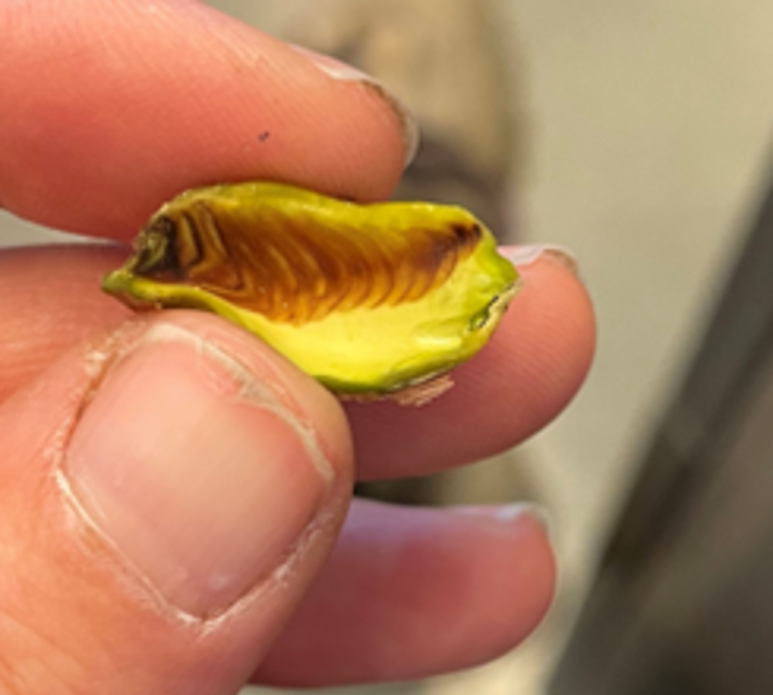
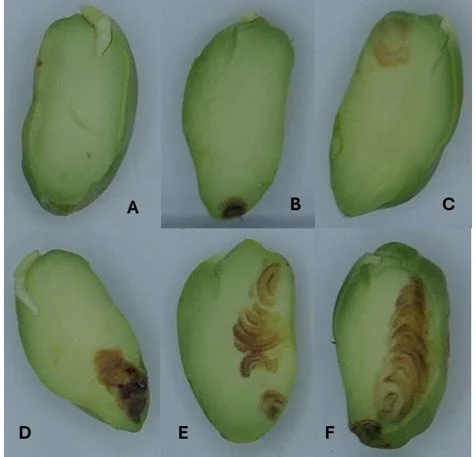
Polyphenol deposition in pistachio kernels, also known as internal kernel discoloration, is a harmless phenotype of pistachios, where dark coloration appears on the internal surface of the pistachio cotyledons (the two halves of the kernel). It started showing up widely in the late 2010s/early 2020s, and researchers Georgia Drakakaki, Phoebe Gordon, and Minmin Wang have been investigating it from different angles (Phoebe from the field perspective; Georgia and Minmin from the anatomical and physiochemical perspective). In this episode, they share some initial results. We still don’t know what truly causes it, but we have some answers to basic questions. Episode transcript The views, thoughts, and opinions expressed are the speaker’s own and do not represent the views, thoughts, and opinions of the University of California. The material and information presented here is for general information purposes only. The "University of California" name and all forms and abbreviations are the property of its owner and its use does not imply endorsement of or opposition to any specific organization, product, or service. Follow us on Twitter! @SacOrchards and @SJVtandv Thank you to the Almond, Pistachio, Prune, and Walnut Boards of California for their kind donations. Thank you to Muriel Gordon for the music. Come to an upcoming extension meeting! Sacramento Valley And the Nickels Field Day is on Tuesday May 19 San Joaquin Valley (scroll to the bottom)
Is this your show?
Claim this listing to keep it up to date, reach guests who want to pitch you, and manage bookings with Guestify.