
Find partners
GreenCars, The Podcast

GreenCars, The Podcast

Hosted by GreenCars, The Podcast

Episodes

40

Latest episode

Oct 2026

Language

EN

About the show

Welcome to GreenCars The Podcast, where we explore the latest trends and innovations in hybrid, plug-in hybrid, and all-electric vehicles. Hosted on Acast. See acast.com/privacy for more information.

Listen to episodes

40 recent
October 7, 202656 min

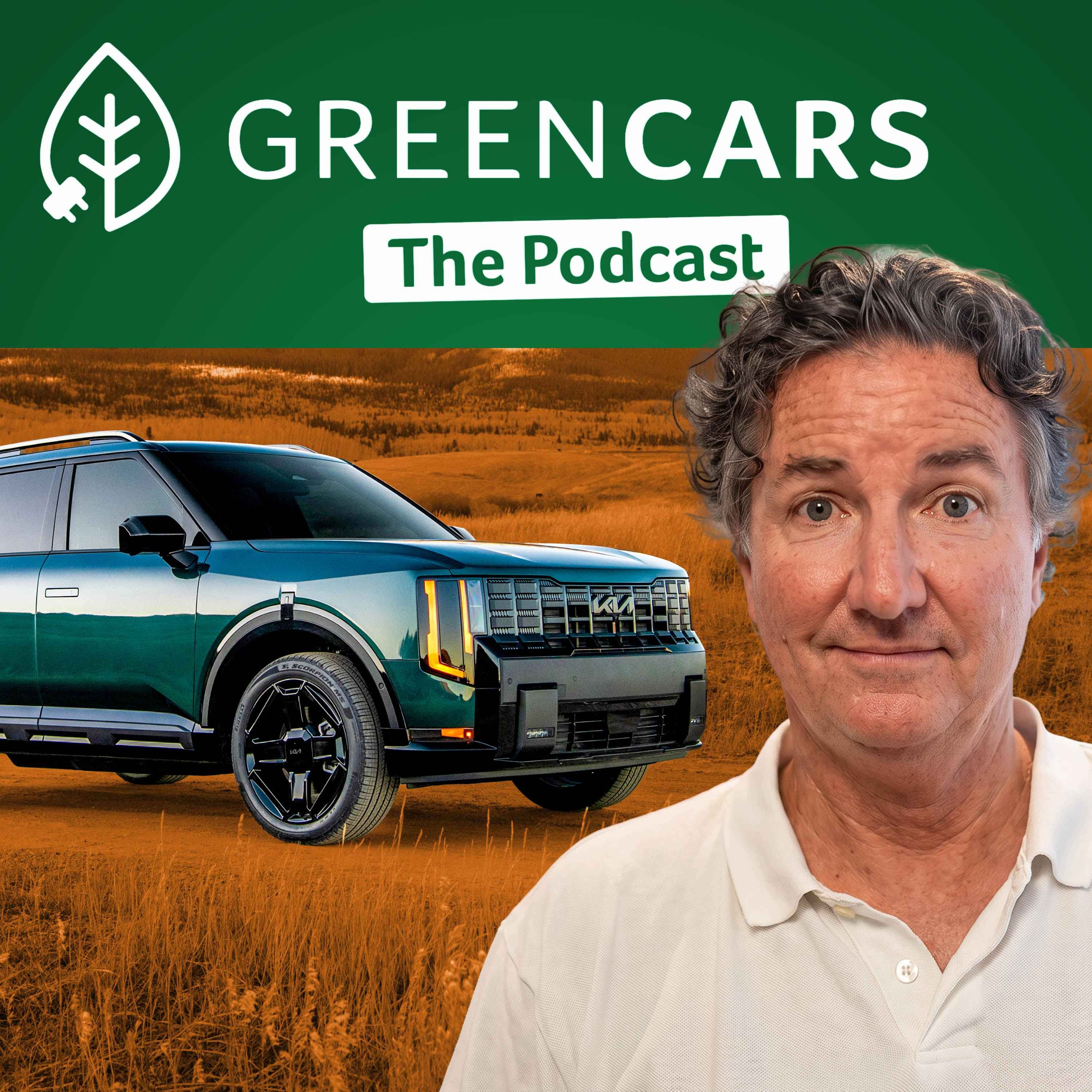
James Bell Explains Why Kia EVs are Staying the Course

For years, Kia was seen as little more than an alternative to buying a used car. Today it's one of the most closely watched automakers in America, and James Bell, Head of Corporate Communications and Public Relations at Kia America, has had a front-row seat for the entire transformation. A former automotive journalist himself, he explains what separates Kia from its Hyundai and Genesis siblings, why the company is pressing ahead with electrification while others retreat, and what kinds of vehicles could be next in line for range-extended electric power. He also explains why Kia is sticking with sedans after Ford and Chevrolet walked away from theirs, shares what keeps him up at night about the American market, and offers candid advice for anyone hoping to build a career in automotive PR, along with one unforgettable story from a press launch gone sideways. Join Craig Cole and co-host Sam Abuelsamid as they dive deep with James to find out how Kia flipped the script and where it's headed next, before looking back on the highlights of the season, in this episode of GreenCars, The Podcast. Chapters 0:00 - Introduction 5:10 - From Journalist to Kia's PR Chief 10:33 - Behind the Scenes of a Press Launch 14:20 - What Makes Kia Different 21:21 - Kia's Electrification Strategy 26:10 - Range-Extended EVs Are Coming 30:00 - Why Kia Is Sticking With Sedans 31:58 - Ionna, Charging & the Road Ahead 37:49 - Is Automotive PR a Good Career? 39:44 - A Press Trip Gone Wrong 44:04 - Three for the Road 48:48 - Conclusions Check out our Buyer’s Guide at https://apps.greencars.com/buyers-guide Visit GreenCars on YouTube for EV and hybrid reviews and much more: https://www.youtube.com/@greencarshq Hosted on Acast. See acast.com/privacy for more information.
September 23, 202649 min

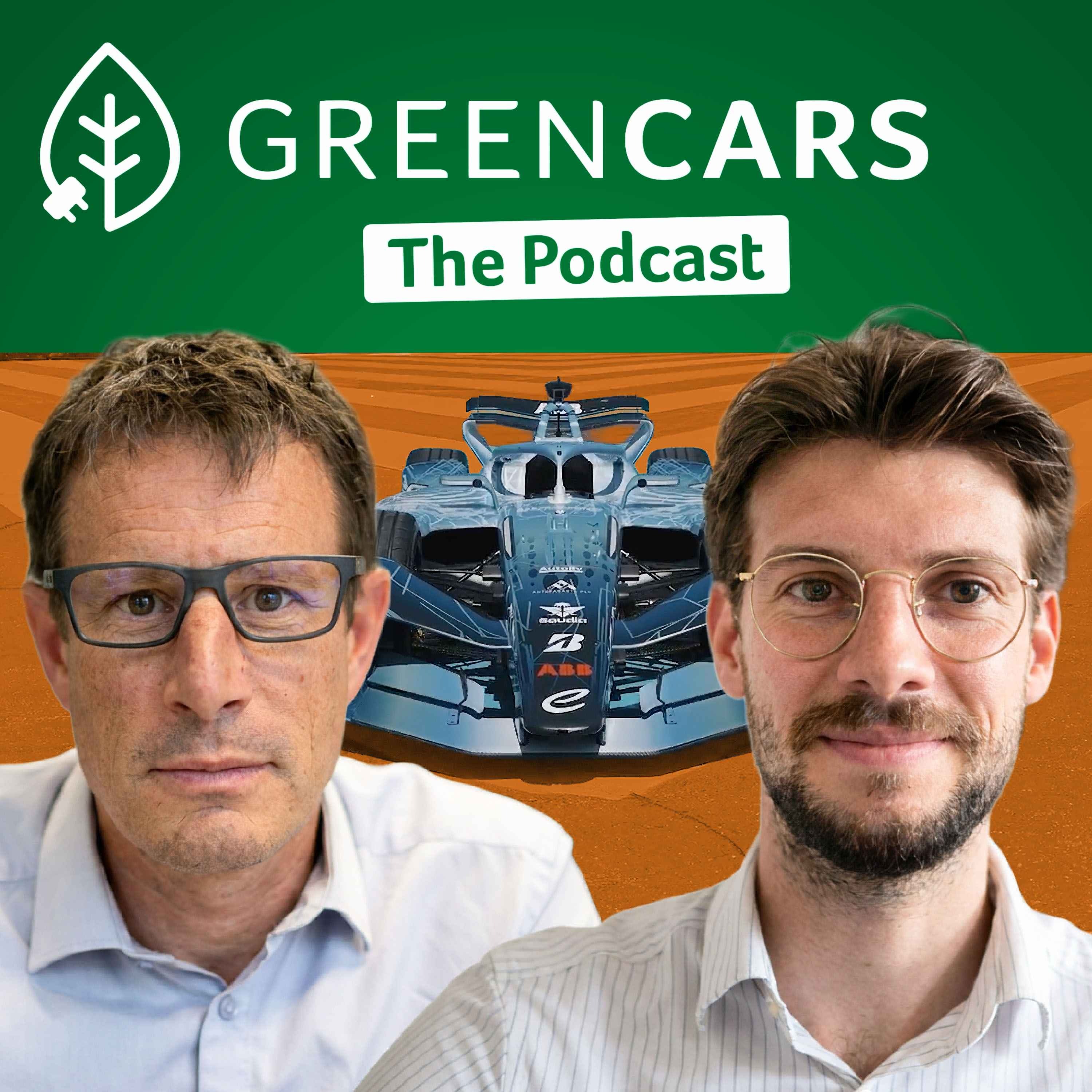
Inside the FIA's Plan to Make Motorsport Sustainable On Track and Off

Race cars have always been rolling laboratories, but the experiment has changed. Thomas Chevaucher, Technical Engineering Director at the FIA, and Pierre Villez, the federation's F1 and Sport Sustainability Lead, help write the rules for Formula 1, Formula E, and the World Endurance Championship, and today those rules are as much about efficiency and emissions as they are about speed. They explain what the sustainable fuels powering today's race cars are actually made of, how technology moves between the racetrack and the cars we drive every day, and why that relationship doesn't work quite the way most people assume. The conversation covers how far Formula E has come since its awkward early days, how much energy its newest cars recover on the move, and the biggest source of racing's carbon footprint, which has nothing to do with what happens on track. And yes, they explain exactly what a virtual fuel tank is. Join Craig Cole and co-host Sam Abuelsamid as they dive deep with Thomas and Pierre to find out how the world of motorsport is getting greener, and what it means for the car in your driveway, in this episode of GreenCars, The Podcast. Chapters 0:00 - Introduction 5:32 - What Is the FIA? 8:04 - Why Sustainability Matters in Motorsport 11:11 - Formula 1, Formula E & WEC Technology 14:09 - Racing's Impact on Passenger Cars 15:36 - Formula E's Decade of Progress 21:31 - Racing's Hidden Emissions 24:09 - What's in Sustainable Race Fuel? 30:11 - How a Virtual Fuel Tank Works 37:08 - Four for the Road 43:20 - Conclusions Check out our Buyer’s Guide at https://apps.greencars.com/buyers-guide Visit GreenCars on YouTube for EV and hybrid reviews and much more: https://www.youtube.com/@greencarshq Hosted on Acast. See acast.com/privacy for more information.
September 9, 20261 hr 8 min

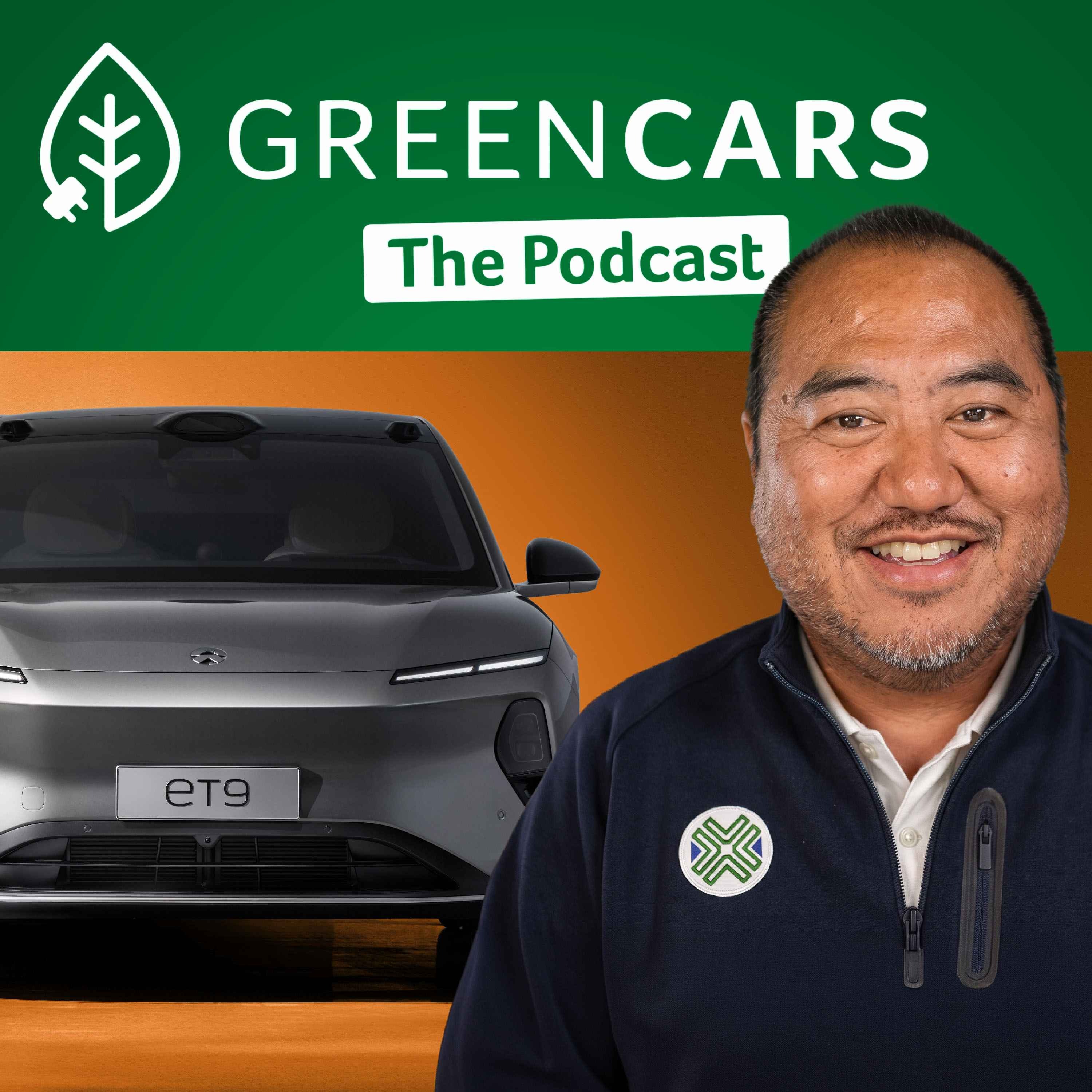
Analyst Tu Le Says U.S. Automakers Will Never Catch Up to China, and That's Fine

The Chinese auto industry moved faster than almost anyone expected, and the numbers are hard to argue with. Legacy brands that once dominated the world's largest car market have watched their collective share collapse in a matter of years. Tu Le, founder and managing director of Sino Auto Insights, spent well over a decade living and working in Beijing and still travels there regularly, which makes him unusually well placed to explain what actually happened and what it means for Detroit. He gets into whether the aura around Chinese EVs is deserved or overblown, why the long-promised consolidation of China's crowded auto industry keeps failing to arrive, and how Chinese drivers now regard the foreign badges that used to be aspirational. He also makes an argument that runs against almost everything you hear from American executives: that catching up to China is neither realistic nor even desirable, and that the smarter play looks quite different. And he suggests the biggest long-term threat to Detroit may not be the East at all. Join Craig Cole and co-host Sam Abuelsamid as they dive deep with Tu to find out what the West still doesn't understand about the world's most competitive car market, in this episode of GreenCars, The Podcast. Chapters 0:00 - Introduction 5:06 - Meet Tu Le 9:33 - Are Chinese Automakers Really Innovators? 14:44 - Can the US Ever Catch Up? 23:38 - How China's EV Boom Actually Happened 27:35 - Why Consolidation Never Comes 33:42 - How China Views Foreign Brands 36:21 - Chips, Nvidia & the Silicon Valley Threat 46:10 - Chinese Car Culture & the EV Debate 52:59 - Charging in 12 Minutes 56:01 - Three for the Road 1:00:51 - Conclusions Check out our Buyer’s Guide at https://apps.greencars.com/buyers-guide Visit GreenCars on YouTube for EV and hybrid reviews and much more: https://www.youtube.com/@greencarshq Hosted on Acast. See acast.com/privacy for more information.
August 26, 20261 hr 2 min

Ford's Alan Clarke on How They Started from Scratch to Make a Better EV

To build the 2028 Fathom, Ford went off and started a car company inside its own car company. A small team in Southern California, deliberately kept at a distance from the Dearborn, MI HQ, spent four and a half years rethinking how an electric vehicle gets designed and manufactured, and the first result is an electric pickup that will start under $30,000. Alan Clarke, Vice President of Advanced Development Projects at Ford and a Tesla veteran before that, runs the skunk works that made it happen. He explains why the team is staffed largely with people from consumer electronics, EV startups, and Formula One rather than from inside the auto industry. Contrary to conventional rhetoric, he also explains why studying what Tesla and the Chinese automakers have already shipped is what he calls “rearview mirror analysis.” There’s also the question of the name. Fathom beat out hundreds of candidates, but why? And when Ford held an open call for mapping software to every provider in the business, Apple came out on top, which Alan walks through in detail. As for the truck’s range, he knows the number, and we grill him to try and get a clue. Join Craig Cole and co-host Sam Abuelsamid as they dive deep with Alan to find out whether Ford has really found its Model T moment, in this episode of GreenCars, The Podcast. Chapters 0:00 - Introduction 4:52 - From Tesla to Ford's Skunk Works 11:56 - Vertical Integration at Long Beach 20:01 - The Universal EV Platform Explained 27:19 - How Ford Hit a Sub-$30,000 Price 29:37 - Solving Ford's Software Problem 34:36 - Where the Name "Fathom" Came From 37:26 - Why Apple Maps Beat Google 40:08 - How Much Range Will Fathom Have? 42:18 - Batteries, Towing & Charging Trade-Offs 47:34 - Three for the Road 50:39 - Conclusions Check out our Buyer’s Guide at https://apps.greencars.com/buyers-guide Visit GreenCars on YouTube for EV and hybrid reviews and much more: https://www.youtube.com/@greencarshq Hosted on Acast. See acast.com/privacy for more information.
August 5, 202653 min

Scott Case on How Recurrent is Unlocking the Real Data on EV Lifespans

Everybody worries about the battery when they think about buying an EV. As it turns out, that worry is mostly misplaced, and the data proves it. Scott Case is the co-founder and CEO of Recurrent, a company that tracks the real-world health of tens of thousands of electric cars to give buyers and sellers a clearer picture than they have ever had. He explains why a used EV is a far safer purchase than most people assume, and why the batteries are holding up better than almost anyone predicted. The conversation also digs into why the range number on the window sticker is misleading in both directions, with some cars quietly overdelivering while others fall short of their promised mileage. Scott also makes the case for a smarter way to think about charging speed than the specs automakers advertise. And, he explains how the data your car is collecting as you drive can be harnessed for eye-opening insights for you and the broader EV-buying public. Join Craig Cole and co-host Sam Abuelsamid as they dive deep with Scott into all this and much more in this episode of GreenCars, The Podcast. Chapters 0:00 - Introduction 1:03 - Green Cars We're Driving 6:07 - What Is Recurrent? 13:29 - Should You Worry About a Used EV Battery? 14:38 - Why EPA Range Numbers Are Wrong 16:12 - What Data Your EV Is Sharing 23:19 - Best Used EVs to Buy 25:47 - A Smarter Way to Measure Charging Speed 32:35 - Does Fast Charging Hurt Your Battery? 37:58 - Three for the Road 44:46 - Conclusions Check out our Buyer’s Guide at https://apps.greencars.com/buyers-guide Visit GreenCars on YouTube for EV and hybrid reviews and much more: https://www.youtube.com/@greencarshq Hosted on Acast. See acast.com/privacy for more information.
July 22, 202650 min

Mandi Damman is Shaping GM's EV and Self-Driving Future

Hands-off driving is one thing. Taking your eyes off the road entirely is something else. General Motors will allow you to do exactly that with the next generation of Super Cruise, its autonomous driving technology. Mandi Damman, Executive Chief Engineer at GM, oversees that effort along with the Chevy Bolt, the Cadillac Lyriq and Vistiq, and the company's entire battery electric truck lineup. She started as a co-op student working on body structures, a modest foundation that turned out to matter enormously for electric vehicles. The conversation gets into what actually changes in the next Super Cruise, how quickly the system will spread across GM's lineup, and what it feels like to ride in one of the development vehicles already on the road. Mandi is also strikingly candid about Chinese automakers. She spent time in China last December and came back with a clear picture of how they iterate so quickly. Join Craig Cole and co-host Sam Abuelsamid as they dive deep with Mandi to find out how close self-driving really is and what GM’s strategy is to keep pace with international rivals in this episode of GreenCars, The Podcast. Chapters 0:00 - Introduction 4:04 - Meet Mandi Damman & Her Path at GM 8:38 - GM's EV Strategy & the Hybrid Question 10:49 - Next-Gen Super Cruise Goes Eyes-Off 16:57 - New Hardware, LiDAR & Rollout Plans 28:11 - Chinese Automakers, Speed & EV Structures 34:05 - Three for the Road 38:30 - Conclusions Check out our Buyer’s Guide at https://apps.greencars.com/buyers-guide Visit GreenCars on YouTube for EV and hybrid reviews and much more: https://www.youtube.com/@greencarshq Hosted on Acast. See acast.com/privacy for more information.
July 8, 202643 min

How Magna's Diba Ilunga Perfects New Powertrain Technology Before it's Built

Magna is one of the most important automotive companies most drivers have never heard of. Supplying transfer cases, transmissions, e-drives, and hybrid systems to nearly every major automaker on the road, Diba Ilunga is the President of Magna Powertrain. He discusses the surprising shift toward software inside a division that started by building gears. That includes how digital twins let Magna perfect a part's design before it's ever physically built, and a clever software breakthrough that eliminates unwanted EV motor noise without changing the hardware. Diba also gets candid about how Western automakers are finally starting to adopt the off-the-shelf sourcing habits that have long given Chinese OEMs a cost advantage, and answers the question everyone wants to ask: with all the parts to build a complete vehicle, will Magna ever put its own badge on one? Join Craig Cole and co-host Sam Abuelsamid as they dive deep with Diba to find out what's changed at the company over his 21 years there, and where it's headed next in this episode of GreenCars, The Podcast. Chapters 0:00 - Introduction 4:02 - Magna's Powertrain Empire & the Software Shift 11:22 - Digital Twins & Solving EV Noise with Software 15:39 - Off-the-Shelf Parts: Learning from China 19:46 - The Future of ICE, Hybrids & EV Batteries 26:34 - Could Magna Build Its Own Car? 34:15 - Three for the Road 36:56 - Conclusions Check out our Buyer’s Guide at https://apps.greencars.com/buyers-guide Visit GreenCars on YouTube for EV and hybrid reviews and much more: https://www.youtube.com/@greencarshq Hosted on Acast. See acast.com/privacy for more information.
June 17, 202651 min

Kurt Kelty Reveals GM's Future Battery Strategies for EVs and Infrastructure

What happens to your EV's battery when it's no longer powerful enough to drive? Is there more life left in it than you'd expect? Those are just two of the questions Craig Cole and co-host Sam Abuelsamid put to Kurt Kelty, VP of Battery and Sustainability at General Motors, who spent over a decade leading battery engineering at Tesla before bringing that expertise to GM. The conversation covers second-life battery programs already operating at scale, GM's decision to leapfrog lithium iron phosphate and pursue sodium-ion chemistry for stationary energy storage, next-generation battery architectures designed to slash cost and complexity, and a candid take on where solid-state batteries actually stand today. Chapters 0:00 - Introduction 6:13 - Kurt Kelty's Career & GM's Battery Strategy 14:46 - Sodium-Ion: The Chemistry GM Is Betting On 19:23 - Vehicle-to-Grid & China's EV Market 25:43 - Next-Gen Battery Architecture 35:01 - LMR, Silicon & Solid-State Batteries 39:12 - Three for the Road 43:05 - Conclusions Check out our Buyer’s Guide at https://apps.greencars.com/buyers-guide Visit GreenCars on YouTube for EV and hybrid reviews and much more: https://www.youtube.com/@greencarshq Hosted on Acast. See acast.com/privacy for more information.
June 3, 202647 min

Rivian's Vidya Rajagopalan on the Move to Custom Chips, Combating Tech Fatigue, and More

What does it actually take to build a software-defined vehicle, one that gets smarter over time and may eventually drive itself? Rivian has a specific answer to that question, and Craig Cole and co-host Sam Abuelsamid put it to Vidya Rajagopalan, Senior VP of Electrical Hardware at Rivian, to find out what it actually looks like in practice. The conversation covers the company’s zonal architecture strategy that stripped 44 pounds of copper from Rivian's vehicles, why the company is designing its own chips the way Apple does, and whether UHF, Rivian's hands-free driving feature, is a genuine step beyond geo-fenced systems like GM's Super Cruise or Ford's BlueCruise. Plus: is a car that can do all of this actually too smart for its own good? Chapters 0:00 - Introduction 4:32 - Software-Defined Vehicles & Zonal Architecture 12:40 - How Much Tech Is Too Much Tech? 18:23 - Why Rivian Is Building Its Own Chip 25:57 - Autonomy Plus & Universal Hands-Free (UHF) 33:05 - Serviceability & Licensing Rivian's Tech 38:10 - Three for the Road 41:21 - Conclusions Check out our Buyer’s Guide at https://apps.greencars.com/buyers-guide Visit GreenCars on YouTube for EV and hybrid reviews and much more: https://www.youtube.com/@greencarshq Hosted on Acast. See acast.com/privacy for more information.

May 20, 202651 min

Scout Motors' Ryan Decker on the Brand's Plan to use Legacy to Redefine the Future

Scout Motors is building something genuinely unusual: an all-American electric truck brand, owned by Volkswagen Group but completely independent from it, with no dealerships, no franchise agreements, and a gas engine hiding in the back of the truck bed. Craig Cole and co-host Sam Abuelsamid sit down with Ryan Decker, VP of Strategy and Brand at Scout, to get into the details behind the Traveler SUV and Terra pickup truck. The big questions are all here — will the rear-mounted Harvester range extender compromise towing capability? Where do you go when something breaks if there are no dealers? And how exactly do you buy a Scout? Ryan addresses the skeptics directly, and the answers are more interesting than you might expect. Chapters 0:00 Introduction 3:02 What Is Scout Motors? 6:26 Scout's Status Update 15:30 Servicing Scouts Without a Dealership 19:00 Scout & Volkswagen: What's the Relationship? 28:19 How to Buy: Direct Sales & Delivery 34:09 Reservations, Factory Capacity & Future Models 43:47 Conclusions Check out our Buyer’s Guide at https://apps.greencars.com/buyers-guide Visit GreenCars on YouTube for EV and hybrid reviews and much more: https://www.youtube.com/@greencarshq Hosted on Acast. See acast.com/privacy for more information.

Is this your show?

Claim this listing to keep it up to date, reach guests who want to pitch you, and manage bookings with Guestify.

Claim this listing