Find partners
Fascinating Gadgets, Gizmos, and Gear Based Technologies

Fascinating Gadgets, Gizmos, and Gear Based Technologies

Hosted by Daniel J. Glenn

Episodes

200

Latest episode

Aug 2026

Language

EN-US

About the show

Making your favorite fictional technology a reality

Listen to episodes

60 recent
August 12, 2026Episode 22449 min

Ep. 224 Psionic Creatures

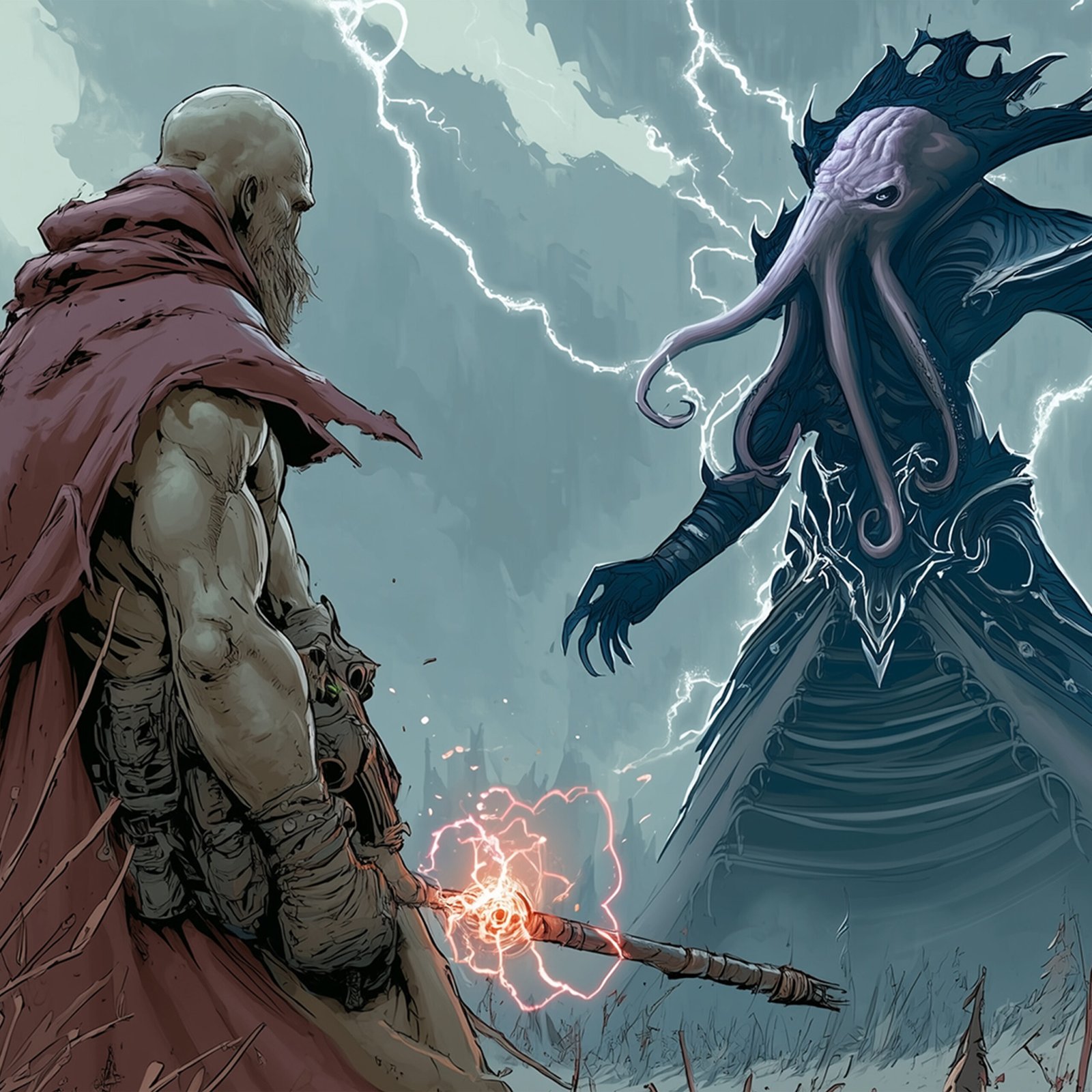
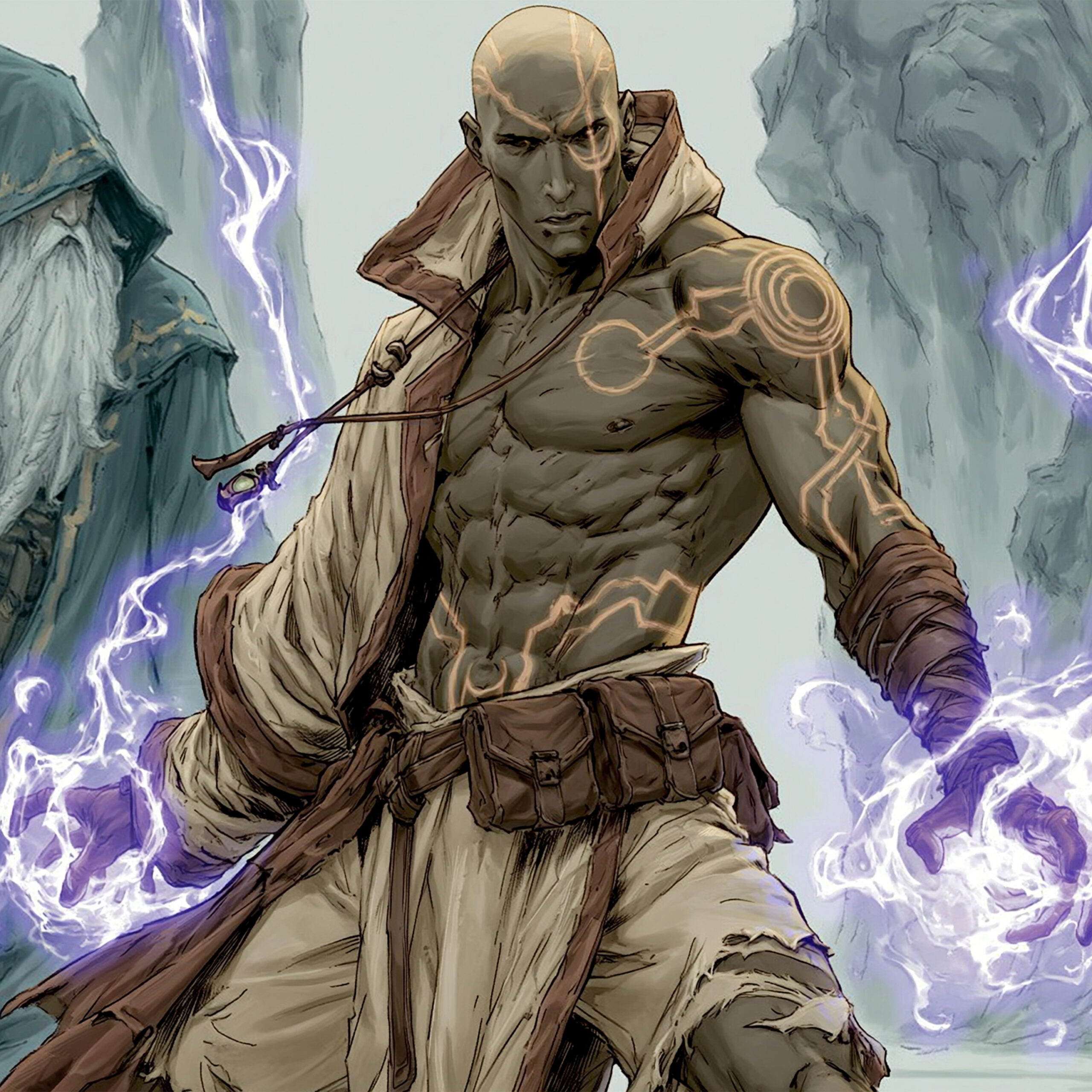
What do a brain-eating squid creature, a giant praying mantis, and a snake person have in common? They’re all psionic — and that’s about where the similarities end. In this episode of FGGGbT, we tackle the most challenging taxonomy of the season: psionic creatures. Unlike the undead or the Fey, this group has almost nothing in common except one thing — the power of the mind. They kick things off with the most iconic psionic creature in D&D: the mind flayer — part Cthulhu, part Billy Corgan, all terrifying — breaking down their reproductive cycle (ceremorphosis), their elder brain hive mind, and whether their brain-eating habit is a dietary preference or a biological necessity. From there they explore the Githyanki and Githzerai — two genetically identical races who responded to mind flayer subjugation in completely opposite ways, one militaristic and dragon-riding, one monk-like and meditative — before moving to the Thri-kreen, the praying mantis creatures whose entirely open telepathic society raises a disturbing question: what would a world with no mental privacy actually look like? They also dig into the Yuan-Ti and their cold, emotionless psionic manipulation, the convergent evolution of psychic powers across wildly different species, and the Elan — a human who voluntarily transforms into an entirely new psionic creature — asking whether gaining mental powers is enough to make you a different species entirely. Listen to all our episodes on magic: The Magical World of….well MAGIC! Facebook Twitter Support the show by buying cool merch at Glennco Designs!

August 5, 2026Episode 22351 min

Ep. 223 Creatures of the Forest

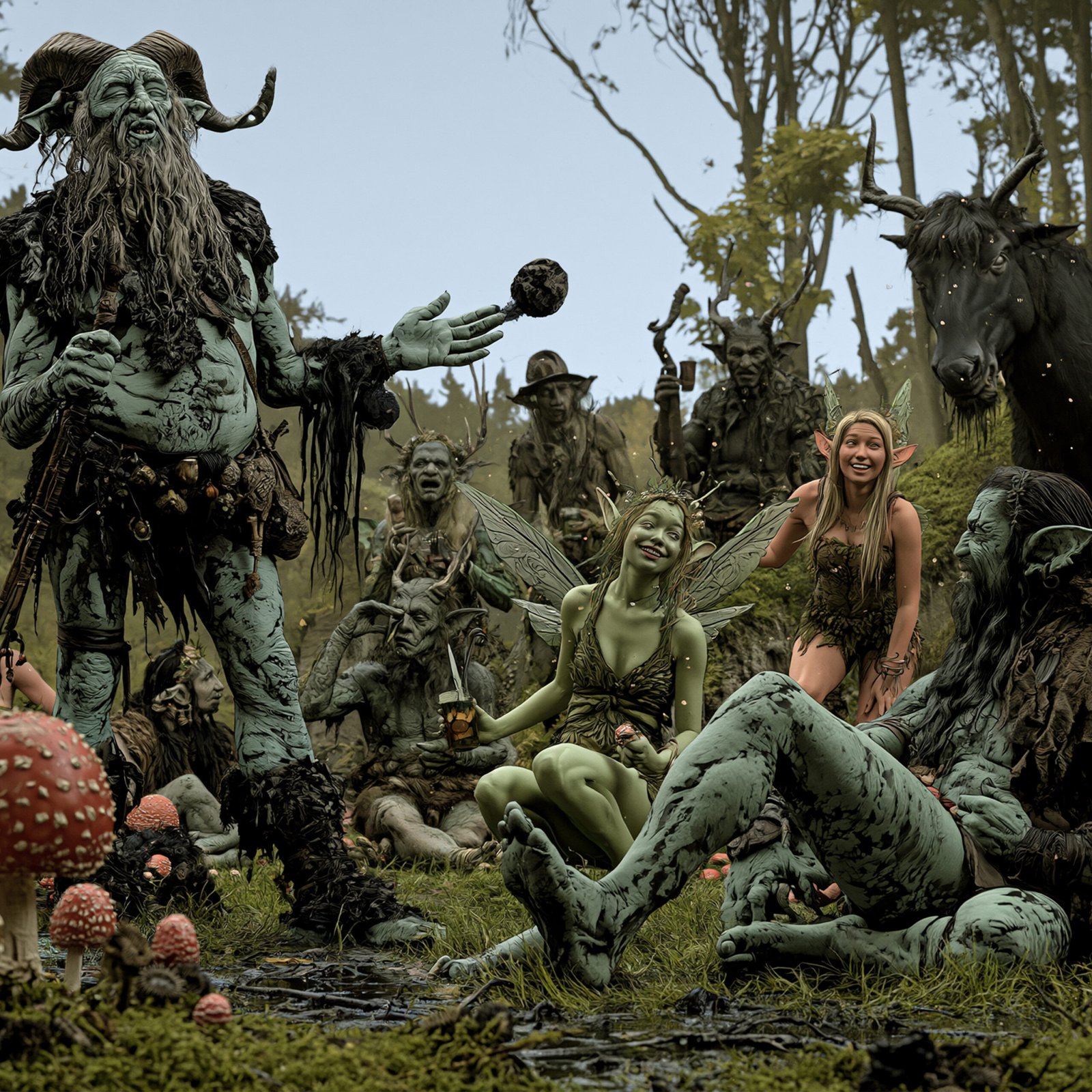
What separates a pixie from a sprite, a brownie from a hag, and a nymph from a siren — and why does any of it matter? In this episode of FGGGbT, we tackle one of the most ambitious taxonomy projects of the season: building a complete classification system for the Fey. Unlike the undead, who are defined by their deadness, the Fey are defined by their otherness — their deep, fundamental connection to nature and the feywild. Using six core classification categories — former mortality, degree of humanity, power hierarchy, corporeal vs. non-corporeal, elemental connections, and relationship to mortals — Daniel J. Glenn, Dr. Michael Dennin, and Ben Siepser work through the full roster: pixies, sprites, brownies, leprechauns, satyrs, centaurs, dryads, nymphs, treants, and hags. Along the way they debate whether satyrs are evil or just really fun at parties, why the centaur is nature’s original cyborg, whether hags are actually villains or just very aggressive conservationists, and how every Fey creature ultimately represents some aspect of nature brought to life. They also introduce a simple four-bucket framework for understanding the Fey: helpers, tricksters, enchanters, and corruptors — and how every bargain with the Fey falls into one of those categories. Listen to all our episodes on magic: The Magical World of….well MAGIC! Facebook Twitter Support the show by buying cool merch at Glennco Designs!

July 29, 2026Episode 22249 min

Ep. 222 Taxonomy of the Undead

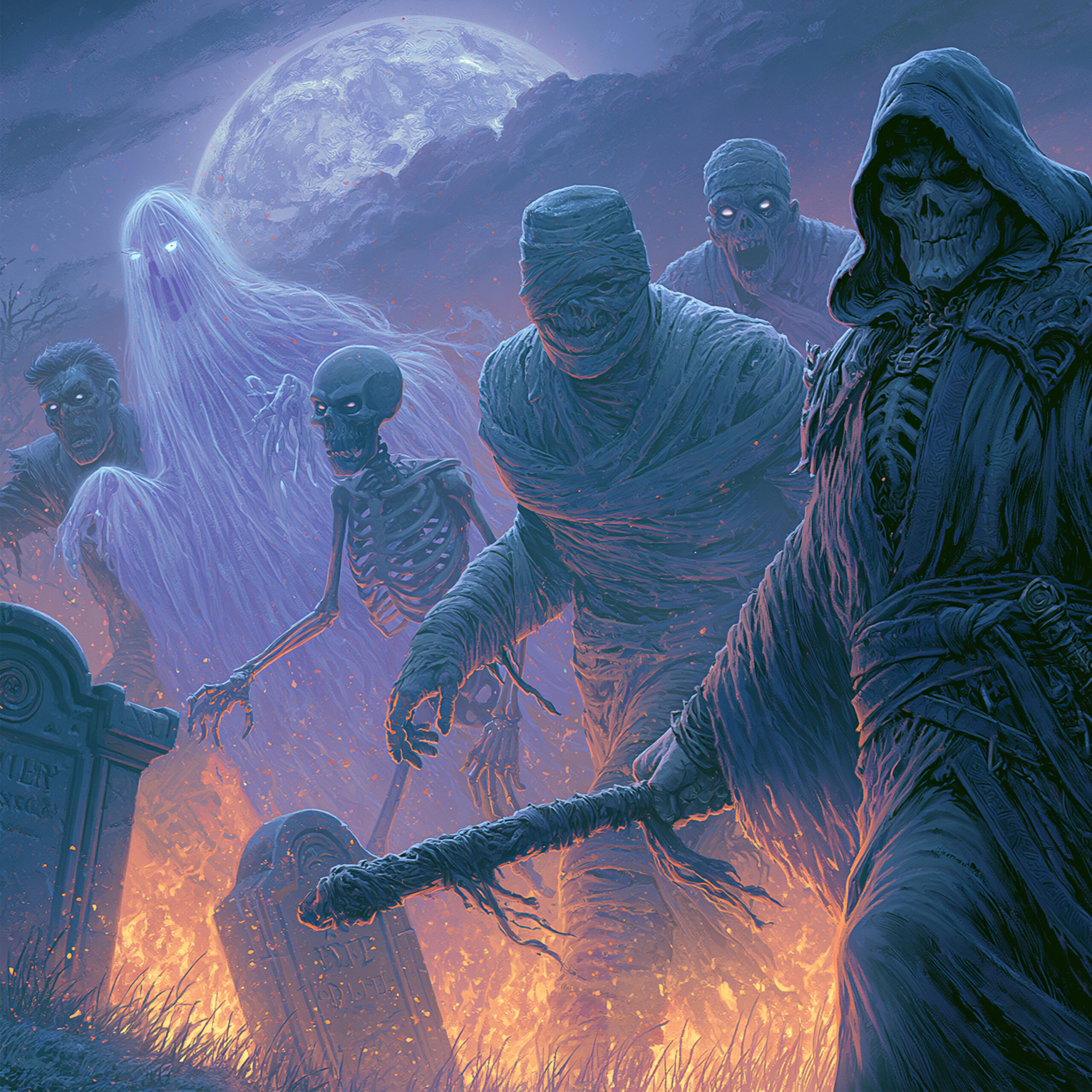
What separates a skeleton from a lich — and does immortality inevitably make you evil? In this episode of FGGGbT, the Brain Trust — Daniel J. Glenn, Dr. Michael Dennin, and Ben Siepser — tackle one of the most ambitious projects of the season: building a complete taxonomic classification system for the undead. Using six core categories — physical presence, soul spectrum, voluntary vs. involuntary transformation, dead-then-reanimated vs. transformed-while-living, life force alteration, and sensitivity to pure things — they systematically break down skeletons, zombies, mummies, ghosts, banshees, liches, and vampires with the rigor of scientists and the enthusiasm of lifelong D&D players. Along the way they debate whether mummies are just high-quality zombies, whether a ghost can choose to stay or is forced to linger, and whether the vampire or the lich is the true apex undead predator. They also tackle the big philosophical question at the heart of all undead lore: does immortality inevitably lead to evil? Ben Siepser’s argument — that anything divided by infinity equals zero, making all moments meaningless — might just be the most elegant explanation for why every lich eventually goes mad and every vampire eventually stops caring about the living. Whether you’re a dungeon master building your undead roster or just someone who’s always wondered what actually separates a mummy from a zombie, this episode has the answers. Episodes we discussed: Fascinating Nouns ep. 276 about Near Death Experiences The great Fascinating Fights series! Listen to all our episodes on magic: The Magical World of….well MAGIC! Facebook Twitter Support the show by buying cool merch at Glennco Designs!

July 22, 2026Episode 22145 min

Ep. 221 Psionic Magical Items

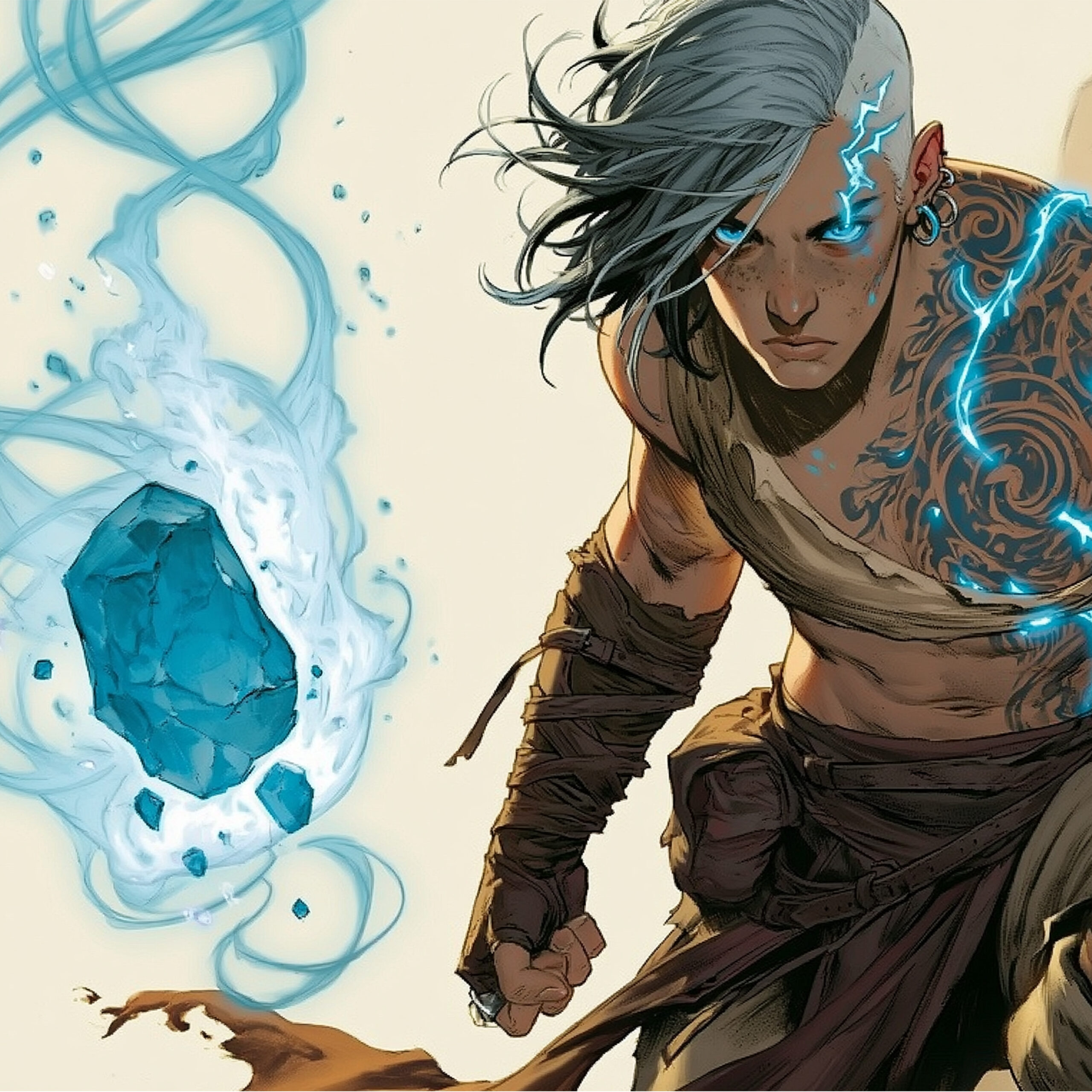
What if crystals could store your personality — and eventually become sentient? In this episode of FGGGbT, the Brain Trust — Daniel J. Glenn, Dr. Michael Dennin, and Ben Sieper — dive into the fascinating world of psionic magical items, exploring the real science of crystals, information theory, and the question that haunts AI researchers and D&D players alike: when does something stop being a tool and start being alive? We break down two categories of psionic items — crystals and tattoos — through the lens of materials science, electronics, and quantum physics. We explore how dorjes work like crystal capacitors with discrete energy symmetries, why they can only store odd numbers and never more than 17 charges, and how the Psicrystal — grown from a shard of a psionic’s own personality — maps perfectly onto modern AI development and information theory. Dr. Dennin introduces Claude Shannon’s information theory (yes, the guy who coined the word “bit”) and explains why psionics aren’t just manipulating energy — they’re manipulating the fundamental probability structure of reality itself. We also dig into psionic tattoos, why their information density is limited by the resolution of ink on skin, and why you should probably vet your tattoo artist very carefully before letting them encode your psychic powers. Finally, we tackle the big question: at what point does a growing Psicrystal cross the line from clever storage device to sentient being — and is wisdom just being too old and tired to care? Listen to all our episodes on magic: The Magical World of….well MAGIC! Facebook Twitter Support the show by buying cool merch at Glennco Designs!

July 15, 2026Episode 2049 min

Ep. 220 Magical Item Combinations

<p>What happens when you put a Sphere of Annihilation inside a Bag of Holding? In this episode of FGGGbT, the Brain Trust — Daniel J. Glenn, Dr. Michael Dennin, and Ben Sieper — go deep on magical item combos, the science of extradimensional space, the world&#039;s most powerful glue, potion mixology, and the surprisingly complex question of when a sword becomes a person.<br /> We kick things off with the Bag of Holding — how its constant weight hints at real theories of gravity and extra dimensions — before combining it with the Sphere of Annihilation (a dense ball of antimatter in a magical containment field) and exploring the three probabilistic outcomes, including a spontaneous rip in space-time that sends your party to a random time period. Then we tackle Sovereign Glue, why no substance in our world truly sticks to everything, and the hilariously impractical physics of storing oil of slipperiness in a bottle.<br /> We also dive into potion mixology — why mixing potions in your body is random (your gut biome matters), what quantum wave interference has to do with making a potion permanent, and why you should always read the label before chugging two potions at once. Finally, we explore sentient magical items: Black Razor, Night Blood, and the Professor Orb — and debate whether these items contain trapped souls, emergent AI, or something else entirely.</p>

July 8, 2026Episode 1946 min

Ep. 219 Mastering Magic Items

What makes a magical item truly magical — and how many is too many? In this episode of FGGGbT, the Brain Trust — Daniel J. Glenn, Dr. Michael Dennin, and Ben Sieper — dive deep into the science, physics, and storytelling behind D&D magical items, and things get wonderfully chaotic. We explore how magical items are created through the fantasy equivalent of metal alloying and materials science — from Damascus steel to samurai folding techniques — and how the concept of magical attunement maps perfectly onto impedance matching in electronics. We break down the difference between a non-magical plus one sword (medieval ergonomics) and a truly magical weapon, why magical weapons can harm magical creatures when ordinary ones can&#8217;t, and how luck itself might be a form of short-range time travel or quantum probability manipulation. Then we get into the really fun stuff: the Cloak of Billowing, the Luck Blade, the Cursed Shield of Missile Attraction, the Bag of Beans, the Folding Boat (which turns out to be an excellent murder weapon), and the ultimate chaotic device — the Deck of Many Things. Plus, does drawing a card that gives you a castle reveal fate or create it? And did your rich uncle have to die for that to happen? Whether you&#8217;re a dungeon master looking for inspiration or a player obsessed with magical loot, this episode is for you. Topics Covered: How magical items are created: alloying, Damascus steel & samurai folding Magical attunement vs. non-magical attunement (medieval ergonomics) Why magical weapons harm magical creatures Impedance matching & the three-item attunement limit Luck as quantum mechanics, divination & short-range time travel The Luck Blade, Cursed Luck Stone & Shield of Missile Attraction The Bag of Beans, Deck of Many Things & wild magic items Favorite magical items: Cloak of Billowing, Folding Boat & Nolzur&#8217;s Marvelous Pigments Cursed items — liabilities or creative opportunities? Listen to all our episodes on magic: The Magical World of&#8230;.well MAGIC! Facebook Twitter Support the show by buying cool merch at Glennco Designs!

July 1, 2026Episode 1846 min

Ep. 218 Schools of Magic

What if the eight schools of D&D magic were actually eight fundamental forces of the universe? In this episode of FGGGbT, the Brain Trust — Daniel J. Glenn, Dr. Michael Dennin, and Ben Sieper — break down all eight schools of magic through the lens of real science, from particle physics and chemistry to neuroscience and quantum mechanics. We explore how the eightfold way in particle physics maps perfectly onto the eight schools of magic, and introduce the theoretical &#8220;magon&#8221; — the fundamental particle of spellcasting. Then we go school by school: Abjuration as proton-like defensive particles, Conjuration as spacetime manipulation, Divination as probabilistic quantum prediction, Enchantment as brain chemistry and pheromones, Evocation as pure chemistry-based destruction, Illusion as electromagnetic sense manipulation, Transmutation as nuclear physics, and Necromancy as life-force control. We also debate which school is the most dangerous, the most easily abused, and the most morally complex — and why charm, illusion, and necromancy form a uniquely troubling trio. Whether you&#8217;re a D&D wizard trying to pick your school, a science nerd who loves fantasy, or just someone who wants to know how a fireball is different from a cone of cold, this is the episode for you. Topics Covered: The eightfold way in particle physics & the &#8220;magon&#8221; Abjuration, Conjuration, Divination, Enchantment, Evocation, Illusion, Transmutation & Necromancy The science behind each school: chemistry, nuclear physics, neuroscience & quantum mechanics Which school requires the most energy? The ethics of necromancy, enchantment & illusion Real-world parallels: mirages, pheromones, nuclear reactions & optical illusions Listen to all our episodes on magic: The Magical World of&#8230;.well MAGIC! Facebook Twitter Support the show by buying cool merch at Glennco Designs!

June 24, 202642 min

Ep. 217 How Spells Work

How do spells actually work — and why do some only affect certain creatures? In this episode of FGGGbT, the Brain Trust — Daniel J. Glenn, Dr. Michael Dennin, and Ben Sieper — break down the mechanics, physics, and philosophy behind spellcasting in D&D and beyond. We explore the power of true names and pronunciation (Cthulhu, anyone?), the science behind spell foci like wands — including a deep dive into electrostatics and why wood might not be a coincidence. We dig into why Charm Person doesn&#8217;t work on a dog, why Hold Monster is harder than Hold Person, and why elves are immune to Sleep (spoiler: they don&#8217;t actually sleep). Then we get into the physics of Fireball vs. Wall of Fire, including a true story about an accidental wall of fire in a college lecture hall. Finally, we tackle one of science&#8217;s oldest debates — is magic (and math) invented or discovered? — using the Newton vs. Leibniz and Edison vs. Tesla rivalries as our guide. Whether you&#8217;re a D&D player who&#8217;s always wondered why Otto&#8217;s Irresistible Dance might not work on someone without legs, or a science fan curious about the line between magic and physics, this episode is for you. Topics Covered: True names & the power of words in magic systems Spell foci: wands, electrostatics & druidic focus items Charm Person vs. Charm Monster — the biology of persuasion Hold Person vs. Hold Monster & paralysis mechanics Why Sleep affects (almost) everyone — and why elves are immune The physics of Fireball, Wall of Fire & controlling chaotic energy Named spells & the &#8220;second discoverer&#8221; effect (Newton, Leibniz, Tesla, Edison) Is magic invented or discovered? The math debate Listen to all our episodes on magic: The Magical World of&#8230;.well MAGIC! Facebook Twitter Support the show by buying cool merch at Glennco Designs!

June 16, 202638 min

Ep. 216 Psionics: Mental Magic

Could humans actually develop psychic powers? The science says&#8230; maybe. In this episode of FT GBT, the Brain Trust — Daniel J. Glenn, Dr. Michael Dennin, and Ben Sieper — dive into the often-overlooked world of psionics, exploring the real neuroscience and physics behind mind powers in D&D, Stranger Things, X-Men, Star Wars, and Warhammer 40K. We break down why psychic energy works as a continuum (unlike the discrete &#8220;chunks&#8221; of arcane spell slots), and how that maps onto pop culture icons like Eleven from Stranger Things. We explore the three categories of psionic powers — attacking the mind, defending the mind, and telekinesis — and dig into the real-world science behind each: from electromagnetic brain signals and sports psychology breakdowns (Simone Biles, Ric Flair) to Faraday cages, Jedi mind tricks, and why a tinfoil hat might not be such a bad idea after all. We also tackle the big question: can a non-psychic person defend against a psychic attack, or are they just a fish in a barrel? Whether you&#8217;re a D&D player curious about psionics, a sci-fi fan, or just someone who&#8217;s ever wondered if you could move a remote control with your mind, this episode is for you. Topics Covered: What are psionics & why they&#8217;re D&D&#8217;s most underrated subsystem Psychic energy as a continuum vs. discrete spell slots Mind attacks: ego whips, mind thrust & psychic horror Real-world parallels: sports psychology, CIA training, hypnotism Defending the brain: Faraday cages, Magneto&#8217;s helmet & Warhammer 40K The physics of telekinesis Eleven (Stranger Things), X-Men, Star Wars & psionic pop culture Can non-psychics resist psychic attacks? Listen to all our episodes on magic: The Magical World of&#8230;.well MAGIC! Facebook Twitter Support the show by buying cool merch at Glennco Designs!

June 10, 202647 min

Ep. 215 Divine Magic

Show Notes Can science explain how divine magic actually works? In this episode the FGGGbT Brain Trust tackles the rules, biology, and ethics behind divine magic in Dungeons & Dragons. From the life-force mechanics powering clerics and druids to the darkest corners of necromancy — we break it all down. We explore how death functions as a control valve for life energy, why souls are the currency of divine magic, and what separates a good necromancer from an evil one. Plus, we debate the ethics of raising the undead, zombie consent, and whether zombies are actually part of the natural order of things. We also break down the key differences between Revivify, Resurrection, and Reincarnation — and what the HBO show Carnival can teach us about the conservation of magical energy. If you&#8217;ve ever wondered whether necromancy can be ethical, what gods actually want with your soul, or why druids might be okay with zombies under the right circumstances — this is the episode for you. Listen to all our episodes on magic: The Magical World of&#8230;.well MAGIC! Facebook Twitter Support the show by buying cool merch at Glennco Designs!

Is this your show?

Claim this listing to keep it up to date, reach guests who want to pitch you, and manage bookings with Guestify.

Claim this listing