Find partners
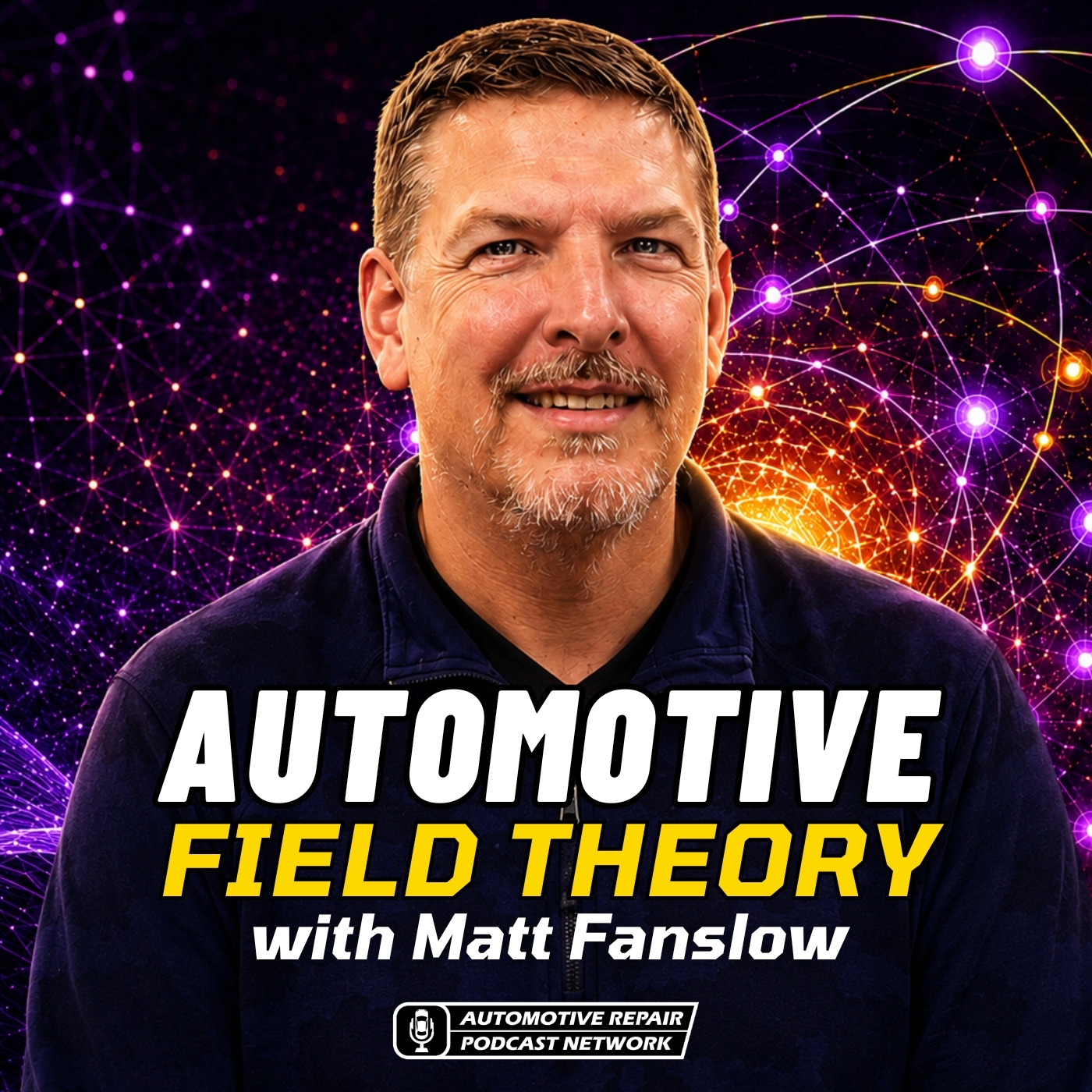
Automotive Field Theory

Automotive Field Theory

Hosted by Matt Fanslow

Episodes

261

Latest episode

Aug 2026

Language

EN

About the show

Automotive Field Theory explores the forces that shape automotive repair, including the ones measured with a meter or oscilloscope and the ones that cannot be found on a wiring diagram. Hosted by automotive diagnostic specialist, shop manager, and instructor Matt Fanslow, the podcast begins in the automotive aftermarket but rarely stays inside its traditional boundaries. Diagnostics, electricity, technology, leadership, psychology, economics, game theory, history, music, movies, family, and human behavior may appear unrelated. Look closely enough, however, and connections begin to emerge. A vehicle may arrive with a technical fault, but the work surrounding it is rarely technical alone. Information is incomplete. People make decisions under pressure and uncertainty. Incentives shape behavior. Standards gradually drift. Good intentions produce unexpected results. The official process may say one thing while the system quietly rewards another. Automotive Field Theory is an attempt to understand those interactions. Drawing from real diagnostic work, shop management, industry conversations, personal experience, and an occasionally inconvenient level of curiosity, Matt examines not only how things work, but why they work that way, how they became what they are, and what apparently unrelated subjects might teach us about repairing vehicles, leading people, running businesses, and improving the automotive industry. Some episodes begin with a failed component. Others begin with Metallica, quantum physics, professional wrestling, a historical disaster, a round of golf, or a question that refuses to leave Matt alone. Eventually, they all enter the same field.

Listen to episodes

60 recent
August 12, 202620 min

Does Experience Give You Permission to Ignore Service Information? [E249]

Thanks to our Partners, Pico Technology, and AutelWatch Full Video EpisodeHow much freedom should an automotive professional have to deviate from published service information?In this episode of Automotive Field Theory, Matt Fanslow digs into that question after a recent discussion involving ADAS procedures and Ford brake caliper fasteners that service information specifically instructs technicians to remove and discard.The debate isn't really about one set of bolts.It's about the level of confidence we sometimes have in deciding that a procedure isn't necessary when we don't actually know why the manufacturer specified it in the first place.Matt compares following service information to insurance and personal protective equipment. Most days, neither appears necessary. You don't buy insurance because you expect to crash every day, and you don't wear PPE because something goes wrong every time you use it. They're there for the rare day when something does go badly wrong.That same idea applies to automotive repair.Millions of repairs may survive a shortcut without consequence. A rope-style tire plug may last the remaining life of the tire. A reused fastener may never loosen. A skipped calibration may never produce an obvious complaint.But is a history of getting away with something the same as evidence that the procedure wasn't necessary?Topics DiscussedFord service information calling for certain brake fasteners to be removed and discardedThe difficulty of finding documentation explaining why Ford requires replacementWhether thread locker, bolt coatings, fastener design, or another factor could be behind the requirementWhy the absence of an explanation doesn't automatically justify ignoring the procedureRisk management in automotive repairThe difference between something working and something being an approved repairRope-style tire plugs versus manufacturer-approved tire repair proceduresLegal exposure when a repair deviates from accepted or published proceduresOE versus aftermarket ADAS calibration equipment and proceduresWhy following the OE procedure provides an inherently defensible positionWhen departing from an OEM diagnostic trouble tree may be reasonableThe difference between deviating from a diagnostic process and deviating from a safety-related assembly procedureAdding something such as thread locker to improve robustness versus eliminating a required stepThe criticism sometimes directed toward specialists who follow service informationWhy experience alone doesn't necessarily demonstrate that a specified procedure is unnecessaryPPE, insurance, and service procedures as protection against the exceptionally bad dayKey Takeaways“I've always done it this way” isn't the same as knowing why the procedure exists.A repair method can work hundreds or thousands of times without demonstrating that the manufacturer's requirement was unnecessary.There are different kinds of deviations from service information.Skipping steps in a diagnostic trouble tree because you understand the system and can perform more efficient testing isn't necessarily comparable to ignoring a torque specification, calibration requirement, preparation procedure, or instruction to replace a fastener.Following the published procedure is also a form of risk management.The value of the procedure may not reveal itself during the thousands of repairs where nothing goes wrong. Its value may be on the one repair where something does.Doing exactly what the manufacturer published is difficult to criticize.There may be legitimate aftermarket alternatives and there may even be procedures that can be improved upon. But if someone performs the repair exactly as the manufacturer specifies, criticizing them for being unnecessarily cautious is difficult to justify.The QuestionIf service information specifically says to discard and replace a component but doesn't explain why, what level of evidence should be required before we decide that replacement isn't actually necessary?And if documentation exists from Ford explaining why these particular fasteners must be replaced, or providing an approved procedure for their reuse, Matt wants to see it.Thanks to our Partner, Pico TechnologyAre you chasing elusive automotive problems? Pico Technology empowers you to see what's really happening. Their PicoScope oscilloscopes transform your diagnostic capabilities. Visit PicoAuto.comThanks to our Partner, AutelFrom drivability diagnostics and TPMS service to ADAS and advanced safety systems, Autel helps technicians follow OEM procedures and repair with confidence. Learn more at Autel.comContact InformationEmail Matt: mattfanslowpodcast@gmail.comSubscribe on YouTube: @automotivefieldtheoryThe Automotive Repair Podcast Network: https://automotiverepairpodcastnetwork.com/Download and Listen on Our Mobile App: https://automotiverepairpodcastnetwork.com/app/Remarkable Results Radio Podcast with Carm Capriotto: Advancing the Aftermarket by Facilitating Wisdom Through StoryTelling and Open Discussion. https://remarkableresults.biz/Business by the Numbers with Hunt Demarest: Understand the Numbers of Your Business with CPA Hunt Demarest. https://huntdemarest.captivate.fm/The Auto Repair Marketing Podcast with Kim and Brian Walker: Marketing Experts Brian & Kim Walker Work with Shop Owners to Take it to the Next Level. https://autorepairmarketing.captivate.fm/The Weekly Blitz with Chris Cotton: Weekly Inspiration with Business Coach Chris Cotton from AutoFix - Auto Shop Coaching. https://chriscotton.captivate.fm/Speak Up! Effective Communication with Craig O'Neill: Develop Interpersonal and Professional Communication Skills when Speaking to Audiences of Any Size. https://craigoneill.captivate.fm/
August 5, 202618 min

Automotive Field Theory: Rebranding the Podcast [E248]

Thanks to our Partners, Pico Technology and AutelWatch Full Video EpisodeDiagnosing the Aftermarket Becomes Automotive Field TheoryThings have changed.After years as Diagnosing the Aftermarket A to Z, the podcast has a new name: Automotive Field Theory.In this episode, Matt explains why the original title was chosen, why it eventually became a problem, and how the new name better represents both the podcast and the range of subjects explored on it.The original name was intended to leave the show wide open. Automotive diagnostics and technology were always part of it, but so were psychology, economics, relationships, mental health, addiction, movies, sports, professional wrestling, and the people behind the work.That freedom is not going away.The problem was simpler: people searching for automotive and auto repair podcasts often could not find the show. Neither “diagnosing” nor “aftermarket” is exclusively connected to the automotive industry, and the word “automotive” did not appear anywhere in the title.Automotive Field Theory solves that problem while also fitting the show on several levels.It is a play on quantum field theory, reflecting Matt’s lifelong interest in physics and his tendency to explore how things actually work. It also refers to the entire automotive field, from vehicle design and manufacturing through sales, service, collision repair, locksmithing, programming, calibration, modification, and eventually recycling.Finally, there is the theory itself: automotive theory, diagnostic theory, economic theory, psychological theory, and the hypotheses and ideas that shape how people understand the profession.The name is changing. The podcast fundamentally is not.In This EpisodeWhy Diagnosing the Aftermarket A to Z was originally chosenThe searchability problem with the old titleWhy “automotive” needed to be in the nameThe connection between automotive field theory and quantum field theoryThe enormous range of careers contained within the automotive fieldWhere independent repair overlaps with collision, locksmithing, programming, and ADASWhy the new title may make it easier to invite guests and reach new listenersWhat listeners can expect from the show going forwardThe people and podcasts that helped inspire and support the changeMatt also recognizes several shows across the Automotive Repair Podcast Network, including:Remarkable Results Radio PodcastBusiness by the NumbersSpeak Up! Effective CommunicationThe Auto Repair Marketing PodcastThe Weekly BlitzA special thank-you goes to Tracy for the work behind the new logo, to Carm Capriotto and the Automotive Repair Podcast Network, and to sponsors Pico Technology and Autel.Take a look at the new logo and let Matt know what you think. Guest suggestions are also welcome as Automotive Field Theory begins its next chapter.Thanks to our Partner, Pico TechnologyAre you chasing elusive automotive problems? Pico Technology empowers you to see what's really happening. Their PicoScope oscilloscopes transform your diagnostic capabilities. Visit PicoAuto.comThanks to our Partner, AutelFrom drivability diagnostics and TPMS service to ADAS and advanced safety systems, Autel helps technicians follow OEM procedures and repair with confidence. Learn more at Autel.comContact InformationEmail Matt: mattfanslowpodcast@gmail.comSubscribe on YouTube: @automotivefieldtheoryThe Automotive Repair Podcast Network: https://automotiverepairpodcastnetwork.com/Download and Listen on Our Mobile App: https://automotiverepairpodcastnetwork.com/app/Remarkable Results Radio Podcast with Carm Capriotto: Advancing the Aftermarket by Facilitating Wisdom Through Story Telling and Open Discussion. https://remarkableresults.biz/Business by the Numbers with Hunt Demarest: Understand the Numbers of Your Business with CPA Hunt Demarest. https://huntdemarest.captivate.fm/The Auto Repair Marketing Podcast with Kim and Brian Walker: Marketing Experts Brian & Kim Walker Work with Shop Owners to Take it to the Next Level. https://autorepairmarketing.captivate.fm/The Weekly Blitz with Chris Cotton: Weekly Inspiration with Business Coach Chris Cotton from AutoFix - Auto Shop Coaching. https://chriscotton.captivate.fm/Speak Up! Effective Communication with Craig O'Neill: Develop Interpersonal and Professional Communication Skills when Speaking to Audiences of Any Size. https://craigoneill.captivate.fm/
July 29, 202625 min

Why You Can't Motivate Someone Into Training [E247]

Thanks to our Partners, Pico Technology, and AutelWatch Full Video EpisodeWhy are some automotive repair specialists resistant to attending training, particularly when it takes place after work or on weekends?The easy explanation is that they are lazy, unmotivated, or unwilling to invest in themselves. Matt argues that this explanation may also be incomplete.In this episode, Matt examines training through the lens of incentives, career development, and systems thinking. A specialist who spends personal time and money developing new skills is often told that the investment will eventually produce better pay, greater opportunities, or increased job security. But what happens when those rewards never materialize?When training does not produce a visible improvement in compensation, working conditions, advancement, or professional stability, declining another class may be a rational decision rather than a character flaw.Matt discusses his own early motivation for attending training, the delayed payoff of that investment, and the importance of the relationships developed through classes, professional forums, and industry events. He also considers what shop owners and managers can do to make continued education feel like part of a legitimate career path rather than another demand placed on an employee’s personal life.Topics DiscussedWhy two people who make opposite decisions about training may both be acting rationallyThe traditional expectation that individuals fund their own professional developmentWhether increased knowledge reliably produces increased compensation“Cheap talk,” empty promises, and the loss of trust between employees and employersThe absence of clear career paths in automotive repairWhy keeping a job is not a meaningful reward unless the job is worth keepingMatt’s early, ego-driven pursuit of technical knowledgeThe delayed financial return from training and professional developmentThe value of relationships formed through classes, events, forums, and industry groupsThe difficulty of identifying and communicating one’s economic valueWhy character judgments should come after examining the system, not beforeProviding training during normal working hoursEstablishing clear expectations for continuing educationCreating positions and responsibilities for specialists throughout every stage of their careersWhy experienced employees should be a shop’s strongest advocatesThe shared reputation of the automotive repair professionKey TakeawayBefore assuming that someone’s reluctance to attend training reflects laziness or a lack of ambition, examine the incentives surrounding the decision.Does training lead somewhere?Can the specialist see a realistic path toward greater compensation, responsibility, security, or professional satisfaction?Does the organization respect personal time while asking employees to continue developing?Individual shops cannot repair the entire profession alone, but each shop contributes to the larger system. Better career paths, meaningful rewards, workday training, and credible long-term planning can help make professional development feel like an investment rather than an obligation.Resources MentionedRich FalcoMike Allen and Confessions of a Shop OwnerDutch SilversteinRatchet+WrenchScannerDanner PremiumAutomotive SeminarsToday’s ClassiATN and other professional automotive communitiesThanks to Pico Technology and Autel for supporting the podcast, and to the Automotive Repair Podcast Network.Thanks to our Partner, Pico TechnologyAre you chasing elusive automotive problems? Pico Technology empowers you to see what's really happening. Their PicoScope oscilloscopes transform your diagnostic capabilities. Visit PicoAuto.comThanks to our Partner, AutelFrom drivability diagnostics and TPMS service to ADAS and advanced safety systems, Autel helps technicians follow OEM procedures and repair with confidence. Learn more at Autel.comContact InformationEmail Matt: mattfanslowpodcast@gmail.comDiagnosing the Aftermarket A - Z YouTube ChannelThe Automotive Repair Podcast Network: https://automotiverepairpodcastnetwork.com/Remarkable Results Radio Podcast with Carm Capriotto: Advancing the Aftermarket by Facilitating Wisdom Through Story Telling and Open Discussion. https://remarkableresults.biz/Business by the Numbers with Hunt Demarest: Understand the Numbers of Your Business with CPA Hunt Demarest. https://huntdemarest.captivate.fm/The Auto Repair Marketing Podcast with Kim and Brian Walker: Marketing Experts Brian & Kim Walker Work with Shop Owners to Take it to the Next Level. https://autorepairmarketing.captivate.fm/The Weekly Blitz with Chris Cotton: Weekly Inspiration with Business Coach Chris Cotton from AutoFix - Auto Shop Coaching. https://chriscotton.captivate.fm/Speak Up! Effective Communication with Craig O'Neill: Develop Interpersonal and Professional Communication Skills when Speaking to Audiences of Any Size. https://craigoneill.captivate.fm/
July 22, 202620 min

The Power of Inspiration: From the Mat to the Shop [E246]

Thanks to our Partners, Pico Technology, and AutelWatch Full Video EpisodeAre We Paying Attention to Inspiration?Ben Askren was already known for an accomplished wrestling career, MMA championships, and one of the most replayed knockouts in UFC history. After a life-threatening illness, severe physical decline, and a double-lung transplant, simply surviving would have been remarkable.Instead, Askren worked his way back onto a wrestling mat.In this episode, Matt reflects on Askren’s return to competition and the difficult position faced by the opponent standing across from him. Is the more respectful choice to hold back, allow Askren to look competitive, or treat him like any other athlete who willingly stepped onto the mat? The match demonstrated that respect does not necessarily mean pity. Sometimes it means taking another person’s effort seriously.That story leads into the larger subject of inspiration and the places it can come from.Matt connects Askren’s return with the film Always, starring Richard Dreyfuss, Holly Hunter, John Goodman, and Audrey Hepburn. The film centers on the idea that influence and inspiration can continue through the people, lessons, and experiences that remain with us.Inspiration does not have to come from an extraordinary recovery or a dramatic movie. It can come from a struggling repair shop that finds its way back, an industry community helping a family in need, an instructor presenting an idea differently, or a conversation with another attendee during a training event.Technical education is intended to build knowledge and ability, but its value is not limited to information. A class may inspire someone to use a forgotten tool, purchase a needed piece of equipment, approach a problem differently, make a small operational change, or believe they are capable of developing a new skill.The larger question is not whether inspiration exists around us.It is whether we are awake enough to recognize it.Topics DiscussedBen Askren’s return to the wrestling mat after a life-threatening illness and double-lung transplantThe difference between respecting a competitor and showing pityThe film Always and its central theme of inspirationHow ordinary people and events can create meaningful changeThe automotive repair industry supporting its own during difficult circumstancesTraining events as sources of energy, possibility, and renewed curiosityIntentionally placing ourselves in environments where inspiration is more likelyThe possibility of inspiring someone else without realizing itAre we actively looking for inspiration, recognizing the people who provide it, and allowing it to affect what we do next?Thanks to our Partner, Pico TechnologyAre you chasing elusive automotive problems? Pico Technology empowers you to see what's really happening. Their PicoScope oscilloscopes transform your diagnostic capabilities. Visit PicoAuto.comThanks to our Partner, AutelFrom drivability diagnostics and TPMS service to ADAS and advanced safety systems, Autel helps technicians follow OEM procedures and repair with confidence. Learn more at Autel.comContact InformationEmail Matt: mattfanslowpodcast@gmail.comDiagnosing the Aftermarket A - Z YouTube ChannelThe Automotive Repair Podcast Network: https://automotiverepairpodcastnetwork.com/Remarkable Results Radio Podcast with Carm Capriotto: Advancing the Aftermarket by Facilitating Wisdom Through Story Telling and Open Discussion. https://remarkableresults.biz/Business by the Numbers with Hunt Demarest: Understand the Numbers of Your Business with CPA Hunt Demarest. https://huntdemarest.captivate.fm/The Auto Repair Marketing Podcast with Kim and Brian Walker: Marketing Experts Brian & Kim Walker Work with Shop Owners to Take it to the Next Level. https://autorepairmarketing.captivate.fm/The Weekly Blitz with Chris Cotton: Weekly Inspiration with Business Coach Chris Cotton from AutoFix - Auto Shop Coaching. https://chriscotton.captivate.fm/Speak Up! Effective Communication with Craig O'Neill: Develop Interpersonal and Professional Communication Skills when Speaking to Audiences of Any Size. https://craigoneill.captivate.fm/
July 15, 202622 min

The Most Controversial Tool in Automotive Electrical Diagnostics [E245]

Thanks to our Partners, Pico Technology, and AutelWatch Full Video EpisodePowered circuit testers tend to produce strong opinions. Some specialists consider them indispensable time-savers. Others see them as dangerous tools that make it far too easy to damage a circuit.In this episode, Matt examines where tools such as the Power Probe, Autel powered circuit tester, and metered test lights fit into an automotive diagnostic process. The ability to apply power or ground can be dangerous without an understanding of the circuit, but the same can be said of jumper wires, scan tools, oscilloscopes, and nearly every other useful diagnostic tool.Matt also opens the episode with thoughts on the unexpectedly short Conor McGregor and Max Holloway fight. Rather than focusing only on the disappointing result, he considers the discipline and preparation required to attempt something difficult, even when the attempt ultimately fails. That leads to a broader shop question: How should a leader respond when a capable employee puts in the work, takes on a difficult task, and still comes up short?In This EpisodeThe difference between a powered circuit tester and a metered test lightWhy Power Probe-style tools remain controversialThe risks of applying power or ground to an unknown circuitWhy Matt prefers the speed and simplicity of the Power Probe IIIUsing powered testers on motors, relays, power windows, and power seatsTesting fuel-pump power and ground circuitsUsing the tester’s circuit breaker to evaluate whether a circuit can carry currentWhy unloaded voltage readings can be misleadingThe value of placing a known load on a circuitWhy corrosion can pass a voltage test but fail under loadMatt’s experience with the Lisle and TOPDON metered test lightsWhy an incandescent test light is often more useful than an LED test lightThe difference between a dangerous tool and an improperly used toolKey TakeawaysA voltage reading does not necessarily prove that a circuit can perform useful work. A connection may show battery voltage through a meter and still fail when current is required.A metered test light can combine the speed of a traditional test light with an actual voltage reading and a known electrical load. Matt regularly uses this type of tester when checking fuses and evaluating circuit integrity.A powered circuit tester can also shorten the process of separating a failed component from a power-feed or ground problem. Matt describes using one at a fuel pump to verify the power side, ground side, and pump operation without repeatedly changing tools or building several different jumper-wire arrangements.The tool does make applying power or ground unusually easy. That convenience is precisely why the user needs to understand the circuit before pressing the switch.The Larger QuestionShould a tool be dismissed because it can cause damage in the wrong hands?A powered circuit tester can damage a circuit. A jumper wire can do the same. A scan tool can lead to expensive parts replacement when its information is misunderstood. The potential for misuse does not necessarily make the tool inappropriate. It may mean the specialist needs more knowledge before using it.Listener QuestionDo powered circuit testers belong in a professional diagnostic arsenal?Are they valuable time-savers, unnecessary risks, or a little of both? What version do you use, and where has it proven most useful?Mentioned in This EpisodePower Probe IIIPower Probe HookAutel powered circuit testerLisle metered test lightTOPDON TC001/CT100-style circuit testerIncandescent and LED test lightsFuel-pump circuit testingRelay and electric-motor testingThanks to our Partner, Pico TechnologyAre you chasing elusive automotive problems? Pico Technology empowers you to see what's really happening. Their PicoScope oscilloscopes transform your diagnostic capabilities. Visit PicoAuto.comThanks to our Partner, AutelFrom drivability diagnostics and TPMS service to ADAS and advanced safety systems, Autel helps technicians follow OEM procedures and repair with confidence. Learn more at Autel.comContact InformationEmail Matt: mattfanslowpodcast@gmail.comDiagnosing the Aftermarket A - Z YouTube ChannelThe Automotive Repair Podcast Network: https://automotiverepairpodcastnetwork.com/Remarkable Results Radio Podcast with Carm Capriotto: Advancing the Aftermarket by Facilitating Wisdom Through Story Telling and Open Discussion. https://remarkableresults.biz/Business by the Numbers with Hunt Demarest: Understand the Numbers of Your Business with CPA Hunt Demarest. https://huntdemarest.captivate.fm/The Auto Repair Marketing Podcast with Kim and Brian Walker: Marketing Experts Brian & Kim Walker Work with Shop Owners to Take it to the Next Level. https://autorepairmarketing.captivate.fm/The Weekly Blitz with Chris Cotton: Weekly Inspiration with Business Coach Chris Cotton from AutoFix - Auto Shop Coaching. https://chriscotton.captivate.fm/Speak Up! Effective Communication with Craig O'Neill: Develop Interpersonal and Professional Communication Skills when Speaking to Audiences of Any Size. https://craigoneill.captivate.fm/
July 8, 202636 min

Who Should Pay for Auto Repair Tools? Shop Owner or Employee? [E244]

Thanks to our Partners, Pico Technology, and AutelWatch Full Video EpisodeIn this episode, Matt digs into a question that sits underneath a lot of shop economics, technician frustration, and industry culture: who should be responsible for buying the tools and equipment required to do the work a shop advertises?The discussion starts with a real-world example involving a dealership service department that did not have a connector depinning tool available, leaving a mechanical or technical specialist considering buying the tool personally. From there, Matt explores where the line should be drawn between personal hand tools and shop-owned equipment.Basic hand tools may be one thing. But scan tools, diagnostic equipment, specialty service tools, alignment systems, AC machines, tire equipment, connector service kits, and timing tools raise a different question entirely. If a shop sells those capabilities to customers, should the employee have to make the investment?Matt also looks at the long-term consequences of pushing too much cost onto specialists. If a specialist builds up enough personal tooling and equipment to perform a broad range of services, the industry may be quietly encouraging them to leave employment and open their own shop. That may work for some, but it also shrinks the talent pool, increases turnover risk, and may contribute to people leaving the industry altogether.The episode closes with a shift into diagnostic tool history, including a short “Mount Rushmore” of influential tools and equipment: the SCA, the Edge/Sun systems, the Fluke 87, and the Snap-on Vantage.Watch Reel VideoKey TopicsWhere the line falls between personal tools and shop-owned equipmentWhy “the specialist can just buy it” may be an unstable business strategyThe difference between basic hand tools and equipment required to sell a serviceHow tool investment affects technician income, risk, and career decisionsWhy shops should think about replacement cost when evaluating pay and retentionHow industry culture can unintentionally make shop ownership look like the only real path upwardThe difference between a tool investment working out and it actually being a good decisionVintage diagnostic equipment that changed how specialists workedNotable IdeasA shop advertising a capability should be equipped to perform that capability. If a shop sells alignments, AC service, tire work, connector repair, diagnostics, or programming, it becomes hard to justify the employee carrying the primary equipment burden.There may be some economic logic to a specialist buying a tool when they are guaranteed the work and the tool pays for itself. But that logic becomes unstable when the employee is taking the risk while the business is selling the service.Tool ownership can become a shadow path to business ownership. When specialists personally acquire enough tools and equipment to operate independently, the industry may be unintentionally training them to leave.Retention math has to include replacement cost. Production numbers matter, but so does the cost of losing a capable person, leaving a bay or role vacant, recruiting someone new, training them, and risking a revolving-door reputation.A tool purchase can “work out” without having been the smartest move. Matt reflects on his own history of buying diagnostic equipment and scan tools, noting that it helped build capability and reputation, but that does not automatically mean it was the best financial decision.Listener QuestionWhat tools or equipment have you been expected to buy personally?Where do you think the line should be between employee responsibility and shop responsibility?Should mechanical and technical specialists be expected to own anything beyond basic hand tools, or should the shop provide everything needed to perform the services it sells?Mentioned Diagnostic EquipmentSCA diagnostic equipmentSun/Edge PC-based engine analyzer systemsFluke 87 digital multimeterSnap-on VantageSnap-on Vantage ProOTC PerceptionSun engine analyzersFour-gas and five-gas analyzersPull Quotes“What's the logic of owning a business that advertises certain capabilities, but the shop itself is ill-equipped to be able to do that?”“If part of my purpose is to take care of my people, then one feature of that is to try to maximize their take-home pay and minimize their financial responsibilities to do the jobs they were hired to do.”“It may have worked out. I don't know if that means it was a good move.”Thanks to our Partner, Pico TechnologyAre you chasing elusive automotive problems? Pico Technology empowers you to see what's really happening. Their PicoScope oscilloscopes transform your diagnostic capabilities. Visit PicoAuto.comThanks to our Partner, AutelFrom drivability diagnostics and TPMS service to ADAS and advanced safety systems, Autel helps technicians follow OEM procedures and repair with confidence. Learn more at Autel.comContact InformationEmail Matt: mattfanslowpodcast@gmail.comDiagnosing the Aftermarket A - Z YouTube ChannelThe Automotive Repair Podcast Network: https://automotiverepairpodcastnetwork.com/Remarkable Results Radio Podcast with Carm Capriotto: Advancing the Aftermarket by Facilitating Wisdom Through Story Telling and Open Discussion. https://remarkableresults.biz/Business by the Numbers with Hunt Demarest: Understand the Numbers of Your Business with CPA Hunt Demarest. https://huntdemarest.captivate.fm/The Auto Repair Marketing Podcast with Kim and Brian Walker: Marketing Experts Brian & Kim Walker Work with Shop Owners to Take it to the Next Level. https://autorepairmarketing.captivate.fm/The Weekly Blitz with Chris Cotton: Weekly Inspiration with Business Coach Chris Cotton from AutoFix - Auto Shop Coaching. https://chriscotton.captivate.fm/Speak Up! Effective Communication with Craig O'Neill: Develop Interpersonal and Professional Communication Skills when Speaking to Audiences of Any Size. https://craigoneill.captivate.fm/

July 1, 202630 min

The Danger of Tunnel Vision in Automotive Diagnostics: Anchoring, Confirmation Bias, and Premature Closure [E243]

Thanks to our Partners, Pico Technology, and AutelWatch Full Video EpisodeA Dodge Durango came into the shop for a second opinion after being suspected of needing a transmission. The symptoms sounded convincing at first: harsh shifts, apparent slipping, no diagnostic trouble codes, and a vehicle that felt completely wrong on the road. But the actual problem was much simpler. The Durango was stuck in four-low. Once shifted properly through neutral, the harsh shifting, driveline bind, and “slipping” behavior disappeared.Matt uses the case as a springboard into a broader discussion about diagnostic tunnel vision. The point is not just that someone almost condemned a transmission unnecessarily. The deeper issue is how easily a first impression can become the diagnosis. Once the vehicle felt like it was slipping, everything after that could be interpreted through that lens. That is where anchoring, confirmation bias, and premature closure start to become dangerous.The episode also compares the Durango case to a more common misfire scenario. A vehicle comes in with a misfire, the scan tool identifies a cylinder, the car line is known for coil failures, and the diagnosis becomes a coil and plug before much testing happens. That gamble may work most of the time, but the process failure is still there. Being right by probability is not the same as proving the fault.Matt also shares a personal example involving a Mini Cooper that was nearly misdiagnosed as needing a turbo. The actual issue was cam/crank timing related. The mistake became a difficult but important lesson in responsibility, process, and making things right with the customer.The episode closes with a nod to Mel Brooks on his 100th birthday, including Matt’s Mount Rushmore of Mel Brooks films: Blazing Saddles, Spaceballs, The Producers, and History of the World, Part One.Watch Durango VideoKey TopicsWhy the Durango seemed like it had a major transmission failureHow four-low can mimic slipping, harsh shifting, and driveline problemsThe importance of reading the owner’s manual when unfamiliar indicators appearAnchoring, confirmation bias, and premature closure in diagnosticsWhy “incompetent” may be technically accurate but often incomplete as an explanationThe ethical problem of charging for the wrong repair when the real fix is simpleWhy common failures can make weak testing feel justifiedHow probabilistic diagnosis can work until it does notThe value of owning a mistake and making it rightMel Brooks, comedy, and Matt’s Mount Rushmore of Mel Brooks filmsPull Quote Options“The first impression is often the most dangerous piece of data in the whole diagnostic process.”“Being right most of the time does not mean the process was right.”“Customers should not be paying for our anchoring, our confirmation bias, and our premature closure.”“The real danger is not being wrong. The real danger is being done too early.”Episode TakeawaysA symptom that feels obvious can still be misleading. The Durango felt like it was slipping, but the transmission was not the problem.A flashing indicator or odd message on the dash may be the clue. The owner’s manual may not feel like a diagnostic tool, but sometimes it is.Common failures can create lazy confidence. A known coil failure pattern or common turbo issue may point in the right direction, but it does not replace verification.Premature closure is expensive. It can cost the customer, the shop, or both.Ethics matter most when the mistake is discovered after the repair. The customer should not pay for a part that did not fix the vehicle just because the shop eventually stumbled into the real fix.A good diagnostic process should include forced questions: What am I anchored to? What evidence am I accepting too easily? What would prove my theory wrong?Thanks to our Partner, Pico TechnologyAre you chasing elusive automotive problems? Pico Technology empowers you to see what's really happening. Their PicoScope oscilloscopes transform your diagnostic capabilities. Visit PicoAuto.comThanks to our Partner, AutelFrom drivability diagnostics and TPMS service to ADAS and advanced safety systems, Autel helps technicians follow OEM procedures and repair with confidence. Learn more at Autel.comContact InformationEmail Matt: mattfanslowpodcast@gmail.comDiagnosing the Aftermarket A - Z YouTube ChannelThe Automotive Repair Podcast Network: https://automotiverepairpodcastnetwork.com/Remarkable Results Radio Podcast with Carm Capriotto: Advancing the Aftermarket by Facilitating Wisdom Through Story Telling and Open Discussion. https://remarkableresults.biz/Business by the Numbers with Hunt Demarest: Understand the Numbers of Your Business with CPA Hunt Demarest. https://huntdemarest.captivate.fm/The Auto Repair Marketing Podcast with Kim and Brian Walker: Marketing Experts Brian & Kim Walker Work with Shop Owners to Take it to the Next Level. https://autorepairmarketing.captivate.fm/The Weekly Blitz with Chris Cotton: Weekly Inspiration with Business Coach Chris Cotton from AutoFix - Auto Shop Coaching. https://chriscotton.captivate.fm/Speak Up! Effective Communication with Craig O'Neill: Develop Interpersonal and Professional Communication Skills when Speaking to Audiences of Any Size. https://craigoneill.captivate.fm/
June 24, 202631 min

7.3L Power Stroke ICP Sensor Failure and the AI Skill Atrophy Debate [E242]

Thanks to our Partners, Pico Technology, and AutelWatch Full Video EpisodeIn this episode of Diagnosing the Aftermarket A to Z, Matt Fanslow starts with a case study on a 2000 Ford Excursion with a 7.3L Power Stroke that came in with a severe lack of power. What began as a fuel delivery problem turned into a more interesting diagnostic puzzle involving a P1280 injection control pressure sensor code, an aftermarket ICP sensor, and a fault that appeared to happen not during cranking or running, but after key-off.The case becomes a practical example of why testing under actual operating conditions matters. Static tests can pass, scan data can look normal, and a meter may never show the event. In this case, the scope captured something the rest of the tools could easily miss.Matt then shifts into a listener question about artificial intelligence, especially large language models like ChatGPT, Gemini, Claude, Grok, and others. The concern is not simply whether AI is good or bad, but whether people, especially kids, may begin outsourcing too much thinking, writing, problem-solving, and confidence to these tools.The episode lands on a recurring theme: tools are not the problem by themselves. The question is how they are used, what skills may atrophy when they are overused, and whether individuals, families, businesses, industries, and society are willing to think more carefully and evidence-first about the long-term effects.Topics Covered2000 Ford Excursion 7.3L Power Stroke Case StudyMatt discusses a 7.3L Power Stroke with a major lack-of-power concern. The initial issue was tied to the low-pressure fuel supply side. A basic fuel pressure test had passed, but it had not been tested under the actual conditions where the symptom occurred.That led to a larger point: testing at idle, key-on, or during cranking is not the same as testing under load.The vehicle ultimately had damaged pickup screens and debris in the fuel tank. Cleaning the tank and replacing the failed components solved the fuel supply issue, but another problem remained.The P1280 ICP Sensor ProblemAfter the fuel supply repair, the truck began setting a P1280 code, related to the injection control pressure sensor circuit reading low.The strange part was that the voltage looked normal:Key-on engine-off voltage looked normal.Cranking voltage did not drop.Five-volt reference stayed stable.Sensor ground stayed stable.The signal looked fine while running.The meter never really caught the failure.The scope eventually revealed the important event: after key-off, the ICP signal voltage would sometimes dip nearly to zero. That appeared to be enough for the PCM to set the code on the next key cycle.Scope vs. Meter vs. Scan ToolThis case is a useful reminder that each tool has limits.A scan tool may not refresh fast enough or may stop collecting data after key-off. A meter may technically sample quickly, but the display may not show a short event clearly. The oscilloscope was the tool that made the failure visible.The point is not that one tool is always better. The point is knowing which tool fits the question being asked.Aftermarket Sensor BehaviorThe aftermarket ICP sensor appeared to produce a rebound effect after shutdown. Matt compares the behavior to something like inertial rebound, a concept familiar from certain pressure pulse sensors and piezo-style tools.The OE Motorcraft sensor did not reproduce the same behavior. Replacing the aftermarket sensor with the OE sensor corrected the issue.Main Diagnostic TakeawaysTesting has to match the failure condition. A fuel pressure test that passes at idle does not prove the fuel system can keep up under load.A sensor can create a failure outside the moment most people are watching. In this case, the important event seemed to occur after key-off.A scope can reveal details that a scan tool or meter may miss, especially when the event is brief, intermittent, or happens outside normal observation windows.Aftermarket parts can fail in ways that are not obvious or traditionally “failed.” The sensor was not simply dead. It behaved incorrectly under a specific condition.Listener Question: AI, Kids, and Skill AtrophyThe second half of the episode deals with a listener question about artificial intelligence and whether it may negatively affect people, especially kids.Matt narrows the discussion to what most people mean by AI in everyday conversation: large language models. These tools can write, summarize, explain, organize, and suggest. That makes them useful, but it also creates a risk.The concern is skill atrophy. When people lean too heavily on AI to write, think, summarize, diagnose, or explain, they may lose confidence or sharpness in those same areas.AI TakeawaysAI does not have to be viewed as the collapse of civilization, but it also should not be treated casually.The better question is not “Is AI good or bad?” It is: What happens when people outsource too much of their thinking to it?Matt argues for an evidence-based approach. Families, schools, businesses, industries, and society should be asking harder questions about long-term effects instead of simply letting the tools spread and hoping it all works out.Neuroplasticity matters here. Even if people become overdependent on AI, the brain can adapt again. Skills can be rebuilt. Confidence can be recovered. But that depends on whether people recognize the problem and choose to do something about it.Thanks to our Partner, Pico TechnologyAre you chasing elusive automotive problems? Pico Technology empowers you to see what's really happening. Their PicoScope oscilloscopes transform your diagnostic capabilities. Visit PicoAuto.comThanks to our Partner, AutelFrom drivability diagnostics and TPMS service to ADAS and advanced safety systems, Autel helps technicians follow OEM procedures and repair with confidence. Learn more at Autel.comContact InformationEmail Matt: mattfanslowpodcast@gmail.comDiagnosing the Aftermarket A - Z YouTube ChannelThe Automotive Repair Podcast Network: https://automotiverepairpodcastnetwork.com/Remarkable Results Radio Podcast with Carm Capriotto: Advancing the Aftermarket by Facilitating Wisdom Through Story Telling and Open Discussion. https://remarkableresults.biz/Business by the Numbers with Hunt Demarest: Understand the Numbers of Your Business with CPA Hunt Demarest. https://huntdemarest.captivate.fm/The Auto Repair Marketing Podcast with Kim and Brian Walker: Marketing Experts Brian & Kim Walker Work with Shop Owners to Take it to the Next Level. https://autorepairmarketing.captivate.fm/The Weekly Blitz with Chris Cotton: Weekly Inspiration with Business Coach Chris Cotton from AutoFix - Auto Shop Coaching. https://chriscotton.captivate.fm/Speak Up! Effective Communication with Craig O'Neill: Develop Interpersonal and Professional Communication Skills when Speaking to Audiences of Any Size. https://craigoneill.captivate.fm/
June 17, 202628 min

The Hidden Game Running Your Auto Repair Shop: When Systems Undermine Values [E241]

Thanks to our Partners, Pico Technology, and AutelWatch Full Video EpisodeMatt Fanslow continues his exploration of game theory by examining the difference between a shop’s official game and its shadow game.The official game is what ownership and management say the shop values: quality work, safety, fairness, employee support, customer care, and doing things the right way.The shadow game is what the shop’s systems, incentives, habits, exceptions, and unwritten rules actually reward.Those two games are not always completely opposed, and the gap between them is not necessarily created intentionally. Management may sincerely believe in the official game while remaining unaware of the behaviors being produced by compensation plans, workflow problems, favoritism, poor communication, broken equipment, or inadequate support.Matt looks at how employees can respond rationally to the system in front of them, even when those responses undermine the shop’s stated purpose. That may help explain dishonest, deviant, or destructive behavior, but it does not necessarily excuse it.The goal is not to pretend the shadow game does not exist. It is to identify it, understand what is creating it, and bring it into the light so the shop’s actual systems move closer to its stated values.The episode then takes a much less serious turn as Matt attempts to choose his Mount Rushmore of stand-up comedians. Richard Pryor, Lenny Bruce, Joan Rivers, and Dave Chappelle make the final cut, but not without considerable hesitation and several deserving names being left behind.Topics DiscussedThe difference between the official game and the shadow gameWhy stated values and actual incentives often conflictProduction-based compensation versus quality expectationsUnpaid inspections and the behavior they may encourageFavoritism, gravy work, and inconsistent enforcementSafety claims versus unsafe or neglected equipmentFront-of-house and back-of-house information gapsHow imperfect information allows assumptions to spreadLocally rational behavior inside a dysfunctional systemExplaining behavior without excusing itManagement’s responsibility to understand the real systemEmployees’ responsibility to communicate problems honestlyWhen trying to improve a workplace becomes less reasonable than leaving itGolden handcuffs and the personal cost of remaining in a misaligned organizationWhether mission statements represent actual beliefs or marketing languageMatt’s Mount Rushmore of stand-up comediansQuestions Raised in the EpisodeWhat does a shop say it rewards?What does it actually reward?Do compensation and workflow systems support the quality standards discussed in meetings?Are safety problems addressed when employees report them?Are rules and opportunities applied consistently?What behaviors are employees learning from the system, regardless of what management says?How closely does the shadow game align with the official game?Who belongs on the Mount Rushmore of stand-up comedy?Matt’s Comedy Mount RushmoreRichard PryorLenny BruceJoan RiversDave ChappelleOther comedians considered include George Carlin, Robin Williams, Bill Burr, Chris Rock, Eddie Murphy, Steve Martin, Steven Wright, Sam Kinison, Andrew Dice Clay, Norm Macdonald, and Bob Uecker.Thanks to our Partner, Pico TechnologyAre you chasing elusive automotive problems? Pico Technology empowers you to see what's really happening. Their PicoScope oscilloscopes transform your diagnostic capabilities. Visit PicoAuto.comThanks to our Partner, AutelFrom drivability diagnostics and TPMS service to ADAS and advanced safety systems, Autel helps technicians follow OEM procedures and repair with confidence. Learn more at Autel.comContact InformationEmail Matt: mattfanslowpodcast@gmail.comDiagnosing the Aftermarket A - Z YouTube ChannelThe Automotive Repair Podcast Network: https://automotiverepairpodcastnetwork.com/Remarkable Results Radio Podcast with Carm Capriotto: Advancing the Aftermarket by Facilitating Wisdom Through Story Telling and Open Discussion. https://remarkableresults.biz/Business by the Numbers with Hunt Demarest: Understand the Numbers of Your Business with CPA Hunt Demarest. https://huntdemarest.captivate.fm/The Auto Repair Marketing Podcast with Kim and Brian Walker: Marketing Experts Brian & Kim Walker Work with Shop Owners to Take it to the Next Level. https://autorepairmarketing.captivate.fm/The Weekly Blitz with Chris Cotton: Weekly Inspiration with Business Coach Chris Cotton from AutoFix - Auto Shop Coaching. https://chriscotton.captivate.fm/Speak Up! Effective Communication with Craig O'Neill: Develop Interpersonal and Professional Communication Skills when Speaking to Audiences of Any Size. https://craigoneill.captivate.fm/

June 10, 202622 min

Why Customers Struggle to Trust Auto Repair [E240]

Thanks to our Partners, Pico Technology, and AutelWatch Full Video EpisodeIn this episode, Matt Fanslow continues the conversation around game theory and economics in the automotive repair industry, focusing on one of the biggest invisible forces affecting customer trust: information asymmetry.Auto repair is a credence good service, meaning most customers cannot fully judge the quality of the work before, during, or even after the repair. A grinding brake noise may disappear after a $200 backyard brake job or a $500 professional repair, but the customer may not be able to tell whether the work was safe, complete, or performed to a professional standard. That gap between what the shop knows and what the customer can reasonably know creates distrust by default.Matt connects this to economist George Akerlof’s “Market for Lemons,” originally applied to the used-car market, and explains how the same logic applies directly to auto repair. When customers cannot reliably distinguish quality from poor work, lower-quality providers can drag down trust in the entire market.The episode then turns toward solutions: better documentation, digital vehicle inspections, before-and-after photos or videos, service information references, and clearer explanations that help narrow the information gap without trying to turn every customer into a technician. The goal is not to overwhelm customers with technical data. The goal is to give them enough context to understand what was found, why it matters, and why the repair has value.Matt also discusses how YouTube, forums, and large language models can complicate trust by giving customers information that may be incomplete, misunderstood, or flat-out wrong. Shops now have to compete not just with other shops, but with customer fear, confirmation bias, and online explanations that may reinforce distrust.Key TopicsInformation asymmetry in automotive repairAuto repair as a credence good serviceWhy customers often distrust repair recommendationsGeorge Akerlof and “The Market for Lemons”How poor-quality providers affect trust in good shopsThe role of digital vehicle inspectionsBefore-and-after documentation as trust-buildingUsing service information to demonstrate valueThe impact of YouTube, forums, and AI tools on customer expectationsWhy economic and game theory language matters in shop managementEpisode HighlightsMatt explains that customers often cannot tell the difference between a good repair and a poor repair if the obvious symptom goes away. That makes trust harder to earn and easier to lose.He uses the brake job example to show how two repairs can appear identical to a customer even when one is much safer, more complete, and more professional than the other.The “Market for Lemons” idea is used to explain how low-quality or deceptive providers can create distrust that affects the entire profession.The episode stresses that documentation is not just paperwork. Photos, videos, voltage readings, service information, and before-and-after evidence are part of how shops demonstrate value.Matt argues that shops need to use economic and game theory terms because many of the answers to shop problems already exist in those fields. Without the right language, it becomes harder to find or explain the solution.Notable Quote“We’re insulating ourselves from a market for lemons.”Practical Takeaways for ShopsUse digital vehicle inspections to show customers what is good, what is bad, and why it matters.Do not assume the customer understands the significance of a test result. Explain the before and after in plain terms.Show comparisons when possible: good versus bad, before versus after, failed versus repaired.Reference manufacturer service information when it helps explain why the job requires certain steps.Recognize that customers may arrive with fear, skepticism, or bad information before you ever speak to them.Trust is not built only by being honest. It is built by making honest work visible and understandable.Thanks to our Partner, Pico TechnologyAre you chasing elusive automotive problems? Pico Technology empowers you to see what's really happening. Their PicoScope oscilloscopes transform your diagnostic capabilities. Visit PicoAuto.comThanks to our Partner, AutelFrom drivability diagnostics and TPMS service to ADAS and advanced safety systems, Autel helps technicians follow OEM procedures and repair with confidence. Learn more at Autel.comContact InformationEmail Matt: mattfanslowpodcast@gmail.comDiagnosing the Aftermarket A - Z YouTube ChannelThe Automotive Repair Podcast Network: https://automotiverepairpodcastnetwork.com/Remarkable Results Radio Podcast with Carm Capriotto: Advancing the Aftermarket by Facilitating Wisdom Through Story Telling and Open Discussion. https://remarkableresults.biz/Business by the Numbers with Hunt Demarest: Understand the Numbers of Your Business with CPA Hunt Demarest. https://huntdemarest.captivate.fm/The Auto Repair Marketing Podcast with Kim and Brian Walker: Marketing Experts Brian & Kim Walker Work with Shop Owners to Take it to the Next Level. https://autorepairmarketing.captivate.fm/The Weekly Blitz with Chris Cotton: Weekly Inspiration with Business Coach Chris Cotton from AutoFix - Auto Shop Coaching. https://chriscotton.captivate.fm/Speak Up! Effective Communication with Craig O'Neill: Develop Interpersonal and Professional Communication Skills when Speaking to Audiences of Any Size. https://craigoneill.captivate.fm/

Is this your show?

Claim this listing to keep it up to date, reach guests who want to pitch you, and manage bookings with Guestify.

Claim this listing

More Management podcasts