Find partners
Audrow Nash Podcast

Audrow Nash Podcast

Hosted by Audrow Nash

Episodes

26

Latest episode

Oct 2026

Language

EN

About the show

If you're building a robotics company, backing one, or deciding whether to join one, this is a way to hear how they actually work from the people running them. Founders, CTOs, investors, and researchers on how the robots work, how the business makes money, and what they've gotten wrong. Unscripted, usually over an hour, with chapters so you can skip to the part you care about. Hosted by Audrow Nash, a robotics engineer who's been interviewing roboticists since 2014. Questions and guest suggestions: audrow.com/contact

Listen to episodes

26 recent
October 13, 2026Episode 271 hr 33 min

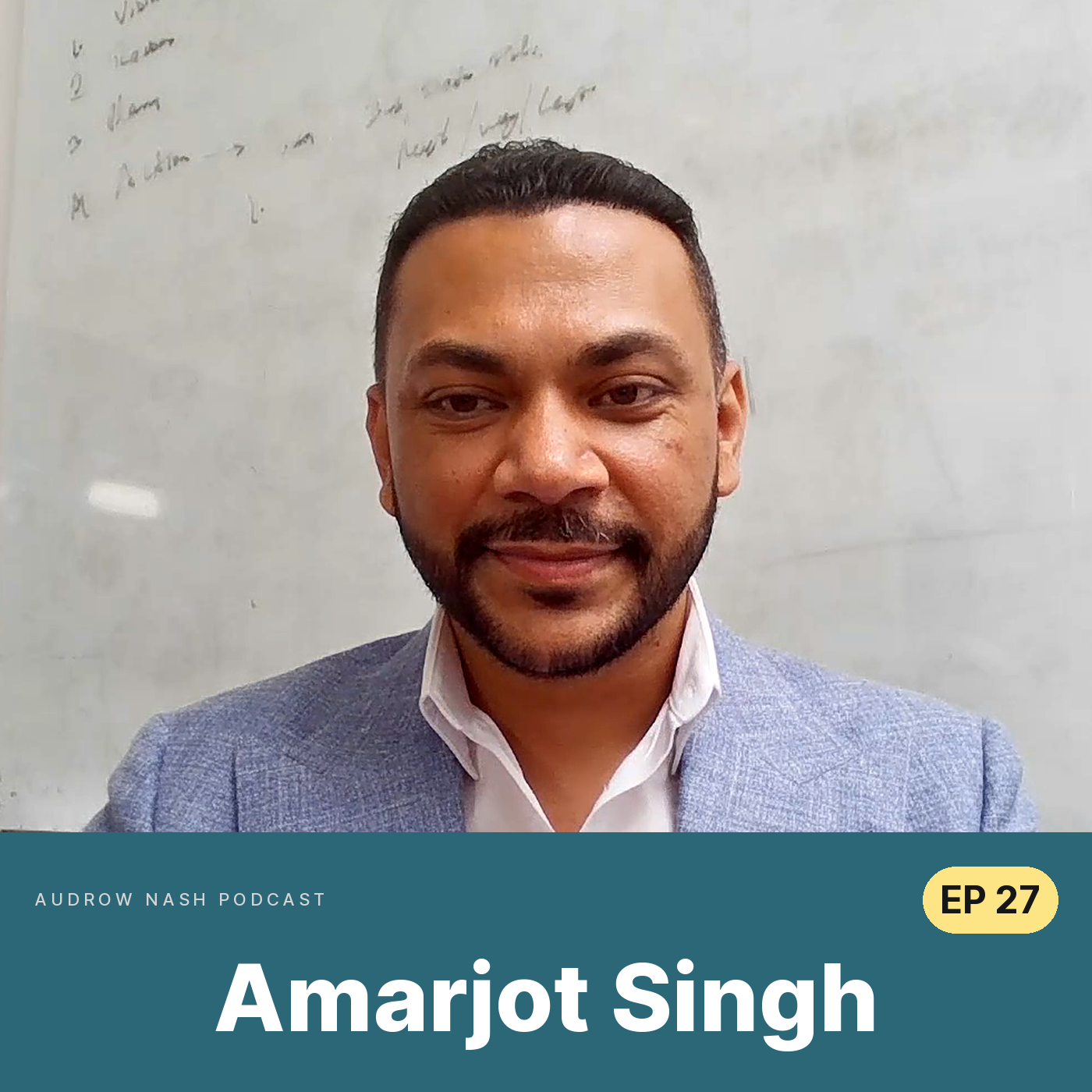
Why Defense Gets Humanoids Before Your Home Does: Skylark Labs' Amarjot Singh

Episode 27 of the Audrow Nash Podcast. A four-and-a-half-foot humanoid kicks in a door so a person doesn't have to go in first. Amarjot's case is that work like this is where humanoids pay off now: the tasks vary less than in a home, and working 70 or 80% of the time is still worth it when a person isn't the one getting shot. I talk with Amarjot Singh, founder and CEO of Skylark Labs, about a model that flags, labels, and learns new things on the device after it's deployed, how they teach a humanoid a skill from a few demonstrations, and why he thinks humanoid hardware becomes a commodity while the value moves to the brain. You'll like this interview if you work on robot learning or perception at the edge, you follow humanoids, or you're curious how robots get sold into defense. The model architecture stretch (8:51–34:41) is the most technical. EPISODE LINKS - Skylark Labs website: https://www.skylarklabs.ai/ PODCAST LINKS - Podcast Website: https://audrownashpodcast.com/ - YouTube: https://www.youtube.com/@audrow - Apple Podcasts: https://podcasts.apple.com/us/podcast/audrow-nash-podcast/id1716486786 - Spotify: https://open.spotify.com/show/74jWpWiLwsasY2QHtDcl8I?si=6c92796bf9554162 TIMECODES 0:00 Cold open 0:33 Amarjot Singh and Skylark Labs 3:30 Humanoids that sweep for bombs and breach doors 7:23 A brain-inspired model with memory 8:51 Wavelets and Gabor filters as the first layer 13:40 Unsupervised features, supervised on top 17:26 1,000x less data and flagging outliers 21:58 Detecting a camouflaged tank 25:53 Explainability for kinetic systems 28:12 Self-labeling and on-device memory 32:06 From perception to motion 34:41 The robotics stack and sensor language model 36:45 Skills stored as graphs 39:10 Mapping human motion onto a humanoid 40:33 Adapting to a new door handle 43:18 Teaching with Apple Vision Pro and egocentric video 46:58 Simulation and sim-to-real 50:14 What's easy, hard, and not yet possible 52:44 When 70% reliable is enough 55:01 The humanoid Turing test 56:51 Generalization is the bottleneck 1:00:05 From runway debris to robot dogs 1:03:46 Why a humanoid, on two legs or four 1:07:00 Humanoid hardware as a commodity 1:10:56 Why defense comes before homes 1:14:32 Trying markets until someone paid 1:18:40 Building their own humanoid 1:19:48 Manufacturing humanoids in the US 1:22:20 India for data, testing, and talent 1:25:40 Skylark's next three to five years 1:28:21 Advice for robotics founders 1:30:02 Where robotics is going 1:31:57 Final takeaway
October 6, 2026Episode 261 hr 36 min

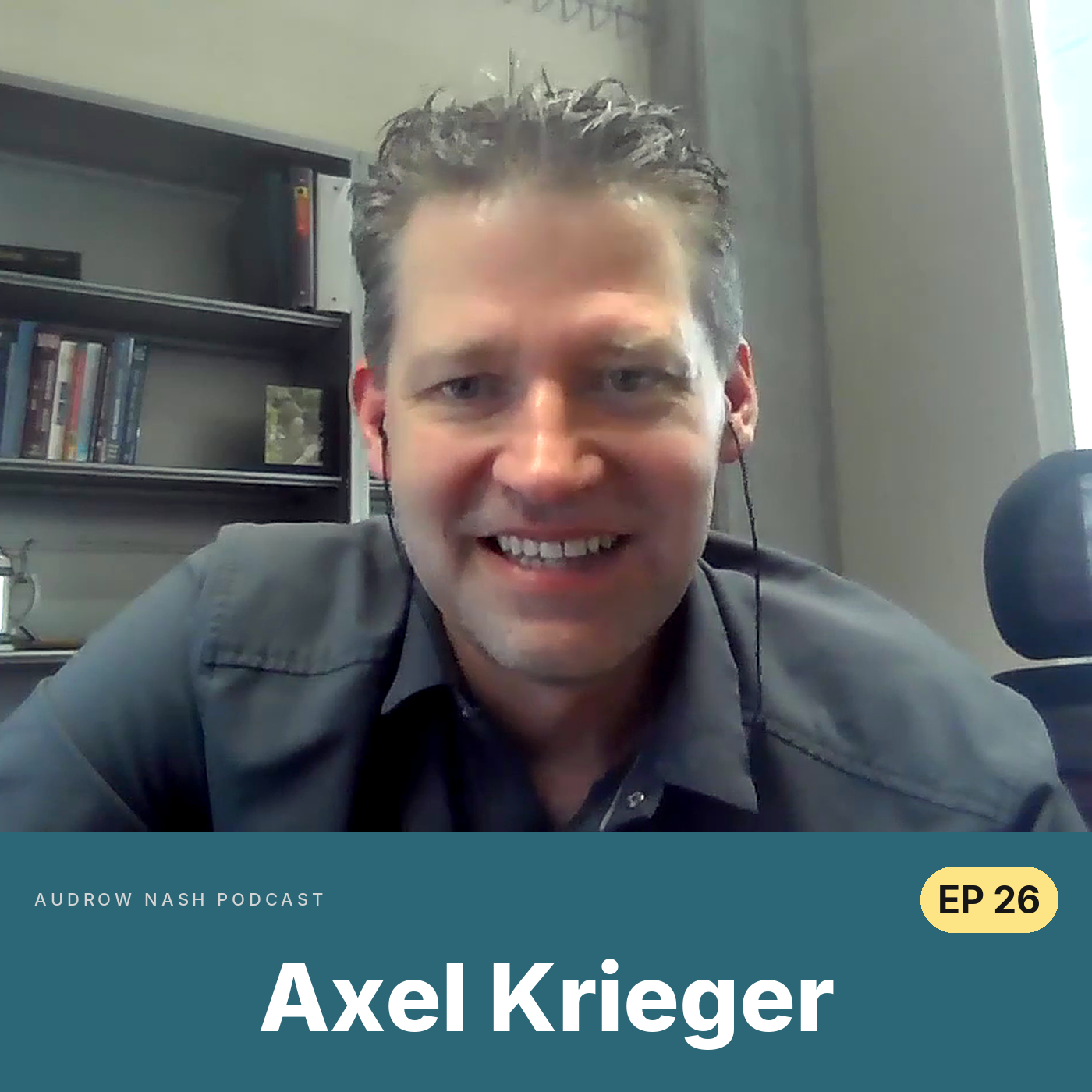
Robots That Learn Surgery From Surgeons: Inner Logic's Axel Krieger

Episode 26 of the Audrow Nash Podcast. Johns Hopkins surgeons showed Axel's team the clip-and-cut phase of gallbladder surgery. The team recorded demonstrations, trained a robot on them, and it did that phase eight times in a row with no human help. The organs were from a butcher. Now they're testing it in live animals. I talk with Axel Krieger, Chief Robotics Officer at Inner Logic and associate professor at Johns Hopkins, about why his lab moved from hand-built models to imitation learning from surgeons, how they break a procedure into small steps a robot can learn, and how simulated patients built from tens of thousands of CT scans help test surgical devices. You'll like this interview if you're a roboticist curious about surgery, you work on imitation learning or VLAs, or you want a grounded take on when autonomy reaches the operating room. The high- and low-level policy stretch (23:46–42:28) is the most technical. EPISODE LINKS - Axel's LinkedIn: https://www.linkedin.com/in/axel-krieger-b14a0075/ - IMERSE Lab (Johns Hopkins): https://imerse.lcsr.jhu.edu/ - Inner Logic website: https://innerlogic.io/ PODCAST LINKS - Podcast Website: https://audrownashpodcast.com/ - YouTube: https://www.youtube.com/@audrow - Apple Podcasts: https://podcasts.apple.com/us/podcast/audrow-nash-podcast/id1716486786 - Spotify: https://open.spotify.com/show/74jWpWiLwsasY2QHtDcl8I?si=6c92796bf9554162 TIMECODES 0:00 Cold open 0:39 Axel Krieger and Inner Logic 4:05 How surgical robots work today 9:41 AI infrastructure for device makers 11:15 From stitching to imitation learning 18:23 Autonomous gallbladder surgery steps 21:37 Action chunking transformers (ACT) 23:46 Breaking surgery into small steps 29:42 Language between high and low level policies 35:44 Adapting to surgical robot hardware 40:01 How much training data it takes 42:28 VLAs and large surgical datasets 47:30 Mixing training data 51:44 From dead tissue to live animals 54:47 Self-driving analogy and FDA approval 58:35 Inner Logic's data platforms 1:02:42 Simulated patients from CT scans 1:05:20 Simulating bones, vessels, and soft tissue 1:13:07 Where surgical robotics is heading 1:17:28 One surgeon, several surgeries 1:18:57 Training the next surgeons 1:22:19 Funding climate 1:24:52 Next milestones, from suction to suturing 1:26:58 Tumor resection and full procedures 1:29:49 Robot surgery in 20 years? 1:31:15 Advice for getting into surgical robotics 1:35:02 Final takeaway

March 19, 2024Episode 61 hr 58 min

When One Company Can't Own ROS Forever: Open Robotics

Episode 6 of the Audrow Nash Podcast. For years Open Robotics staff were the default maintainers. After Intrinsic acquired the for-profit side, Tully and Geoff argue that model can't be the long-term plan for ROS and the rest of the stack. I talk with Tully Foote (community advisor to OSRF; open source lead at Intrinsic) and Geoffrey Biggs (CTO of the Open Source Robotics Foundation) about Willow Garage and ROS lore, why ROS 2 existed for product teams that wouldn't ship on ROS 1, what Intrinsic capital unlocked (including RMW Zenoh), and how OSRA is meant to replace a single-company "benevolent dictator" with paid members plus meritocratic contributors. You'll like this interview if you ship on ROS, care about middleware and simulation infrastructure, or need a straight account of Open Robotics after the Intrinsic deal. OSRA motivation and membership (about 1:04:28–1:29:18) is the densest governance stretch; Zenoh and infra (47:38–53:27) is the densest engineering stretch. EPISODE LINKS - OSRA: https://osralliance.org/ - Open Robotics: https://www.openrobotics.org/ - Open Source Robotics Foundation LinkedIn: https://www.linkedin.com/company/open-source-robotics-foundation/ PODCAST LINKS - Podcast Website: https://audrownashpodcast.com/ - YouTube: https://www.youtube.com/@audrow - Apple Podcasts: https://podcasts.apple.com/us/podcast/audrow-nash-podcast/id1716486786 - Spotify: https://open.spotify.com/show/74jWpWiLwsasY2QHtDcl8I?si=6c92796bf9554162 TIMECODES 0:00 Episode intro 2:47 Willow Garage and Open Robotics lore 5:38 Player and ROS lore 9:06 Willow Garage and the birth of Open Robotics 13:17 Tully and Geoff's roles 22:13 Why make ROS 2 24:39 Player and ROS 2 25:42 Towards a robot revolution 29:16 Gazebo for robot simulation 34:39 OpenRMF project 38:22 Open Robotics infrastructure 44:42 Open Robotics before Intrinsic 47:38 Zenoh and bigger bets after Intrinsic 51:41 Rust for robotics 53:27 Intrinsic's acquisition of Open Robotics 58:31 OSRF since the acquisition 1:01:33 How former OSRC folks contribute now 1:04:28 Announcing OSRA 1:07:27 Motivation for OSRA 1:15:20 Merit-based contributors 1:18:06 OSRA consortium 1:20:23 Why companies join OSRA 1:23:55 OSRA membership types 1:29:18 Mentoring and getting involved 1:32:26 Mentorship process 1:34:25 Value of contributing to open source 1:39:19 OSRA badging for contributors 1:42:52 Educating more roboticists 1:47:26 Robotics in the next 5 years 1:52:10 Why open source? 1:55:36 Final thoughts

March 18, 2024Episode 51 hr 43 min

Why Series B Is the Hardest Robotics Raise: F-Prime's Sanjay Aggarwal

Episode 5 of the Audrow Nash Podcast. Seed and Series A can bet on vision. Series B and C have to underwrite metrics. Sanjay walks the gap where a lot of robotics companies stall. I talk with Sanjay Aggarwal, who leads robotics and automation investing at F-Prime Capital, about why they pulled back from unbounded AV bets toward industrial verticals, how F-Prime's State of Robotics report reads investment mix over recent years, and what he wants from founders (including when human-in-the-loop beats chasing 100% autonomy). You'll like this interview if you're raising for a robotics company, allocating into the category, or trying to map VC incentives against hardware timelines. The B/C stretch (about 55:02–1:04:31) is the densest fundraising bit; reliability and human-in-the-loop (1:12:00 on) is the densest product-architecture bit. EPISODE LINKS - F-Prime Capital (robotics): https://fprimecapital.com/robotics - F-Prime Capital: https://fprimecapital.com/ - Sanjay Aggarwal LinkedIn: https://www.linkedin.com/in/sanjaykaggarwal/ - F-Prime Capital LinkedIn: https://www.linkedin.com/company/f-prime-capital-partners/ PODCAST LINKS - Podcast Website: https://audrownashpodcast.com/ - YouTube: https://www.youtube.com/@audrow - Apple Podcasts: https://podcasts.apple.com/us/podcast/audrow-nash-podcast/id1716486786 - Spotify: https://open.spotify.com/show/74jWpWiLwsasY2QHtDcl8I?si=6c92796bf9554162 TIMECODES 0:00 Episode intro 2:13 Introducing Sanjay and F-Prime 4:40 Sanjay's background 11:31 Investing in AVs then industrial robots 15:29 F-Prime's robotics portfolio 26:55 A new type of robotics founder 28:21 Humanoids 35:04 F-Prime's State of Robotics report 39:29 Macro forces for declining investment cash 46:32 Why are companies not IPO'ing lately? 48:51 High interest rates and the VC model 55:02 Challenges raising B and C rounds 1:04:31 Why we're in the early days in robotics 1:09:23 Will labor shortages affect robotics investments? 1:12:00 Reliability and human-in-the-loop 1:17:20 Common pitfalls for robotics companies 1:20:27 How to look attractive to investors 1:23:36 Biggest challenges in robotics 1:25:44 Opportunities for new robotics companies 1:27:53 How would you start a new robotics company? 1:32:12 How to pick a Series A investor 1:34:39 Trends in the robotics industry 1:40:28 Future of robotics

May 1, 2025Episode 221 hr 39 min

Why Deep Tech Investing Still Has No Rulebook: AlleyCorp's Brannon Jones

Episode 22 of the Audrow Nash Podcast. Twenty years ago, SaaS had no rule of 40. Brannon Jones's take is that deep tech is in that same stretch now: the rules are still unwritten. I talk with Brannon Jones, investor on AlleyCorp's deep tech team, about why they started the vertical in robotics, how they underwrite hardware with a value-creation multiple instead of SaaS metrics, and what that looks like in the portfolio: EyeBot's 90-second eye exam kiosk, Portal Space's satellite thrusters, and Aescape's robotic massage table (which he says raised $83M). We also get into why AlleyCorp hasn't backed a humanoid yet, and why he thinks a lot of embodied-AI demos are still pick and place. You'll like this if you raise for a robotics company, invest in hardware, or want an operator-turned-investor view of New York deep tech. The portfolio walk (about 15:43–56:00) is concrete; the investing framework (56:08 on) is the densest stretch. EPISODE LINKS - Brannon Jones X: https://x.com/robotjonez - Brannon Jones LinkedIn: https://www.linkedin.com/in/jones-brannon - AlleyCorp website: https://alleycorp.com - AlleyCorp LinkedIn: https://www.linkedin.com/company/alleycorp PODCAST LINKS - Podcast Website: https://audrownashpodcast.com/ - YouTube: https://www.youtube.com/@audrow - Apple Podcasts: https://podcasts.apple.com/us/podcast/audrow-nash-podcast/id1716486786 - Spotify: https://open.spotify.com/show/74jWpWiLwsasY2QHtDcl8I?si=6c92796bf9554162 TIMECODES 0:00 Cold open 0:23 AlleyCorp and Brannon Jones 3:26 What deep tech means at AlleyCorp 10:14 New York vs West Coast portfolio 15:43 Deep tech portfolio overview 17:11 EyeBot eye exam kiosk 22:25 Why deep tech vs SaaS 28:46 Portal Space satellite thrusters 32:35 Aescape massage robot 44:39 Valar Atomics 49:24 Koop Technologies 50:58 Glacier recycling robots 54:46 Civ Robotics solar surveying 56:08 Funding robotics without SaaS playbooks 1:09:50 Market-focused startups 1:14:17 Early robotics investments 1:23:40 Humanoids and value creation 1:28:32 Deglobalization and China 1:32:48 Hype vs pick and place 1:38:19 Key takeaways

February 15, 2024Episode 41 hr 30 min

Manual Morning, Autonomous Afternoon: Bluewhite's Ben Alfi

Episode 4 of the Audrow Nash Podcast. Bluewhite's bet is not a new tractor. It's a kit dealers install so a grower's existing machine is manual in the morning and autonomous by afternoon, aimed at permanent crops where labor is scarce and GPS often isn't reliable under canopy. I talk with Ben Alfi, CEO and co-founder of Bluewhite Robotics, about bolting actuation and sensing onto mechanical tractors, redundant localization (GPS/RTK, LiDAR, vision, odometry) that re-prioritizes itself, selling through John Deere and New Holland dealerships, and blending into farm culture instead of trying to replace it. You'll like this interview if you care about ag robotics, go-to-market through equipment dealers, or autonomy in GPS-denied orchards and vineyards. The kit and sensing stretch (about 3:53–18:41) and the labor / operator-role bit (48:14 on) are the densest arguments. EPISODE LINKS - Bluewhite: https://www.bluewhite.co/ - Bluewhite on LinkedIn: https://www.linkedin.com/company/bluewhite/ - Ben Alfi on LinkedIn: https://www.linkedin.com/in/ben-alfi-aaa6b1146/ PODCAST LINKS - Podcast Website: https://audrownashpodcast.com/ - YouTube: https://www.youtube.com/@audrow - Apple Podcasts: https://podcasts.apple.com/us/podcast/audrow-nash-podcast/id1716486786 - Spotify: https://open.spotify.com/show/74jWpWiLwsasY2QHtDcl8I?si=6c92796bf9554162 TIMECODES 0:00 Episode intro 1:09 Introducing Ben Alfi and Bluewhite Robotics 3:53 Outfitting a tractor with Bluewhite's tech 8:52 What types of jobs are they automating? 11:12 How do you do localization? What sensors do you use? 18:41 Adding sensors to the tractor's tools + levels of support 23:36 Being a full solution for agriculture companies 25:14 Sending data to the cloud 31:43 Configuring their robot's behavior + onboarding 34:54 Working with farm equipment dealerships 38:01 Spiral development 40:32 Scaling their operation 44:46 How large is the tractor market? 48:14 Labor shortages and people not wanting to be farmers 56:43 Future of unmanned tractors 1:07:14 Data as a Service + Fellowship 1:13:21 Blending into the agriculture culture 1:17:58 Making systems safe 1:21:48 Recent Series C investment round 1:23:48 Working with the community 1:29:26 Episode outro

July 8, 2025Episode 231 hr 39 min

The Best Robot Today Is Worth Less Than a 1960 Computer: Polymath

Episode 23 of the Audrow Nash Podcast. Stefan's cold open: the best robot in the world today is less valuable to its owner than an average computer was in 1960. They argue robotics still makes teams rebuild the same navigation stack instead of buying commodity software. I talk with Stefan Seltz-Axmacher (CEO) and Ilia Baranov (CTO), co-founders of Polymath Robotics, about packaging point-to-point navigation for off-highway machines (tractors, bulldozers, mines), why SaaS feels easy because you don't rebuild payments and backends, labor shortages and vehicle SKU sprawl, and why they think humanoid-as-general-purpose is often the wrong bet next to Roomba-scale appliances. You'll like this if you build autonomy for industrial vehicles, sell into mining/ag, or want a blunt take on demos vs products. The ROI/history stretch (about 12:14–24:15) and the humanoid/minimally-viable-humanoid bit (52:02 on) are the densest arguments. EPISODE LINKS - Polymath Robotics: https://www.polymathrobotics.com PODCAST LINKS - Podcast Website: https://audrownashpodcast.com/ - YouTube: https://www.youtube.com/@audrow - Apple Podcasts: https://podcasts.apple.com/us/podcast/audrow-nash-podcast/id1716486786 - Spotify: https://open.spotify.com/show/74jWpWiLwsasY2QHtDcl8I?si=6c92796bf9554162 TIMECODES 0:00 Cold open 0:12 Polymath overview 6:04 Robotics standards gap 12:14 Market reality 16:43 Labor shortages 24:15 Cutting mining costs 33:55 AgTech needs action 43:16 Practical autonomy 52:02 Humanoid future 1:12:31 LLMs and coding 1:21:10 Work-kids balance 1:36:04 Key takeaways

August 23, 2024Episode 121 hr 32 min

Why Portals Beat Pipes for Underground Delivery: Pipedream's Canon Reeves

Episode 12 of the Audrow Nash Podcast. Pipedream Labs lays storm-drain-class pipe, adds a rail, and runs tote robots underground. Canon Reeves argues the hard product isn't the tunnel robot. It's the portals people actually grab food from. I talk with Canon Reeves, CTO and co-founder of Pipedream Labs, about underground last-mile delivery, Instant Pickup as a drive-thru-style parking-lot wedge, and how they think about scaling from QSR portals toward a wider network without pretending Manhattan is day one. You'll like this if you care about logistics robotics, urban infrastructure, or shipping physical systems that have to survive permits and maintenance. The Instant Pickup stretch (about 0:06:58–0:12:26) is the densest product bit; install/permits and Peachtree Corners (0:20:15 on) is the densest infra bit. EPISODE LINKS - Pipedream Labs: https://www.pipedreamlabs.co/ - Pipedream Labs X: https://x.com/pipedream_labs - Canon Reeves X: https://x.com/ReevesCanon - Pipedream Labs LinkedIn: https://www.linkedin.com/company/pipedream-labs/ - Canon Reeves LinkedIn: https://www.linkedin.com/in/canonreeves/ PODCAST LINKS - Podcast Website: https://audrownashpodcast.com/ - YouTube: https://www.youtube.com/@audrow - Apple Podcasts: https://podcasts.apple.com/us/podcast/audrow-nash-podcast/id1716486786 - Spotify: https://open.spotify.com/show/74jWpWiLwsasY2QHtDcl8I?si=6c92796bf9554162 TIMECODES 0:00 Episode intro 0:37 Meet Canon Reeves 1:05 Underground delivery vision 1:49 Storm drains and rails 3:17 Last-mile cost problem 6:58 Instant Pickup drive-thru 12:26 Parking lot to city 20:15 Pipe install and permits 48:22 Modular pipe network 50:14 Sell before you build 52:39 Small team, long runway 54:45 Hiring killer engineers 56:43 Remote vs in-person 1:00:43 Modular future-proofing 1:07:17 Seed round scaling 1:28:00 Founder advice

April 16, 2024Episode 71 hr 47 min

Four-Year Tooling Lead Times to Days: Machina Labs' Edward Mehr

Episode 7 of the Audrow Nash Podcast. Missing dies and multi-year tooling lead times can ground an aircraft for years and cost millions. Edward's bet is robotic sheet forming that turns some of that into days. I talk with Edward Mehr, CEO and co-founder of Machina Labs, about high-mix manufacturing floors that switch parts and materials without rebuilding the factory, why physics FEA was too slow for their process so they lean on data-driven models, and why he thinks robotics startups need roughly 10× improvement to survive the failure margin. You'll like this interview if you care about aerospace/defense manufacturing, process robotics, or how hardware founders pitch venture while carrying CapEx. The forming and modeling stretch (about 7:33–34:45) is the densest engineering bit; the 10× / market-choice stretch (47:16 on) is the densest founder bit. EPISODE LINKS - Machina Labs: https://machinalabs.ai/ - Machina Labs LinkedIn: https://www.linkedin.com/company/machina-labs/ - Edward Mehr LinkedIn: https://www.linkedin.com/in/edward-mehr/ PODCAST LINKS - Podcast Website: https://audrownashpodcast.com/ - YouTube: https://www.youtube.com/@audrow - Apple Podcasts: https://podcasts.apple.com/us/podcast/audrow-nash-podcast/id1716486786 - Spotify: https://open.spotify.com/show/74jWpWiLwsasY2QHtDcl8I?si=6c92796bf9554162 TIMECODES 0:00 Cold open 0:29 Episode intro 1:51 Introducing Edward and Machina Labs 7:33 AI in manufacturing 15:19 Data models vs physics-based models 18:51 Capturing data and modeling 34:45 About Machina Labs 39:15 Machina Labs funding 45:11 Being in LA 47:16 Why make a company that is 10x better 58:43 What if you weren't venture funded? 1:02:53 On growing quickly 1:10:26 Humanoids: challenges and Elon Musk 1:20:54 AI trends: transformers and hallucinations 1:35:32 Thoughts on manufacturing 1:42:15 Advice to get involved in manufacturing

August 21, 2025Episode 241 hr 44 min

Why "Shut It Off" Fails for Bipeds: Agility Robotics' Pras Velagapudi

Episode 24 of the Audrow Nash Podcast. For a wheeled robot, "shut it off" can be a safety move. For a biped that has to stay upright, killing power is the hazard. Pras walks through why Digit needs different rules. I talk with Pras Velagapudi, CTO of Agility Robotics, about Digit (two arms, two legs) doing paid material handling on full shifts, why a dynamically stable biped beats a heavy wheeled base for narrow aisles, the tradeoffs of wheels on feet, and how they're working with others (including Boston Dynamics) on safety standards for robots that can't just lock their wheels and call it safe. You'll like this interview if you're into humanoids, warehouse automation, or the control and safety problems that show up once a robot has to balance. The legs-and-wheels stretch (about 5:26–23:15) is the densest design argument; safety and standards (36:42 on) is where the shut-it-off problem shows up. EPISODE LINKS - Agility Robotics: https://www.agilityrobotics.com PODCAST LINKS - Podcast Website: https://audrownashpodcast.com/ - YouTube: https://www.youtube.com/@audrow - Apple Podcasts: https://podcasts.apple.com/us/podcast/audrow-nash-podcast/id1716486786 - Spotify: https://open.spotify.com/show/74jWpWiLwsasY2QHtDcl8I?si=6c92796bf9554162 TIMECODES 0:00 Cold open 0:42 Agility overview 5:26 Why humanoid design 13:26 Why legs, not wheels 23:15 Digit's application 36:42 Safety in humanoids 49:11 Standardizing safety 1:06:50 Digit in other industries 1:14:41 How AI fits into robotics 1:29:23 Is data still gold? 1:35:54 The future of Agility 1:38:13 Key takeaways

Is this your show?

Claim this listing to keep it up to date, reach guests who want to pitch you, and manage bookings with Guestify.

Claim this listing

More Technology podcasts