Using various programmes, AI True Crime looks at true crime stories using AI text generation (ChatGPT, NOVA, and others) and voice-to-text by Blaster, with unique thememusic for every episode by Bensound and Mureka.
Listen to episodes
60 recent
October 13, 202646 min
The Hitler Diaries
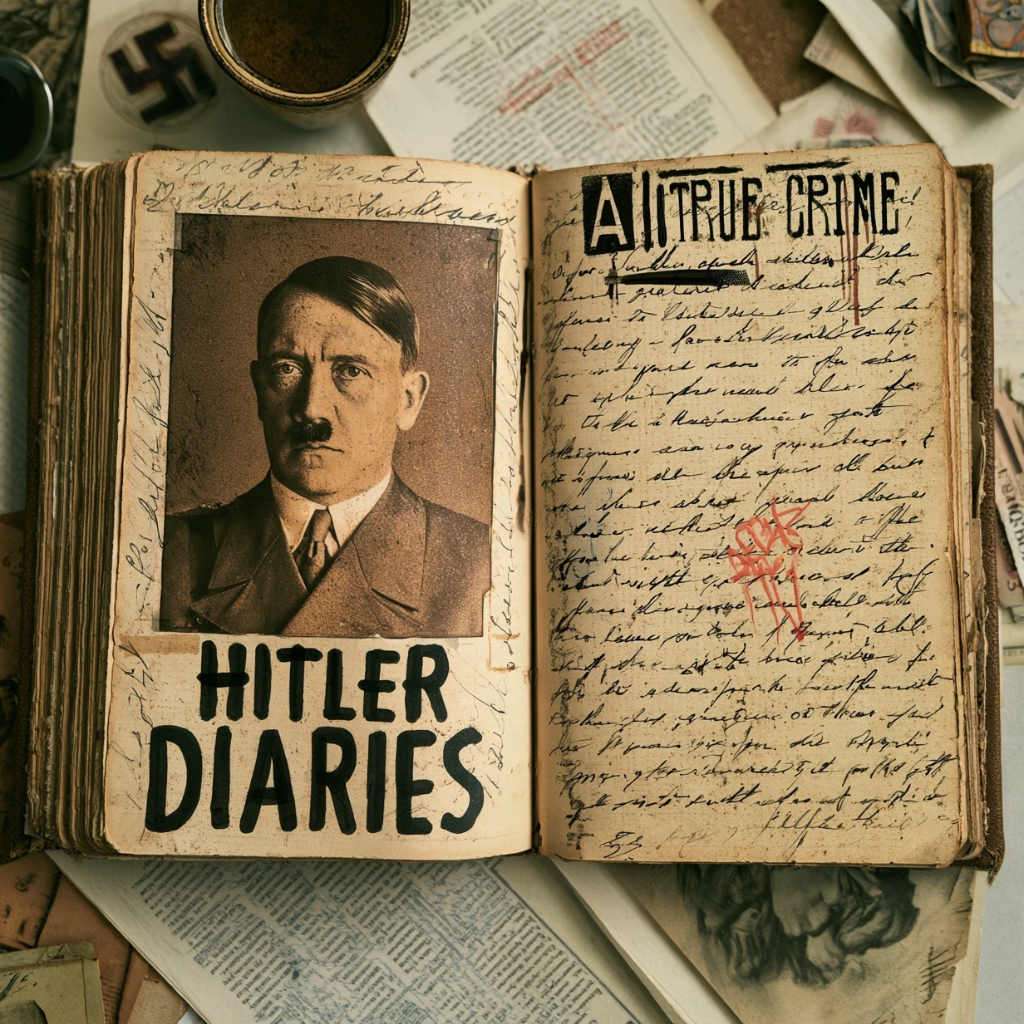
AI True Crime: The Hitler Diaries Show Notes: The Greatest Literary Forgery of the Twentieth Century In April 1983, the German news magazine Stern announced one of the most astonishing discoveries in modern historical research: the personal diaries of Adolf Hitler. The magazine had spent millions of West German marks acquiring dozens of handwritten notebooks supposedly documenting Hitler's life from 1932 through the final days of World War II. The documents had been supplied through journalist Gerd Heidemann, whose mysterious source claimed that the notebooks had survived an aircraft crash in 1945 and been secretly recovered from East Germany. But the diaries were the work of Konrad Kujau, a Stuttgart dealer and accomplished forger who had manufactured counterfeit Nazi memorabilia for years. The scandal involved respected historians, international publishing agreements, flawed forensic examinations, and extraordinary failures of editorial judgment. On May 6, 1983, German authorities publicly confirmed that the diaries were forgeries. Kujau and Heidemann were eventually convicted of fraud and sentenced to prison. The case remains one of journalism's most spectacular failures and a warning about the dangers of allowing commercial ambition to overwhelm historical verification. This episode follows Kujau's development as a forger, Heidemann's pursuit of the manuscripts, the flawed authentication process, the international media sensation, the criminal investigation, and the aftermath of a fraud that threatened to rewrite the history of Nazi Germany. Sources and Further Reading Norddeutscher Rundfunk (NDR). “Hitler-Tagebücher 1983: Chronologie eines absehbaren Skandals.” Detailed chronology of the fraud, covering Kujau's early forgeries, Heidemann's acquisition of the documents, payments, authentication failures, public exposure, and criminal convictions. https://www.ndr.de/geschichte/chronologie/Hitler-Tagebuecher-1983-Chronologie-eines-absehbaren-Skandals%2Ctagebuecher4.html Norddeutscher Rundfunk (NDR). “1983: Der Skandal um die Hitler-Tagebücher.” Historical overview of the scandal, its principal participants, the financial motivations behind the fraud, and the damage to Stern's reputation. Includes contemporary archival video and interviews. https://www.ndr.de/geschichte/chronologie/1983-der-skandal-um-die-hitler-tagebuecher%2Ctagebuecher2.html German Federal Archives (Bundesarchiv). “Pressekonferenz des Bundesarchivs zu Hitler-Tagebüchern.” Primary archival material concerning the examination of the notebooks and the official announcement that they were counterfeit. https://www.bundesarchiv.de/themen-entdecken/online-entdecken/geschichtsgalerien/pressekonferenz-des-bundesarchivs-zu-hitler-tagebuechern/ Norddeutscher Rundfunk (NDR). “Gefälschte Hitler-Tagebücher: So gefährlich war der Fake.” Extensive research project examining the surviving forged diaries, including their historical distortions, the portrayal of Hitler, and Holocaust denial within the manuscripts. Includes access to additional expert analysis and digitized materials. https://www.ndr.de/geschichte/tagebuecher The Washington Post, July 9, 1985. “Hitler Diaries Forger, Reporter Get 4 Years.” Contemporary reporting on the convictions and prison sentences imposed upon Konrad Kujau and Gerd Heidemann, including disputes over the money paid for the forged manuscripts. https://www.washingtonpost.com/archive/politics/1985/07/09/hitler-diaries-forger-reporter-get-4-years/e558c470-c4b9-4c51-bd8a-4fd748fff6c8/ The Washington Post, April 12, 1989. “Art of a Happy Hoaxer.” Profile of Konrad Kujau following his release from prison, exploring his unexpected celebrity and career producing openly acknowledged imitations of famous artworks. https://www.washingtonpost.com/archive/lifestyle/1989/04/12/art-of-a-happy-hoaxer/85ae41e6-1f6a-4436-984c-43d108f1069a/ Los Angeles Times, November 6, 1990. Reporting on Kujau's post-prison activities, including his business selling imitation artworks and historical documents. https://www.latimes.com/archives/la-xpm-1990-11-06-wr-3936-story.html The Guardian, September 16, 2000. Obituary of Konrad Kujau, examining his life, career in forgery, role in the Hitler diaries affair, and transformation into a public celebrity. https://www.theguardian.com/news/2000/sep/16/guardianobituaries1 Deutsche Biographie. Biographical material on Konrad Kujau, his early life in Germany, criminal activities, development as a counterfeiter, and later career. https://www.deutsche-biographie.de/dbo088489-5.html?language=en Additional Book Reference Robert Harris. Selling Hitler: The Story of the Hitler Diaries. Pantheon Books, 1986. A detailed investigation of the forgery, the personalities involved, the negotiations with Stern, and the disastrous authentication process. AI True Crime is an AI Podcast Warehouse production. The intelligence is artificial, but the crime is real. This podcast is powered by Pinecast .
October 5, 202650 min
Your Black Muslim Bakery
AI TRUE CRIME: YOUR BLACK MUSLIM BAKERY The Chauncey Bailey Project – The Chauncey Bailey Slaying: Key Players https://chaunceybaileyproject.org/2009/08/02/the-chauncey-bailey-killing-key-players/ The Chauncey Bailey Project – Grand Jury Votes to Indict Bakery Leader in Slaying of Oakland Journalist https://chaunceybaileyproject.org/2009/04/29/grand-jury-votes-to-indict-bakery-leader-in-slaying-of-oakland-journalist/ The Chauncey Bailey Project – Confessed Gunman Broussard Takes the Stand https://chaunceybaileyproject.org/2011/03/24/confessed-gunman-broussard-takes-the-stand/ The Chauncey Bailey Project – Witness: Bey IV Had Bailey Killed https://chaunceybaileyproject.org/2011/04/13/witnesses-bey-iv-had-bailey-killed-whites-are-devils-bakery-was-a-beautiful-place/ The Chauncey Bailey Project – Prosecutor Lays Out Arguments Against Yusuf Bey IV https://chaunceybaileyproject.org/2011/05/18/prosecutor-lays-out-arguments-against-yusuf-bey-iv/ The Chauncey Bailey Project – Yusuf Bey IV Finally on His Way to Prison for Murdering Journalist, Two Others https://chaunceybaileyproject.org/2011/10/07/yusuf-bey-iv-finally-on-his-way-to-prison-for-murdering-journalist-two-others/ San Francisco Chronicle – Bean Pies, Power, Sex and Death at Oakland’s Your Black Muslim Bakery https://www.sfgate.com/bayarea/article/Bean-pies-power-sex-and-death-at-Oakland-s-Your-2510374.php San Francisco Chronicle – The Fall of Your Black Muslim Bakery https://www.sfgate.com/news/article/The-fall-of-Your-Black-Muslim-Bakery-2536123.php San Francisco Chronicle – Raid on Your Black Muslim Bakery Came a Day Late for Oakland Editor https://www.sfgate.com/news/article/Raid-on-Your-Black-Muslim-Bakery-came-a-day-late-2519320.php San Francisco Chronicle – Bey’s Strict Vision Focused on Street More Than God https://www.sfgate.com/bayarea/article/Bey-s-strict-vision-focused-on-street-more-than-2591307.php San Francisco Chronicle – Three Ex-Wives of Muslim Bakery Founder Allege Elaborate Welfare Scam https://www.sfgate.com/bayarea/article/3-ex-wives-of-Muslim-bakery-founder-allege-3300809.php San Francisco Chronicle – U.S. Asked to Investigate Muslim Bakery’s Alleged Housing Scam https://www.sfgate.com/bayarea/article/u-s-asked-to-investigate-muslim-bakery-s-alleged-3300763.php San Francisco Chronicle – Judge Orders Your Black Muslim Bakery to Liquidate https://www.sfchronicle.com/bayarea/article/judge-orders-your-black-muslim-bakery-to-liquidate-2526601.php CBS San Francisco – Yusuf Bey IV Sentenced to Life Without Parole https://www.cbsnews.com/sanfrancisco/news/yusuf-bey-sentenced-to-life-without-parole/ CBS News – Man Gets Life for Ordering Journalist’s Killing https://www.cbsnews.com/news/man-gets-life-for-ordering-journalists-killing/ CBS San Francisco – Yusuf Bey Sentencing Postponed Due to Perjury Concerns https://www.cbsnews.com/sanfrancisco/news/yusuf-bey-sentencing-postponed-due-to-perjury-concerns/ ABC7 San Francisco – Son of Your Black Muslim Bakery Founder Yusuf Bey Testifies About Bakery’s Financial Trouble https://abc7news.com/archive/7327102/ This podcast is powered by Pinecast .
September 28, 202637 min
The Murder of Harvey Milk
AI True Crime: The Murder of Harvey Milk Harvey Milk became the first openly gay elected official in California when he won a seat on the San Francisco Board of Supervisors in 1977. His short political career, his battles over gay rights, the Briggs Initiative, and his assassination alongside Mayor George Moscone made him one of the defining figures in modern LGBTQ history. GLBT Historical Society — Harvey Milk Primary Source Set https://www.glbthistory.org/primary-source-set-harvey-milk The GLBT Historical Society maintains one of the most important collections of primary material relating to Milk, including photographs, oral histories, contemporary newspaper coverage, audio recordings, memorial material, and documentation of the reaction to Dan White’s trial. GLBT Historical Society — Harvey Milk Recorded Political Will https://www.glbthistory.org/harvey-milk-audio Approximately ten days after his election, Milk recorded a political will discussing what should happen if he were assassinated. The surviving recording has become one of the most famous primary documents associated with his life and death. GLBT Historical Society — Harvey Milk Oral History https://docs.glbthistory.org/oh/MilkHarvey_77_001_web.pdf An extensive contemporary interview with Milk from approximately 1977, covering his political views, organizing, gay politics, and his own experiences before his election to the Board of Supervisors. GLBT Historical Society — Harvey Milk Research Guide https://www.glbthistory.org/research-guides The Society’s research guides provide access to archival collections relating to Milk, San Francisco electoral politics, gay-rights activism, policing, Pride, and other subjects surrounding the events of 1978 and 1979. GLBT Historical Society — Primary Source Sets https://www.glbthistory.org/primary-source-sets The Society’s larger digital primary-source collection includes material on Harvey Milk, the Briggs Initiative, policing and resistance, San Francisco Pride, and other movements and events that provide context for Milk’s political career. GLBT Historical Society — Policing and Resistance Primary Sources https://www.glbthistory.org/primary-source-set-policing-and-resistance Archival material covering the relationship between San Francisco’s LGBTQ community and law enforcement, including a 1979 radio program about the White Night riots and documentation of subsequent hearings concerning police violence. National Park Service — Blue and “Other Than Honorable” Discharges https://www.nps.gov/articles/000/blue-and-other-than-honorable-discharges.htm The National Park Service discusses Harvey Milk’s military service and discharge as part of the broader history of gay and lesbian people in the United States military. It also summarizes his later political career and assassination. On November 27, 1978, former San Francisco Supervisor Dan White entered City Hall and killed Mayor George Moscone and Supervisor Harvey Milk. White was later convicted of voluntary manslaughter rather than murder. The verdict on May 21, 1979 triggered the White Night riots, during which demonstrators clashed with police around San Francisco City Hall and police later moved into the Castro district. GLBT Historical Society — White Night Riots / “No Apologies” https://www.glbthistory.org/shop-apparel-and-gifts/no-apologies-t-shirt The Historical Society provides background on the reaction to White’s manslaughter conviction, including the destruction at City Hall, burned police vehicles, subsequent police actions in the Castro, and the political divisions that followed. For more information on Harvey Milk archival holdings, the GLBT Historical Society also maintains the Harvey Milk and Scott Smith Collection, while the San Francisco Public Library’s James C. Hormel LGBTQIA Center holds the Harvey Milk Archives–Scott Smith Collection. AI True Crime examines real crimes, their victims, perpetrators, investigations, trials, and the histories that surround them. This podcast is powered by Pinecast .
September 15, 202636 min
The Zebra Murders
The Zebra Murders In 1973 and 1974, San Francisco was terrorized by a series of seemingly random shootings targeting white victims. The attacks became known as the Zebra murders, named for the special police radio channel used during the massive investigation. The killings were attributed to a group of Black men associated with a radical religious organization that investigators called the Death Angels. Victims were often attacked without warning, frequently shot from behind as they walked through the city. The violence created widespread fear and brought San Francisco to the brink of a racial crisis. The investigation became one of the largest manhunts in San Francisco history. Police eventually arrested Jessie Lee Cooks, Manuel Moore, Larry Green, and J. C. X. Simon. All four were convicted in 1976 and sentenced to life imprisonment. California appellate records document the extraordinary scale of Operation Zebra and the eventual convictions. But the story of Zebra is also about what happened when fear overwhelmed civil liberties. In an effort to find the killers, San Francisco police conducted sweeping stops of Black men, particularly those who fit generalized descriptions of the suspects. Hundreds of African American men were detained, and a federal judge ultimately ruled the dragnet unconstitutional. Among the survivors was Art Agnos, who was shot twice in the back in December 1973 and would later become mayor of San Francisco. Other survivors provided crucial information that helped investigators understand the attacks and ultimately identify the killers. The Zebra murders remain one of the darkest and most complicated chapters in San Francisco's history. They were not simply a story about a serial killing spree. They were also a story about racial hatred, radicalization, fear, policing, profiling, and what happens to a city when the search for a killer threatens to consume the people who are supposed to be protecting it. Sources San Francisco Chronicle, “Terrifyingly random Zebra Murders” https://www.sfchronicle.com/crime/article/terrifyingly-random-zebra-murders-4116923.php San Francisco Chronicle, “Zebra murders meant to start race war” https://www.sfchronicle.com/books/article/zebra-murders-meant-to-start-race-war-2469576.php California Court of Appeal, People v. Cooks https://law.justia.com/cases/california/court-of-appeal/3d/141/224.html San Francisco Chronicle, “KILLERS / Now There's a Sniper Loose on the Right Coast / S.F.'s own time of terror” https://www.sfchronicle.com/bayarea/article/killers-now-there-s-a-sniper-loose-on-the-right-2785010.php San Francisco Chronicle, “Infamous 'Zebra killer’ found dead in San Quentin cell” https://www.sfchronicle.com/crime/article/Infamous-Zebra-killer-found-dead-in-San-6133406.php This podcast is powered by Pinecast .
September 9, 202645 min
The Doodler
AI True Crime: The Doodler Between 1974 and 1975, six gay men were killed in San Francisco in a series of murders that became one of the city's most disturbing unsolved cases. The killer became known as The Doodler because at least one surviving victim told police that the attacker claimed to be a cartoonist and sketched while talking with him at a late-night diner. The victims were Gerald Cavanaugh, Joseph Stevens, Klaus Christmann, Frederick Capin, Warren Andrews and Harald Gullberg. San Francisco police believe all six were gay white men who encountered the killer shortly before their deaths, generally in isolated coastal locations. Warren Andrews, who was beaten rather than stabbed, was identified as a possible sixth victim decades after the original investigation. The case became even more complicated because there were survivors. Their descriptions helped police create a composite sketch of the suspected killer in 1975. One survivor was reportedly a European diplomat, while another was a well-known entertainer. The social climate of 1970s San Francisco meant that publicly identifying themselves as gay could have enormous personal and professional consequences. Police eventually received information pointing toward a possible suspect, including a report from a psychiatrist who believed one of his patients might be the killer. Investigators could not build a prosecutable case, however, and the Doodler disappeared from public attention for decades. The case was reopened in the modern era, and investigators have continued examining old evidence, surviving witnesses and possible connections to other attacks. In 2026, San Francisco police renewed their appeal for information and are offering a $250,000 reward for information leading to the identification, apprehension and conviction of the person responsible. Sources and Further Reading San Francisco Police Department: The Doodler Cold Case The primary current source for the case. SFPD's June 2026 announcement identifies the six homicides currently being investigated and describes what investigators believe about the victims, the suspect and the related Fox Plaza attacks. https://www.sanfranciscopolice.org/news/sfpd-cold-case-unit-asking-publics-assistance-solving-six SFPD: The “Doodler” Cold Case Investigation Update The department's January 2023 update, including the identification of Warren Andrews as a possible sixth victim and the increase of the reward to $250,000. https://www.sanfranciscopolice.org/news/doodler-cold-case-investigation-update-23-009 SFPD: The “Doodler” 2022 Investigation Update Earlier official documentation describing the surviving victims, the cartoonist story, the forensic sketch and the identification of Andrews as a possible sixth victim. https://www.sanfranciscopolice.org/news/doodler-cold-case-investigation-update-22-011 SFPD: Warren Andrews The department's current case page for Warren Andrews, who was attacked at Land's End on April 27, 1975, never regained consciousness and died several weeks later. https://www.sanfranciscopolice.org/stay-safe/ongoing-investigations/homicides-and-cold-cases/warren-andrews SFPD Doodler Crime Bulletin The official SFPD crime bulletin describing the six suspected victims, the Fox Plaza attacks and the $250,000 reward. https://www.sanfranciscopolice.org/sites/default/files/2023-01/SFPDDoodlerCrimeBulletin-Jan2023-20230124.pdf San Francisco Chronicle: The Doodler Kevin Fagan's extensive investigation into the case, including the victims, surviving witnesses, original detectives, the suspect investigation and the modern cold-case investigation. https://www.sfchronicle.com/projects/doodler-true-crime-podcast/ The Doodler: Drawing a Line to a Forgotten Serial Killer The first installment of the San Francisco Chronicle investigation, providing background on Gerald Cavanaugh, Joseph Stevens, the original murders and the circumstances surrounding the Doodler's attacks. https://www.sfchronicle.com/projects/doodler-true-crime-podcast/chapter-one/ The Doodler: One Victim Came to S.F. for a New Start The second chapter of the Chronicle investigation, including Klaus Christmann and the investigation into the early murders. https://www.sfchronicle.com/projects/doodler-true-crime-podcast/chapter-two/ The Doodler: No One Knew What He Looked Like The Chronicle's investigation into the surviving victims and the creation of the original composite sketch. https://www.sfchronicle.com/projects/doodler-true-crime-podcast/chapter-four/ The Doodler: Sketch Snares Suspects An examination of the 1975 investigation, including Officer James Andre Boles, the original composite sketch and the numerous suspects questioned after its publication. https://www.sfchronicle.com/projects/doodler-true-crime-podcast/chapter-five/ The Doodler: Searching for a Psychiatrist Who May Have Heard a Confession The investigation into the psychiatrist who reportedly contacted police about a patient he believed could be the Doodler, and why investigators were unable to turn that lead into a prosecution. https://www.sfchronicle.com/projects/doodler-true-crime-podcast/chapter-six/ The Doodler: A Sixth Victim? And Maybe More Outside the Bay Area The Chronicle's investigation into Warren Andrews and the possibility that the Doodler may have committed additional attacks outside San Francisco. https://www.sfchronicle.com/projects/doodler-true-crime-podcast/chapter-seven/ San Francisco Chronicle: 2026 Doodler Update The Chronicle's current reporting on SFPD's renewed appeal for information and the latest status of the investigation. https://www.sfchronicle.com/crime/article/sf-doodler-serial-killer-murders-22300023.php The Victims Gerald Cavanaugh Found near Ocean Beach in January 1974. Joseph "Jae" Stevens A 27-year-old entertainer found near Spreckels Lake in Golden Gate Park in June 1974. Klaus Christmann Found at Ocean Beach in July 1974. Frederick Capin A nurse and Navy veteran found at Ocean Beach in May 1975. Warren Andrews Attacked at Land's End in April 1975 and died several weeks later. He was identified decades afterward as a possible sixth Doodler victim. Harald Gullberg Found at Lincoln Park in June 1975. He is generally considered the last of the six victims currently attributed to the Doodler. The Investigation Today The case remains unsolved. SFPD's June 2026 announcement says investigators believe the six victims were targeted because they were gay white adult men and that they met the suspect shortly before being killed in isolated coastal locations. Police have also identified a person of interest connected to the two July 1975 Fox Plaza attacks, but have not established that this person is responsible for the Doodler murders . The department is offering a $250,000 reward for information leading to the identification, apprehension and conviction of the person or persons responsible. Tips can be provided anonymously to SFPD. https://www.sanfranciscopolice.org/news/sfpd-cold-case-unit-asking-publics-assistance-solving-six Episode Warning This episode discusses multiple murders, violence against gay men, homophobia and the social conditions surrounding the investigation in 1970s San Francisco. Next Time on AI True Crime The next episode takes us somewhere very different: the Zebra Killings This podcast is powered by Pinecast .
August 17, 202643 min
The My Lai Massacre
AI True Crime: The My Lai Massacre On March 16, 1968, soldiers of Charlie Company entered the Vietnamese hamlet commonly known as My Lai expecting to encounter Viet Cong forces. Instead, American soldiers killed hundreds of unarmed civilians, including women, children and elderly people. The killings were followed by false reports, failed investigations and an attempt to portray the operation as a military success. In this episode of AI True Crime , we examine the massacre itself, Lieutenant William Calley and Charlie Company, the extraordinary intervention of helicopter pilot Hugh Thompson and his crew, the Army's initial response, Ronald Ridenhour's effort to expose what happened, Seymour Hersh's reporting, the Peers Inquiry, the court-martial of Calley, and the enormous gap between the scale of the crime and the punishment that followed. Sources and Further Reading Report of the Department of the Army Review of the Preliminary Investigations into the My Lai Incident, Volume I — The Peers Report The Army's extensive investigation into the massacre, the command structure surrounding it and the failure of earlier investigations. The Library of Congress provides the complete report online. https://www.loc.gov/item/74603407/ The Peers Inquiry of the Massacre at My Lai — Library of Congress Library of Congress catalog and digital access to material from Lieutenant General William R. Peers' investigation. https://www.loc.gov/item/97042604/ Investigation of the My Lai Incident — U.S. House Armed Services Investigating Subcommittee Congressional investigation into the massacre, including testimony and examination of the Army's response. https://www.loc.gov/item/2011525307/ Complete hearings: https://tile.loc.gov/storage-services/service/ll/llmlp/MyLaiHearings/MyLaiHearings.pdf Investigation of the My Lai Incident — Congressional Report The report of the House Armed Services Investigating Subcommittee following its investigation of the massacre. https://tile.loc.gov/storage-services/service/ll/llmlp/MyLaiReport/MyLaiReport.pdf The Moral Courage Paradox: The Peers Report and My Lai — Army University Press Detailed modern U.S. Army study of the massacre, the Peers investigation, command responsibility, the cover-up and the actions of Hugh Thompson, Glenn Andreotta and Lawrence Colburn. https://www.armyupress.army.mil/books/browse-books/ibooks-and-epubs/the-moral-courage-paradox/ The Peers Inquiry — Military Review / Army University Press An examination of General Peers' investigation and the institutional and command failures identified in the Army's inquiry. https://www.armyupress.army.mil/Portals/7/military-review/Archives/English/MilitaryReview_20090630_art006.pdf My Lai at 50 — U.S. Army Combined Arms Center Army retrospective on the massacre, the investigation and the moral courage of Thompson and his helicopter crew. Thompson, Andreotta and Colburn were awarded the Soldier's Medal in 1998 for their efforts to save civilians. https://usacac.army.mil/Article-Library/View-Content/My-Lai-at-50?ArtMID=575\&ArticleID=1355 My Lai — PBS American Experience Documentary and supporting historical material examining Charlie Company, the massacre, survivors, investigators and the people who exposed what happened. https://www.pbs.org/wgbh/americanexperience/films/mylai/ Interview with Lawrence Colburn — PBS American Experience Colburn describes serving as the gunner aboard Hugh Thompson's helicopter and the crew's intervention to protect Vietnamese civilians from American soldiers. https://www.pbs.org/wgbh/americanexperience/features/my-lai-interview-larry-colburn/ Charlie Company and the Massacre — PBS American Experience Timeline and background on Charlie Company before, during and after the events of March 16, 1968. https://www.pbs.org/wgbh/americanexperience/features/my-lai-charlie-company-and-massacre/ Seymour Hersh — 1970 Pulitzer Prize for International Reporting Hersh received the Pulitzer Prize for his reporting exposing the My Lai massacre. https://www.pulitzer.org/winners/seymour-m-hersh “I Sent Them a Good Boy and They Made Him a Murderer” — The Pulitzer Prizes Background on Hersh's investigation, his search for William Calley and the reporting that brought My Lai to national attention. https://www.pulitzer.org/article/i-sent-them-good-boy-and-they-made-him-murderer The Photographer Who Showed the World What Really Happened at My Lai — TIME The story of Army photographer Ronald Haeberle and the color photographs that gave the American public visual evidence of the massacre. Warning: this page contains extremely disturbing photographs. https://time.com/5200422/my-lai-massacre-ron-haeberle-photographs/ Only One Officer Found Guilty of My Lai Atrocities — Library of Congress Library of Congress material on William Calley's court-martial, conviction for the murder of twenty-two civilians and the extraordinary fact that he was the only officer convicted for the massacre. https://www.loc.gov/exhibitions/drawing-justice-courtroom-illustrations/about-this-exhibition/federal-and-special-courts/only-one-officer-found-guilty-of-my-lai-attrocities/ Captain Medina Testifies at Calley's Court-Martial — Library of Congress Contemporary courtroom artwork and historical background concerning Charlie Company commander Captain Ernest Medina's testimony during Calley's trial. https://www.loc.gov/exhibitions/drawing-justice-courtroom-illustrations/about-this-exhibition/federal-and-special-courts/capt-medina-testifies-at-calleys-court-martial/ William Calley, Face of My Lai Massacre in Vietnam War, Dies at 80 — Reuters Report on Calley's April 2024 death and a concise account of his conviction, sentence, presidential intervention, eventual release and later apology. https://www.reuters.com/world/us/us-soldier-calley-face-my-lai-massacre-vietnam-war-dies-80-2024-07-30/ Next time on AI True Crime : San Francisco, the 1970s, a series of attacks on gay men, and a killer whose identity remains one of the city's most enduring mysteries. The Doodler. This podcast is powered by Pinecast .
August 10, 202636 min
The Murder of Jessica Lal
Jessica Lal: The Murder That Changed the Case On April 29, 1999, Jessica Lal was working at the bar of a private party at Tamarind Café in New Delhi. After the bar had closed, a customer demanded alcohol. When Jessica refused, he pulled out a gun and shot her. The murder itself was witnessed by numerous people. The investigation quickly focused on Manu Sharma, the son of a politically influential family. He was eventually arrested and charged with murder, but the case that initially appeared to have substantial evidence against him would become a seven-year legal battle. The prosecution faced a critical problem: witnesses who had provided information during the investigation later changed their stories or refused to support the case in court. The murder weapon was never recovered, and questions arose over other elements of the investigation. In February 2006, a Delhi trial court acquitted Sharma and the other principal accused. The acquittal produced an extraordinary public reaction. Newspapers, television networks and public demonstrations turned the case into a national controversy over privilege, witness intimidation and the ability of India's justice system to hold powerful defendants accountable. The Delhi High Court subsequently overturned the acquittal and convicted Sharma, sentencing him to life imprisonment. In 2010, India's Supreme Court upheld the conviction. The Jessica Lal case became much more than a murder investigation. It became a story about hostile witnesses, investigative failures, public pressure and the ability of an appellate court to reverse a controversial acquittal. It also became one of the most recognizable examples of the influence that sustained media attention could have on a criminal justice case in modern India. Jessica's murder was eventually resolved in court, but the questions surrounding it remain important: Why did witnesses change their accounts? What pressures surrounded the investigation? And how close did the case come to ending without a conviction? The story ultimately became a landmark in India's ongoing debate over justice, privilege and accountability. In This Episode The April 1999 party at Tamarind Café Jessica Lal and the confrontation at the bar The investigation and the search for the murder weapon Witness testimony and the emergence of hostile witnesses The prosecution's case against Manu Sharma The 2006 trial-court acquittal The public reaction to the verdict The Delhi High Court's reversal of the acquittal The Supreme Court's 2010 confirmation of the conviction The lasting impact of the case on Indian public life and criminal justice Next Episode From a murder in a New Delhi restaurant, we move to a very different crime and a very different war. In March 1968, American soldiers entered the Vietnamese hamlets of Mỹ Lai. What happened there would become one of the most notorious atrocities of the Vietnam War—and another story in which witnesses, evidence, official accounts and the struggle to establish the truth would prove decisive. Next: The Mỹ Lai Massacre This podcast is powered by Pinecast .
August 3, 202638 min
Killdozer: The Story of Marvin Heemeyer
Episode Notes AI TRUE CRIME: KILLDOZER On June 4, 2004, Marvin Heemeyer entered an armored Komatsu bulldozer and began systematically destroying buildings in Granby, Colorado. The attack was the culmination of years of property disputes, failed negotiations, code violations, lawsuits, and increasingly obsessive grievances. Although Heemeyer fired at people and struck buildings that had been occupied moments earlier, nobody else died. In this episode, AI True Crime examines the disputes that preceded the attack, the secret construction of the machine, Heemeyer’s recorded claims of divine approval, the two-hour rampage, and the internet mythology that transformed an attempted mass-casualty attack into a story about a working-class folk hero. Twenty years after the attack, Denver7 reconstructs the rampage through interviews with residents, law-enforcement officers, and people whose buildings were targeted. https://www.denver7.com/news/local-news/killdozer-20-years-later-how-and-why-a-man-went-on-a-rampage-through-granby-in-an-armored-bulldozer Patrick Brower, former publisher of the Sky-Hi News and one of Heemeyer’s intended targets, discusses the attack and his book, Killdozer: The True Story of the Colorado Bulldozer Rampage . https://www.cpr.org/show-segment/this-man-barely-escaped-killdozers-path-now-hes-written-a-book-about-marvin-heemeyer/ Patrick Brower’s official Killdozer book site contains background material, photographs, interviews, and articles about the attack and its mythology. https://killdozerbook.com/ Route Fifty examines the dispute, Heemeyer’s refusal to connect his property to an approved sewage system, and the lessons the case holds for local government. https://www.route-fifty.com/management/2018/02/colorado-bulldozer-rampage-marvin-heemeyer/145747/ KUNC interviews Patrick Brower about the attack and the documentary Tread . https://www.kunc.org/news/2020-02-20/granbys-bulldozer-rampage-captured-the-worlds-attention-now-its-a-documentary Tread , directed by Paul Solet, uses interviews, archival footage, dramatic recreations, and portions of Heemeyer’s recordings to recount the events leading to the rampage. https://www.netflix.com/title/81206411 CBS Colorado interviews Brower about the release of his book and the continuing disagreement over whether Heemeyer should be remembered as a victim or an attacker. https://www.cbsnews.com/colorado/news/new-killdozer-book-granby/ The Colorado government made up to $600,000 available to help Granby rebuild its town hall, library, and other public facilities after the attack. https://www.claimsjournal.com/news/west/2004/06/11/43069.htm 9News reports on the dismantling of the armored bulldozer. Its pieces were dispersed to prevent the machine from becoming a monument or source of souvenirs. https://www.9news.com/article/news/local/infamous-granby-bulldozer-being-demolished/73-344748210 Patrick Brower examines how Killdozer imagery moved beyond internet folklore and became an anti-government and extremist symbol. https://www.skyhinews.com/news/meme-inspired-by-heemeyer-becomes-extremist-rallying-cry/ HowStuffWorks provides an overview of the property dispute, the construction of the machine, the attack, and the competing stories that developed afterward. https://history.howstuffworks.com/american-history/killdozer.htm Next time on AI True Crime: The Jessica Lal Murder . This podcast is powered by Pinecast .
July 20, 202635 min
The Murder of Hattie Carroll
AI True Crime: The Lonesome Death of Hattie Carroll In February 1963, Hattie Carroll was working as a bartender at a Baltimore society ball when William Zantzinger, a wealthy young Maryland tobacco farmer, subjected her and other Black hotel employees to a night of racist abuse and violence. After Zantzinger struck Carroll with a toy cane, she became ill and collapsed. She died hours later from a cerebral hemorrhage that medical experts connected to the physical and emotional shock of the assault. Zantzinger was convicted of manslaughter and sentenced to six months in jail. Bob Dylan transformed the case into “The Lonesome Death of Hattie Carroll,” one of the most powerful protest songs of the civil-rights era. The song kept Carroll’s name alive, but it also simplified the medical and legal facts and helped make both Dylan and Zantzinger more visible than the woman whose death inspired it. This episode examines Hattie Carroll’s life, the racial and economic world surrounding the Emerson Hotel, the Spinsters’ Ball, the medical question of what killed her, Zantzinger’s trial and sentence, Dylan’s transformation of the case, and Zantzinger’s later exploitation of poor Black tenants. The Devoted Life and Lonesome Death of Hattie Carroll The Smithsonian Center for Folklife and Cultural Heritage reconstructs Carroll’s family, work, church life, death, trial, and legacy. It is the strongest source for restoring Hattie Carroll as a person rather than treating her solely as the subject of a song. https://folklife.si.edu/magazine/hattie-carroll Bob Dylan’s “Lonesome Death of Hattie Carroll” Became a Protest Song of the Civil Rights Era Baltimore Magazine provides a detailed reconstruction of the Spinsters’ Ball, Zantzinger’s treatment of hotel employees, Carroll’s collapse, Baltimore’s reaction, and the song’s place in civil-rights history. https://www.baltimoremagazine.com/section/historypolitics/hattie-carroll-murder-bob-dylan-protest-song-60-years-later/ A Lonesome Death David Simon examines the liberties Dylan took with the facts and recounts an interview in which Zantzinger attacked the song while acknowledging responsibility for Carroll’s death. https://www.newyorker.com/magazine/2009/01/26/a-lonesome-death Life After a Lonesome Death Ian Frazier investigates the crime, the trial, Dylan’s song, memories of Carroll within her church, and Zantzinger’s later conviction for collecting rent from poor Black tenants in properties he no longer owned. https://www.theguardian.com/music/2005/feb/25/bobdylan The Lonesome Death of Hattie Carroll The official Bob Dylan page contains the complete song and information about the albums and live collections on which it appears. https://www.bobdylan.com/songs/lonesome-death-hattie-carroll/ How Bob Dylan’s “The Lonesome Death of Hattie Carroll” Functions as Alternative Journalism This academic article compares Dylan’s account with reporting in The Washington Post, The Baltimore Sun, and The Afro-American. It examines the song’s inaccuracies and argues that Dylan used music to express a moral judgment obscured by supposedly objective reporting. https://www.americanpopularculture.com/journal/articles/fall_2020/petersen.htm Fifty Years Later, Hattie Carroll’s Death Remembered The Baltimore Afro-American revisits Carroll’s death, Zantzinger’s prosecution, the six-month sentence, and the continuing importance of the case within Baltimore’s Black community. https://afro.com/fifty-years-later-hattie-carrolls-death-remembered/ William Zantzinger, Convicted of Killing Hattie Carroll and Denounced in Bob Dylan Song, Dies at 69 This obituary follows Zantzinger’s life after the trial, his anger toward Dylan, and the notoriety that remained attached to his name until his death in 2009. https://www.latimes.com/local/obituaries/la-me-zantzinger10-2009jan10-story.html The Lonesome Death of William Zantzinger The Guardian’s obituary considers Zantzinger’s death, his lifelong resentment of Dylan’s song, and the way the case remained part of his public identity for more than four decades. https://www.theguardian.com/music/2009/jan/09/bob-dylan-hattie-carroll-inspiration Next time on AI True Crime, we travel to Granby, Colorado, where a dispute between one man and his town ended with an armored bulldozer tearing through thirteen buildings. The next episode is all about Marvin Heemeyer and the Killdozer. This podcast is powered by Pinecast .
June 18, 202636 min
The Assassination of JFK - Part 2
Episode Notes AI True Crime: The JFK Assassination — Show Notes On November 22, 1963, President John F. Kennedy was shot while riding in a motorcade through Dealey Plaza in Dallas, Texas. He was pronounced dead at Parkland Memorial Hospital at 1:00 p.m.; later that afternoon Lyndon B. Johnson took the oath of office aboard Air Force One. The Warren Commission concluded that Lee Harvey Oswald acted alone, while the House Select Committee on Assassinations later concluded that Kennedy was probably assassinated as the result of a conspiracy. The National Archives’ JFK Assassination Records Collection now contains more than six million pages of assassination-related records, photographs, films, sound recordings, and artifacts. This episode follows the killing of JFK from Dealey Plaza to Parkland, from Oswald’s arrest to Ruby’s murder of Oswald, and from the Warren Commission to the long afterlife of suspicion. We look at the motorcade, the shots, the rifle, the “magic bullet,” the death of Officer J. D. Tippit, Oswald’s impossible two-day fame, the birth of the conspiracy era, and the strange way the government’s attempt to settle the case only made the mystery feel larger. Content warning: assassination, gun violence, autopsy discussion, historical trauma, conspiracy claims, and political violence. Primary Archives and Official Records National Archives: President John F. Kennedy Assassination Records Collection https://www.archives.gov/research/jfk National Archives: JFK Assassination Records, 2025 Documents Release https://www.archives.gov/research/jfk/release-2025 National Archives: Background on the JFK Assassination Records Collection https://www.archives.gov/research/jfk/background National Archives: Frequently Asked Questions about JFK Assassination Records https://www.archives.gov/research/jfk/faqs National Archives: Warren Commission Report, Table of Contents https://www.archives.gov/research/jfk/warren-commission-report/toc National Archives: Warren Commission Report, Introduction https://www.archives.gov/research/jfk/warren-commission-report/intro National Archives: Warren Commission Report, Chapter 1, Summary and Conclusions https://www.archives.gov/research/jfk/warren-commission-report/chapter-1 National Archives: Warren Commission Report, Chapter 2, The Assassinationhttps:// www.archives.gov/research/jfk/warren-commission-report/chapter-2 National Archives: Warren Commission Report, Chapter 3, The Shots from the Texas School Book Depository https://www.archives.gov/research/jfk/warren-commission-report/chapter-3.html National Archives: Warren Commission Report, Chapter 4, The Assassin https://www.archives.gov/research/jfk/warren-commission-report/chapter-4.html National Archives: Warren Commission Report, Chapter 5, Detention and Death of Oswaldhttps:// www.archives.gov/research/jfk/warren-commission-report/chapter-5 National Archives: Warren Commission Report, Chapter 6, Investigation of Possible Conspiracyhttps:// www.archives.gov/research/jfk/warren-commission-report/chapter-6 National Archives: Warren Commission Report, Chapter 7, Lee Harvey Oswald: Background and Possible Motiveshttps:// www.archives.gov/research/jfk/warren-commission-report/chapter-7 National Archives: Warren Commission Report, Chapter 8, The Protection of the Presidenthttps:// www.archives.gov/research/jfk/warren-commission-report/chapter-8 GovInfo: Warren Commission Report and Hearings https://www.govinfo.gov/features/warren-commission-report-and-hearings GovInfo: President John F. Kennedy Assassination Records Collection https://www.govinfo.gov/collection/jfk-assassination-records-collection National Archives: House Select Committee on Assassinations Report, Table of Contents https://www.archives.gov/research/jfk/select-committee-report/toc National Archives: House Select Committee on Assassinations, Summary of Findings https://www.archives.gov/research/jfk/select-committee-report/summary.html National Archives: House Select Committee on Assassinations, Findings https://www.archives.gov/research/jfk/select-committee-report/part-1a.html National Archives: Assassination Records Review Board Report https://www.archives.gov/research/jfk/review-board/report/index National Archives: ARRB Final Report PDF https://www.archives.gov/files/research/jfk/review-board/report/arrb-final-report.pdf FBI: JFK Assassination Case History https://www.fbi.gov/history/cases-and-criminals/jfk-assassination CIA Reading Room: JFK Records https://www.cia.gov/readingroom/ NSA: Records Regarding the Assassination of John F. Kennedy https://www.nsa.gov/Helpful-Links/NSA-FOIA/Declassification-Transparency-Initiatives/Historical-Releases/JFK/smdpage14699/7/ JFK Library and Historical Context John F. Kennedy Presidential Library: November 22, 1963, Death of the President https://www.jfklibrary.org/learn/about-jfk/jfk-in-history/november-22-1963-death-of-the-president John F. Kennedy Presidential Library: Death of the President Media Gallery https://www.jfklibrary.org/learn/about-jfk/media-galleries/death-of-the-president Library of Congress: Today in History, November 22 https://www.loc.gov/item/today-in-history/november-22/ The Sixth Floor Museum at Dealey Plaza https://www.jfk.org/ The Sixth Floor Museum Collections https://emuseum.jfk.org/ The Sixth Floor Museum: Zapruder Film FAQ https://www.jfk.org/zapruder-faq/ The Sixth Floor Museum: Plan Your Visit https://www.jfk.org/plan-your-visit/ Independent Research Archives History Matters: Warren Report https://www.history-matters.com/archive/contents/wc/contents_wr.htm History Matters: Warren Commission Hearings and Exhibitshttps:// www.history-matters.com/archive/contents/wc/contents.htm History Matters: HSCA Final Assassinations Report https://history-matters.com/archive/jfk/hsca/report/contents.htm History Matters: ARRB Final Report https://www.history-matters.com/archive/jfk/arrb/report/contents.htm Mary Ferrell Foundation https://www.maryferrell.org/ Mary Ferrell Foundation JFK Database Explorer, via AARC Library announcement https://aarclibrary.org/the-mary-ferrell-foundation-jfk-database-explorer/ Assassination Archives and Research Center https://aarclibrary.org/ National Security Archive: JFK Files and Mexico City Intelligence https://nsarchive.gwu.edu/briefing-book/mexico/2025-05-19/jfk-files-detail-close-intelligence-collaboration-between-cia-and Recent Record Releases and Reporting National Archives: National Archives Releases Thousands of JFK Assassination Records https://www.archives.gov/news/articles/jfk-records-release Axios: FBI Finds Secret JFK Assassination Records After Trump Order https://www.axios.com/2025/02/10/trump-jfk-assassination-records PBS NewsHour / AP: JFK Files Send History Buffs Hunting for New Clues https://www.pbs.org/newshour/nation/jfk-files-send-history-buffs-hunting-for-new-clues The Guardian: Trump Releases Thousands of Pages on John F. Kennedy Assassination https://www.theguardian.com/us-news/2025/mar/18/jfk-assassination-files-released-trump Washington Post: What’s New in the JFK Files? https://www.washingtonpost.com/nation/2025/03/19/jfk-files-summary-assassination-takeaways/ Vanity Fair: What the New JFK Files Reveal About the CIA’s Secrets https://www.vanityfair.com/news/story/jfk-files-cia-secrets Key Issues Mentioned in the Episode The Warren Commission concluded that the shots came from the Texas School Book Depository and that Oswald fired them. The episode treats that as the official conclusion, not as the end of the story. The point is that every major investigation after 1963 had to answer not only who fired, but why the case felt unfinished. The single-bullet theory remains one of the central fault lines in the case. The Warren Commission needed a timing explanation for how Kennedy and Governor Connally were wounded within the shooting window; critics later turned that theory into the infamous “magic bullet” phrase. Oswald’s murder by Jack Ruby made the case permanently unstable in the public imagination. With Oswald dead, there was no trial, no cross-examination, no defense strategy, and no public legal test of the evidence. The House Select Committee on Assassinations reopened the matter in the 1970s and concluded that Kennedy was probably assassinated as the result of a conspiracy, though it did not identify the conspirators. That conclusion is one of the reasons the JFK case never stayed sealed inside the Warren Report. The 1992 JFK Records Act, pushed forward in the cultural aftermath of Oliver Stone’s JFK, created the modern assassination records process and led to the Assassination Records Review Board. The ARRB was not a new murder investigation; it was a records-review and declassification body. Forensic and Technical Reading Chemical and Forensic Analysis of JFK Assassination Bullet Lots: Is a Second Shooter Possible? https://arxiv.org/abs/0712.2150 Library of Congress: Zapruder Film of the Kennedy Assassination Essay https://www.loc.gov/static/programs/national-film-preservation-board/documents/Zapruder-Film-of-the-Kennedy-Assassination.pdf The Sixth Floor Museum: What Does the Abraham Zapruder Film Show? https://www.jfk.org/zapruder-faq/ History Matters: The Magic Bullet, Even More Magical Than We Knew https://history-matters.com/essays/frameup/EvenMoreMagical/EvenMoreMagical.htm History Matters: How Five Investigations into JFK’s Medical / Autopsy Evidence Got It Wrong https://history-matters.com/essays/jfkmed/How5Investigations/How5InvestigationsGotItWrong_6.htm Episode Closing Note The JFK assassination is not just a murder case. It is the moment where modern American suspicion becomes a permanent public language. The official story never stopped existing, but neither did the doubt. In the next episode of AI True Crime, we look at the four big theories: the Mob, the intelligence community, the military, and the friendly-fire concept. This podcast is powered by Pinecast .
Is this your show?
Claim this listing to keep it up to date, reach guests who want to pitch you, and manage bookings with Guestify.